
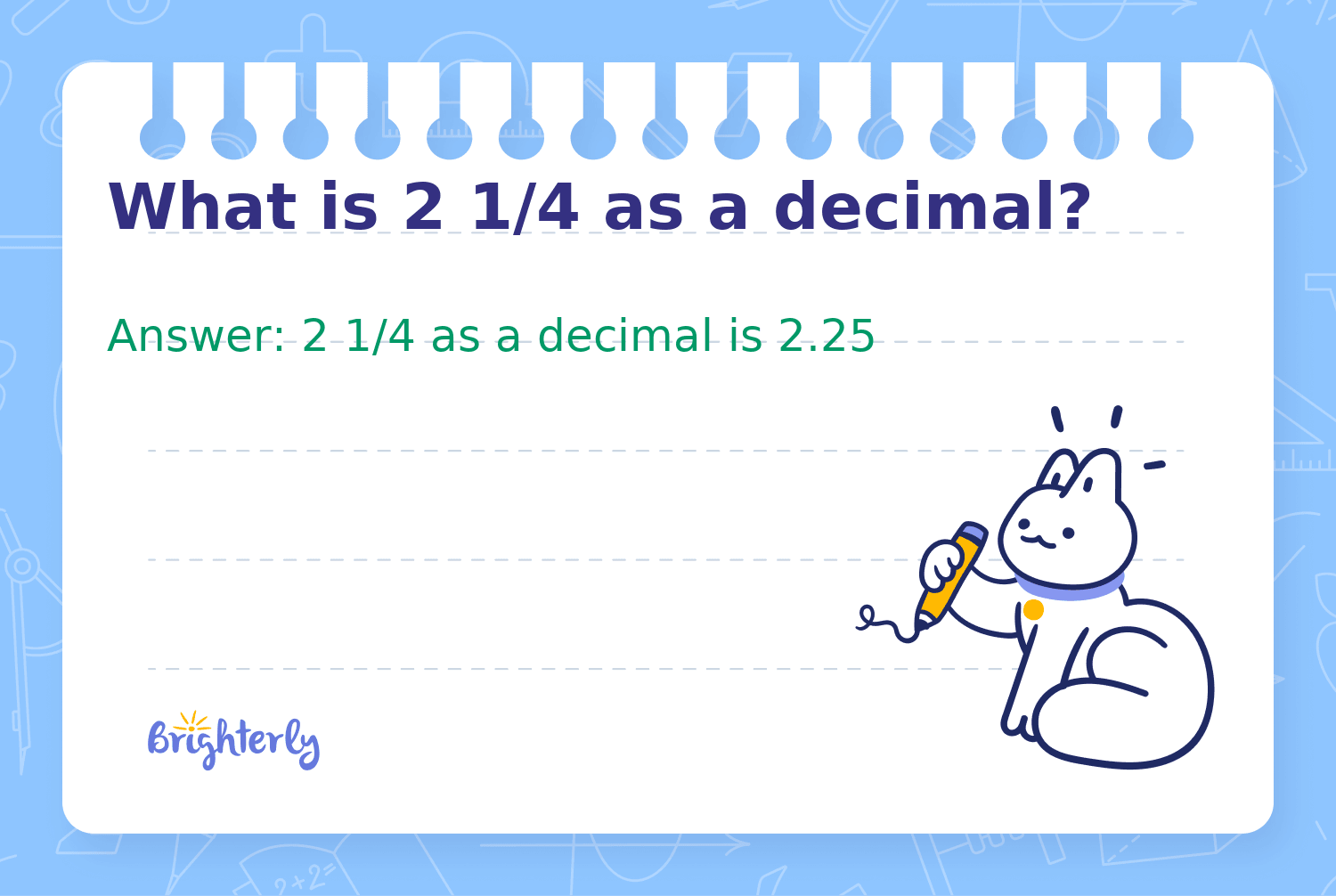
At its core, “2 1 4 in decimal form” represents a simple mathematical conversion: transforming the mixed number two and one-quarter into its decimal equivalent. The answer is 2.25. While seemingly straightforward, this fundamental conversion holds significant weight across various facets of personal and business finance. From calculating interest rates and understanding investment returns to budgeting and analyzing market prices, precision in decimal form is not merely academic—it is the bedrock of sound financial decision-making and clarity. In the intricate world of money, fractions can often obscure the true value or cost, making the ability to fluidly transition to decimals an indispensable skill for individuals and enterprises alike.
The Foundation of Financial Clarity: Understanding Fractions and Decimals
Financial literacy hinges on the ability to interpret and manipulate numbers effectively. Fractions, while useful in some contexts, can often complicate direct comparisons and calculations. This is particularly true when dealing with percentages, ratios, and rates that are predominantly expressed in decimal form. The conversion of “2 1/4” (two and one-quarter) to 2.25 serves as a microcosm of how simplifying numerical expressions can illuminate financial realities.
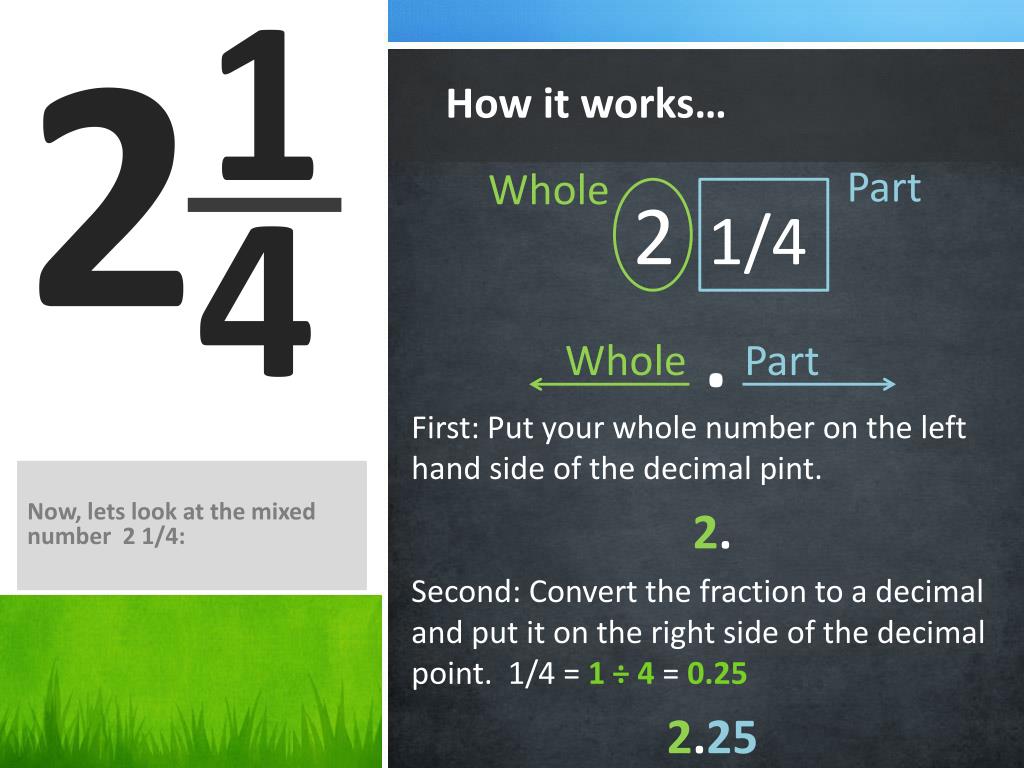
To convert 2 1/4 to a decimal, one first separates the whole number (2) from the fraction (1/4). The whole number remains unchanged. The fraction is then converted by dividing the numerator (1) by the denominator (4), which yields 0.25. Combining the whole number with the decimal fraction gives us 2 + 0.25 = 2.25. This seemingly small step from a mixed number to a decimal form has profound implications for accurately assessing financial scenarios, enabling clearer comparison and precise calculation in a world where every cent and every basis point can influence outcomes.
Why Precision Matters in Financial Contexts
In finance, ambiguity is the enemy of prosperity. Whether managing personal savings, evaluating investment opportunities, or forecasting business expenditures, relying on precise decimal values eliminates guesswork and enhances transparency. Imagine comparing two different savings accounts where one offers an Annual Percentage Yield (APY) of “two and a quarter percent” and another quotes 2.2%. Without converting the former to 2.25%, a direct, accurate comparison is cumbersome, potentially leading to suboptimal financial choices. This simple conversion empowers individuals to make informed decisions, ensuring they understand the exact terms and implications of their financial dealings.
Unpacking “2 1/4”: Practical Applications in Personal Finance
The decimal equivalent of 2 1/4, or 2.25, is not just a theoretical number; it manifests in countless everyday financial situations, directly impacting personal budgets, savings, and debt management.
Budgeting and Expense Tracking
When constructing a personal budget, precision ensures that every dollar is accounted for. While most expenses are whole numbers, some may involve fractional amounts that, when rounded or ignored, can lead to discrepancies over time. For instance, if you allocate 2 1/4 hours per day to a side hustle that pays an hourly rate, or a subscription costs “two and a quarter dollars” more after a certain period, understanding 2.25 allows for exact calculations of income or expenditure. This prevents budget overruns or underestimations, keeping your financial plan on track. Moreover, when tracking monthly utility bills or grocery expenses, these fractional amounts accumulate, making accurate decimal representation crucial for an honest assessment of spending habits and identifying areas for potential savings.
Interest Rates and Returns
Perhaps one of the most critical applications of decimal conversion in personal finance is understanding interest rates. A loan with an interest rate of “two and a quarter percent” means 2.25%. Similarly, a savings account or certificate of deposit (CD) might offer a 2 1/4% APY. The difference between 2% and 2.25% might seem minor, but over the life of a loan or an extended savings period, these fractional percentages can equate to hundreds or even thousands of dollars. For example, understanding how an APR of 2.25% compounds over time for a mortgage or car loan is vital for forecasting total interest paid and managing debt effectively. Conversely, maximizing returns on investments means accurately comparing APY rates, where 2.25% is definitively better than 2.15%, even if both seem “around two percent.”
Loan Calculations and Debt Management
When taking out a loan, whether for a home, car, or personal needs, the interest rate is a primary determinant of total cost. Lenders frequently quote rates with fractional components. An interest rate of 2 1/4% needs to be accurately translated to 2.25% to calculate monthly payments, total interest over the loan term, and to compare against competing offers. A slight fractional difference in an interest rate can result in significant variations in total repayment amounts, underscoring the necessity of decimal accuracy. Effectively managing debt involves a clear understanding of these numbers, enabling borrowers to make informed decisions about refinancing, accelerating payments, or choosing the most favorable loan terms.
Savings Goals and Financial Planning
Setting and achieving financial goals, such as saving for a down payment, retirement, or a child’s education, often involves calculating how much needs to be saved or invested periodically. If a goal requires saving an amount equivalent to 2 1/4 units (e.g., 2.25 times your monthly income) or achieving a specific return of 2.25% annually, understanding this decimal equivalence is paramount. It allows for precise forecasting of when a goal might be met, helping to adjust saving strategies or investment portfolios to stay on target.
Investing Demystified: Decimals in the World of Assets
The world of investments is inherently quantitative, and decimal precision is not just a convenience but a necessity for understanding asset values, returns, and risks.
Stock and Bond Prices
Stock prices are almost universally quoted in decimals, reflecting the exact value per share. If a stock’s price is “two and a quarter dollars,” it trades at $2.25. This precision is critical when buying or selling shares, especially for larger volumes, where even a few cents’ difference can significantly impact the total transaction value. Furthermore, the rise of fractional share investing means that investors can purchase parts of a share, often expressed as precise decimal amounts (e.g., 0.25 of a share), making decimal understanding fundamental to portfolio construction. Similarly, bond yields and prices often involve decimal points to reflect their precise market value and return characteristics.
Mutual Funds and ETFs
Net Asset Value (NAV) per share for mutual funds and Exchange Traded Funds (ETFs) is always expressed in decimals, reflecting the market value of the fund’s underlying assets. For example, a mutual fund might have an NAV of $22.25 per share. When calculating the value of your holdings, the number of shares owned is multiplied by this precise decimal NAV. Expense ratios, which represent the annual cost of owning a fund, are also typically quoted as percentages in decimal form (e.g., 0.25%), directly influencing your net returns. Understanding these decimal values is essential for evaluating fund performance and costs.
Real Estate Investments
While property prices are often large round numbers, certain aspects of real estate investment utilize decimals. For example, land parcels might be measured in acres with fractional components, like 2 1/4 acres, which translates to 2.25 acres. When calculating property taxes, rental yields, or cap rates, these fractional measurements and percentages need to be converted to decimals for accurate financial modeling and decision-making. Investors involved in real estate partnerships might also own “2.25 shares” or units in a property, where their ownership percentage and corresponding returns are directly tied to these precise decimal figures.
Commodity Trading
The prices of commodities like oil, gold, or agricultural products are often quoted with high decimal precision due to their global market nature and the immense volumes traded. Crude oil might trade at $72.25 per barrel, or gold at $2,025.50 per ounce. Traders and investors in these markets rely heavily on these exact decimal values to execute trades, manage risk, and calculate profit margins, where even minute price fluctuations can lead to substantial gains or losses.
Beyond the Basics: Leveraging Decimal Precision for Strategic Financial Decisions
Mastering decimal conversions extends beyond basic calculations; it empowers strategic financial planning, risk management, and astute comparative analysis.
Financial Planning and Forecasting
Long-term financial planning, such as retirement planning or wealth accumulation strategies, requires robust forecasting. Small fractional differences in assumed annual returns (e.g., 2.25% versus 2%) or inflation rates, when compounded over decades, lead to vastly different future values. Using precise decimal figures in financial models and projections ensures that these forecasts are as accurate and reliable as possible, allowing for more informed adjustments to saving and investment strategies. This precision helps in setting realistic goals and understanding the long-term impact of current financial decisions.
Tax Implications
Tax laws can be complex, and certain deductions, credits, or thresholds might involve fractional percentages or specific monetary limits. For example, if a tax credit is 2.25% of a certain expense, or a capital gains tax calculation requires precise fractional adjustments, decimal accuracy is paramount. Miscalculating even small percentages can lead to incorrect tax filings, potential penalties, or missed opportunities for legitimate tax savings. Tax planning often involves optimizing various financial inputs, where decimal precision ensures compliance and efficiency.
Comparative Analysis
Comparing financial products—be it different mortgage offers, savings accounts, investment portfolios, or insurance policies—involves scrutinizing their terms, rates, and fees. Often, the distinguishing factor between competing products comes down to subtle fractional differences. An investment fund with an expense ratio of 0.25% compared to another with 0.30% might seem insignificant, but over years, that 0.05% difference compounded on a large portfolio can amount to thousands of dollars in savings. The ability to convert all relevant figures into a common decimal format facilitates objective, accurate comparisons, enabling individuals to choose the most advantageous options.
Managing Risk
Assessing and managing financial risk—whether in investments, business operations, or personal debt—relies on quantifying potential losses and gains with precision. If a financial model predicts a “two and a quarter percent” chance of a certain market event, understanding this as 2.25% allows for a clearer assessment of risk probability and the formulation of appropriate mitigation strategies. Precise decimal values are used in calculating Value at Risk (VaR), portfolio volatility, and other risk metrics, providing a comprehensive view of potential financial exposure.
Tools and Best Practices for Decimal Accuracy in Your Finances
In an increasingly digital financial landscape, ensuring decimal accuracy is easier than ever, but still requires diligence.
The Role of Calculators and Software
Modern financial calculators, spreadsheet software like Excel, and specialized financial planning tools are indispensable for managing decimal numbers. They automate complex calculations and conversions, significantly reducing the risk of human error. However, the accuracy of these tools depends on correct input. Understanding that “2 1 4” needs to be entered as “2.25” is the critical human element that ensures the technology provides reliable results. Leveraging these tools effectively requires a foundational understanding of decimal principles.
Double-Checking Your Work
Even with powerful tools, the importance of double-checking calculations cannot be overstated, especially for critical financial decisions. A misplaced decimal point or an incorrect entry can lead to substantial errors. A quick mental check or a cross-reference with a different calculation method can often catch mistakes before they become costly. For example, if a loan payment calculation seems unusually high or low, it warrants a re-evaluation of the input values, including any fractional-to-decimal conversions.
Developing Financial Numeracy
Ultimately, building confidence in handling numbers, particularly decimals, is a cornerstone of financial numeracy. This involves not just knowing how to convert 2 1/4 to 2.25, but understanding why that conversion is important in various financial contexts. Continuous learning and practical application of these skills will empower individuals to navigate their financial lives with greater confidence and competence.

Seeking Professional Advice
For highly complex financial scenarios involving numerous fractional components, intricate investment strategies, or significant tax implications, consulting with a qualified financial advisor, accountant, or tax professional is a wise decision. These experts possess the knowledge and tools to handle nuanced calculations, ensuring optimal outcomes and minimizing risk. While personal financial numeracy is crucial, knowing when to seek professional guidance is also a mark of financial intelligence.
In conclusion, “2 1 4 in decimal form” is 2.25. This simple conversion is far more than a mathematical exercise; it is a gateway to greater financial clarity, precision, and strategic decision-making across personal finance, investing, and business operations. Embracing decimal accuracy allows individuals and businesses to navigate the complexities of the monetary world with confidence, ensuring every cent and every percentage point is understood and leveraged effectively.
aViewFromTheCave is a participant in the Amazon Services LLC Associates Program, an affiliate advertising program designed to provide a means for sites to earn advertising fees by advertising and linking to Amazon.com. Amazon, the Amazon logo, AmazonSupply, and the AmazonSupply logo are trademarks of Amazon.com, Inc. or its affiliates. As an Amazon Associate we earn affiliate commissions from qualifying purchases.