
In the complex world of finance, precision is paramount. Whether you’re managing personal budgets, evaluating investment returns, or navigating the intricacies of business finance, an accurate understanding of numbers is non-negotiable. Among the most fundamental conversions often encountered, yet sometimes overlooked in its deeper implications, is understanding how a fraction like “1/3” translates into its decimal equivalent. On the surface, it’s a simple mathematical fact. However, within the realm of money, grasping “what is 1/3 as a decimal” serves as a critical cornerstone for making informed decisions, preventing errors, and achieving financial clarity.

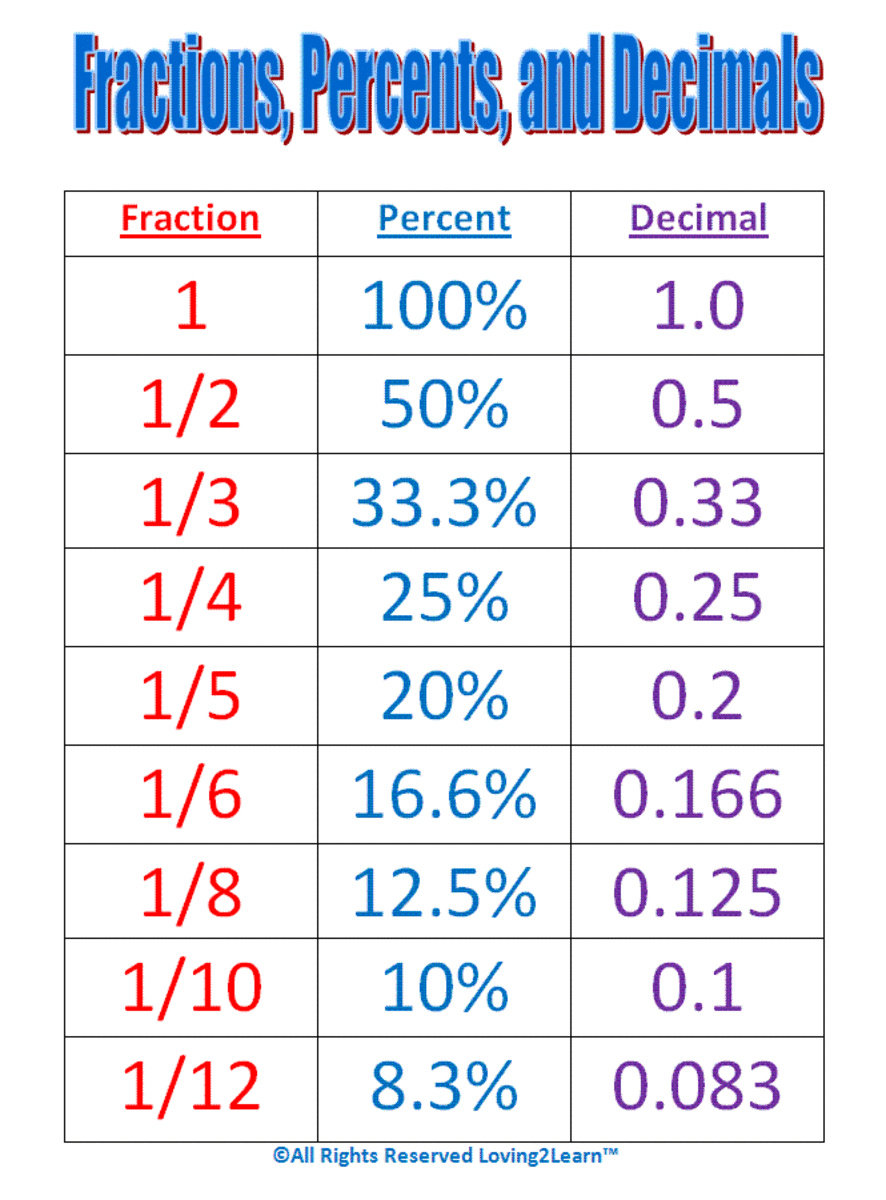
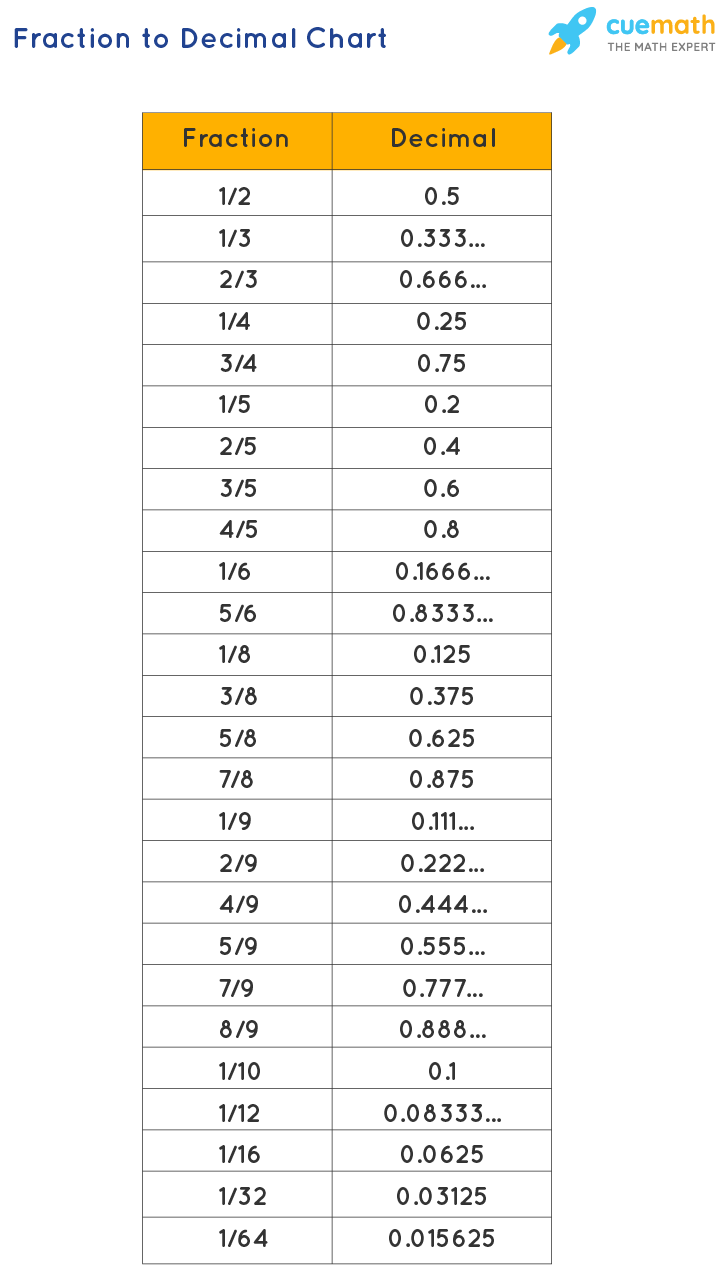
The fraction 1/3 represents one part out of three equal parts. When converted to a decimal, 1/3 is approximately 0.3333… – an infinitely repeating decimal where the digit ‘3’ continues indefinitely. For most practical financial applications, it is commonly rounded to two decimal places, making it 0.33, or to four decimal places, 0.3333, depending on the level of accuracy required. While a seemingly small detail, the difference between understanding this exact repeating nature and simply approximating can have significant ramifications across various financial scenarios. This article delves into why this basic conversion is so crucial for anyone dealing with money, from individual investors to corporate treasurers, and how neglecting its nuances can lead to costly mistakes.
Understanding the Basics: From Fractions to Financial Decimals
The journey from fractional concepts to precise decimal figures is fundamental to financial literacy. While fractions offer an intuitive way to describe parts of a whole, decimals provide the standardized, universally understood language of financial calculations and digital systems.
The Fundamental Conversion: 1/3 Explained
Converting a fraction to a decimal involves a simple division: dividing the numerator (the top number) by the denominator (the bottom number). For 1/3, you divide 1 by 3.
1 ÷ 3 = 0.333333...
This result is a non-terminating, repeating decimal. Unlike fractions like 1/2 (0.5) or 1/4 (0.25) which terminate, 1/3 never ends. This characteristic is vital because it means that any attempt to represent 1/3 precisely in a finite decimal format will always be an approximation. In finance, where every penny can count, understanding the nature of this approximation is key to managing expectations and potential rounding errors. When dealing with currency, it’s customary to round to the nearest cent (two decimal places), making 1/3 approximately $0.33. However, for calculations involving larger sums or more precise percentages, extending the decimal places (e.g., 0.3333 or 0.333333) becomes necessary to maintain accuracy.
Why Decimals Matter More Than Fractions in Finance
While fractions are excellent for conceptualizing shares (e.g., “I own 1/3 of the company”), decimals are the workhorse of financial operations.
-
Standardization: Financial systems, from bank accounts to trading platforms, operate on decimal values. Interest rates, stock prices, exchange rates, and transaction fees are almost universally expressed in decimals.
-
Ease of Calculation: Performing arithmetic operations (addition, subtraction, multiplication, division) is significantly simpler and less error-prone with decimals than with fractions, especially when dealing with disparate denominators.
-
Digital Compatibility: Spreadsheets, financial software, and algorithms are designed to process decimal numbers efficiently. Inputting and calculating with fractions would introduce unnecessary complexity and potential for misinterpretation.
-
Precision and Comparability: Decimals allow for finer granularity and easier comparison between different values. It’s easier to compare 0.3333 with 0.34 than to compare 1/3 with 34/100.
For these reasons, the financial world demands a swift and accurate translation from fractional concepts to their decimal equivalents, making the understanding of 1/3 as 0.3333… a foundational skill.
Practical Applications of 1/3 Decimal in Personal Finance
Understanding 1/3 as a decimal isn’t just an academic exercise; it has tangible, everyday applications that directly impact your personal financial well-being. From managing your budget to assessing investments, this basic conversion plays a critical role.
Budgeting and Allocating Income
Many popular budgeting rules or financial advice involve allocating portions of your income. A common guideline is the 50/30/20 rule, but sometimes people might think about allocating “one-third” of their income to a specific category, such as savings or debt repayment.
-
Example: If your monthly net income is $3,000, and you decide to allocate 1/3 of it to savings, you’re looking at 0.3333 * $3,000 = $999.90 (or $1,000 rounded for simplicity). If you simply rounded 1/3 to 0.33, you’d allocate $990, leaving a $10 discrepancy that could accumulate over time or distort your financial picture. For a single month, $10 might seem negligible, but over a year, that’s $120. Over a decade, it’s $1,200, potentially impacting investment growth or debt reduction plans.
-
Expense Tracking: When a recurring bill or expense is shared among three people, knowing that each person owes 0.3333… of the total ensures fair and accurate distribution, preventing small rounding disputes or cumulative imbalances.
Understanding Investment Shares and Returns
Investing often involves owning shares or portions of an asset. While stock shares are typically whole numbers, mutual funds, ETFs, or partnerships can involve fractional ownership.
-
Partnership Equity: If you own 1/3 of a small business or investment venture, your share of profits, losses, or asset value is precisely 0.3333… of the total. When the business makes a profit of $100,000, your share is $33,333.33. Rounding prematurely to 0.33 would net you only $33,000, a significant difference of $333.33 that underscores the importance of precision.
-
Return on Investment (ROI): When calculating ROI, especially in scenarios where an investment might yield “one-third more” than the initial capital, understanding the precise decimal equivalent ensures accurate growth projections and performance evaluation.
Debt Management and Repayment Strategies
Debt repayment plans, particularly those involving partial payments or shared liabilities, also benefit from decimal precision.
-
Shared Debt: If you and two friends borrowed $900 equally, each person is responsible for 1/3 of the debt, or $300. This is a clean example. But if the debt was $1,000, each person’s share would be $333.33. Miscalculating this could lead to one party paying less, leaving the others to cover the remainder.
-
Interest Calculations: While 1/3 rarely appears directly as an interest rate, understanding how interest accrues based on decimal percentages (e.g., 0.05 for 5%) reinforces the need for decimal literacy. The concept of “one-third of your payment going to interest” rather than principal further highlights the importance of accurate proportional understanding.
Business Finance: Leveraging Decimal Precision
In the corporate world, the stakes are higher, and the need for decimal precision is magnified. Financial statements, strategic planning, and legal agreements all hinge on accurate numerical representation.
Profit Sharing and Equity Distribution
Just as in personal finance, business partnerships often involve fractional ownership that translates directly into decimal-based profit and equity distribution.
-
Minority Stakeholders: A partner holding a 1/3 equity stake in a company expects to receive 0.3333… of all dividends, sale proceeds, or liquidation values. Even a small rounding error can mean thousands or millions of dollars in discrepancy, leading to legal disputes and eroded trust among stakeholders.
-
Vesting Schedules: Employee stock options or equity grants sometimes vest in fractions over time. Understanding what 1/3 of the total grant means as a decimal ensures accurate tracking of vested shares and calculation of their current value, crucial for both employees and the company’s financial reporting.
Financial Reporting and Analysis
Publicly traded companies and even small businesses rely heavily on accurate financial reporting. Every line item, ratio, and percentage must be precisely calculated.
-
Sales and Revenue Allocation: If a product line contributes 1/3 of the total revenue, accurately stating this as 33.33% (or 0.3333) in reports provides stakeholders with a clear and precise understanding of its impact. Rounding to 33% could slightly misrepresent the contribution, especially when aggregated across many product lines or over large sums.
-
Cost Analysis: Understanding that a specific component accounts for 1/3 of production costs allows for targeted cost-saving measures. Using the precise decimal ensures that the impact of any changes is accurately projected and reflected in the financial models.
Strategic Pricing and Discounting
Pricing strategies and promotional offers often involve fractional adjustments that must be precisely translated into decimals for implementation.
-
“Buy Two, Get One Free”: This common promotion effectively means you are paying for two out of three items, making each item cost 2/3 of its original price, or a discount of 1/3. If an item costs $15, the “free” item implies you’re paying $10 per item in a bundle. A discount of 1/3 is $5 off each item, or $0.3333… * $15 = $5. This calculation is vital for setting profit margins and ensuring the promotion is financially viable.
-
Wholesale Pricing: Offering “one-third off” for bulk purchases requires precise decimal conversion to set the actual discounted price, ensuring that the business still meets its margin requirements while offering an attractive deal to customers.
The Role of Technology and Financial Tools
While mental math and manual calculations are valuable, modern finance heavily relies on technology to handle the complexities and precision required, especially with repeating decimals like 1/3.
Calculators and Spreadsheets for Accuracy
Basic calculators provide the repeating decimal, and financial calculators often have features for handling fractions. However, spreadsheets like Microsoft Excel or Google Sheets are indispensable for financial professionals.
-
Formulas: Using formulas like
=1/3in a spreadsheet cell immediately yields0.333333333333333(up to the spreadsheet’s precision limits). This avoids manual approximation errors. -
Rounding Functions: Spreadsheets offer various rounding functions (e.g.,
ROUND,ROUNDUP,ROUNDDOWN) that allow users to control the level of precision for display while retaining the underlying accurate value for subsequent calculations, a crucial distinction in financial modeling. This prevents cumulative rounding errors that can occur if every intermediate calculation is rounded prematurely.
Automated Financial Planning Software
From personal budgeting apps to sophisticated enterprise resource planning (ERP) systems, financial software is built to handle decimal precision automatically.
-
Investment Platforms: When you allocate a percentage of your portfolio to a specific asset class, the software uses precise decimal values to execute trades and track performance, ensuring your 1/3 allocation isn’t subtly eroded by rounding.
-
Accounting Systems: These systems meticulously track every financial transaction, using precise decimal values to ensure ledgers balance, and financial statements are accurate to the cent. They inherently understand that 1/3 of a payment or revenue stream requires more than just a 0.33 approximation.
Leveraging these tools is not about bypassing the understanding of decimal conversion but rather enhancing the efficiency and accuracy with which these fundamental principles are applied in practical financial management.
Beyond 1/3: Cultivating Broader Financial Numeracy
While “what is 1/3 as a decimal” might seem like a simple question, its implications extend to a broader understanding of financial numeracy. Mastering this concept opens the door to greater confidence and accuracy in all financial dealings.
The Power of Percentage Equivalents
Understanding 1/3 as 0.3333… naturally leads to its percentage equivalent: 33.33%. Percentages are ubiquitous in finance – interest rates, discounts, growth rates, profit margins, and tax rates are all expressed this way. A solid grasp of fraction-to-decimal-to-percentage conversions is vital for:
-
Comparing Rates: Instantly understanding if a 33.33% return is better than a 30% return.
-
Calculating Changes: Quickly determining the impact of a 1/3 increase or decrease in value.
-
Interpreting Financial News: Deciphering economic reports and investment analyses that frequently use percentage figures.
Avoiding Common Financial Miscalculations
Many financial mistakes, especially in personal finance, stem from a lack of precision or a misunderstanding of how numbers interact.
-
Cumulative Rounding Errors: Small rounding errors, when repeated across numerous transactions or over extended periods, can accumulate into significant discrepancies. For example, if you consistently round 1/3 down to 0.33 in your budget, you might unknowingly under-allocate funds, leading to a shortfall.
-
Misinterpreting Proportions: Conflating 1/3 with “about one-third” without understanding the exact decimal can lead to incorrect assumptions about shares, responsibilities, or returns.
-
Overlooking the “Repeating” Aspect: Forgetting that 1/3 is a repeating decimal can lead to a false sense of exactness when using truncated values, impacting calculations where high precision is required.
In conclusion, the seemingly simple question of “what is 1/3 as a decimal” unlocks a fundamental understanding critical to navigating the financial landscape with confidence and accuracy. From budgeting your personal income to making high-stakes business decisions, the ability to translate fractional concepts into precise decimal figures and understand their implications for rounding and approximation is an indispensable skill. It underpins financial literacy, ensures fair distribution, enables accurate reporting, and ultimately empowers individuals and organizations to make sound, data-driven financial choices.
aViewFromTheCave is a participant in the Amazon Services LLC Associates Program, an affiliate advertising program designed to provide a means for sites to earn advertising fees by advertising and linking to Amazon.com. Amazon, the Amazon logo, AmazonSupply, and the AmazonSupply logo are trademarks of Amazon.com, Inc. or its affiliates. As an Amazon Associate we earn affiliate commissions from qualifying purchases.