
The Financial Foundation of Two-Step Equations
In an increasingly complex financial world, the ability to understand and manipulate numbers is paramount. While many aspects of personal finance, investing, and business finance might seem daunting, they are often built upon foundational mathematical principles. Among these, the two-step equation stands out as a critical building block. Far from being an abstract academic exercise, mastering two-step equations empowers individuals to decipher financial puzzles, make informed decisions, and plan for a more secure future. These simple algebraic expressions allow us to find unknown variables in scenarios ranging from calculating savings goals to determining loan repayments or understanding profit margins. Recognizing the underlying structure of a two-step equation in everyday financial problems transforms seemingly complex situations into solvable challenges.
Demystifying the Algebra
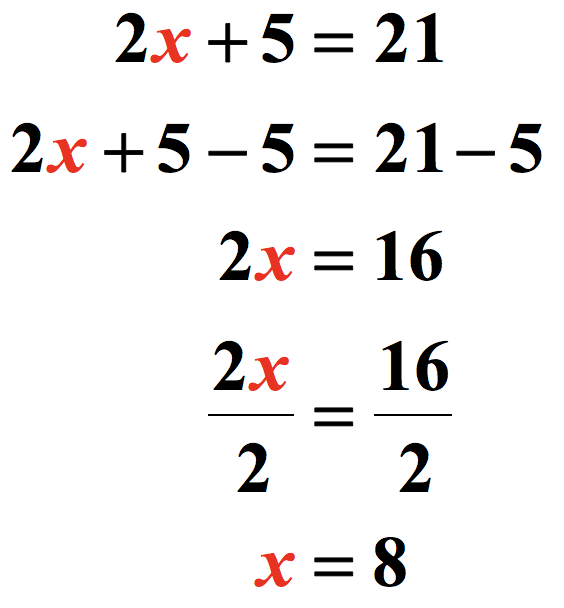
A two-step equation typically takes the form of Ax + B = C, where ‘x’ is the unknown variable we aim to solve for, and ‘A’, ‘B’, and ‘C’ are known numerical values. The “two steps” refer to the two inverse operations required to isolate ‘x’ on one side of the equation. First, we address the addition or subtraction (the ‘B’ term) by performing the inverse operation on both sides of the equation. Second, we address the multiplication or division (the ‘A’ term) by again performing the inverse operation on both sides. This systematic approach ensures that the equation remains balanced while gradually revealing the value of the unknown. Understanding this basic structure is the gateway to applying it effectively in financial contexts.
For example, if you want to know how many hours you need to work at a certain rate to hit a savings goal after accounting for initial savings, you’re dealing with a two-step equation. If you’re trying to figure out how much more you need to save each month to reach a down payment target, after already having a certain amount, that’s also a two-step equation. These aren’t just theoretical constructs; they are practical tools for financial clarity.
Why Basic Equations Matter for Your Wallet
The core reason two-step equations are indispensable in finance is their utility in problem-solving. Financial decisions are rarely straightforward. They involve multiple variables, known quantities, and an unknown target or requirement. Whether you’re trying to determine an affordable monthly payment for a new car, calculate how much you need to set aside from each paycheck to meet an annual investment goal, or project your income from a side hustle, these equations provide the framework. They transform vague financial aspirations into concrete, actionable steps. Without this fundamental understanding, many financial calculations might seem like guesswork, leading to poor planning or missed opportunities. By mastering this simple algebraic concept, individuals gain a powerful tool for financial empowerment, enabling them to dissect complex financial scenarios into manageable parts.
Practical Applications in Personal Finance
The abstract world of algebra seamlessly integrates into the very tangible realm of personal finance. Two-step equations are the silent workhorses behind countless financial decisions, providing a clear path to understanding what needs to happen to achieve a desired outcome.
Budgeting for Clarity and Control
Budgeting is the cornerstone of sound personal finance, and two-step equations are instrumental in creating effective budgets. Often, individuals know their total income and some fixed expenses, but need to determine how much is left for variable spending or how much they can spend on a certain category while still meeting a savings goal.
Consider this scenario: You earn $3,500 per month after taxes. Your fixed expenses (rent, utilities, loan payments) total $1,800. You want to save $500 each month. How much do you have left for variable expenses (groceries, entertainment, transportation – let’s call this ‘x’)?
The equation would be: 1800 + 500 + x = 3500
-
Combine known expenses and savings:
2300 + x = 3500 -
Subtract $2300 from both sides:
x = 3500 - 2300 -
Solve for x:
x = 1200
You have $1,200 remaining for variable expenses. This simple equation transforms a broad income figure into a precise spending limit, giving you control over your cash flow and ensuring you don’t overspend after accounting for savings.
Setting and Achieving Savings Goals
Whether it’s for a down payment on a house, a new car, or an emergency fund, savings goals are critical. Two-step equations help break down large goals into achievable monthly or weekly targets.
Imagine you want to save $15,000 for a down payment in two years (24 months). You already have $3,000 saved. How much do you need to save each month (‘x’)?
The equation is: 24x + 3000 = 15000
-
Subtract $3000 from both sides to isolate the term with ‘x’:
24x = 15000 - 3000 -
Simplify:
24x = 12000 -
Divide both sides by 24 to solve for ‘x’:
x = 12000 / 24 -
Solve for x:
x = 500
You need to save $500 per month to reach your $15,000 goal in two years. This calculation provides a clear, actionable target, turning an ambitious goal into a manageable monthly commitment.
Managing Debt Strategically
Debt can be a significant burden, but understanding the math behind repayment can empower you to tackle it more effectively. Two-step equations can help you strategize accelerated repayment or determine remaining balances.
Suppose you have a credit card debt of $5,000. You plan to pay $200 each month. After making payments for 10 months, you want to know how much principal (‘x’) you still owe, assuming no interest accrual for simplicity in this example.
The equation is: 5000 - (10 * 200) = x
-
Multiply the number of payments by the payment amount:
5000 - 2000 = x -
Subtract to find ‘x’:
x = 3000
You would still owe $3,000. While real-world debt includes interest, this simplified example demonstrates how two-step equations help in visualizing the impact of your repayment efforts and calculating outstanding balances, which can then be adjusted for interest.
Expanding Your Financial Acumen with Equations
Beyond personal budgeting and savings, two-step equations prove invaluable in understanding and managing aspects of online income, side hustles, and even basic business finance. They offer a systematic way to project earnings, calculate costs, and assess profitability.
Online Income and Side Hustle Calculations
For those engaged in online income generation or side hustles, understanding the relationship between effort, rate, and desired income is crucial. Two-step equations enable precise goal setting and performance tracking.
Imagine you’re a freelance writer. You charge $50 per article. You also have a recurring monthly gig that pays $300. You want to earn a total of $1,000 this month. How many additional articles (‘x’) do you need to write?
The equation is: 50x + 300 = 1000
-
Subtract the fixed income from the total desired income:
50x = 1000 - 300 -
Simplify:
50x = 700 -
Divide by the per-article rate to find ‘x’:
x = 700 / 50 -
Solve for x:
x = 14
You need to write 14 additional articles to reach your $1,000 income goal. This empowers you to set clear work targets and evaluate your progress.
Simple Business Finance Insights
Even small businesses or those just starting a side hustle can benefit from applying two-step equations to understand profitability and pricing.
Consider a small e-commerce venture selling handmade crafts. Each craft costs $15 to produce (materials + labor). You also have fixed monthly expenses (website hosting, marketing tools) totaling $200. If you want to make a profit of $500 this month, how many crafts (‘x’) do you need to sell if you price each at $35?
First, calculate the profit per item: $35 (selling price) – $15 (cost) = $20 profit per item.
The equation becomes: 20x - 200 = 500 (Total profit from items minus fixed costs equals desired net profit)
-
Add fixed monthly expenses to both sides:
20x = 500 + 200 -
Simplify:
20x = 700 -
Divide by the profit per item to find ‘x’:
x = 700 / 20 -
Solve for x:
x = 35
You need to sell 35 crafts to achieve your $500 profit target for the month. This direct application helps entrepreneurs understand their sales volume requirements.
Beyond the Basics: Building Complex Financial Models
While two-step equations are fundamental, they are also the building blocks for more complex financial modeling. Understanding how to isolate variables and perform inverse operations in a simple context provides the intuition needed to tackle multi-step equations or systems of equations used in advanced financial analysis, investment valuation, or detailed business forecasting. Whether calculating net present value, internal rate of return, or complex loan amortization schedules, the core algebraic manipulation skills learned from two-step equations remain relevant and crucial.
A Step-by-Step Approach to Financial Problem Solving
Solving two-step equations in a financial context involves a consistent and logical process. By adhering to these steps, you can confidently navigate various financial calculations.
Isolate the Variable
The primary goal in solving any equation is to isolate the unknown variable, ‘x’, on one side of the equals sign. This means moving all other numbers and terms to the opposite side. In a two-step equation like Ax + B = C, the first step is typically to address the ‘B’ term, which is either added to or subtracted from the term containing ‘x’.
For instance, if your equation is 5x + 100 = 600 (e.g., you earn $5 per unit, have $100 fixed income, and want $600 total), you need to get rid of the + 100.
Perform Inverse Operations
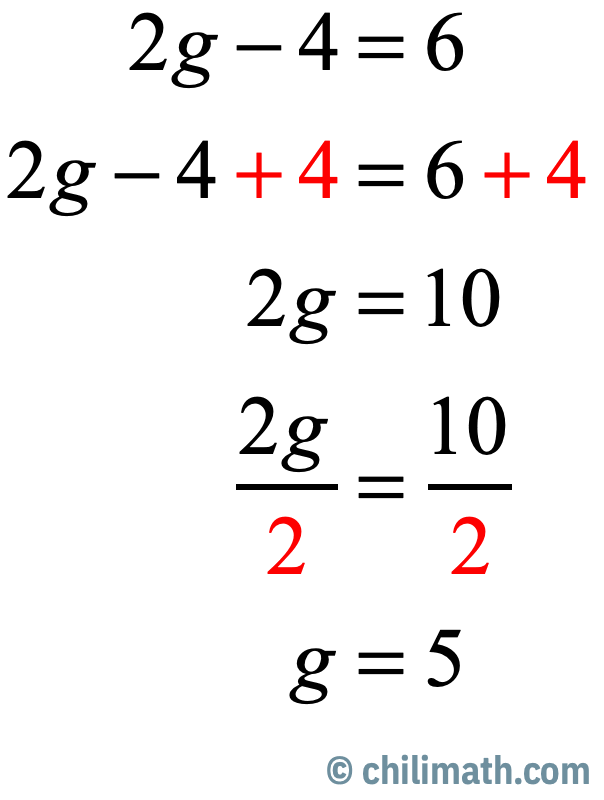
To move a term to the other side of the equation, you must perform the inverse operation.
If a number is being added, subtract it from both sides. If a number is being subtracted, add it to both sides.
In our example: 5x + 100 = 600
Subtract 100 from both sides: 5x + 100 - 100 = 600 - 100
This simplifies to: 5x = 500
Now, you have a one-step equation. The ‘x’ term is being multiplied by ‘A’ (in this case, 5). To isolate ‘x’, perform the inverse operation of multiplication, which is division.
Divide both sides by 5: 5x / 5 = 500 / 5
This simplifies to: x = 100
So, you need to produce 100 units to reach your $600 goal.
Verify Your Solution
Once you’ve found a value for ‘x’, it’s always good practice to plug it back into the original equation to ensure your answer is correct. This verification step catches any arithmetic errors and confirms that your solution logically fits the financial scenario.
Using our example: 5x + 100 = 600
Substitute x = 100: 5(100) + 100 = 600
500 + 100 = 600
600 = 600
Since both sides are equal, the solution is correct. This simple verification provides confidence in your financial calculations.
Leveraging Tools for Equation Solving
While understanding the manual process of solving two-step equations is crucial, modern financial management often involves leveraging tools that can automate these calculations, especially for more complex scenarios or repetitive tasks.
Spreadsheets as Your Financial Equation Solver
Spreadsheet programs like Microsoft Excel or Google Sheets are incredibly powerful tools for financial planning and problem-solving. They allow you to input known variables, set up formulas that mirror two-step equations, and instantly calculate unknown values. For instance, you can create a simple budget template where you input your income and fixed expenses, and a cell automatically calculates your remaining variable spending. Or, for a savings goal, you can set up cells for your target amount, current savings, and desired timeline, and another cell will calculate the required monthly contribution using an embedded formula. The beauty of spreadsheets is their flexibility: you can easily change one variable (e.g., your income or a target savings amount) and see how it impacts the unknown almost instantly, facilitating “what-if” analysis for your financial decisions.

When to Use a Financial Calculator
For specific financial calculations that involve time value of money, such as compound interest, loan amortizations, or investment growth, a dedicated financial calculator (either a physical device or an app) can be highly beneficial. While these often involve more than two steps, the underlying principles of isolating variables and using inverse operations remain. Financial calculators are programmed with formulas for common financial scenarios, allowing users to input known variables (e.g., present value, interest rate, number of periods, payment) and solve for a specific unknown (e.g., future value or payment amount). While they do the heavy lifting, understanding the algebraic foundations of two-step equations provides the conceptual framework necessary to correctly input values and interpret the results from these powerful tools.
By integrating a solid understanding of two-step equations with the practical application of spreadsheets and financial calculators, individuals can elevate their financial literacy and make more precise, informed decisions that drive them closer to their financial goals.
aViewFromTheCave is a participant in the Amazon Services LLC Associates Program, an affiliate advertising program designed to provide a means for sites to earn advertising fees by advertising and linking to Amazon.com. Amazon, the Amazon logo, AmazonSupply, and the AmazonSupply logo are trademarks of Amazon.com, Inc. or its affiliates. As an Amazon Associate we earn affiliate commissions from qualifying purchases.