
Understanding your hourly earning rate is far more than a simple numerical exercise; it’s a fundamental pillar of personal finance that empowers you to make informed decisions about your career, spending habits, and long-term financial goals. For many, especially those on a fixed salary, the concept of an hourly wage might seem distant or irrelevant. However, accurately calculating this figure can unlock profound insights into the true value of your time, help you budget more effectively, negotiate salaries with greater confidence, and even evaluate the viability of side hustles or new job opportunities. It allows you to translate complex compensation packages into a tangible, per-hour metric, demystifying your financial landscape.

In an increasingly dynamic job market, where traditional employment models coexist with the gig economy, freelancing, and contract work, the methods for determining one’s hourly rate have become varied. This article will guide you through the essential steps and considerations for calculating your hourly earnings, moving beyond the obvious to account for benefits, expenses, and even the hidden hours that contribute to your professional life. By the end, you’ll have a clear framework to assess your true earning power and leverage this knowledge for greater financial well-being.
The Foundation: Calculating Your Hourly Rate Based on Employment Type
The first step in understanding your hourly earnings is to apply the correct calculation method based on how you are compensated. Different employment structures require different approaches to arrive at an accurate figure.
For Salaried Employees
If you receive a fixed annual salary, your hourly rate isn’t explicitly stated on your pay stub, but it can be easily derived. The standard calculation involves dividing your annual salary by the number of working hours in a year.
-
Standard Formula: Annual Salary / (Working Weeks per Year × Hours Worked per Week)
-
Common Assumption: Most full-time roles assume 52 weeks in a year and a 40-hour work week.
-
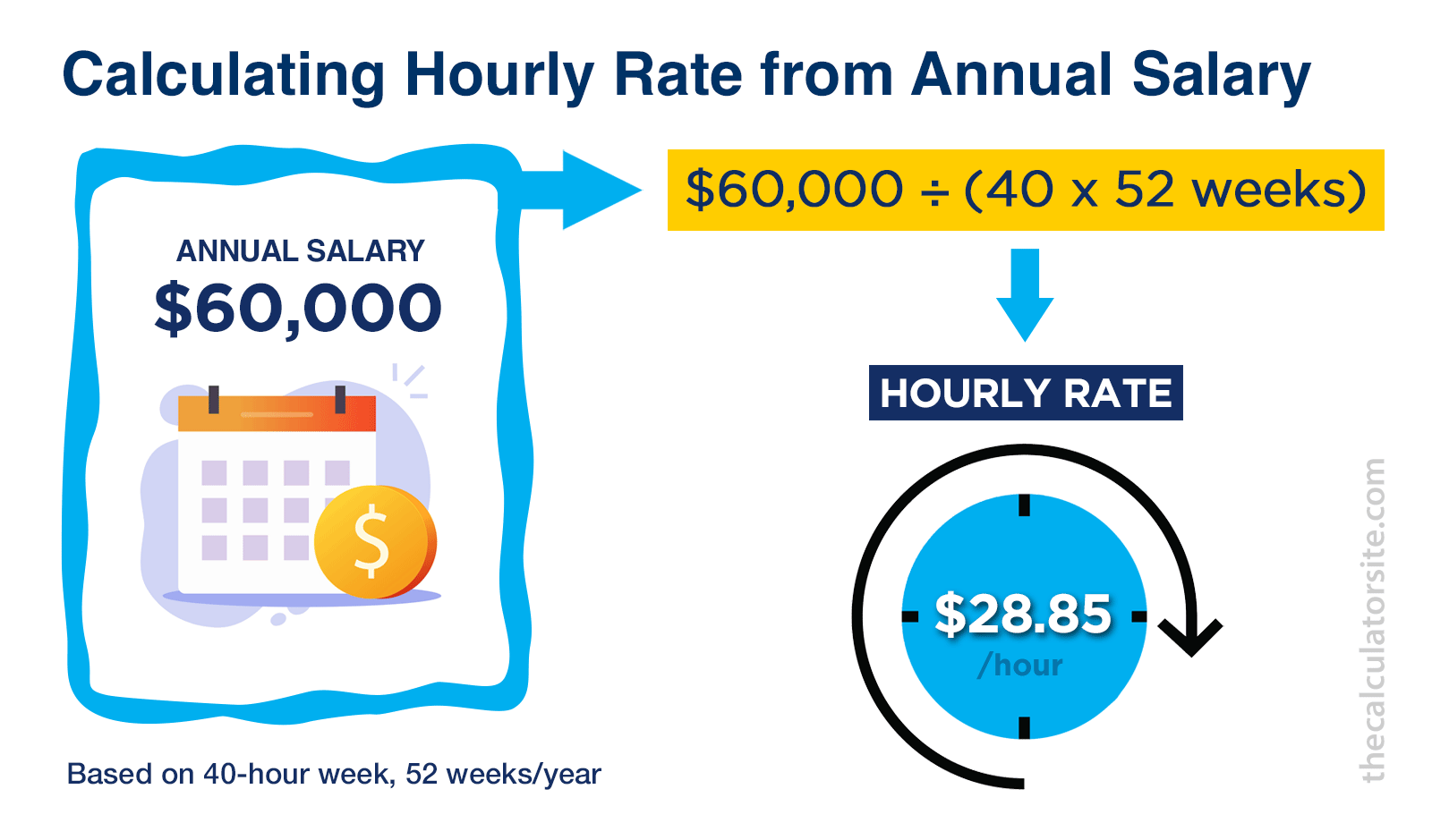
Example: If your annual salary is $60,000 and you work 40 hours per week:
$60,000 / (52 weeks/year × 40 hours/week) = $60,000 / 2080 hours = $28.85 per hour.
It’s important to be realistic about the “hours worked per week.” While 40 hours is a common baseline, many salaried professionals frequently work more than that without additional pay. If you consistently put in 50 hours a week, your effective hourly rate would be lower: $60,000 / (52 × 50) = $23.08 per hour. This distinction is crucial for understanding your true compensation for the time invested.
For Hourly Wage Earners
For those paid an hourly wage, the calculation appears straightforward, as your rate is already defined. However, there are nuances to consider for a complete picture.
-
Verification: Always cross-reference your stated hourly rate with your pay stubs to ensure accuracy, especially after raises or changes in roles.
-
Overtime: Remember that your hourly rate for regular hours may differ from your overtime rate (often 1.5 times your regular rate). For an average, you might need to calculate total earnings over a period and divide by total hours worked (regular + overtime).
-
Fluctuations: If your hours vary significantly week to week, calculate your average hourly rate over a longer period (e.g., a month or quarter) by dividing your total gross earnings by your total hours worked during that period.
For Freelancers, Contractors, and Gig Workers
Calculating your hourly rate in the gig economy or as a self-employed professional is often the most complex, as it involves accounting for non-billable time and business expenses.
-
Gross Project Income: Start by summing all the income generated from client projects or gigs over a specific period (e.g., a month).
-
Total Hours Spent: Track all hours dedicated to your business, not just billable client work. This includes administrative tasks, marketing, client acquisition, proposal writing, invoicing, and professional development.
-
Formula: Total Gross Income / Total Hours Spent on Business Activities
-
Example: In a month, you earned $5,000 from client projects. You spent 100 hours directly on client work and another 20 hours on administrative tasks, marketing, and invoicing.
$5,000 / (100 billable hours + 20 admin hours) = $5,000 / 120 hours = $41.67 per hour.
This approach gives you a more realistic sense of your effective hourly wage, acknowledging that “working for yourself” encompasses more than just the tasks directly generating revenue.
Beyond the Obvious: Unpacking Your True Hourly Value
A simple calculation based solely on cash wages often presents an incomplete picture of your true compensation. To understand your genuine hourly value, it’s essential to consider the monetary worth of benefits, perks, and even the expenses you incur to do your job.
Accounting for Benefits and Perks
Many employers offer a range of benefits that significantly add to your overall compensation, even if they don’t appear in your direct paycheck. These “hidden wages” can drastically alter your effective hourly rate.
-
Health Insurance: If your employer pays a portion or all of your health, dental, or vision insurance premiums, add the employer’s contribution to your total annual compensation. A typical employer contribution can be several thousand dollars per year.
-
Retirement Contributions: Employer-matched contributions to a 401(k), 403(b), or pension plan are direct financial benefits. Calculate the annual match you receive and add it.
-
Paid Time Off (PTO): Vacation days, sick leave, and paid holidays have monetary value. Calculate how many days you get and multiply by your daily pay rate (Annual Salary / Working Days in a Year).
-
Bonuses and Commissions: If you regularly receive performance bonuses or commissions, incorporate their average annual value into your total compensation.
-
Other Perks: Tuition reimbursement, life insurance, disability insurance, gym memberships, commuter benefits, stock options, employee discounts, and even free meals can have significant monetary value. While some are harder to quantify precisely, estimating their annual worth provides a more comprehensive view.
By summing your annual salary (or average gross income) with the estimated annual value of all these benefits, you arrive at your “total compensation package.” This larger sum should then be used in your hourly rate calculation for a more accurate reflection of your true worth.
Incorporating Work-Related Expenses
Just as benefits add to your value, certain out-of-pocket expenses required for your job effectively reduce your take-home pay and, consequently, your true hourly rate.
-
Commuting Costs: The cost of gas, public transport fares, tolls, parking, and vehicle wear-and-tear can add up significantly. Estimate your monthly or annual commuting costs.
-
Professional Development: Fees for certifications, courses, conferences, or professional memberships not reimbursed by your employer are an investment in your career but a direct expense from your pocket.
-
Equipment and Supplies: For freelancers, this might include software subscriptions, office supplies, or equipment. For employees, it could be specialized tools or uniforms if not provided or reimbursed.
-
Home Office Expenses: If you work remotely and aren’t fully reimbursed for utilities, internet, or home office setup, these represent a cost of doing business.
Subtracting these necessary, unreimbursed work-related expenses from your total compensation package before calculating your hourly rate provides an even more precise net hourly figure, reflecting what you truly take home.
The Hidden Hours: Commute, Unpaid Overtime, and “Always On” Culture
Your actual “work week” often extends beyond the hours you are formally paid for. These hidden hours dilute your effective hourly rate and are crucial to acknowledge when assessing your work-life balance and overall compensation.
-
Commute Time: While not directly paid, the time spent commuting to and from work is time you cannot use for personal endeavors. If you spend 10 hours a week commuting, that’s 10 hours invested in your job that isn’t reflected in your gross pay. Adding these to your total weekly hours for calculation purposes will yield a more realistic (and likely lower) hourly rate.
-
Unpaid Overtime: Many salaried employees regularly work beyond their contracted hours without additional compensation. Consistently working 50 hours instead of 40 effectively reduces your hourly wage.
-
“Always On” Culture: Checking emails after hours, taking calls on weekends, or being expected to be available outside of official work times contribute to your overall work investment. While hard to quantify precisely, acknowledging this time underscores the full extent of your commitment.
By including these “hidden hours” in your total weekly or annual hours worked, you’ll gain a more honest understanding of how much you are truly earning per hour of your life dedicated to your profession.
Why Your Effective Hourly Rate Matters for Financial Planning
Armed with a comprehensive understanding of your effective hourly rate, you unlock a powerful tool for strategic financial planning and decision-making across various aspects of your life.
Budgeting and Expense Management
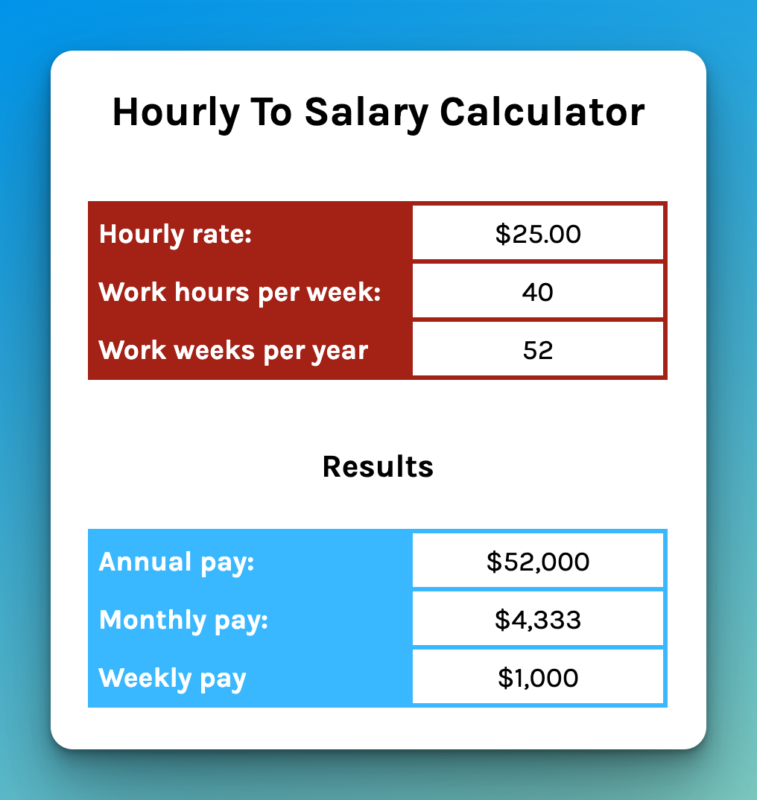
Your hourly rate serves as a tangible metric for evaluating your spending. Instead of seeing an item as “$100,” you can reframe it as “X hours of work.”
-
Prioritize Spending: If that new gadget costs you 5 hours of your life, is it truly worth it? This perspective encourages mindful consumption and helps distinguish wants from needs.
-
Track Lifestyle Creep: As income increases, so can expenses. Regularly calculating your hourly rate helps you assess if your spending is aligning with your values and financial goals, or if “lifestyle creep” is eroding your increased earning power.
-
Savings Goals: Understanding how many hours it takes to save a certain amount can motivate you to work towards financial milestones more effectively.
Negotiation and Career Advancement
Knowing your true hourly worth is an indispensable asset during salary negotiations or when evaluating new job offers.
-
Informed Negotiations: When asking for a raise or discussing salary for a new role, you can confidently articulate your value not just as an annual sum, but also in terms of your precise hourly contribution, including the monetary value of benefits.
-
Job Offer Comparison: When comparing two job offers, one with a higher salary but fewer benefits, and another with a lower salary but substantial benefits, calculating the total compensation and effective hourly rate for both provides an apples-to-apples comparison.
-
Quantifying Your Value: It empowers you to view yourself as a valuable commodity, selling your time and skills for a specific rate, rather than just an employee receiving a paycheck.
Evaluating Side Hustles and Online Income Opportunities
For those considering or already pursuing additional income streams, calculating the effective hourly rate is crucial for determining true profitability.
-
Time vs. Money Trade-off: A side hustle might generate additional income, but if it demands excessive hours for minimal returns, its effective hourly rate might be significantly lower than your main job, making it a less efficient use of your time.
-
Opportunity Cost: By comparing the hourly rate of a potential side hustle against your primary job, you can assess the opportunity cost – what you’re giving up (e.g., leisure time, higher-paying work) to pursue it.
-
Pricing Strategy: For freelancers and consultants, knowing your minimum acceptable hourly rate (after accounting for non-billable time and expenses) is critical for setting fair and profitable pricing for your services.
Long-Term Financial Goals
Your effective hourly rate contributes directly to your capacity to achieve significant long-term financial goals, such as homeownership, retirement, or financial independence. It clarifies your earning power and helps project how much time it will take to save for these milestones.
Tools and Resources to Simplify Hourly Rate Calculation
While the calculations might seem intricate, various tools and resources can simplify the process and help you accurately determine your hourly rate.
Spreadsheets (Excel/Google Sheets)
For personalized and comprehensive tracking, a spreadsheet is an invaluable tool.
-
Customizable Formulas: You can set up formulas to automatically calculate your hourly rate, incorporate varying hours, add benefit values, and subtract expenses.
-
Historical Tracking: A spreadsheet allows you to track your income, hours, and expenses over time, providing a historical view of your effective hourly rate and helping you identify trends.
-
“What If” Scenarios: You can easily adjust variables (e.g., “what if I got a $5,000 raise?”) to see the immediate impact on your hourly earnings.
Online Calculators and Financial Apps
Numerous online tools are designed to streamline the process, especially for basic salary-to-hourly conversions.
-
Quick Conversions: Many financial websites offer free “salary to hourly” calculators where you input your annual salary and weekly hours to get an instant hourly figure.
-
Budgeting Apps: Apps like Mint, YNAB (You Need A Budget), or Personal Capital can help track your income and expenses, providing the raw data needed for more detailed hourly rate calculations. Some even offer features to categorize income streams and track time.
Payroll Records and Pay Stubs
These are your primary sources of truth for accurate data.
-
Gross Income: Your pay stubs clearly state your gross pay for the period. Annualize this to get your total gross income.
-
Hours Worked: For hourly employees, pay stubs show the exact hours worked, including any overtime. Salaried employees might need to consult their employment contract or time tracking system for official hours.
-
Deductions and Benefits: Pay stubs also detail deductions for taxes, retirement contributions, and insurance, helping you identify employer contributions to benefits.
Common Pitfalls and Advanced Considerations
While calculating your hourly rate is empowering, being aware of certain nuances and potential pitfalls will ensure your figure is as accurate and useful as possible.
Ignoring Taxes
Most hourly rate calculations discussed are based on gross income (before taxes and other deductions).
-
Gross vs. Net: Remember that your net hourly rate (what you actually take home after taxes, social security, and other deductions) will be significantly lower. For budgeting purposes, understanding your net hourly rate is often more practical.
-
Tax Planning: If you’re a freelancer, remember to factor in self-employment taxes and income taxes when calculating your true net hourly profit. Your “take-home” rate will be lower than your gross billing rate.
Fluctuating Hours or Income
For individuals with variable schedules, commission-based pay, or project-based income, a single weekly calculation may not be representative.
-
Average Over Time: It’s best to calculate your hourly rate over a longer period – a month, a quarter, or even a full year – to capture an accurate average. This smooths out weeks with unusually high or low income/hours.
-
Annualization: If you only have a few weeks of data, annualize your earnings and hours to get a more stable figure.
The Value of Time Off
Paid time off (PTO) is a valuable benefit, and while we include its monetary value in total compensation, there’s a subtle point to consider when calculating hours.
-
Working Hours vs. Compensated Hours: When you use PTO, you are compensated for hours you are not physically working. If you want to know your hourly rate purely for time spent working, you would subtract PTO hours from your total annual working hours. However, for total compensation divided by all compensated hours, including PTO, is appropriate. The key is consistency in your methodology.
-
Rest and Recharge: Regardless of the calculation, acknowledge that PTO itself is a critical benefit for well-being and productivity, representing value beyond a simple monetary conversion.
Conclusion
Understanding “how much you make an hour” is more than a trivial figure; it’s a profound insight into your financial landscape and the value of your time. By meticulously calculating this rate, factoring in not just your base pay but also the value of benefits, the burden of work-related expenses, and even the hidden hours you dedicate to your profession, you gain an unparalleled level of financial clarity.
This knowledge empowers you to build more effective budgets, negotiate your worth with confidence, evaluate new career opportunities with a discerning eye, and make smarter decisions about how you allocate your most precious resource: your time. As your career evolves and your financial situation changes, regularly revisiting and recalculating your effective hourly rate will ensure you remain informed, empowered, and in control of your financial destiny. Embrace this tool; it is a cornerstone of robust personal finance.
aViewFromTheCave is a participant in the Amazon Services LLC Associates Program, an affiliate advertising program designed to provide a means for sites to earn advertising fees by advertising and linking to Amazon.com. Amazon, the Amazon logo, AmazonSupply, and the AmazonSupply logo are trademarks of Amazon.com, Inc. or its affiliates. As an Amazon Associate we earn affiliate commissions from qualifying purchases.