
Understanding Obamacare (ACA) and Its Financial Impact
Navigating the landscape of health insurance can seem daunting, but understanding the Affordable Care Act (ACA), commonly known as Obamacare, is a crucial step towards securing your financial well-being. For 2024, the ACA continues to offer comprehensive health coverage options designed to be accessible and affordable for millions of Americans, directly impacting personal finance by managing one of life’s most unpredictable expenses: healthcare.
What is the Affordable Care Act (ACA)?
The Affordable Care Act is a comprehensive healthcare reform law enacted in 2010. Its primary goals include increasing the number of insured Americans, regulating the health insurance industry, and making health insurance more affordable. This is achieved through a combination of measures, including the establishment of health insurance marketplaces (healthcare.gov and state-run exchanges), premium tax credits (subsidies), and cost-sharing reductions, alongside consumer protections like prohibiting denial of coverage for pre-existing conditions. For individuals and families, the ACA represents a vital financial tool, offering a pathway to protect assets from potentially catastrophic medical bills.
The Financial Benefits: Subsidies and Protections
One of the most significant financial advantages of the ACA is the availability of subsidies, specifically Premium Tax Credits, which lower the monthly cost of insurance premiums. These credits are calculated based on your household income and family size relative to the federal poverty level (FPL). For many, these subsidies make quality health insurance genuinely affordable, often reducing monthly premiums by a substantial amount. Additionally, the ACA includes Cost-Sharing Reductions (CSRs) for eligible individuals, which lower out-of-pocket costs like deductibles, co-payments, and co-insurance. These financial protections are essential, as they prevent medical emergencies from spiraling into financial crises, helping individuals budget for healthcare and maintain financial stability. Without these mechanisms, many would face exorbitant costs that could lead to medical debt, a leading cause of bankruptcy.
Key Steps to Navigating the Application Process
Applying for Obamacare in 2024 is primarily done through the official Health Insurance Marketplace. The process is designed to be streamlined, guiding you through options tailored to your financial situation. Successfully completing the application ensures you access the best plans and financial aid available.
Gathering Your Financial Documents
Before you begin the application, having key financial information readily accessible will save time and ensure accuracy. This includes:
-
Income Estimates: Your household’s modified adjusted gross income (MAGI) for 2024 is critical for determining subsidy eligibility. This includes wages, salaries, self-employment income, rental income, social security benefits, and other taxable income sources. Be as accurate as possible; significant discrepancies later could result in repayment of excess subsidies.
-
Household Information: The number of people in your household (yourself, spouse, dependents) impacts your FPL calculation and subsidy eligibility.
-
Current Insurance Information: If you currently have health insurance, details about your existing policy may be required, though often only for verification or comparison.
-
Identity Verification: You’ll need social security numbers (SSN) or document information for legal immigrants for everyone in your household applying for coverage.
-
Employer Information: Details about any employer-sponsored health coverage that might be available to you or your family members, even if you don’t plan to take it. This is important because if you have access to “affordable” employer-sponsored coverage that meets minimum value standards, you might not qualify for ACA subsidies.
Creating an Account and Exploring Options
The first practical step is to create an account on healthcare.gov or your state’s specific health insurance marketplace website. This account will serve as your personal portal for applying, comparing plans, and managing your coverage. Once your account is set up, you will input your personal and financial information. The marketplace then uses this data to:
-
Determine Eligibility: Confirm if you are eligible to enroll through the marketplace and for any financial assistance.
-
Calculate Subsidies: Provide an estimate of your Premium Tax Credit and potential Cost-Sharing Reductions.
-
Display Plans: Show you all available health insurance plans in your area, with the calculated subsidies applied, allowing you to see the true cost. This is where the financial decision-making begins, as you compare premiums, deductibles, and out-of-pocket maximums across different plan tiers.
Understanding Plan Tiers and Costs
Health insurance plans on the marketplace are categorized into metal tiers: Bronze, Silver, Gold, and Platinum. These tiers are designed to give you a clear understanding of the trade-off between monthly premiums and out-of-pocket costs:
-
Bronze plans: Have the lowest monthly premiums but the highest deductibles and out-of-pocket maximums. They cover roughly 60% of healthcare costs. These are suitable for individuals who are generally healthy and anticipate minimal healthcare needs, but want protection against major medical events.
-
Silver plans: Have moderate monthly premiums and moderate deductibles. They cover about 70% of healthcare costs. Silver plans are particularly important because they are the only tier eligible for Cost-Sharing Reductions (CSRs), making them the most financially beneficial choice for many low to moderate-income individuals. With CSRs, a Silver plan can offer coverage equivalent to a Gold or even Platinum plan at a much lower premium.
-
Gold plans: Have higher monthly premiums but lower deductibles and out-of-pocket maximums. They cover about 80% of healthcare costs. These are ideal for individuals who anticipate needing regular medical care or prescription drugs and prefer predictable costs.
-
Platinum plans: Have the highest monthly premiums but the lowest deductibles and out-of-pocket maximums. They cover about 90% of healthcare costs. These plans are best for those with significant chronic health conditions or who prefer to pay more upfront for minimal out-of-pocket expenses when they receive care.
When selecting a plan, consider your anticipated healthcare usage and financial comfort with deductibles. A higher deductible means lower monthly premiums but more out-of-pocket spending before your insurance kicks in significantly. Evaluate your budget carefully, balancing the monthly premium against potential medical costs throughout the year.
Maximizing Your Financial Aid: Subsidies and Cost-Sharing Reductions
The cornerstone of the ACA’s affordability is its robust system of financial assistance. Understanding how these subsidies work and ensuring you qualify for the maximum amount can significantly reduce your healthcare expenses.
Eligibility for Premium Tax Credits
Premium Tax Credits (PTCs) are advanceable, refundable tax credits designed to lower your monthly health insurance premiums purchased through the Marketplace. Eligibility for PTCs in 2024 depends primarily on your household income relative to the Federal Poverty Level (FPL) and household size. Generally, individuals and families earning between 100% and 400% of the FPL are eligible for some level of subsidy, although temporary enhancements from the American Rescue Plan Act (ARPA) and the Inflation Reduction Act (IRA) have extended eligibility to those above 400% FPL, ensuring no one pays more than 8.5% of their household income for a benchmark Silver plan. You must not be eligible for Medicare, Medicaid, CHIP, or “affordable” employer-sponsored health coverage that meets minimum value standards. Accurately estimating your income for the coverage year is paramount, as the final credit amount is reconciled when you file your federal income tax return.
Cost-Sharing Reductions: Lowering Out-of-Pocket Expenses
Cost-Sharing Reductions (CSRs) are an additional layer of financial help that reduce the amount you pay for deductibles, co-payments, and co-insurance. Unlike Premium Tax Credits, which lower your monthly premiums, CSRs directly decrease your out-of-pocket expenses when you receive medical care. To be eligible for CSRs, your household income must generally be between 100% and 250% of the FPL, and you must enroll in a Silver-tier plan. If you qualify for CSRs, choosing a Silver plan is almost always the most financially advantageous option. It effectively upgrades your Silver plan to offer benefits similar to a Gold or even Platinum plan, but at the Silver plan’s premium rate, which can also be reduced by Premium Tax Credits. This combination provides exceptional value and significantly mitigates the financial risk of needing medical services.
The Importance of Accurate Income Estimation
Your household income estimate for the upcoming year (2024) is the single most critical factor in determining your financial assistance. Overestimating your income might lead to receiving less in advance tax credits than you’re entitled to, meaning higher monthly premiums. Underestimating your income, however, can result in receiving too much in advance tax credits, which you would then have to pay back at tax time, potentially leading to an unexpected tax bill. Life changes such as job loss, a new job, marriage, divorce, or changes in family size can all affect your income and, consequently, your subsidy eligibility. It is crucial to update your income information with the Marketplace as soon as any significant changes occur to ensure your subsidies are adjusted correctly throughout the year, preventing financial surprises come tax season.
Important Dates, Special Enrollment, and Annual Renewal
Staying informed about key dates and processes is essential for maintaining continuous and affordable health coverage through the ACA Marketplace.
Open Enrollment Period 2024
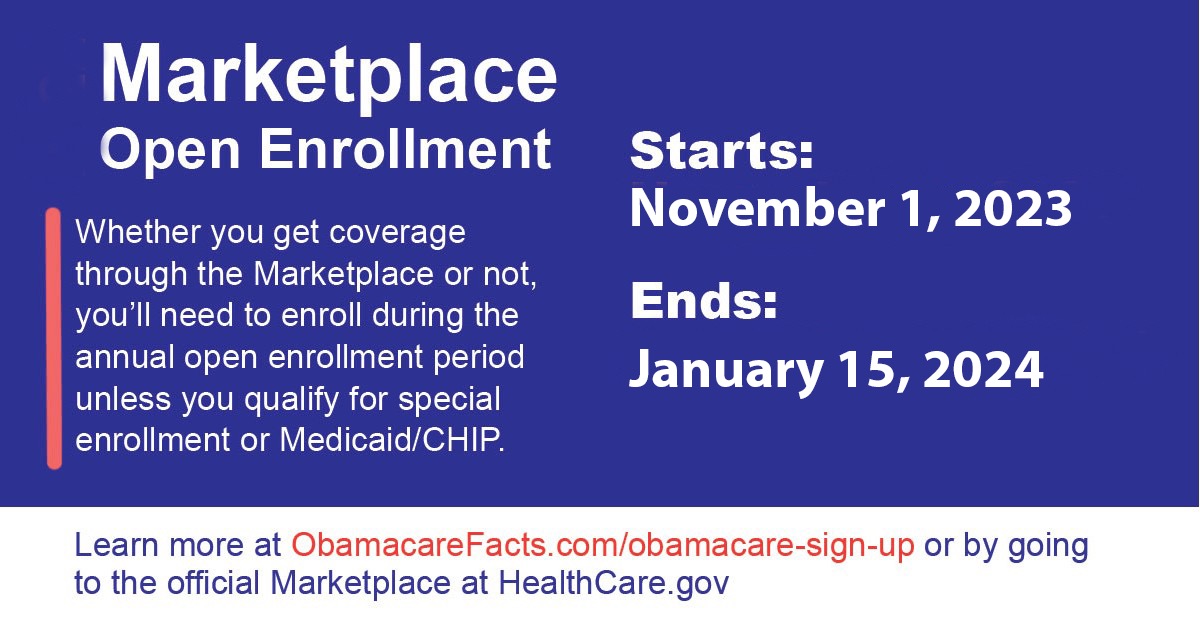
The primary window for applying or re-enrolling in Obamacare is during the annual Open Enrollment Period (OEP). For coverage starting January 1, 2024, the OEP typically runs from November 1 to December 15 of the preceding year (for coverage starting Jan 1st), with the final deadline for 2024 coverage usually extended to January 15, 2024. If you miss this period, you generally cannot enroll in a new plan or change your existing one unless you qualify for a Special Enrollment Period. Missing Open Enrollment without a qualifying life event can leave you uninsured and financially vulnerable for the remainder of the year. Mark these dates on your financial calendar to ensure uninterrupted coverage.
Qualifying for Special Enrollment Periods
Outside of Open Enrollment, you may still be able to enroll in a health insurance plan through a Special Enrollment Period (SEP). SEPs are triggered by specific life events that qualify you for a temporary enrollment window, usually 60 days from the event date. These events often have a direct financial impact and include:
-
Loss of other health coverage: Losing job-based coverage, COBRA, Medicaid, or expiring individual plans (not due to non-payment).
-
Changes in household: Marriage, birth or adoption of a child, divorce or legal separation (if it results in loss of coverage).
-
Changes in residence: Moving to a new state or a new area within your state that offers different health plans.
-
Changes in eligibility for financial help: Changes in income or household that affect your eligibility for subsidies or Medicaid.
-
Other qualifying events: Becoming a U.S. citizen, leaving incarceration, or for members of federally recognized tribes.
Understanding SEPs is vital for maintaining continuous coverage and managing your financial risk in the face of unexpected life changes.
Annual Renewal and Updating Your Information
If you are already enrolled in an ACA plan, the Marketplace will typically send you information about renewing your coverage for the upcoming year. You will usually have the option to automatically re-enroll in your current plan, or you can actively review and switch to a new plan during Open Enrollment. It is always financially prudent to actively review your options each year. Premiums, plan benefits, and available subsidies can change annually. Even if you are happy with your current plan, comparing it against new offerings and recalculating your subsidy eligibility based on your updated financial projections for 2024 can lead to significant savings or better coverage. Always update your income and household information during renewal to ensure your financial assistance is accurate for the coming year.
Final Considerations for Financial Health
Beyond simply enrolling, a deeper understanding of your health plan’s mechanics is crucial for truly optimizing your financial health.
Beyond Premiums: Deductibles, Co-pays, and Max Out-of-Pocket
While the monthly premium is the most obvious cost, understanding your plan’s deductible, co-payment (co-pay), co-insurance, and out-of-pocket maximum is equally critical for financial planning.
-
Deductible: The amount you must pay out of your own pocket for covered medical services before your insurance plan starts to pay. High deductibles mean lower premiums but more upfront costs for care.
-
Co-pay: A fixed amount you pay for a covered health care service after you’ve paid your deductible (e.g., $20 for a doctor’s visit).
-
Co-insurance: Your share of the cost of a covered health care service, calculated as a percentage (e.g., 20% of the cost) after you’ve met your deductible.
-
Out-of-pocket maximum: The most you will have to pay for covered services in a plan year. Once you reach this limit, your health plan pays 100% of the cost of covered benefits. This limit provides crucial financial protection against catastrophic medical expenses.
When choosing a plan, consider your health status and expected medical needs. If you anticipate frequent doctor visits or prescription drug use, a plan with a higher premium but lower deductible and co-pays might save you money overall. Conversely, if you are generally healthy, a higher deductible plan could offer sufficient coverage at a lower monthly cost, provided you have an emergency fund to cover the deductible if needed.

Seeking Professional Financial Guidance
While the Marketplace offers a wealth of information, navigating complex financial decisions related to health insurance can still be challenging. If you have a particularly intricate financial situation, substantial assets, or specific healthcare needs, consider consulting with a qualified financial advisor or a licensed insurance broker. These professionals can provide personalized guidance, help you accurately project your income, compare plans in detail, and ensure you’re maximizing all available financial assistance. Their expertise can be invaluable in making an informed decision that aligns with your broader financial planning goals and secures your future against unexpected healthcare costs.
aViewFromTheCave is a participant in the Amazon Services LLC Associates Program, an affiliate advertising program designed to provide a means for sites to earn advertising fees by advertising and linking to Amazon.com. Amazon, the Amazon logo, AmazonSupply, and the AmazonSupply logo are trademarks of Amazon.com, Inc. or its affiliates. As an Amazon Associate we earn affiliate commissions from qualifying purchases.