
Understanding your potential Social Security benefits is a cornerstone of effective retirement planning. For many Americans, these benefits represent a significant, often essential, component of their post-employment income. However, the exact amount you’ll receive isn’t a flat figure; it’s determined by a complex interplay of factors, primarily your earnings history, the age at which you claim benefits, and your marital status. Deciphering these elements is crucial for accurately projecting your financial future and making informed decisions about when and how to claim.
Understanding the Fundamentals of Social Security Benefits
The Social Security system, established in 1935, operates on a pay-as-you-go basis, with current workers’ contributions funding current retirees’ benefits. While seemingly straightforward, the calculation of individual benefits involves several key steps and criteria that directly influence your eventual payout.
Eligibility Requirements and Work Credits
To qualify for Social Security retirement benefits, you must accumulate a sufficient number of “work credits.” These credits are earned through covered employment, meaning jobs where you paid Social Security taxes (FICA or SECA). In 2024, you earn one credit for every $1,730 in wages or self-employment income, up to a maximum of four credits per year. Most individuals need 40 work credits, accumulated over at least 10 years of work, to be eligible for retirement benefits. This 10-year threshold is a baseline; working more years, particularly your highest-earning ones, can significantly impact your benefit amount.
The Role of Your Earnings History
Your entire earnings history under Social Security is crucial. The Social Security Administration (SSA) calculates your benefit based on your average indexed monthly earnings (AIME). “Indexing” means that your past earnings are adjusted for changes in the average wage level in the economy, bringing them up to near current-dollar equivalents. This ensures that the purchasing power of your past earnings is preserved when calculating your future benefits. Specifically, the SSA looks at your 35 highest-earning years. If you have fewer than 35 years of earnings, zero-earning years will be factored into the calculation, which can reduce your average and, consequently, your benefit amount. This underscores the importance of consistent work throughout your career.
Primary Insurance Amount (PIA) Calculation
Once your AIME is determined, the SSA uses a progressive formula to calculate your Primary Insurance Amount (PIA). The PIA is the benefit you would receive if you claim exactly at your Full Retirement Age (FRA). The formula uses “bend points” – specific dollar amounts that define the thresholds for different percentages of your AIME that are included in your PIA. For example, a certain percentage of your AIME up to the first bend point is included, a lower percentage for the AIME between the first and second bend points, and an even lower percentage for the AIME above the second bend point. This progressive structure means that lower-income workers receive a higher percentage of their average earnings back as benefits compared to high-income workers, reflecting Social Security’s goal of providing a social safety net.
Key Factors Influencing Your Benefit Amount
While your earnings history sets the foundation, several other critical factors can significantly increase or decrease the actual monthly benefit you receive. Understanding these levers is paramount for strategic planning.
Claiming Age: The Most Significant Lever
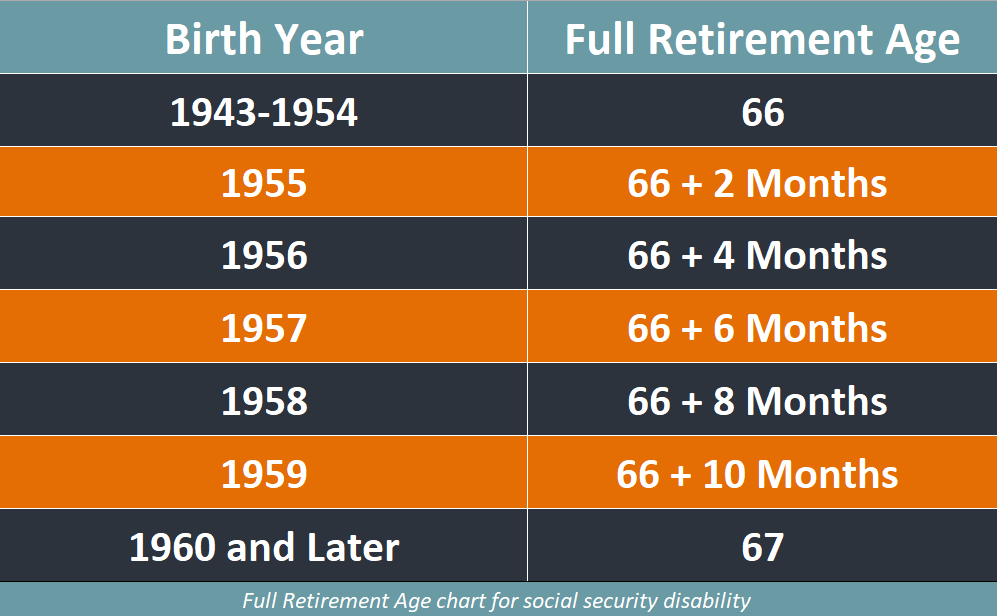
The age at which you choose to start receiving your Social Security benefits is arguably the most impactful decision. Your Full Retirement Age (FRA) is determined by your birth year, typically falling between age 66 and 67 for those born in 1943 or later.
-
Claiming Early (as early as age 62): If you claim before your FRA, your monthly benefit will be permanently reduced. For example, claiming at age 62 with an FRA of 67 results in a benefit reduction of approximately 30%. This reduction is applied to your PIA.
-
Claiming at Full Retirement Age (FRA): You receive 100% of your calculated PIA.
-
Claiming Late (up to age 70): For each year you delay claiming past your FRA, up to age 70, you earn delayed retirement credits. These credits permanently increase your monthly benefit by 8% per year (for those born in 1943 or later), compounded monthly. Delaying from an FRA of 67 to age 70 can result in an additional 24% on top of your PIA. This incentive is a powerful tool for maximizing lifetime benefits, especially if you anticipate a long life expectancy.
Maximizing Your High-Earning Years
Because the SSA bases your benefit on your 35 highest-earning years, any period of high earnings within that window will elevate your AIME and, subsequently, your PIA. Conversely, years with low earnings or no earnings can significantly drag down your average, reducing your potential benefit. This emphasizes the importance of consistent work, striving for career advancement, and avoiding extended periods out of the workforce, particularly during your peak earning years. Self-employed individuals must also ensure they are reporting all income and paying appropriate self-employment taxes to receive proper credit for their contributions.
Spousal and Survivor Benefits
Social Security also provides benefits to eligible family members, which can indirectly affect your claiming strategy.
-
Spousal Benefits: If you are married, divorced, or widowed, you may be eligible for benefits based on your spouse’s or former spouse’s work record. A spouse can receive up to 50% of the primary earner’s PIA once they reach their own FRA. However, if they claim spousal benefits early, they will face reductions. A key rule is that the primary earner must have filed for their own benefits for their spouse to collect spousal benefits (with an exception for “file and suspend” or “restricted application” strategies, which have largely been eliminated but still apply to specific birth cohorts).
-
Survivor Benefits: Upon the death of a worker, eligible survivors (e.g., widow(er)s, dependent children, dependent parents) may receive benefits. A widow or widower can receive up to 100% of the deceased worker’s benefit at their own FRA, or a reduced amount as early as age 60 (or age 50 if disabled). Understanding these provisions is vital for comprehensive family financial planning.
Government Pension Offset (GPO) and Windfall Elimination Provision (WEP)
For individuals who receive a pension from employment not covered by Social Security (e.g., some government employees, foreign government employees), two provisions can reduce Social Security benefits:
-
Government Pension Offset (GPO): This affects spousal or survivor benefits. If you receive a pension from non-covered employment, your Social Security spousal or survivor benefits may be reduced by two-thirds of your government pension.
-
Windfall Elimination Provision (WEP): This affects your own earned Social Security benefit if you also worked in non-covered employment and receive a pension from that work. WEP reduces the PIA calculation for workers who also receive a non-covered pension, though it cannot eliminate your Social Security benefit entirely. These provisions are complex and require careful consideration if they apply to your situation.
Estimating Your Future Social Security Income
Fortunately, you don’t have to guess your future Social Security income. The SSA provides robust tools and resources to help you estimate your benefits, empowering you to integrate these projections into your broader retirement financial plan.
Utilizing the Social Security Administration (SSA) Tools
The primary resource for benefit estimation is the SSA’s official website.
-
My Social Security Account: This is your personalized portal. By creating an account, you can access your full earnings record, verify that your reported earnings are correct, and view personalized estimates of your future benefits at different claiming ages (62, FRA, and 70). This account is an invaluable tool for real-time planning and allows you to monitor your work credits and earnings history. It’s recommended to check your account annually, especially if you’re nearing retirement.
-
Online Calculators: The SSA website also hosts various calculators that allow you to plug in different scenarios (e.g., future earnings, claiming ages) to see how they might impact your benefits. These tools are excellent for “what-if” analyses.
Interpreting Your Annual Social Security Statement
Although the SSA primarily encourages online access, many individuals still receive a physical Social Security Statement in the mail (typically every five years for those under age 60, and annually after that if you don’t have an online account). This statement provides:
-
Your Earnings Record: A comprehensive list of your annual earnings as reported to the SSA. It is critical to review this regularly for accuracy, as errors could impact your future benefits.
-
Estimated Benefits: Projections of your monthly retirement benefits at age 62, your Full Retirement Age, and age 70. It also includes estimates for disability and survivor benefits.
-
Work Credits Earned: A summary of how many work credits you have accumulated towards eligibility.
Understanding this statement is vital. If you find any discrepancies in your earnings record, it’s important to contact the SSA promptly to correct them, as this directly affects your benefit calculation.
Beyond the Estimate: Considering Cost of Living Adjustments (COLAs)
The benefit estimates provided by the SSA are in today’s dollars, meaning they don’t account for future Cost of Living Adjustments (COLAs). COLAs are annual increases to Social Security benefits, designed to help beneficiaries maintain their purchasing power as inflation erodes the value of money. They are based on the Consumer Price Index for Urban Wage Earners and Clerical Workers (CPI-W). While COLAs are not guaranteed to occur every year, they have been a regular feature of Social Security for decades. Factoring in future COLAs, even conservatively, can further enhance the long-term value of your benefits. Historical data shows that COLAs can add a substantial amount to benefits over an extended retirement period.
Integrating Social Security into Your Retirement Plan
Social Security is a critical piece of the retirement puzzle, but rarely the only piece. Integrating it effectively with your other savings and income streams is essential for a secure retirement.
Social Security as a Pillar, Not the Entire Foundation
While Social Security provides a reliable income stream, it was never intended to be the sole source of retirement income for most people. On average, Social Security replaces about 40% of pre-retirement income for a moderate earner. For higher earners, this percentage is lower. Therefore, relying solely on Social Security benefits is often insufficient to maintain your desired lifestyle in retirement. It should be viewed as one of several pillars supporting your financial well-being, alongside personal savings, investments (like 401(k)s, IRAs, and taxable brokerage accounts), and potentially pensions or other income streams. A diversified approach ensures resilience and flexibility.
Strategic Claiming in Conjunction with Other Assets
Your Social Security claiming strategy should ideally be coordinated with your overall withdrawal strategy from other retirement accounts. For instance, some financial planners recommend delaying Social Security to maximize its guaranteed, inflation-adjusted payout, while drawing down other, potentially less reliable, assets in the early years of retirement. This strategy essentially “insures” against longevity risk and provides a higher fixed income later in life. Conversely, if you have significant health issues or a shorter life expectancy, claiming early might make more sense to receive benefits for a longer duration. The optimal strategy is highly personalized and depends on your financial situation, health, and risk tolerance.
Tax Implications of Social Security Benefits
It’s important to remember that your Social Security benefits may be subject to federal income tax. The amount that is taxable depends on your “provisional income,” which is the sum of your adjusted gross income, tax-exempt interest, and half of your Social Security benefits.
-
If your provisional income is between $25,000 and $34,000 (for individuals) or $32,000 and $44,000 (for married couples filing jointly), up to 50% of your benefits may be taxable.
-
If your provisional income exceeds $34,000 (for individuals) or $44,000 (for married couples filing jointly), up to 85% of your benefits may be taxable.
Additionally, some states also tax Social Security benefits. Understanding these tax implications is crucial for accurate retirement income planning and budgeting. You can elect to have federal taxes withheld directly from your Social Security payments to avoid a large tax bill at the end of the year.
Common Misconceptions and Proactive Steps
Misinformation surrounding Social Security is prevalent. Dispelling common myths and taking proactive steps can lead to greater financial security.
Is Social Security Running Out of Money?
A frequent concern is whether Social Security will be available for future generations. While the program faces long-term financial challenges due to demographic shifts (lower birth rates, increased life expectancy), the system is not “running out of money.” According to the latest Trustees’ Report, Social Security can pay 100% of promised benefits until approximately the mid-2030s. After that, it is projected to be able to pay about 80% of scheduled benefits if no legislative action is taken. Congress has historically made adjustments to ensure solvency, and various solutions, such as raising the full retirement age, increasing the payroll tax rate, or adjusting the COLA formula, are often discussed. It is highly unlikely that Social Security will disappear entirely.
The Importance of Regular Review and Planning
Your financial situation, health, and even Social Security rules can change over time. Regularly reviewing your “My Social Security” account, understanding any legislative updates, and re-evaluating your claiming strategy as you approach retirement is crucial. Don’t set a plan and forget it; be prepared to adapt. Check your earnings record annually to ensure all your contributions are accurately recorded, as corrections become more difficult the further back in time they go.
Seeking Professional Financial Advice
For complex situations – such as coordinating benefits with a spouse, navigating WEP/GPO, or integrating Social Security with a sophisticated investment portfolio – consulting a qualified financial advisor specializing in retirement planning can be invaluable. An advisor can help you understand all your options, model different claiming scenarios, and create a comprehensive retirement plan that optimizes your Social Security benefits alongside your other assets, ensuring you maximize your financial well-being in retirement.
aViewFromTheCave is a participant in the Amazon Services LLC Associates Program, an affiliate advertising program designed to provide a means for sites to earn advertising fees by advertising and linking to Amazon.com. Amazon, the Amazon logo, AmazonSupply, and the AmazonSupply logo are trademarks of Amazon.com, Inc. or its affiliates. As an Amazon Associate we earn affiliate commissions from qualifying purchases.