
For many, Social Security represents a cornerstone of their retirement income, a reliable source of funds that can significantly impact financial security in later life. Yet, the exact amount you can expect to receive isn’t a simple, fixed figure. It’s a dynamic calculation influenced by a multitude of factors, making it crucial for every individual to understand the variables at play and integrate this knowledge into their broader financial planning. This article delves into the intricacies of Social Security benefits, helping you estimate your potential payout and strategically incorporate it into your retirement strategy.
Understanding the Fundamentals of Social Security Benefits
Before diving into estimations, it’s essential to grasp the foundational principles that govern Social Security. This federal program, funded through payroll taxes (FICA taxes), provides benefits to retirees, the disabled, and survivors of deceased workers.
Eligibility Requirements
To qualify for Social Security retirement benefits, you generally need to have accumulated sufficient “credits” over your working career. In 2024, you earn one credit for every $1,730 in earnings, up to a maximum of four credits per year. Most people need 40 credits, which translates to 10 years of work, to be eligible for retirement benefits. Once you’ve earned 40 credits, you are “fully insured” and qualify for benefits based on your earnings record.
How Your Benefits Are Calculated
The Social Security Administration (SSA) uses a formula to calculate your Primary Insurance Amount (PIA), which is the benefit you would receive if you start collecting benefits at your Full Retirement Age (FRA). This formula primarily considers your highest 35 years of indexed earnings.
“Indexed earnings” means that your past wages are adjusted to account for changes in the average wage level in the economy over time. This ensures that the purchasing power of your past earnings is accurately reflected in today’s dollars. If you worked for less than 35 years, years with no earnings will be factored in as zero, which can reduce your overall benefit amount.
The Importance of Your Earnings Record
Your earnings record is paramount. The SSA maintains a detailed history of your taxed earnings, and any discrepancies can directly affect your future benefits. It’s advisable to regularly review your Social Security Statement, which summarizes your earnings record, estimated benefits, and provides other important information. Errors, such as missing wages or incorrect dates, should be corrected promptly by contacting the SSA, as these can impact your benefit calculation.
Factors Influencing Your Social Security Payout
While the 35 highest-earning years form the core of your benefit calculation, several other critical factors can significantly alter the final monthly sum you receive. Understanding these variables empowers you to make informed decisions about when and how to claim your benefits.
Your Primary Insurance Amount (PIA)
As mentioned, your PIA is the monthly benefit you’re entitled to at your Full Retirement Age (FRA). The calculation is progressive, meaning lower-income earners receive a higher percentage of their average indexed monthly earnings (AIME) compared to high-income earners. The SSA uses bend points in its formula to achieve this progressive weighting. This ensures that Social Security provides a safety net for all income levels, with a greater emphasis on supporting those with lower lifetime earnings.
When You Claim Your Benefits: Early, Full, or Delayed Retirement
This is perhaps the most significant variable under your control.
-
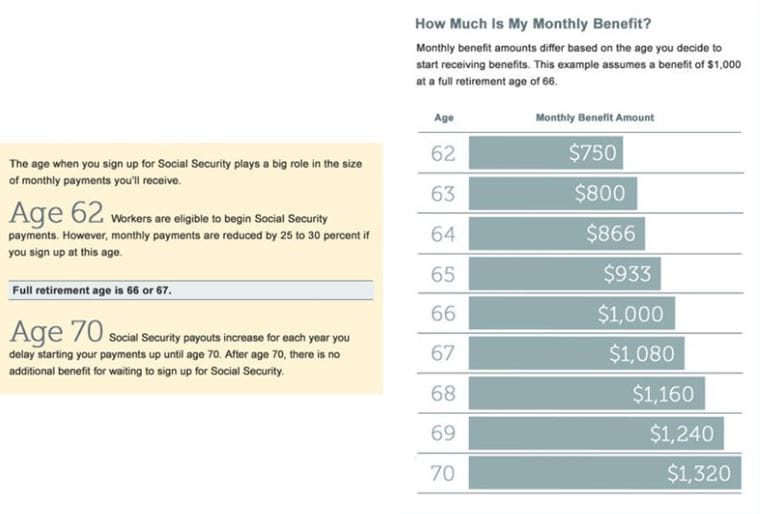
Early Retirement: You can start receiving Social Security benefits as early as age 62. However, claiming early results in a permanent reduction of your monthly benefit. The reduction can be substantial, upwards of 25-30% for someone with an FRA of 67. This reduction is applied because you will be receiving benefits for a longer period.
-
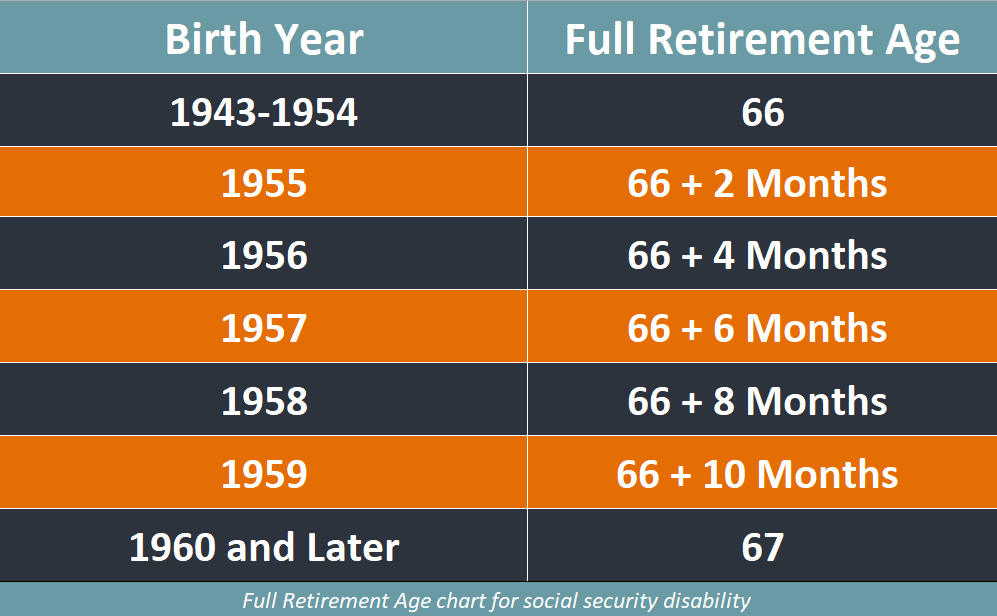
Full Retirement Age (FRA): Your FRA depends on your birth year. For those born between 1943 and 1954, it’s 66. It gradually increases for later birth years, reaching 67 for those born in 1960 or later. Claiming at your FRA entitles you to 100% of your PIA.
-
Delayed Retirement: For every year you delay claiming benefits past your FRA, up to age 70, you earn Delayed Retirement Credits (DRCs). These credits permanently increase your monthly benefit by 8% per year. This means delaying until age 70 could result in a benefit that is 24% to 32% higher than your PIA, depending on your FRA. This strategy can be particularly beneficial for individuals with good health and other retirement income sources, as it maximizes the guaranteed lifetime income stream from Social Security.
Cost-of-Living Adjustments (COLAs)
Social Security benefits are subject to annual Cost-of-Living Adjustments (COLAs), which are designed to help benefits keep pace with inflation. COLAs are determined by the Consumer Price Index for Urban Wage Earners and Clerical Workers (CPI-W). When inflation rises, benefits generally increase, helping to preserve the purchasing power of your Social Security income over time. While not guaranteed to be positive every year, COLAs are a vital feature that helps maintain financial stability for retirees.
Taxation of Social Security Benefits
It’s important to remember that a portion of your Social Security benefits may be taxable. If your “provisional income” (which includes your adjusted gross income, tax-exempt interest, and 50% of your Social Security benefits) exceeds certain thresholds, then up to 50% or even 85% of your benefits could be subject to federal income tax. Some states also tax Social Security benefits, so it’s crucial to understand the tax implications both federally and at the state level when planning your retirement income.
Tools and Strategies for Estimating Your Future Benefits
While the factors above outline the mechanics, several practical tools can help you get a personalized estimate of your future Social Security benefits.
Using Your Social Security Statement
The most direct and personalized source of information is your annual Social Security Statement. You can access this online by creating an account at mySocialSecurity on the SSA website. Your statement provides:
-
An estimate of your retirement benefits at age 62, your Full Retirement Age, and age 70.
-
Estimates for disability and survivor benefits.
-
A complete record of your earnings history, allowing you to verify its accuracy.
Regularly reviewing this statement is crucial, not only for planning but also for identifying and correcting any errors in your earnings record.
The SSA’s Online Calculators
The Social Security Administration offers several user-friendly online calculators on its website. These tools allow you to input various scenarios, such as different retirement ages, future earnings projections, and other relevant data, to see how these choices impact your estimated benefit. They can be invaluable for running “what-if” analyses to compare the financial outcomes of claiming early versus delaying benefits.
Financial Planners and Retirement Software
For a more comprehensive and integrated view, consulting with a qualified financial planner can be highly beneficial. A planner can help you:
-
Integrate your Social Security benefits with all other retirement income sources, such as 401(k)s, IRAs, pensions, and personal savings.
-
Develop optimal claiming strategies based on your specific financial situation, health, and family circumstances (e.g., spousal benefits).
-
Address complex scenarios, such as taxation of benefits or the impact of working in retirement.
Additionally, various commercial retirement planning software tools can provide sophisticated projections, factoring in inflation, investment returns, and tax implications, giving you a holistic picture of your retirement readiness.
Integrating Social Security into Your Overall Retirement Plan
Social Security, while a vital component, should rarely be the sole pillar of your retirement income. A robust retirement plan leverages multiple income streams and strategies to ensure financial security and flexibility.
Social Security as a Foundation, Not the Sole Source
Think of Social Security as a solid base or foundation for your retirement income. It provides a reliable, inflation-adjusted stream of income that can cover a significant portion of your basic living expenses. However, relying exclusively on Social Security often means a substantial reduction in your pre-retirement lifestyle. The average Social Security benefit replaces only about 40% of an average worker’s pre-retirement earnings, a figure that is often lower for high earners. Therefore, supplementary income is almost always necessary to maintain a comfortable standard of living.
Maximizing Other Retirement Savings
To bridge the gap between Social Security benefits and your desired retirement lifestyle, maximizing other retirement savings vehicles is paramount. This includes:
-
401(k)s and 403(b)s: Employer-sponsored plans offering tax-advantaged growth. Contribute enough to get any employer match, and then aim to max out contributions if possible.
-
IRAs (Traditional and Roth): Individual Retirement Arrangements provide flexibility and different tax benefits depending on whether they are traditional (tax-deductible contributions, taxed withdrawals in retirement) or Roth (after-tax contributions, tax-free withdrawals in retirement).
-
Health Savings Accounts (HSAs): These accounts offer a triple tax advantage (tax-deductible contributions, tax-free growth, and tax-free withdrawals for qualified medical expenses) and can be an excellent way to save for healthcare costs in retirement.
-
Taxable Brokerage Accounts: For savings beyond tax-advantaged limits, these accounts offer flexibility, though capital gains and dividends are taxed annually.
Diversifying your savings across these accounts can provide flexibility and tax efficiency in retirement.

Considering Longevity and Healthcare Costs
When planning your retirement, it’s crucial to factor in increasing life expectancies and the escalating costs of healthcare. Social Security benefits are paid for life, which is a significant advantage in mitigating longevity risk (the risk of outliving your savings). However, Medicare generally covers only a portion of healthcare costs, leaving significant out-of-pocket expenses for premiums, deductibles, co-pays, and services not covered by Medicare (like long-term care). Your retirement plan must adequately address these potential costs, perhaps through HSAs, long-term care insurance, or dedicated savings.
Ultimately, understanding “how much Social Security will I have” is a critical first step in building a robust retirement plan. By leveraging the available tools, making informed claiming decisions, and strategically supplementing your benefits with other savings, you can build a comprehensive financial strategy that ensures security and comfort throughout your golden years.
aViewFromTheCave is a participant in the Amazon Services LLC Associates Program, an affiliate advertising program designed to provide a means for sites to earn advertising fees by advertising and linking to Amazon.com. Amazon, the Amazon logo, AmazonSupply, and the AmazonSupply logo are trademarks of Amazon.com, Inc. or its affiliates. As an Amazon Associate we earn affiliate commissions from qualifying purchases.