
Understanding the amount you will receive from Social Security is a cornerstone of retirement planning for millions. It’s a complex calculation influenced by your entire working life, your claiming age, and various other personal factors. Far from being a simple, flat payout, your Social Security benefit is an earned entitlement designed to provide a foundational income in retirement, disability, or for survivors. Pinpointing the exact figure requires delving into the Social Security Administration’s (SSA) intricate formulas and your personal earnings history.
Understanding Your Social Security Benefits: The Basics
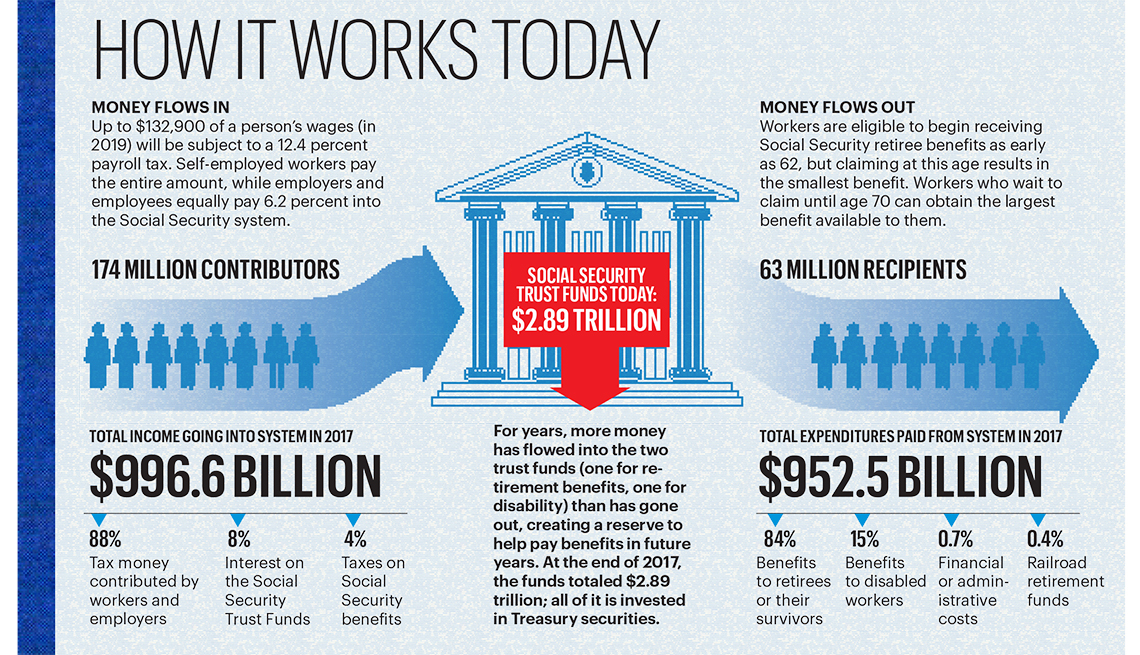
Social Security is a social insurance program funded by payroll taxes, known as Federal Insurance Contributions Act (FICA) taxes. Workers contribute a percentage of their earnings to the system throughout their careers, and in return, they earn eligibility for future benefits. It’s crucial to understand that Social Security is not a savings account but a pay-as-you-go system where current workers fund current retirees.
What is Social Security?
At its core, Social Security provides financial protection for millions of Americans. While often associated with retirement, it also offers disability benefits and survivor benefits, ensuring a safety net for families in various life circumstances. For most individuals, retirement benefits are the primary concern, aiming to replace a portion of pre-retirement income. The goal is to provide a steady income stream that can help cover essential living expenses once you stop working.
Earning Work Credits
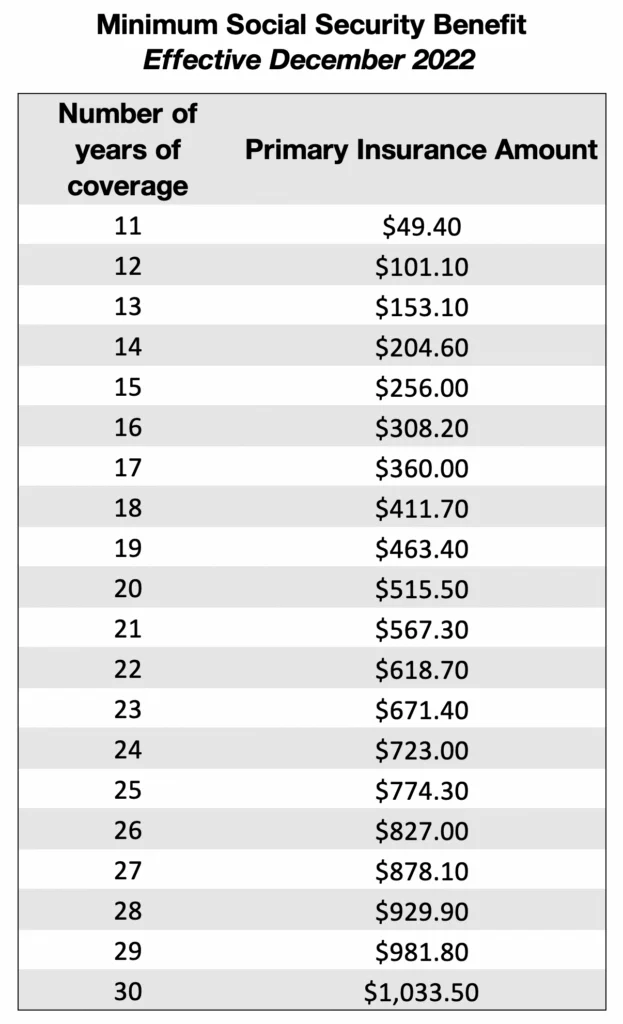
To qualify for Social Security retirement benefits, you must earn “work credits.” The SSA awards these credits based on your annual earnings. In 2024, you earn one credit for every $1,730 in wages or self-employment income, up to a maximum of four credits per year. To be eligible for retirement benefits, most people need to accumulate 40 work credits, which typically translates to 10 years of work. These credits do not have to be consecutive; they simply accumulate over your working life. Without the necessary credits, you generally won’t qualify for benefits based on your own work record.
Key Factors Influencing Your Benefit Amount
Several critical factors determine the size of your monthly Social Security check. These variables are unique to each individual’s work history and life choices, making personalized planning essential.
Your Earning History
Your benefit amount is primarily based on your average indexed monthly earnings (AIME) over your 35 highest-earning years. The SSA “indexes” your past earnings to account for changes in the average wage level in the economy over time. This process brings your past earnings up to a comparable current dollar value, ensuring that your earliest earnings are not undervalued. If you have fewer than 35 years of earnings, the SSA will include zeros for the missing years in its calculation, which can significantly lower your average and, consequently, your benefit. This emphasizes the importance of a consistent and robust earnings record throughout your career. High earners who consistently hit or exceed the annual Social Security taxable earnings limit (e.g., $168,600 in 2024) will receive higher benefits, though there’s a maximum benefit cap.
Your Age When You Claim
The age at which you begin receiving benefits is perhaps the most impactful decision you’ll make regarding your Social Security income.
-
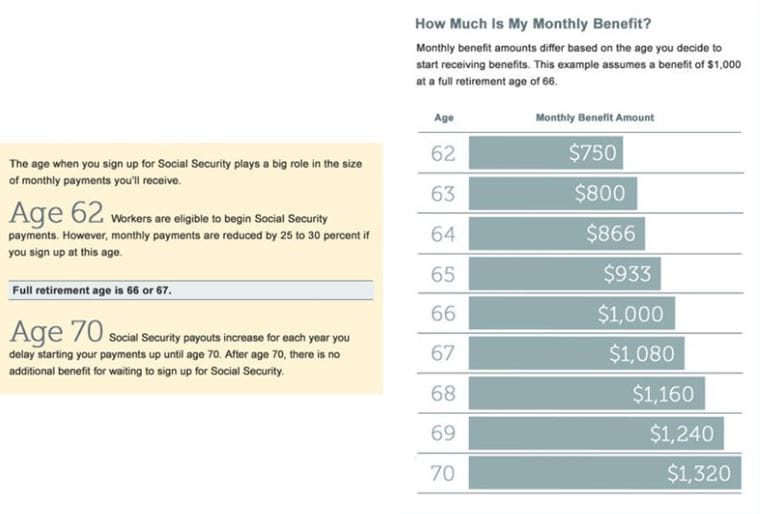
Early Claiming (Age 62): You can start receiving retirement benefits as early as age 62, but doing so results in a permanent reduction of your monthly benefit. The reduction can be as much as 30% if your full retirement age (FRA) is 67.
-
Full Retirement Age (FRA): This is the age at which you are entitled to 100% of your primary insurance amount (PIA). Your FRA depends on your birth year. For those born between 1943 and 1954, it’s 66. For those born in 1960 or later, it’s 67.
-
Delayed Claiming (Up to Age 70): For each year you delay claiming benefits past your FRA, up to age 70, you earn delayed retirement credits. These credits permanently increase your monthly benefit by 8% per year. This means someone with an FRA of 67 who delays claiming until 70 would receive a benefit 24% higher than their FRA amount, in addition to any Cost-of-Living Adjustments.
Cost-of-Living Adjustments (COLAs)
To help maintain the purchasing power of benefits, the SSA periodically implements Cost-of-Living Adjustments (COLAs). These adjustments are typically announced in the fall and take effect in December (for benefits received in January). COLAs are based on increases in the Consumer Price Index for Urban Wage Earners and Clerical Workers (CPI-W). When inflation is high, COLAs tend to be larger, providing beneficiaries with more money to keep up with rising costs. These adjustments apply to all beneficiaries, regardless of when they started receiving benefits.
Spousal and Survivor Benefits
While your personal benefit is based on your own earnings, it’s also important to be aware of spousal and survivor benefits, as these can affect your household’s overall financial picture.
-
Spousal Benefits: If your spouse has a higher earnings record, you might be eligible for a spousal benefit equal to up to 50% of their primary insurance amount, provided it’s greater than your own benefit.
-
Survivor Benefits: If your spouse passes away, you may be eligible to receive survivor benefits based on their work record, which can be up to 100% of their benefit, depending on your age and other factors. These benefits are a crucial safety net for many families.
Calculating Your Primary Insurance Amount (PIA)
Your Primary Insurance Amount (PIA) is the monthly benefit you are entitled to receive if you claim benefits at your Full Retirement Age (FRA). It’s the starting point for all benefit calculations, whether you claim early or delay.
The AIME and Bend Points
The SSA uses a progressive formula to calculate your PIA from your Average Indexed Monthly Earnings (AIME). This formula involves “bend points,” which are dollar amounts that divide your AIME into segments. Different percentages are applied to these segments:
-
A higher percentage is applied to the lowest segment of your AIME.
-
A lower percentage is applied to the middle segment.
-
An even lower percentage is applied to the highest segment.
This progressive structure means that Social Security replaces a higher percentage of pre-retirement earnings for lower-income workers than for higher-income workers, ensuring a greater safety net for those with more modest earnings. The exact bend points and percentages are updated annually.
Online Tools and Statements
You don’t need to be a mathematician to figure out your estimated PIA. The SSA provides powerful tools to help you:
-
Social Security Statement: This annual statement (or accessible online) provides an estimate of your retirement benefits at age 62, your full retirement age, and age 70. It also details your earnings history that the SSA has on record. Reviewing this statement regularly is crucial to ensure your earnings are correctly reported.
-
My Social Security Account: By creating a free account at SSA.gov, you can access your personalized Social Security Statement anytime, see your complete earnings record, get personalized estimates for future benefits, and even apply for benefits online. This online portal is the most reliable and up-to-date source for your specific benefit projections. It allows you to model different claiming ages and see the resulting impact on your monthly payout.
When to Claim: Optimizing Your Benefits
The decision of when to claim Social Security benefits is one of the most significant financial choices you will make leading into retirement. There’s no one-size-fits-all answer, as it depends on your health, financial needs, other income sources, and life expectancy.
Early Claiming (Age 62)
Claiming at the earliest possible age of 62 can be appealing for immediate access to funds. However, it comes with a significant and permanent reduction in your monthly benefit. For someone with an FRA of 67, claiming at 62 results in a roughly 30% lower monthly payment for the rest of their life. Reasons for early claiming often include health issues that prevent continued work, immediate financial necessity, or a desire to retire early regardless of the lower benefit amount. It’s important to weigh the immediate cash flow against the long-term reduction in income.
Full Retirement Age (FRA)
Claiming at your Full Retirement Age (FRA) means you receive 100% of your Primary Insurance Amount (PIA). This is often considered a balanced approach for many retirees. There’s no reduction or bonus; you simply get the benefit you’ve earned based on your average indexed monthly earnings. Your FRA depends on your birth year:
-
Born 1943-1954: FRA is 66
-
Born 1955: FRA is 66 and 2 months
-
Born 1956: FRA is 66 and 4 months
-
Born 1957: FRA is 66 and 6 months
-
Born 1958: FRA is 66 and 8 months
-
Born 1959: FRA is 66 and 10 months
-
Born 1960 or later: FRA is 67
Delayed Claiming (Up to Age 70)
Delaying your claim past your FRA, up to age 70, can substantially increase your monthly benefit. For each year you defer, you earn delayed retirement credits, which permanently boost your benefit by 8% per year. This means someone with an FRA of 67 who waits until 70 would receive a benefit 24% higher than their FRA amount, plus any COLAs applied during those years. For those who are healthy, have sufficient other retirement savings, and expect to live a long life, delaying benefits is often the most financially advantageous strategy, providing the maximum possible monthly income.
Breakeven Point Analysis
To help decide when to claim, many financial planners use a “breakeven point” analysis. This involves calculating how long it would take for the cumulative benefits from a delayed claiming strategy to surpass the cumulative benefits from an earlier claiming strategy. For example, if you claim early, you get more money sooner. If you delay, you get less money initially but more per month later. The breakeven point is when the total money received from both strategies becomes equal. If you live past this point, delaying benefits typically results in more total lifetime income. However, this analysis relies on an assumption of your longevity, which is inherently uncertain.
Impact of Taxes and Other Considerations
The “money you will receive” isn’t always the gross amount the SSA calculates. Various factors can reduce your net Social Security check, including taxes, Medicare premiums, and potential earnings tests.
Taxation of Social Security Benefits
A significant consideration is that your Social Security benefits may be subject to federal income tax. Up to 85% of your benefits can be taxable, depending on your “provisional income.” Provisional income is the sum of your adjusted gross income (AGI), any tax-exempt interest (like from municipal bonds), and half of your Social Security benefits.
-
Single filers: If your provisional income is between $25,000 and $34,000, up to 50% of your benefits may be taxable. If it’s over $34,000, up to 85% may be taxable.
-
Married filing jointly: If your provisional income is between $32,000 and $44,000, up to 50% of your benefits may be taxable. If it’s over $44,000, up to 85% may be taxable.
Some states also tax Social Security benefits, so it’s essential to check your state’s specific laws. This taxation can noticeably reduce your net monthly payment.
Working While Receiving Benefits
If you claim Social Security benefits before your Full Retirement Age (FRA) and continue to work, your benefits may be temporarily reduced or withheld if your earnings exceed certain limits. This is known as the “earnings test.”
-
Before FRA: For 2024, if you are under FRA, the SSA will deduct $1 from your benefits for every $2 you earn above $22,320.
-
In the year you reach FRA: The SSA will deduct $1 from your benefits for every $3 you earn above a higher limit ($59,520 in 2024) until the month you reach FRA.
-
At or after FRA: Once you reach your FRA, there is no earnings limit, and your benefits will not be reduced regardless of how much you earn.
Importantly, any benefits withheld due to the earnings test are not lost forever. When you reach your FRA, your monthly benefit will be recalculated to account for the withheld amounts, effectively increasing your future payments.
Medicare Premiums
For most beneficiaries, Medicare Part B premiums are automatically deducted from their Social Security checks. In some cases, Part A (if not premium-free) and Part D premiums may also be deducted. This direct deduction means the net amount you receive from Social Security will be less than your gross benefit amount. The standard Part B premium changes annually, and some higher-income individuals pay an Income-Related Monthly Adjustment Amount (IRMAA), further increasing their Medicare costs and thus reducing their net Social Security payment.
Determining “how much money you will receive from Social Security” involves a careful review of your work history, a strategic decision about your claiming age, and an understanding of how taxes and other deductions will impact your final net payment. By utilizing the SSA’s online tools and considering these critical factors, you can make informed decisions to optimize your financial security in retirement.
aViewFromTheCave is a participant in the Amazon Services LLC Associates Program, an affiliate advertising program designed to provide a means for sites to earn advertising fees by advertising and linking to Amazon.com. Amazon, the Amazon logo, AmazonSupply, and the AmazonSupply logo are trademarks of Amazon.com, Inc. or its affiliates. As an Amazon Associate we earn affiliate commissions from qualifying purchases.