
Social Security is a cornerstone of retirement planning for millions of Americans, providing a vital income stream that can significantly impact financial security in later life. Yet, for many, the exact mechanics of how benefits are calculated and what they can expect to receive remain shrouded in mystery. Understanding your potential Social Security benefits is not just about a number; it’s about empowering yourself with knowledge to make informed decisions about your financial future, retirement age, and overall wealth management strategy. This comprehensive guide will demystify the process, explain the factors that influence your payout, provide tools for estimation, and offer strategies to maximize what you receive from this essential government program.
Understanding Social Security Benefits: The Basics
At its heart, Social Security is an earned benefit program, funded by payroll taxes contributed by workers and their employers. It provides various forms of financial protection, predominantly recognized for its retirement income component, but also extends to disability and survivor benefits. Grasping the fundamentals is the first step toward accurately assessing your future entitlements.
What is Social Security?
Established in 1935, Social Security was designed as a social insurance program to provide economic security for Americans. It operates on a pay-as-you-go system, where current workers’ contributions fund the benefits of current retirees and other beneficiaries. While it’s not a retirement savings account in the traditional sense, it acts as a reliable income floor that complements personal savings and investments. Its primary goal is to protect individuals and families from the loss of income due to retirement, disability, or death.
Who is Eligible for Benefits?
Eligibility for Social Security benefits is primarily based on your work history and contributions to the system. Most individuals qualify for retirement benefits by accumulating “work credits.” You can earn up to four credits each year. In 2024, for example, you earn one credit for every $1,730 in earnings, up to the maximum of four credits for earnings of $6,920. To be eligible for retirement benefits, you generally need 40 credits, which translates to 10 years of work. These credits do not need to be consecutive; they accumulate over your working life. The more you earn and contribute (up to the annual maximum), the higher your potential benefits will be, reflecting your lifetime earnings.
Types of Social Security Benefits
While this article primarily focuses on retirement benefits, it’s crucial to acknowledge the broader scope of Social Security’s offerings:
-
Retirement Benefits: The most common type, providing income to eligible individuals once they retire. The amount depends on their work history and age at which they claim benefits.
-
Disability Benefits: Provides income to individuals who are unable to work due to a severe medical condition that is expected to last at least a year or result in death.
-
Survivor Benefits: Provides financial support to the spouses, children, and parents of deceased workers who qualified for Social Security. This benefit offers a critical safety net during difficult times.
Understanding these foundational elements sets the stage for delving into the specific calculations and factors that determine your individual benefit amount.
Key Factors Influencing Your Benefit Amount
Your Social Security benefit isn’t a one-size-fits-all figure. It’s a highly personalized calculation influenced by several critical factors, primarily your earnings record, the number of years you’ve worked, and most significantly, the age at which you choose to begin receiving benefits. These elements combine to determine your Primary Insurance Amount (PIA), which is the base figure from which your actual monthly benefit is derived.
Your Earning Record: The Foundation
The Social Security Administration (SSA) calculates your benefit based on your average indexed monthly earnings (AIME) over your 35 highest-earning years. “Indexed” means your past earnings are adjusted to account for changes in the average wage level in the economy over time. If you have fewer than 35 years of earnings, the missing years will be counted as zeros, which can significantly reduce your overall benefit. This emphasizes the importance of a consistent and robust earning history. The higher your indexed earnings over those 35 years, up to the annual taxable maximum, the greater your PIA will be. This also means that working longer, particularly in years where you earn more than previous low-earning years, can replace those lower-earning years and potentially increase your average.
The Importance of Work Credits
As mentioned earlier, 40 work credits (10 years of work) are generally required to qualify for retirement benefits. However, simply qualifying for benefits does not mean you’ve maximized them. The accumulation of these credits ensures eligibility, but the actual benefit amount is determined by the amount you earned over those qualifying years. While a minimum number of credits gets you in the door, a comprehensive work history with substantial earnings is what truly builds a meaningful benefit.
Deciding When to Claim: Full Retirement Age (FRA), Early vs. Delayed Claiming
Perhaps the most impactful decision affecting your Social Security benefit is when you choose to start receiving payments.
-
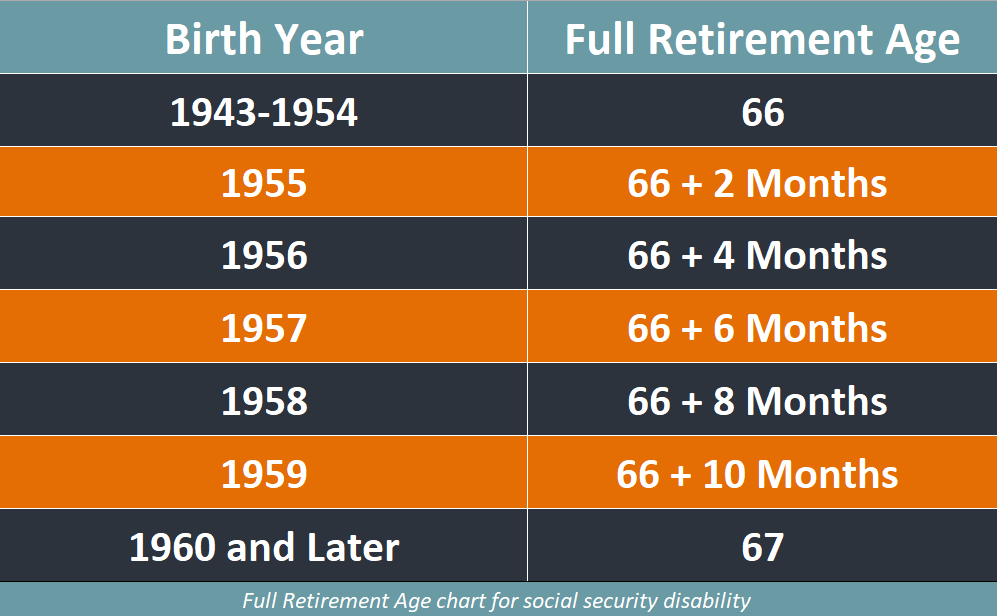
Full Retirement Age (FRA): This is the age at which you are entitled to 100% of your PIA. FRA varies based on your birth year. For those born between 1943 and 1954, it’s 66. For those born in 1960 or later, it’s 67. If you claim benefits before your FRA, your monthly payment will be permanently reduced.
-
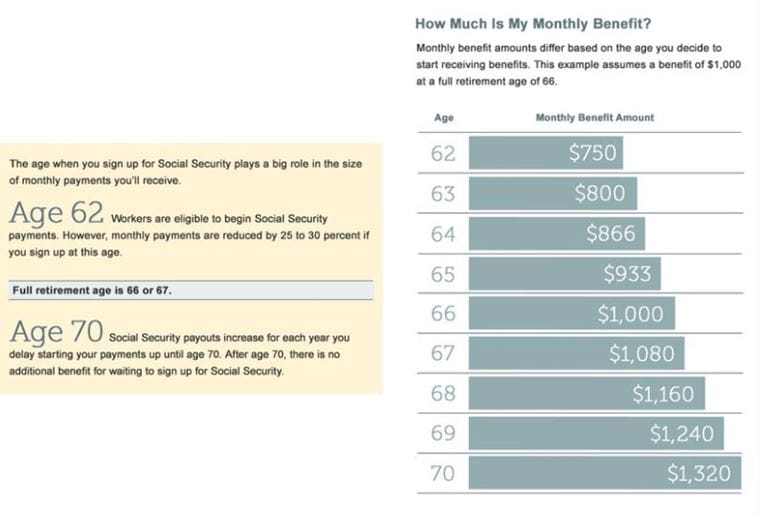
Early Claiming: You can start receiving benefits as early as age 62. However, claiming at 62 results in a permanent reduction of up to 30% of your full benefit, depending on your FRA. While it provides income sooner, it also means a smaller check for the rest of your life.
-
Delayed Claiming: For every year you delay claiming benefits past your FRA, up to age 70, you earn Delayed Retirement Credits (DRCs). These credits permanently increase your monthly benefit by approximately 8% per year. This means someone with an FRA of 67 could increase their monthly benefit by 24% by waiting until age 70. This option can be incredibly powerful for those who are healthy, have other income sources, and can afford to defer Social Security payments.
The decision of when to claim is a complex one, influenced by personal health, other retirement savings, financial needs, and life expectancy projections.
Estimating Your Future Social Security Benefits
While the factors above provide a theoretical framework, you’ll undoubtedly want to see concrete numbers. Fortunately, the Social Security Administration provides robust tools and resources to help you estimate your future benefits with considerable accuracy. Leveraging these resources is a crucial step in your retirement planning journey.
The Social Security Administration (SSA) Online Account
The most definitive and personalized way to estimate your benefits is by creating an online “my Social Security” account at ssa.gov. This secure portal allows you to:
-
View your complete earnings record to ensure accuracy.
-
Get personalized estimates of your future retirement, disability, and survivor benefits at various claiming ages (e.g., 62, FRA, 70).
-
Check the status of an application.
-
Request a replacement Social Security card.
This account is an invaluable resource that pulls directly from your official SSA record, providing the most precise estimates available.
Understanding Your Social Security Statement
Even if you don’t create an online account, the SSA used to mail an annual Social Security Statement to workers aged 25 and over who were not yet receiving benefits. While these are now primarily available online, you can still request a paper copy. Your statement provides a summary of your earnings history, estimated benefits at different claiming ages (62, your FRA, and 70), and information about disability and survivor benefits. It’s essential to review your earnings record carefully on this statement (or online) for any errors, as discrepancies could impact your future benefits.
Using Online Calculators and Tools
Beyond your personal account, the SSA website also offers various online calculators:
-
Retirement Estimator: Provides estimates based on your actual earnings record.
-
Quick Calculator: A simpler tool for quick, rough estimates.
-
Benefit Calculators for Spouses, Survivors, and Divorced Spouses: These specialized calculators help estimate benefits for different scenarios, which can be particularly useful for complex family situations.
These tools are excellent for scenario planning, allowing you to see how different decisions, like delaying retirement, might affect your monthly payout.
Professional Financial Advice
While SSA tools are powerful, they don’t always capture the full complexity of your financial situation, especially regarding taxes, spousal benefits optimization, and coordination with other retirement accounts. A qualified financial advisor can help integrate your Social Security strategy into your broader financial plan. They can provide personalized advice on when to claim, how to coordinate benefits with a spouse, and how to minimize taxes on your Social Security income, offering a holistic perspective.
Maximizing Your Social Security Payouts
Once you understand how your benefits are calculated and how to estimate them, the next logical step is to explore strategies to maximize your payout. This isn’t about loopholes but about making informed choices based on the rules of the system.
The Power of Delayed Claiming
As discussed, delaying claiming benefits past your Full Retirement Age (FRA) up to age 70 can result in a significant increase in your monthly payments, thanks to Delayed Retirement Credits. For many, this 8% annual increase (up to 24% for three years of delay) is a compelling reason to wait, especially if they are in good health, have sufficient other retirement savings, or plan to continue working. This strategy essentially “buys” you a higher lifetime income stream from the government, providing a hedge against longevity risk.
Spousal and Survivor Benefits Considerations
Social Security offers benefits that extend beyond individual worker claims.
-
Spousal Benefits: If your spouse claims benefits, you may be eligible to receive up to 50% of their full retirement benefit if that amount is higher than your own benefit. This can be particularly beneficial for spouses with limited or no work history.
-
Survivor Benefits: If your spouse passes away, you may be eligible for survivor benefits, which can be up to 100% of your deceased spouse’s benefit.
Strategic claiming can maximize the combined benefits for a couple over their lifetimes. This often involves one spouse delaying their claim to build a higher benefit, which can then translate into a higher survivor benefit for the surviving spouse. Understanding these options is critical for married couples and those planning for unforeseen circumstances.
Working in Retirement and the Earnings Test
If you claim Social Security benefits before your Full Retirement Age and continue to work, your benefits may be reduced if your earnings exceed certain limits. This is known as the “earnings test.” In 2024, if you are under FRA, the SSA deducts $1 from your benefits for every $2 you earn above $22,320. In the year you reach FRA, the reduction is $1 for every $3 earned above a higher limit ($59,520 in 2024) until the month you reach FRA. Once you reach your FRA, the earnings test no longer applies, and you can earn as much as you want without your benefits being reduced. Any benefits withheld due to the earnings test are not permanently lost; your future benefits are recalculated at your FRA to account for the withheld amounts.
Impact of Taxes on Benefits
It’s important to remember that your Social Security benefits may be taxable. If your “combined income” (adjusted gross income + nontaxable interest + half of your Social Security benefits) exceeds certain thresholds, a portion of your benefits could be subject to federal income tax. Depending on your combined income, up to 50% or even 85% of your benefits may be taxable. Several states also tax Social Security benefits. Understanding these tax implications is crucial for accurate retirement income planning.
Integrating Social Security into Your Retirement Plan
Social Security, while vital, is rarely sufficient on its own to fund a comfortable retirement. It’s best viewed as one critical pillar within a broader, multi-faceted retirement strategy. Integrating your Social Security expectations into your overall financial plan is essential for achieving long-term financial security.
Social Security as One Piece of the Puzzle
Think of Social Security as a foundational layer of your retirement income. For most individuals, it’s designed to provide a base income, but it’s often not enough to cover all desired retirement expenses, especially for those accustomed to a higher standard of living during their working years. This highlights the importance of supplemental income streams from personal savings, investments, and potentially part-time work in retirement. Recognizing its role as a component, rather than the sole solution, helps set realistic expectations.
Beyond Social Security: Savings and Investments
To truly achieve financial independence in retirement, you must actively save and invest throughout your working life. This includes utilizing employer-sponsored plans like 401(k)s, 403(b)s, and 457(b)s, as well as individual retirement accounts (IRAs) such as traditional and Roth IRAs. Diversified investment portfolios, real estate, and other income-generating assets will collectively form the bulk of your retirement income, allowing you to maintain your desired lifestyle and cover discretionary expenses. A well-diversified portfolio that aligns with your risk tolerance and time horizon is critical.
Reassessing Your Financial Goals
As you approach retirement, periodically reassess your financial goals and spending projections. What kind of lifestyle do you envision? How much will healthcare cost? Do you plan to travel extensively, or will you downsize? Understanding your anticipated expenses, combined with your estimated Social Security benefits and other income sources, will help you determine if you’re on track or if adjustments are needed. This might involve increasing savings, adjusting retirement age, or refining your investment strategy.
Long-Term Financial Security
Ultimately, understanding how much you will get from Social Security is a key step towards building long-term financial security. By taking the time to educate yourself on the system’s mechanics, utilizing available estimation tools, exploring maximization strategies, and integrating these insights into a comprehensive financial plan, you can approach retirement with confidence. Proactive planning ensures that Social Security serves its intended purpose: a reliable and valuable asset in your journey towards a financially secure and fulfilling retirement.
aViewFromTheCave is a participant in the Amazon Services LLC Associates Program, an affiliate advertising program designed to provide a means for sites to earn advertising fees by advertising and linking to Amazon.com. Amazon, the Amazon logo, AmazonSupply, and the AmazonSupply logo are trademarks of Amazon.com, Inc. or its affiliates. As an Amazon Associate we earn affiliate commissions from qualifying purchases.