
Understanding your potential Social Security benefit is a cornerstone of retirement planning. For many Americans, these benefits represent a significant, if not primary, source of income during their non-working years. However, the exact amount you receive is far from a one-size-fits-all figure, influenced by a complex interplay of your earnings history, the age you choose to claim, and various other factors. Delving into these specifics is crucial for accurately forecasting your financial future and making informed decisions.
Understanding the Fundamentals of Your Social Security Benefit
Social Security is more than just a retirement check; it’s a comprehensive social insurance program providing benefits to retirees, the disabled, and survivors of deceased workers. Its primary purpose is to offer a financial safety net, but the amount of that net varies significantly among individuals.
What is Social Security and Its Purpose?
Established in 1935, Social Security acts as a pay-as-you-go system, where current workers’ contributions fund the benefits of today’s retirees and other beneficiaries. It’s designed to replace a portion of pre-retirement income, particularly for lower-income workers, but it was never intended to be your sole source of retirement funds. Instead, it forms one leg of a three-legged stool, alongside personal savings/investments and employer-sponsored pensions/401(k)s.
Key Factors Influencing Your Benefit Amount
Your monthly Social Security check is primarily determined by four key variables:
-
Your Earnings Record: Social Security calculates your benefit based on your average indexed monthly earnings (AIME) over your 35 highest-earning years. The more you earned (up to the annual taxable maximum) and the longer you worked, the higher your potential benefit.
-
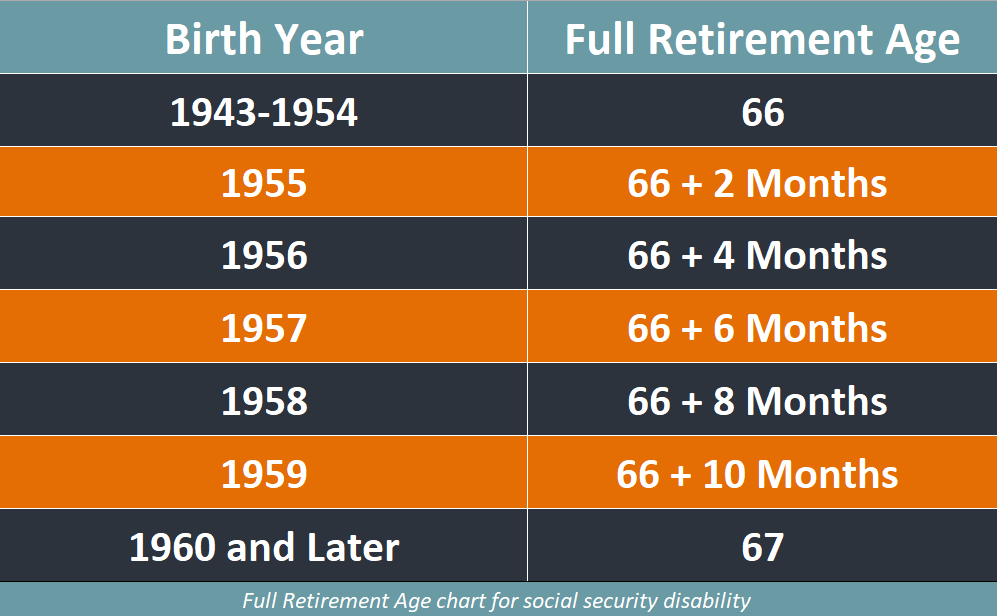
Your Full Retirement Age (FRA): This is the age at which you are entitled to 100% of your primary insurance amount (PIA). Your FRA depends on your birth year, ranging from 66 for those born between 1943 and 1954, gradually increasing to 67 for those born in 1960 or later.
-
The Age You Claim Benefits: While you can start receiving benefits as early as age 62, or as late as age 70, the age you choose has a profound impact on your monthly payment. Claiming early results in a permanent reduction, while delaying past your FRA increases your monthly check.
-
Cost-of-Living Adjustments (COLA): To help benefits keep pace with inflation, Social Security generally provides annual cost-of-living adjustments, which can increase your monthly payment over time.
Deconstructing the Benefit Calculation: Your Primary Insurance Amount (PIA)
At the heart of your Social Security benefit calculation is your Primary Insurance Amount (PIA). This is the monthly benefit you would receive if you start collecting benefits exactly at your Full Retirement Age (FRA).
The Role of Your Earnings Record
The Social Security Administration (SSA) looks at your entire earnings history. For each year you worked, the wages you earned (up to the taxable maximum) are recorded. To ensure that past earnings reflect current wage levels, these historical earnings are “indexed” to account for general wage growth in the economy. This indexing process helps to provide a fair reflection of your lifetime earnings in relation to the economy.
After indexing, the SSA takes your 35 highest-earning indexed years and sums them up. If you worked fewer than 35 years, zero earnings are recorded for the missing years, which will lower your average. This total is then divided by 420 (the number of months in 35 years) to arrive at your Average Indexed Monthly Earnings (AIME).
How AIME and Bend Points Determine Your PIA
Once your AIME is calculated, the SSA applies a progressive formula using “bend points” to determine your PIA. This progressive structure means that Social Security replaces a higher percentage of earnings for lower-income workers than for higher-income workers.
For example, for individuals becoming eligible for retirement benefits in 2024, the formula is:
-
90% of the first $1,174 of AIME
-
32% of AIME between $1,174 and $7,078
-
15% of AIME over $7,078
These dollar amounts (bend points) are adjusted annually for inflation. The result of this calculation is your PIA – the amount you are due at your Full Retirement Age. It’s important to note that this PIA is the baseline; your actual monthly payment will then be adjusted based on the age you claim.
The Critical Impact of When You Claim Your Benefits
One of the most significant decisions affecting your Social Security benefit is when you choose to begin receiving payments. This choice can result in a difference of hundreds, or even over a thousand, dollars per month for the rest of your life.
Full Retirement Age (FRA): The Benchmark
Your Full Retirement Age (FRA) is the age at which you are entitled to 100% of your PIA. As mentioned, this age varies based on your birth year:
-
Born 1943-1954: FRA is 66
-
Born 1955: FRA is 66 and 2 months
-
Born 1956: FRA is 66 and 4 months
-
Born 1957: FRA is 66 and 6 months
-
Born 1958: FRA is 66 and 8 months
-
Born 1959: FRA is 66 and 10 months
-
Born 1960 or later: FRA is 67
Claiming exactly at your FRA ensures you receive your full, unadjusted PIA.
Claiming Early: Reductions for Ages 62-FRA
You can start receiving Social Security retirement benefits as early as age 62. However, claiming before your FRA results in a permanent reduction in your monthly benefit. The reduction is calculated based on the number of months you claim early.
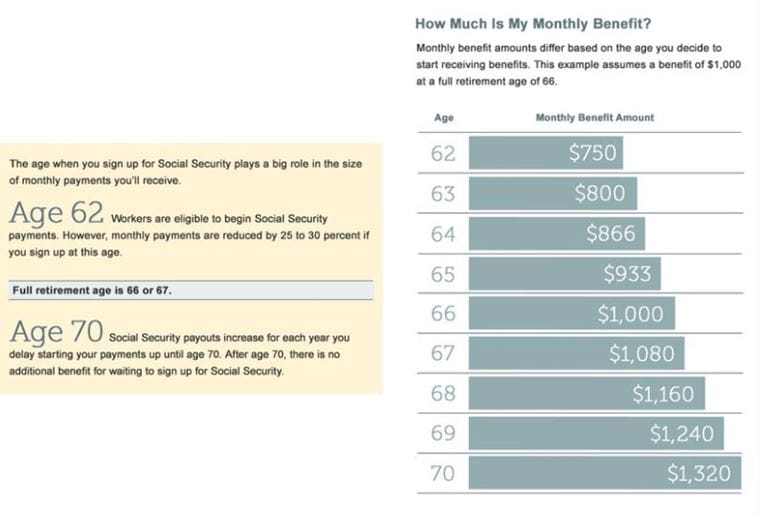
For example, if your FRA is 67 and you claim at 62, your benefit will be reduced by approximately 30%. The reduction rate is 5/9 of 1% for each of the first 36 months you claim early, and 5/12 of 1% for each additional month. While this means more monthly payments over your lifetime, the individual payment amount will be significantly smaller. This option is often chosen by individuals who have health issues, are no longer able to work, or simply need the income sooner.
Delaying Benefits: Maximizing Your Monthly Payout Beyond FRA
Conversely, you can delay claiming benefits past your FRA, up to age 70. For each month you delay past your FRA, your benefit increases by a certain percentage, known as “Delayed Retirement Credits.” These credits typically add up to an 8% increase per year for each year you delay, up to age 70.
For instance, if your FRA is 67 and you delay claiming until age 70, your monthly benefit could be approximately 24% higher than your PIA (8% per year for three years). This is often an attractive strategy for individuals who are healthy, continue to work, or have sufficient other retirement income to defer Social Security, effectively guaranteeing a higher fixed income stream later in life.
The Impact of Working While Receiving Benefits
If you claim benefits before your FRA and continue to work, your benefits may be temporarily reduced if your earnings exceed certain annual limits. For 2024, if you are under FRA for the entire year, the SSA deducts $1 from your benefits for every $2 you earn above $22,320. In the year you reach FRA, the deduction is $1 for every $3 earned above a higher limit ($59,520 in 2024), but only for earnings before the month you reach FRA. Once you reach your FRA, your benefits are no longer subject to earnings limits, and any previously withheld benefits are factored back into your monthly payment calculation, potentially increasing your future checks.
Average vs. Maximum Social Security Payouts
It’s helpful to understand the range of benefits people receive to contextualize your own potential payout.
Typical Benefits for Retirees
The average Social Security retirement benefit provides a realistic benchmark. For January 2024, the average monthly Social Security benefit for retired workers was approximately $1,907. This figure reflects the diverse earnings histories and claiming ages of millions of beneficiaries. It underscores that while Social Security provides a vital foundation, relying solely on it is unlikely to maintain a comfortable pre-retirement lifestyle for most.
Reaching the Maximum Benefit Threshold
While the average is modest, it is possible to receive a much higher monthly benefit. To qualify for the maximum Social Security benefit, an individual must meet stringent criteria:
-
Work for at least 35 years: This ensures no zero-earning years are factored into your AIME calculation.
-
Earn the maximum taxable earnings each year for those 35 years: For instance, in 2024, the maximum earnings subject to Social Security tax are $168,600. To hit the maximum benefit, you must have earned at least this amount (or the equivalent indexed amount for prior years) for at least 35 years.
-
Delay claiming benefits until age 70: This ensures you receive the maximum possible Delayed Retirement Credits.
For an individual claiming benefits at age 70 in 2024, having met all these criteria, the maximum possible monthly benefit was $4,873. This figure serves as an upper bound, showcasing the highest potential payout from the system.
Strategies to Optimize Your Social Security Income
Given the significant role Social Security plays in retirement, strategic planning can significantly impact the “how much” you receive.
Maximizing Your Earned Income
Since your benefit is based on your 35 highest-earning years, maximizing your income, particularly during your peak earning years, directly translates to a higher AIME and thus a higher PIA. This means staying employed, seeking promotions, or even considering part-time work in retirement to fill out those 35 years or replace lower-earning years. For those who haven’t worked for 35 years, working additional years (even if for lower pay) can be beneficial by replacing zero-earning years in the calculation.
Understanding Spousal and Survivor Benefits
Social Security isn’t just for primary workers. If you are married, divorced (under certain conditions), or widowed, you may be eligible for benefits based on your spouse’s or ex-spouse’s earnings record, which could potentially be higher than your own.
-
Spousal Benefits: A spouse can claim up to 50% of their partner’s full retirement age benefit. If your own PIA is lower than 50% of your spouse’s, you might claim spousal benefits. However, if you claim spousal benefits early, they are also reduced.
-
Survivor Benefits: A widow(er) can receive up to 100% of their deceased spouse’s benefit at their own FRA, or a reduced amount as early as age 60 (or 50 if disabled). Understanding these rules is critical, especially for couples, as claiming strategies can be optimized to maximize total household benefits over both lifetimes.
Navigating Taxation of Benefits
It’s important to remember that your Social Security benefits may be taxable. If your “combined income” (adjusted gross income + non-taxable interest + half of your Social Security benefits) exceeds certain thresholds, a portion of your benefits becomes subject to federal income tax.
-
Up to 50% of benefits may be taxable if combined income is between $25,000 and $34,000 for individuals, or $32,000 and $44,000 for married couples filing jointly.
-
Up to 85% of benefits may be taxable if combined income exceeds $34,000 for individuals or $44,000 for married couples.
Some states also tax Social Security benefits, so understanding your state’s tax laws is equally important. Factor potential taxes into your retirement income projections.

Integrating Social Security into Your Broader Retirement Plan
Ultimately, the question of “how much” you get from Social Security should be viewed within the context of your overall retirement financial strategy. Social Security provides a foundational income, but it typically won’t cover all your expenses. Develop a comprehensive retirement plan that includes personal savings (IRAs, 401(k)s), other investments, and potentially part-time work. Use the SSA’s online tools, such as the “my Social Security” account, to get personalized estimates and explore various claiming scenarios. Consulting with a financial advisor specializing in retirement planning can also provide invaluable guidance on optimizing your Social Security claiming strategy alongside your other financial assets to achieve a secure and comfortable retirement.
aViewFromTheCave is a participant in the Amazon Services LLC Associates Program, an affiliate advertising program designed to provide a means for sites to earn advertising fees by advertising and linking to Amazon.com. Amazon, the Amazon logo, AmazonSupply, and the AmazonSupply logo are trademarks of Amazon.com, Inc. or its affiliates. As an Amazon Associate we earn affiliate commissions from qualifying purchases.