
Supplemental Security Income (SSI) is a critical federal program designed to provide financial assistance to millions of Americans. Unlike Social Security Disability Insurance (SSDI), which is based on work history and contributions to Social Security taxes, SSI is a needs-based program for individuals who are disabled, blind, or age 65 or older, and who have limited income and resources. Understanding how much you can receive from SSI involves navigating a complex landscape of federal regulations, state supplements, and individual circumstances. It’s not a fixed sum for everyone; rather, it’s a dynamic calculation influenced by numerous factors.
Understanding Supplemental Security Income (SSI)
At its core, SSI aims to provide a minimum level of income for those most in need. Administered by the Social Security Administration (SSA), it is funded by general tax revenues, not Social Security trust funds. This distinction is crucial because it highlights SSI’s role as a safety net program, distinct from earned benefits.
Eligibility Criteria
To qualify for SSI, applicants must meet specific requirements related to age, disability, and financial status:
-
Age: Be 65 or older.
-
Disability/Blindness: Be deemed disabled or blind by the SSA’s strict definitions. For adults, disability means an inability to engage in any substantial gainful activity due to a medically determinable physical or mental impairment that has lasted or is expected to last for a continuous period of not less than 12 months or result in death. For children, it means a severe impairment that results in marked and severe functional limitations.
-
Limited Income: The applicant’s countable income must fall below a certain threshold, known as the Federal Benefit Rate (FBR). Not all income counts; some is excluded.
-
Limited Resources: The applicant’s countable resources (assets) must not exceed $2,000 for an individual or $3,000 for a couple. Resources include cash, bank accounts, stocks, and other easily convertible assets. Certain assets, such as a primary residence, one vehicle, and household goods, are typically excluded.
The interplay of these criteria determines initial eligibility, setting the stage for calculating potential payment amounts.
Decoding the Maximum Federal Benefit Rate (FBR)
The foundation of an SSI payment is the Federal Benefit Rate (FBR). This is the maximum monthly payment an eligible individual or couple can receive from the federal government, assuming they have no other countable income. The FBR is adjusted annually to account for inflation, through a Cost-of-Living Adjustment (COLA), typically announced in the fall for the following year.
Current FBR Amounts
As of 2024, the FBR stands at:
-
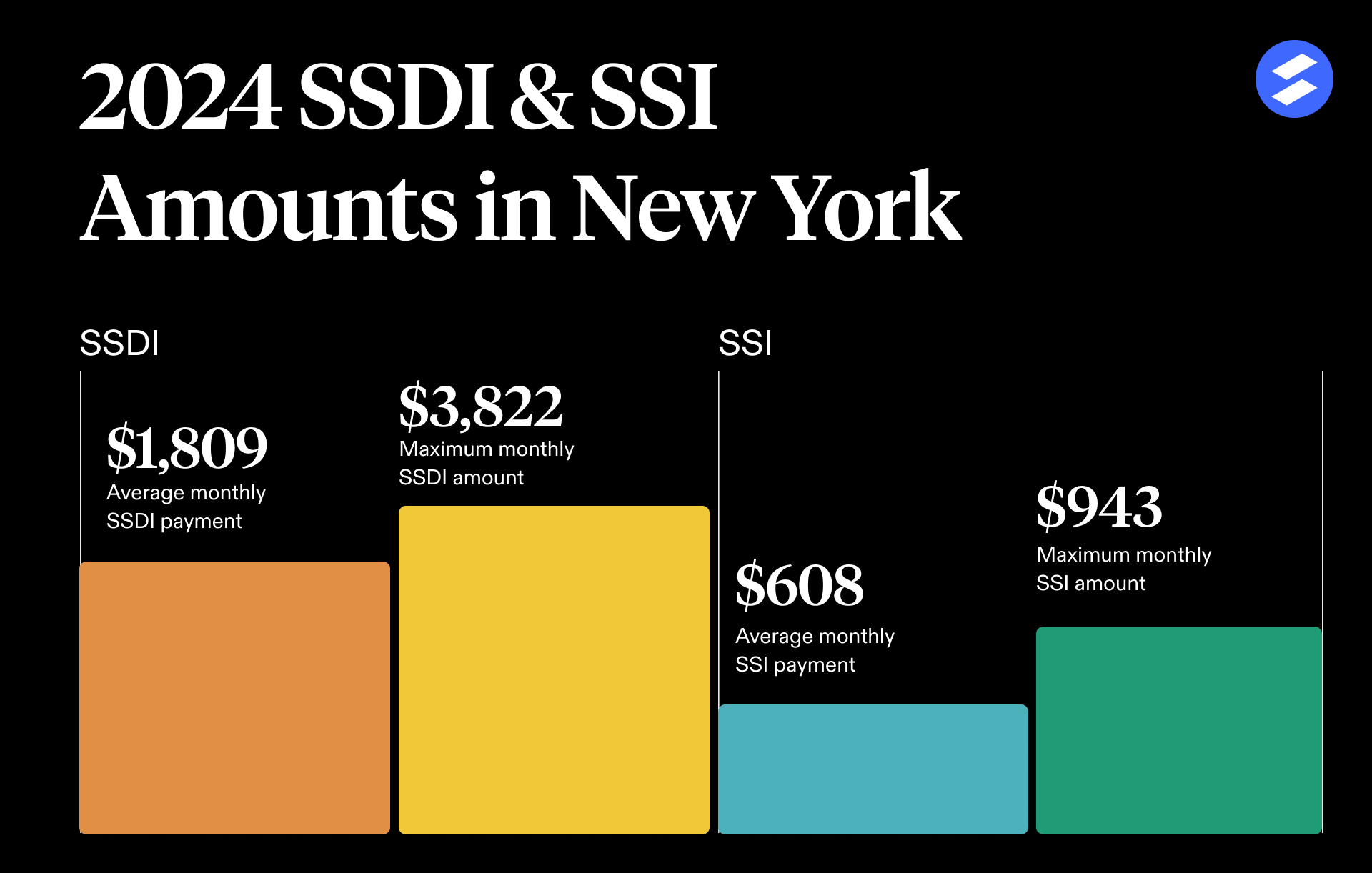
Individual: $943 per month
-
Eligible Couple: $1,415 per month
It’s vital to understand that the FBR is a maximum. Most recipients do not receive the full FBR because various factors reduce the countable amount. The SSA calculates your payment by taking the FBR and subtracting your “countable” income.
How COLA Impacts SSI Payments
The annual COLA ensures that SSI benefits retain their purchasing power against inflation. When the cost of living increases, so too does the FBR, providing a necessary adjustment for recipients whose incomes are often fixed. This automatic adjustment is a critical feature, helping to sustain the financial well-being of beneficiaries over time.
Factors That Reduce Your SSI Payment
While the FBR sets the ceiling, several factors can significantly reduce the actual amount an individual receives. These reductions are primarily based on the principle that SSI is a “payer of last resort” and takes into account other available support.
Countable Income
The most significant factor affecting your SSI payment is your “countable income.” Not all income is counted, as the SSA has specific rules for exclusions.
-
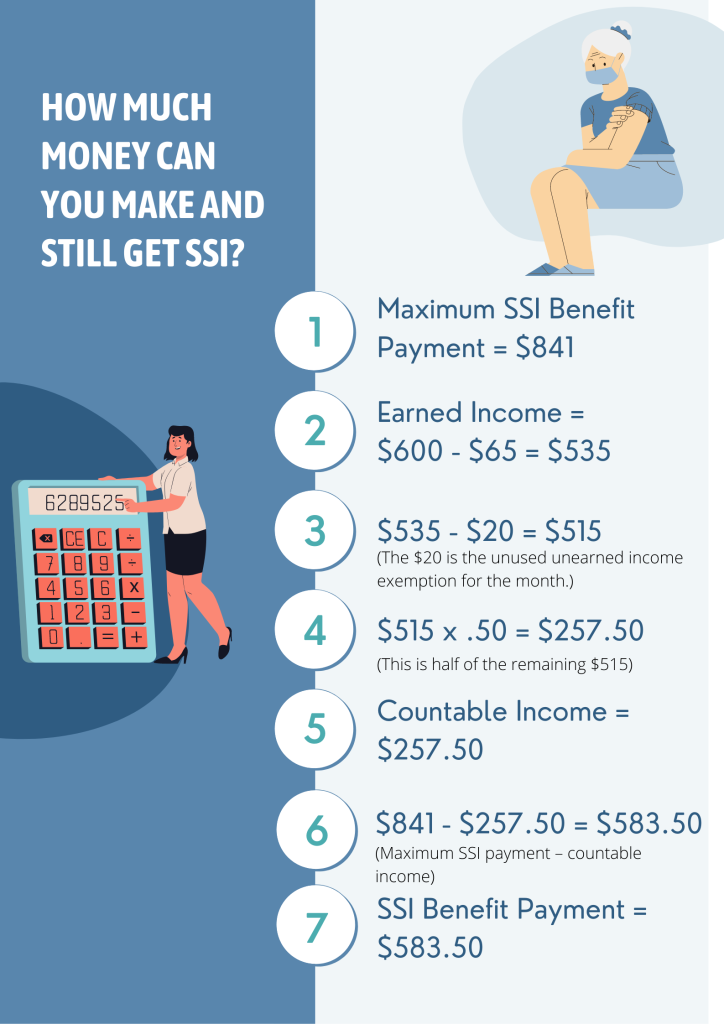
Earned Income: This includes wages from work. The SSA applies a substantial exclusion: the first $85 of your monthly earned income is not counted. Of the remaining earned income, only half is counted against your SSI benefit. For example, if you earn $685 in a month, the first $85 is excluded, leaving $600. Half of $600 ($300) is then counted as income. This encourages work by allowing beneficiaries to keep a significant portion of their earnings without a dollar-for-dollar reduction in their SSI.
-
Unearned Income: This includes money from sources like Social Security benefits (SSDI, retirement, survivors), pensions, unemployment benefits, or even gifts. For unearned income, the first $20 is excluded. After that, nearly all the remaining unearned income is counted dollar-for-dollar against your SSI payment.
-
Other Income: Certain other types of income, such as veterans’ benefits, workers’ compensation, and some royalties, may also be counted.

The formula is essentially: (FBR + State Supplement) – Countable Income = Your SSI Payment.
In-Kind Support and Maintenance (ISM)
If someone else provides you with food or shelter, or helps pay for them, the SSA considers this “in-kind support and maintenance” (ISM). This is treated as unearned income and can reduce your SSI payment.
-
One-Third Reduction Rule (VTR): If you live in another person’s household throughout a calendar month and receive both food and shelter from them, your SSI payment is reduced by one-third of the FBR. This is a simplified rule to avoid complex valuations.
-
Presumed Maximum Value (PMV) Rule: If you receive ISM but the one-third reduction rule doesn’t apply (e.g., you pay some rent but it’s less than your fair share, or you live in your own household but someone pays a bill for you), the SSA might use the PMV rule. Under this rule, the value of the ISM is presumed to be no more than one-third of the FBR plus $20. The actual reduction is the lower of the actual value of the ISM or the PMV. This rule is designed to prevent excessive reductions when only partial support is provided.
Understanding ISM is critical, as it can be a common source of payment reduction, especially for those living with family or in shared housing where others contribute significantly to their living expenses.
Variations and State Supplementary Payments
Beyond the federal framework, many states offer their own supplementary payments to SSI recipients. These state supplements can significantly increase the total amount an individual receives, but they vary widely by state and depend on specific living arrangements and other factors.
State-Specific Additions
-
Purpose: State supplementary payments are designed to provide additional financial assistance beyond the federal FBR, often reflecting higher costs of living in certain regions or specific state policies to support vulnerable populations.
-
Eligibility and Amounts: Eligibility criteria for state supplements can differ from state to state. Some states provide supplements to all federal SSI recipients, while others target specific groups (e.g., those living in adult foster care, or individuals with certain medical conditions). The amounts can range from a few dollars to several hundred dollars per month.
-
Administration: Some states administer their own supplements, meaning you apply and receive the payment directly from the state. Other states have agreements with the SSA, which then includes the state supplement in your federal SSI payment.
It is crucial for potential and current SSI recipients to check with their state’s social services agency or the SSA for information on state-specific supplements. This additional layer of funding can make a substantial difference in an individual’s financial stability. For instance, states like California and New York are known for having more generous state supplements, whereas others may offer none at all.
Navigating the Application Process and Maintaining Eligibility
Applying for SSI can be a detailed process, and once approved, maintaining eligibility requires ongoing vigilance and communication with the SSA. The SSA’s objective is to ensure that benefits are paid correctly to those who truly qualify.
The Application Journey
The application for SSI can be initiated online, by phone, or in person at a local Social Security office. It involves providing comprehensive documentation, including:
-
Personal Information: Birth certificate, proof of citizenship or legal residency, marital status.
-
Financial Records: Bank statements, income records (pay stubs, pension statements), property deeds, insurance policies.
-
Medical Records: For disability applicants, detailed medical reports, doctor’s notes, hospital records, and a list of medications are essential to prove the severity and duration of the impairment.
The SSA uses this information to determine if income and resource limits are met and, for disability claims, sends the medical information to a State Disability Determination Services (DDS) agency for evaluation. This process can take several months.
Ongoing Responsibilities
Once approved, SSI recipients have critical responsibilities to report changes that could affect their eligibility or payment amount. Failure to report changes promptly can lead to overpayments, which the SSA will require to be repaid, often through reduction of future benefits.
-
Changes in Income: Any new job, increase in wages, or receipt of other benefits must be reported.
-
Changes in Resources: If your bank account balance significantly increases or you acquire new assets, this must be reported.
-
Changes in Living Arrangement: Moving, marriage, divorce, or changes in who pays for your food and shelter are all critical to report.
-
Changes in Medical Condition: While less frequent, significant improvements in a disabling condition could impact eligibility.
Periodic Redeterminations
The SSA conducts periodic “redeterminations” of non-medical eligibility to verify that recipients continue to meet the income, resource, and living arrangement requirements for SSI. These reviews are typically conducted every 1 to 6 years, depending on the likelihood of change in the recipient’s situation. For those receiving SSI based on disability, periodic “Continuing Disability Reviews” (CDRs) are also conducted to assess whether the medical condition has improved to the point where they are no longer considered disabled.
Work Incentives
Recognizing the desire and ability of some disabled individuals to work, the SSA offers several work incentives for SSI recipients. These provisions allow individuals to work and earn income without immediately losing their SSI or Medicaid eligibility. Key incentives include:
-
Earned Income Exclusion: As mentioned, a significant portion of earned income is not counted.
-
Section 1619(a) and 1619(b): These sections allow individuals to continue receiving SSI cash payments and/or Medicaid coverage even if their earnings become high enough to cause their SSI cash payments to stop. This is particularly important for access to healthcare.
-
Plans for Achieving Self-Support (PASS): This allows disabled individuals to set aside money and resources over a period of time to achieve a specific work goal, without counting against their SSI eligibility.
These incentives are designed to promote self-sufficiency and economic independence, demonstrating the program’s commitment to supporting individuals beyond just providing a baseline income. Maximizing your SSI benefit, therefore, involves not only understanding the initial payment calculations but also actively managing your financial situation and responsibilities within the program’s guidelines.
aViewFromTheCave is a participant in the Amazon Services LLC Associates Program, an affiliate advertising program designed to provide a means for sites to earn advertising fees by advertising and linking to Amazon.com. Amazon, the Amazon logo, AmazonSupply, and the AmazonSupply logo are trademarks of Amazon.com, Inc. or its affiliates. As an Amazon Associate we earn affiliate commissions from qualifying purchases.