
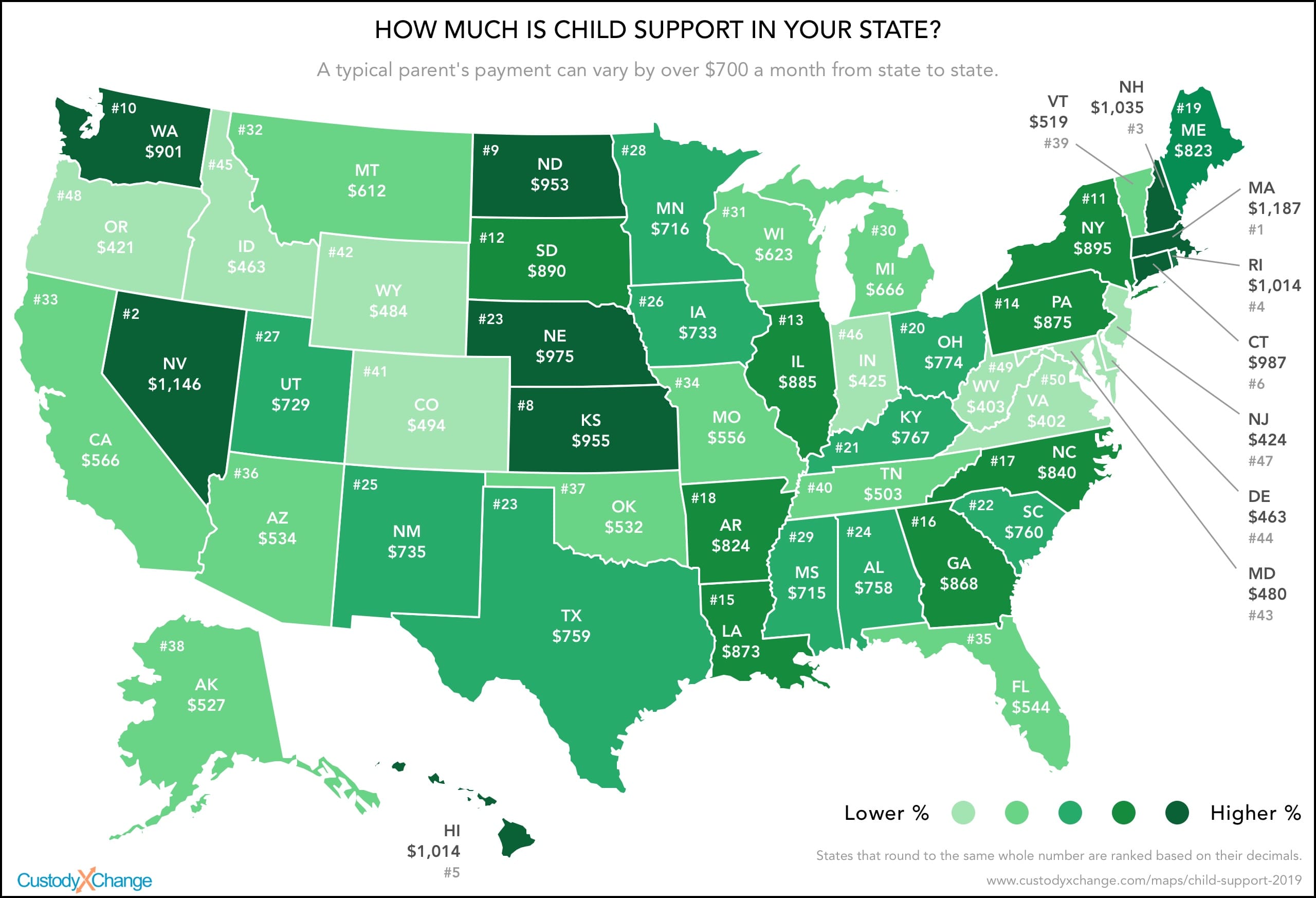
The financial responsibility of raising a child is a significant consideration, especially when parents are no longer together. Child support is a legal mechanism designed to ensure that both parents contribute to the financial well-being of their child, maintaining a standard of living similar to what they would have enjoyed had the parents remained a single household. Determining the exact amount of child support for one child is a complex process, heavily dependent on state-specific guidelines, the financial circumstances of both parents, and the child’s individual needs. There is no single national formula; instead, each state employs its own unique set of rules and calculations.

Understanding the Foundation of Child Support Calculations
At its core, child support aims to provide for a child’s necessities and reasonable comforts. States have developed structured guidelines to make these calculations as fair and consistent as possible, although specific figures will always vary.
State-Specific Guidelines and Formulas
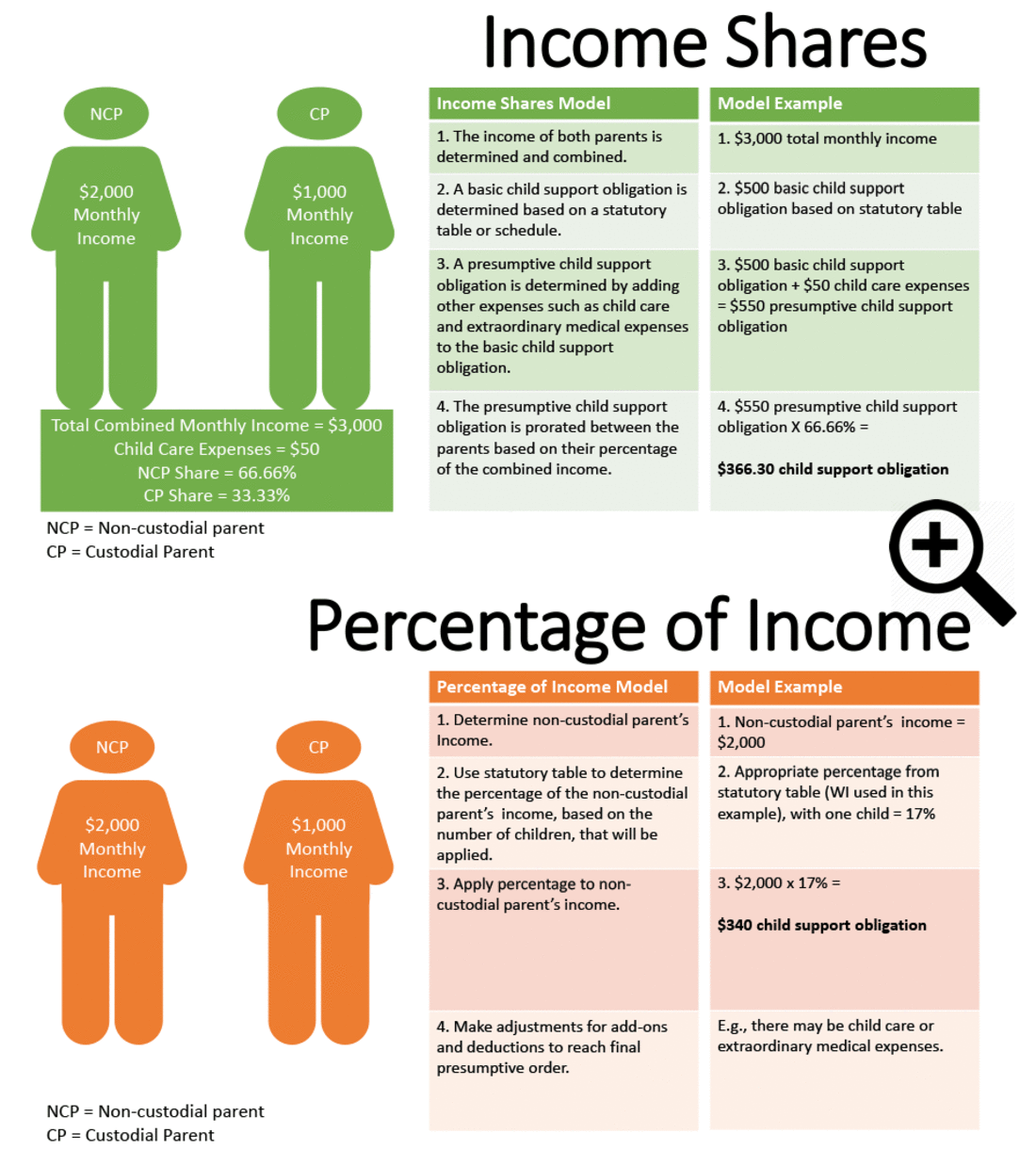
Most states use one of three primary models for calculating child support:
-
Income Shares Model: This is the most common model, adopted by a majority of states. It’s based on the premise that a child should receive the same proportion of parental income that they would have received if the parents lived together. The court calculates the combined adjusted gross income of both parents, then consults a schedule or table to find the basic support obligation for that income level and number of children. This total obligation is then divided proportionally between the parents based on their share of the combined income. For example, if one parent earns 60% of the combined income, they would be responsible for 60% of the total child support obligation.
-
Percentage of Obligor’s Income Model: Used by a few states, this model sets child support as a percentage of the non-custodial parent’s (the “obligor’s”) income. The percentage often varies based on the number of children. Some states using this model apply a “flat percentage” regardless of the custodial parent’s income, while others use a “varying percentage” that might adjust based on factors like the obligor’s income level.
-
Melson Formula: This more complex model, used in a handful of states, incorporates a self-support reserve for each parent and considers the basic needs of the children before calculating additional support. It’s similar to the income shares model but includes a more explicit step to ensure each parent retains enough income to meet their own basic living expenses.
Regardless of the model, the overarching goal is to ensure the child’s needs are met while considering the financial realities of both parents.
Key Factors Influencing the Amount
Beyond the basic formula, several critical factors directly influence the final child support order:
-
Parental Income: This is arguably the most significant factor. Courts typically consider the gross or net income of both parents, including wages, salaries, bonuses, commissions, self-employment income, benefits (social security, unemployment, disability), rental income, and investment returns.
-
Number of Overnights (Custody Arrangement): For parents with shared custody or extensive visitation schedules, the number of nights each parent spends with the child can significantly impact the support calculation. Many states have specific adjustments in their formulas for shared parenting arrangements, often reducing the support paid by the non-custodial parent if they have the child for a substantial portion of the time (e.g., 35% or more overnights).
-
Healthcare Costs: The cost of health insurance premiums for the child, as well as uninsured medical expenses (co-pays, deductibles, prescriptions), are almost always factored in. One parent may be ordered to carry the insurance, and both typically share uninsured costs proportionally.
-
Childcare Expenses: Work-related childcare costs (daycare, after-school care) are usually added to the basic support obligation and shared between the parents, often proportional to their incomes.
-
Special Needs and Extraordinary Expenses: If a child has special educational needs, significant medical conditions requiring ongoing treatment, or participates in exceptionally expensive extracurricular activities agreed upon by both parents or deemed necessary by the court, these costs can lead to an upward adjustment in the support order.
Deconstructing Income: What Counts and What Doesn’t
A thorough and accurate assessment of each parent’s income is paramount to determining a fair child support amount. The definition of “income” for child support purposes can be quite broad.
Gross vs. Net Income
States differ on whether they use parents’ gross income (total income before taxes and deductions) or net income (income after certain allowable deductions) in their calculations.
-
Gross Income: Often preferred for simplicity and to prevent manipulation, gross income typically includes nearly all sources of funds, such as:
-
Salaries, wages, tips, bonuses, and commissions.
-
Self-employment income (gross receipts minus ordinary and necessary business expenses).
-
Pension and retirement payments.
-
Social Security benefits (excluding SSI).
-
Unemployment and disability benefits.
-
Workers’ compensation awards.
-
Alimony or spousal support received from a prior marriage (or the current one, in some contexts).
-
Interest and dividend income.
-
Rental income.
-
Trust income.
-
-
Net Income: If a state uses net income, it typically starts with gross income and subtracts specific, statutorily defined deductions, which may include:
-
Mandatory income taxes (federal, state, local).
-
Social Security and Medicare taxes (FICA).
-
Mandatory union dues.
-
Mandatory retirement contributions.
-
Health insurance premiums paid for the parent and/or children.
-
Court-ordered child support or spousal support paid for other dependents.
-
It’s crucial to understand the specific definitions used by your state’s guidelines.
Allowable Deductions
Even in states that use a gross income model, certain deductions may be permissible before arriving at the “adjusted gross income” used in the support calculation. These often include:
-
Pre-existing Child Support or Spousal Support Orders: Payments made to another party from a prior relationship.
-
Health Insurance Premiums: Often, only the portion covering the children is considered, or in some cases, the parent’s individual premium.
-
Certain Taxes: While not always a deduction from gross, tax liabilities are inherently considered when evaluating a parent’s financial capacity.
Imputation of Income
A critical concept in child support is “imputation of income.” This occurs when a parent is deemed voluntarily unemployed or underemployed without a valid reason. If a court finds that a parent could earn more but is intentionally not doing so to reduce their child support obligation, the court may “impute” an income to that parent. This means the support calculation will be based on what the parent could be earning, rather than their declared, lower income. Factors considered include the parent’s work history, education, skills, and prevailing job opportunities in their community. This prevents parents from deliberately shirking their financial responsibility.
Beyond Basic Support: Additional Expenses and Adjustments
Child support isn’t just about covering the bare minimum. Courts recognize that children have varying needs that extend beyond food, clothing, and shelter.
Healthcare Costs
One of the most common additions to basic child support is the provision for healthcare. This typically involves:
-
Health Insurance Premiums: One parent is usually ordered to maintain health insurance for the child if it’s available at a reasonable cost through their employer or another source. The cost of this premium is then often factored into the child support calculation, with both parents sharing the expense proportionally to their incomes.
-
Unreimbursed Medical Expenses: Deductibles, co-pays, prescription costs, and other medical expenses not covered by insurance are almost always shared. A common arrangement is 50/50, but it can also be proportional to income.
Childcare Expenses
If either parent requires childcare (daycare, after-school programs) due to their work or job-seeking efforts, these costs are generally considered mandatory additional expenses. Similar to healthcare premiums, these are usually added to the basic support obligation and allocated between the parents based on their respective incomes.
Educational and Extracurricular Activities
While basic support covers some general costs, specific educational expenses (private school tuition, tutoring for learning disabilities) or significant extracurricular activity fees (competitive sports, music lessons) can be subject to separate orders. These often require the agreement of both parents or a judicial determination that they are necessary and in the child’s best interest. Courts may consider the family’s historical spending patterns and ability to pay.
Special Needs and Extraordinary Expenses
Children with disabilities or chronic medical conditions often incur substantial expenses that go beyond standard support. These could include specialized therapy, medical equipment, adaptive housing needs, or unique educational programs. Courts have the discretion to order additional support specifically for these extraordinary needs, again considering the financial capacity of both parents and the child’s specific requirements.
The Process of Establishing and Modifying Child Support
Establishing and managing child support involves legal processes, and changes in circumstances often necessitate modifications.
Initial Determination
The process usually begins when one parent files a petition with the court or a state child support agency. Both parents are then typically required to provide detailed financial disclosures, including income verification, tax returns, and expense documentation. Many states offer mediation services to help parents reach an agreement outside of court. If an agreement isn’t reached, a judge will review the financial information, apply state guidelines, and issue a child support order. This order is legally binding.
Enforcement Mechanisms
Once an order is in place, states have various tools to enforce it if a parent fails to pay:
-
Wage Garnishment: A common and effective method where support payments are automatically deducted from the non-paying parent’s paycheck.
-
Bank Account Levies: Funds can be withdrawn directly from bank accounts.
-
Tax Refund Interception: Federal and state tax refunds can be seized.
-
Driver’s License/Professional License Suspension: Licenses can be suspended until payments are made.
-
Passport Denial: Passports can be denied for parents who owe significant arrears.
-
Contempt of Court: In severe cases of non-payment, a parent can be held in contempt, potentially leading to fines or even jail time.
Modifying an Existing Order
Child support orders are not set in stone. Life circumstances change, and the law provides for modifications when there’s a “material change in circumstances.” Common reasons for modification include:
-
Significant Change in Income: A substantial increase or decrease in either parent’s income (e.g., job loss, promotion, disability).
-
Change in Custody Arrangement: If the number of overnights with each parent significantly changes.
-
Change in Child’s Needs: A new diagnosis requiring expensive medical care, or a child reaching an age where expenses typically increase (e.g., teenage years).
-
Emancipation of Child: When a child reaches the age of majority (usually 18 or 21, depending on the state and specific circumstances like high school graduation).
It’s crucial to understand that modifications are not automatic. A parent seeking a change must petition the court and demonstrate the material change in circumstances. Self-modifying payments without a court order can lead to legal issues.
Navigating Child Support: Practical Financial Considerations
Child support is a significant financial commitment for the paying parent and a vital resource for the receiving parent. Strategic financial planning is essential for both.
Budgeting for the Payor Parent
Integrating child support payments into a personal budget requires careful planning. It’s a non-discretionary expense that must be prioritized. Payor parents should:
-
Factor it into monthly budgeting: Treat it like any other fixed bill.
-
Understand the long-term commitment: Child support often lasts for many years, impacting long-term financial goals like retirement savings or investments.
-
Maintain an emergency fund: To cover payments during unexpected financial setbacks.
-
Seek financial advice: To optimize their budget and investment strategy while meeting their obligations.
Managing Funds for the Recipient Parent
For the recipient parent, child support is intended to cover the child’s needs. Responsible management of these funds is key:
-
Track expenses: Keep records of how child support is being spent to ensure it aligns with the child’s needs. This can also be helpful in future modification requests.
-
Create a child-focused budget: Ensure funds cover essentials like food, clothing, housing, education, healthcare, and extracurricular activities.
-
Consider future needs: While primarily for current expenses, some families may earmark a portion for future educational savings if the support amount allows.
-
Avoid commingling funds: Keep child support clearly distinct from personal funds to maintain clarity and accountability.
The Role of Legal and Financial Professionals
Navigating child support laws can be complex. Engaging legal counsel (family law attorney) is highly recommended for understanding state-specific guidelines, ensuring accurate income calculations, and representing your interests in court. For long-term financial planning, particularly when managing income changes, investments, or budgeting with child support factored in, a qualified financial advisor can provide invaluable guidance.
Avoiding Common Pitfalls
Several common mistakes can complicate child support matters:
-
Informal Agreements: While tempting, agreements not formalized by court order are generally unenforceable and can lead to disputes.
-
Withholding Visitation for Non-Payment: Child support and visitation are separate legal issues. Withholding one due to issues with the other is illegal and can result in severe penalties.
-
Self-Modifying Orders: Never unilaterally decide to pay less or more, or stop payments. Always seek a court order for any changes.
-
Lack of Financial Transparency: Hiding income or assets can lead to legal penalties and an unfair support order.
Understanding the intricacies of child support for one child requires diligent research into state laws and a transparent approach to financial disclosure. By working within the established legal framework and seeking professional guidance, both parents can ensure the financial stability and well-being of their child.
aViewFromTheCave is a participant in the Amazon Services LLC Associates Program, an affiliate advertising program designed to provide a means for sites to earn advertising fees by advertising and linking to Amazon.com. Amazon, the Amazon logo, AmazonSupply, and the AmazonSupply logo are trademarks of Amazon.com, Inc. or its affiliates. As an Amazon Associate we earn affiliate commissions from qualifying purchases.