
Social Security is more than just a government program; for millions of Americans, it’s a cornerstone of their financial security, particularly during retirement, disability, or after the loss of a loved one. Understanding how much you can expect to “earn” from Social Security is not just a matter of curiosity; it’s a critical component of effective financial planning. Far from a simple fixed payout, the benefits you receive are influenced by a complex interplay of your earnings history, claiming age, marital status, and even broader economic factors. Demystifying this system is essential for making informed decisions that can significantly impact your financial well-being throughout your golden years.

Many individuals approach retirement planning with a vague notion of Social Security providing a safety net, but without a clear understanding of the benefit calculation or the strategies available to maximize their income. This lack of clarity can lead to suboptimal claiming decisions, leaving money on the table that could have otherwise provided greater comfort and security. This comprehensive guide aims to unpack the intricacies of Social Security benefits, revealing the factors that dictate your payout and offering actionable insights to help you potentially increase what you earn. From the fundamental eligibility rules to advanced claiming strategies, we’ll navigate the system to empower you with the knowledge needed to secure your financial future.
The Fundamentals of Social Security Benefits
To truly understand how much you can earn from Social Security, it’s imperative to grasp its foundational structure and purpose. Established in 1935, Social Security was designed to provide a basic level of financial protection for American workers and their families. It’s not a savings account in the traditional sense, but rather a “pay-as-you-go” system where current workers’ contributions fund the benefits of today’s retirees and beneficiaries.
What is Social Security?
Primarily, Social Security provides three main types of benefits:
-
Retirement Benefits: The most common form, paid to eligible individuals who have worked and contributed to the system throughout their careers.
-
Disability Benefits: Provided to workers who become severely disabled and are unable to work.
-
Survivor Benefits: Paid to the spouses, children, or parents of deceased workers who qualified for Social Security.
The focus of “how much can earn” typically revolves around retirement benefits, which we will largely concentrate on here.
Eligibility Requirements
To qualify for Social Security benefits, you must earn “credits” by working and paying Social Security taxes. In 2024, you earn one credit for every $1,730 in earnings, up to a maximum of four credits per year. Most people need 40 credits (10 years of work) to be eligible for retirement benefits. These credits do not determine the amount of your benefit but merely your eligibility. The amount is determined by your earnings record over your working life.
The Basic Benefit Calculation Formula
Your monthly Social Security benefit is primarily based on your average indexed monthly earnings (AIME) over your 35 highest-earning years.
-
Earnings Indexing: Your past earnings are indexed to account for changes in average wages in the economy. This ensures that your past earnings are expressed in terms of their current value, preventing inflation from diminishing the value of earlier contributions.
-
Average Indexed Monthly Earnings (AIME): The indexed earnings from your 35 highest-earning years are totaled and then divided by 420 (the number of months in 35 years) to arrive at your AIME.
-
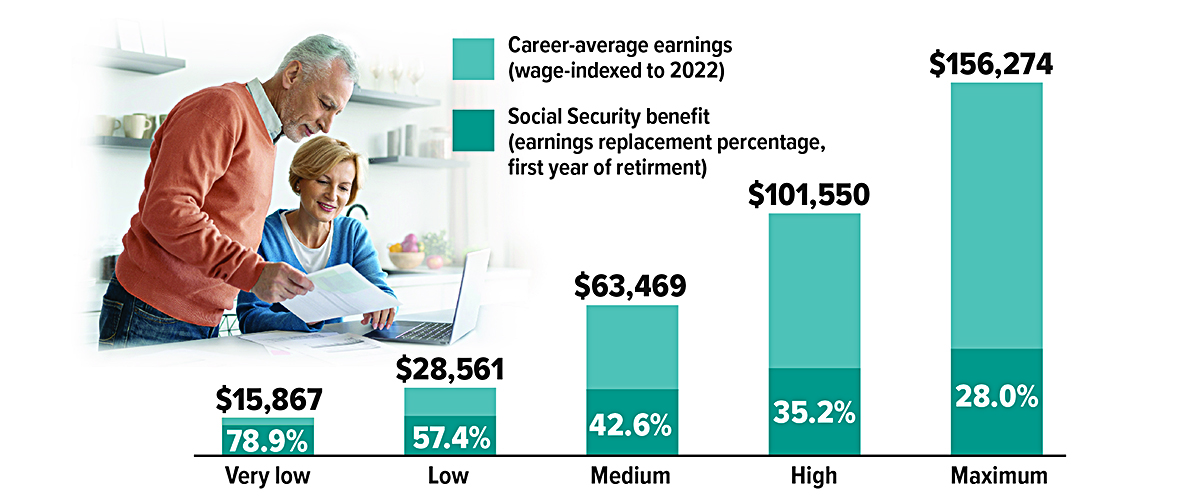
Primary Insurance Amount (PIA): The AIME is then subjected to a progressive formula involving “bend points.” These bend points are dollar amounts that determine how different portions of your AIME are weighted. For instance, a certain percentage of your earnings up to the first bend point is included, a lower percentage for earnings between the first and second bend points, and an even lower percentage for earnings above the second bend point. This progressive formula means that lower-income earners receive a higher percentage of their average earnings back compared to higher-income earners, although higher-income earners will still receive a larger dollar amount. The result of this calculation is your Primary Insurance Amount (PIA), which is the benefit you receive if you claim exactly at your Full Retirement Age (FRA).
Key Factors Determining Your Benefit Amount
While the PIA forms the core of your potential benefit, several crucial factors can significantly alter the final amount you receive each month. Understanding these levers is vital for projecting your retirement income and formulating a sound financial strategy.
Your Lifetime Earning Record
As mentioned, your benefit is based on your 35 highest-earning years. This means that consistent work and higher earnings throughout your career directly translate to a higher potential benefit. Conversely, years with low or no earnings will reduce your average, potentially lowering your benefit. For example, if you only worked for 30 years, Social Security will include five years of zero earnings in your calculation, which can substantially decrease your AIME and, consequently, your PIA. Therefore, maintaining a strong earning record, even in the later stages of your career, can be highly beneficial.
Your Claiming Age
This is perhaps the most significant determinant of your monthly Social Security check. You can start receiving retirement benefits as early as age 62, but doing so comes with a permanent reduction in your monthly payment.
-
Full Retirement Age (FRA): This is the age at which you are entitled to 100% of your PIA. FRA varies depending on your birth year, ranging from 66 for those born between 1943 and 1954, gradually increasing to 67 for those born in 1960 or later.
-
Early Claiming: If you claim before your FRA, your benefits are permanently reduced. For instance, claiming at age 62 can result in a reduction of up to 30% if your FRA is 67.
-
Delayed Claiming: For each year you delay claiming benefits past your FRA, up to age 70, you earn “delayed retirement credits.” These credits increase your monthly benefit by approximately 8% per year. This means someone with an FRA of 67 could increase their monthly benefit by 24% by waiting until age 70 to claim. This is often the most powerful strategy for maximizing individual benefits.
Spousal and Survivor Benefits
Social Security isn’t just for individual workers; it also provides benefits to eligible family members based on a worker’s record.
-
Spousal Benefits: If you are married, your spouse may be eligible for benefits equal to up to 50% of your PIA. To receive this, your spouse must be at least 62 or caring for your qualifying child. This benefit doesn’t reduce your own benefit. If your spouse’s own earned benefit is less than 50% of yours, they might be able to claim the spousal benefit instead.
-
Survivor Benefits: If you pass away, your eligible survivors (spouse, children, dependent parents) may receive benefits based on your earnings record. A surviving spouse can receive up to 100% of your benefit at their FRA or later, or a reduced amount as early as age 60 (or age 50 if disabled). These benefits provide crucial financial support to families during a difficult time.
Taxation of Benefits
While Social Security benefits are designed to be a lifeline, they are not always entirely tax-free. Depending on your “provisional income,” a portion of your benefits may be subject to federal income tax. Provisional income is calculated as your adjusted gross income (AGI), plus non-taxable interest, plus half of your Social Security benefits.
-
Single Filers: If your provisional income is between $25,000 and $34,000, up to 50% of your benefits may be taxable. If it’s above $34,000, up to 85% may be taxable.
-
Married Filing Jointly: If your provisional income is between $32,000 and $44,000, up to 50% of your benefits may be taxable. If it’s above $44,000, up to 85% may be taxable.
Some states also tax Social Security benefits, so it’s important to understand your local tax laws when planning your retirement income.
Strategies to Maximize Your Social Security Income
Given the complexity and the significant impact of Social Security on your financial future, adopting strategic approaches to maximize your benefits is crucial. These strategies often involve careful timing and coordination, especially for couples.
Understanding Your Full Retirement Age (FRA)
Knowing your specific FRA is the cornerstone of any claiming strategy. It’s the benchmark against which early or delayed claiming benefits are measured. For individuals born between 1943 and 1954, FRA is 66. It gradually increases for those born in later years, reaching 67 for anyone born in 1960 or later. A clear understanding of your FRA allows you to precisely calculate the reductions or increases associated with different claiming ages, empowering you to make an informed decision.
The Power of Delaying Claims
For many individuals, the most effective way to significantly boost their monthly Social Security income is to delay claiming benefits past their FRA, up to age 70. As noted, each year you delay past your FRA, your benefit amount increases by approximately 8% through delayed retirement credits. This growth is guaranteed and inflation-adjusted, making it one of the best “investments” you can make. While waiting means foregoing income in the short term, it results in a substantially higher monthly check for the rest of your life, offering valuable longevity insurance, especially for those with good health and a family history of living longer.
Coordinating Spousal Benefits for Couples
Couples have unique opportunities to optimize their combined Social Security income. The goal is often to maximize the higher earner’s benefit and strategically utilize spousal benefits for the lower earner.
-
Maximizing the Higher Earner’s Benefit: It often makes sense for the higher-earning spouse to delay claiming until age 70 to maximize their benefit. This creates a larger monthly income for their lifetime and provides a higher survivor benefit for the spouse should the higher earner pass away first.
-
Strategic Spousal Claiming: The lower-earning spouse might claim their own benefit early (e.g., at age 62) if their own benefit is relatively low, and then switch to a higher spousal benefit once the higher-earning spouse claims. Alternatively, if the lower earner was born before January 2, 1954, they might be able to “restrict their application” to spousal benefits at their FRA, allowing their own benefit to continue growing until age 70, then switch to their maximized individual benefit. This option is no longer available for those born later. Careful planning here, possibly with a financial advisor, is key.
Working While Receiving Benefits
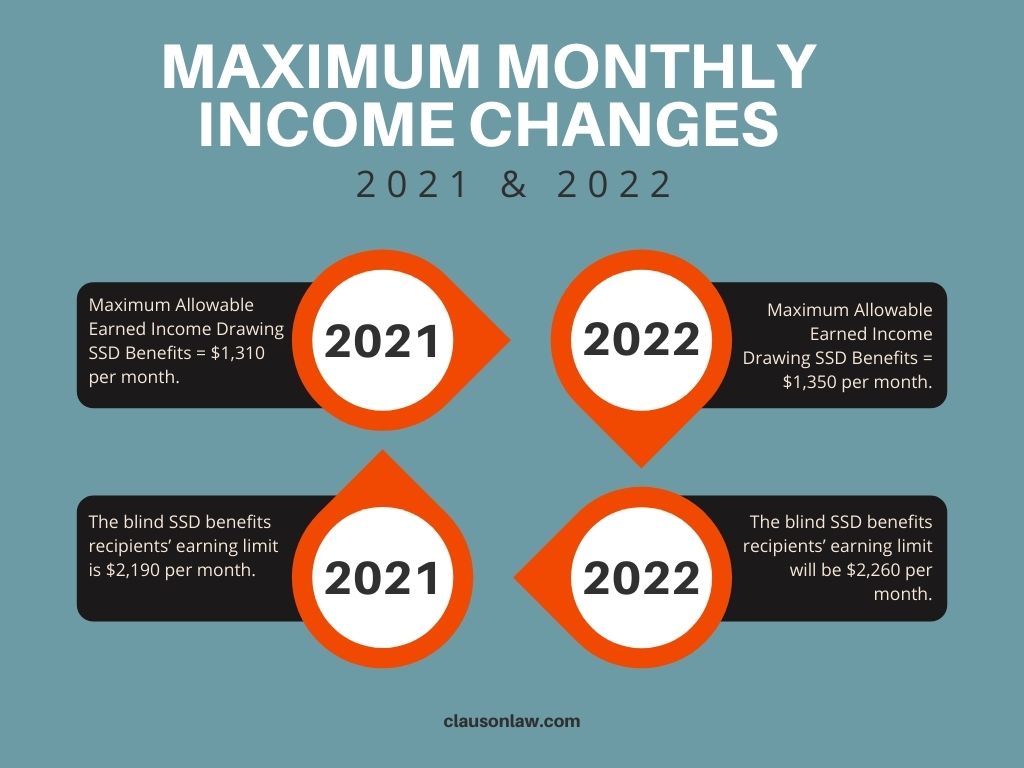
If you decide to claim Social Security benefits before your FRA and continue working, be aware of the “earnings test.” Social Security will temporarily withhold a portion of your benefits if your earnings exceed a certain limit ($22,320 in 2024 for those under FRA for the entire year). For every $2 you earn above this limit, $1 in benefits is withheld. In the year you reach FRA, a higher limit applies ($59,520 in 2024), and $1 in benefits is withheld for every $3 earned above the limit. Once you reach your FRA, the earnings test no longer applies, and you can earn as much as you want without any reduction to your Social Security benefits. Any benefits withheld due to the earnings test are not lost; your future benefits are recalculated at FRA to account for them, effectively giving you credit for those withheld amounts.
Integrating Social Security into Your Broader Retirement Plan
Social Security, while vital, should be viewed as just one component of a holistic retirement income strategy. A comprehensive financial plan considers all sources of income, expenses, and potential contingencies to ensure long-term financial stability.
Holistic Financial Planning
Think of your retirement income as a multi-legged stool: Social Security is one leg, but you also need legs like 401(k)s, IRAs, personal savings, pensions, and potentially part-time work or other investments. Relying solely on Social Security can be precarious, as it is generally intended to replace only about 40% of an average worker’s pre-retirement income. A robust retirement plan integrates all these sources, ensuring diversification and resilience against unforeseen economic shifts. Financial advisors can play a critical role in helping you build and manage such a comprehensive plan.
Using the Social Security Statement and Online Tools
The Social Security Administration (SSA) provides invaluable resources to help you understand your potential benefits. Every year, you can access your Social Security Statement online at ssa.gov/myaccount. This statement provides an estimate of your future benefits at various claiming ages, a summary of your earnings history, and information about disability and survivor benefits. Regularly reviewing your statement ensures your earnings record is accurate and helps you track your progress towards retirement goals. The SSA website also offers various calculators to help you estimate benefits and explore different claiming scenarios.
Projecting Future Income and Expenses
Accurate financial projections are key. Use the SSA’s tools, alongside those from financial planning software or advisors, to project your Social Security income in conjunction with your other retirement savings. More importantly, create a realistic budget for your anticipated retirement expenses. Understanding your income needs versus your projected income sources will highlight any potential shortfalls and allow you to adjust your savings or spending plans accordingly.
Addressing Program Solvency Concerns
It’s natural to have questions about the long-term solvency of Social Security. The program faces demographic challenges, such as an aging population and lower birth rates, which could lead to a shortfall in funding in the coming decades. However, it’s crucial to understand that Social Security is not on the verge of collapse. It has faced similar challenges in the past and has been reformed through legislative action. Future adjustments might include modest changes to the full retirement age, adjustments to the benefit formula, or changes to the Social Security tax rate or earnings cap. While these concerns warrant attention and ongoing monitoring, current projections indicate that the program will be able to pay a significant portion of promised benefits for the foreseeable future, even without legislative action. It remains a foundational element of retirement security.
Conclusion
Understanding “how much you can earn on Social Security” transcends a simple number; it involves a deep dive into your personal work history, strategic claiming decisions, and a holistic view of your financial future. Social Security is a complex yet powerful program designed to provide a critical safety net for millions of Americans. By grasping the fundamentals of its calculation, recognizing the factors that influence your benefit amount, and employing thoughtful strategies to maximize your income, you can significantly enhance your financial security in retirement.
From meticulously reviewing your earnings record to carefully timing your benefit claims, every decision has an impact. Engaging with the resources provided by the Social Security Administration, and potentially consulting with a qualified financial advisor, can provide personalized guidance tailored to your unique circumstances. Ultimately, an informed approach to Social Security is not just about earning more; it’s about building a more secure, comfortable, and predictable financial future, ensuring that this vital program serves its purpose as a cornerstone of your long-term well-being.
aViewFromTheCave is a participant in the Amazon Services LLC Associates Program, an affiliate advertising program designed to provide a means for sites to earn advertising fees by advertising and linking to Amazon.com. Amazon, the Amazon logo, AmazonSupply, and the AmazonSupply logo are trademarks of Amazon.com, Inc. or its affiliates. As an Amazon Associate we earn affiliate commissions from qualifying purchases.