
Understanding how your salary is calculated is fundamental to effective personal finance management. Far too often, individuals only focus on the headline figure – the “gross salary” – without fully grasping the various deductions and benefits that ultimately determine their take-home pay, or “net salary.” This guide aims to demystify the complexities of salary calculation, empowering you with the knowledge to accurately assess your earnings, make informed financial decisions, and even strategically plan for your future.
Whether you’re starting a new job, evaluating a raise, or simply trying to get a clearer picture of your finances, knowing the intricate dance between your gross pay and what eventually lands in your bank account is crucial. We’ll break down the components, from mandatory taxes to voluntary deductions, providing a clear roadmap to understanding your full compensation package.

Demystifying Gross vs. Net Salary: The Foundation of Your Paycheck
The journey to understanding your salary begins with a clear distinction between gross and net pay. These two terms are the bedrock of all salary discussions and calculations.
Understanding Gross Salary: What You Earn Before Deductions
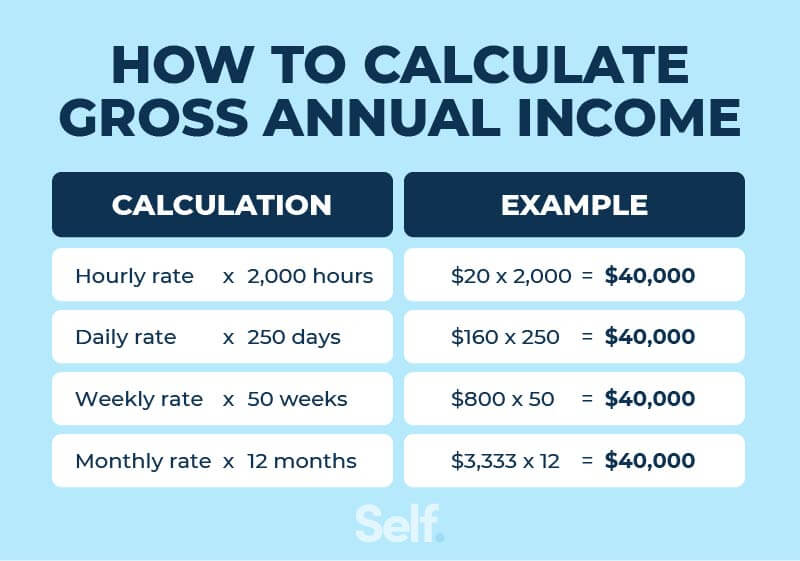
Gross salary represents the total amount of money an employer agrees to pay an employee before any deductions are made. It’s the figure usually quoted in job offers and employment contracts. This figure can be calculated in several ways:
-
Hourly vs. Salaried Compensation: For hourly employees, gross pay is calculated by multiplying the hourly rate by the number of hours worked. Salaried employees receive a fixed amount per pay period (e.g., bi-weekly, semi-monthly, or monthly), regardless of the exact hours worked, assuming they meet their contractual obligations.
-
Commissions, Bonuses, and Overtime: Many roles include variable components that contribute to gross pay. Sales professionals might earn commissions on sales, while other employees might receive performance-based bonuses, holiday bonuses, or year-end profit-sharing. Overtime pay, typically calculated at a higher rate (e.g., 1.5 times the regular hourly rate), also adds to the gross amount.
-
Benefits-in-Kind (Perks with Monetary Value): In some compensation structures, certain non-cash benefits that have a taxable monetary value (like a company car, housing allowance, or certain professional development stipends) might be considered part of your gross taxable income, even if they aren’t directly deposited into your bank account as cash.
It’s vital to recognize that your gross salary is merely the starting point. It reflects your earnings potential but not your actual spending power.
Decoding Net Salary: What Actually Lands in Your Bank Account
Net salary, often referred to as take-home pay, is the amount of money an employee receives after all mandatory and voluntary deductions have been subtracted from their gross salary. This is the figure that dictates your budget, your savings capacity, and your overall financial lifestyle.
The Importance of Net Pay cannot be overstated. While a high gross salary sounds impressive, a significant portion can be eroded by various deductions, leaving a much smaller net figure. Financial planning, budgeting, and debt management should always be based on your net income, as this is the real money you have at your disposal.
Why Gross Isn’t What You Take Home is the key takeaway here. Expecting to live off your gross salary is a common financial mistake, leading to budgeting errors and potential financial strain.
Navigating Mandatory Deductions: Understanding What Comes Out
Once your gross salary is established, the next step in calculating your actual take-home pay involves understanding the mandatory deductions. These are deductions required by law and are non-negotiable, though their amounts can vary based on your income, location, and specific circumstances.
Income Tax: Your Contribution to Public Services
Income tax is typically the largest deduction from your gross salary. It’s collected by various levels of government to fund public services like infrastructure, education, healthcare, and defense.
-
Federal/National Income Tax: Most countries have a federal or national income tax system. This tax is usually progressive, meaning higher earners pay a larger percentage of their income in taxes. Tax brackets define the different rates applied to portions of your income.
-
State/Provincial/Local Income Tax (if applicable): In addition to federal taxes, many states, provinces, or even local municipalities impose their own income taxes. These vary significantly from one jurisdiction to another, with some areas having no state income tax at all.
-
Tax Brackets and Marginal Tax Rates: Understanding how tax brackets work is crucial. You don’t pay one flat rate on your entire income. Instead, different portions of your income are taxed at increasing rates. Your marginal tax rate is the rate applied to your last dollar of income, while your effective tax rate is the total tax paid divided by your total taxable income.
Social Security and Medicare (or equivalent): Funding Future Benefits
In the United States, these are known as FICA (Federal Insurance Contributions Act) taxes. Similar social insurance contributions exist in most developed nations under different names (e.g., National Insurance in the UK, Canada Pension Plan and Employment Insurance in Canada).
-
Employee Contributions: A portion of your gross salary is automatically deducted to fund Social Security (providing retirement, disability, and survivor benefits) and Medicare (providing health insurance for the elderly and disabled). Employers also pay a matching portion, though this doesn’t directly come out of your stated gross salary, it’s part of the employer’s total cost of employing you.
-
Employer Contributions (and how it affects perception of total compensation): While the employer’s share isn’t deducted from your paycheck, it’s important to recognize that your total compensation package includes these employer-paid taxes. It’s an often-overlooked aspect of the true value of your employment.
Other Statutory Deductions: Pensions, Unemployment Insurance, etc.
Depending on your country, profession, or specific employment contract, other mandatory deductions may apply:
-
Mandatory Retirement Contributions: Some countries or specific industries require mandatory contributions to pension schemes or other retirement funds.
-
Unemployment Insurance Premiums: These contributions provide benefits to workers who become unemployed through no fault of their own.
Exploring Voluntary Deductions and Benefits: Optimizing Your Financial Picture
Beyond the mandatory deductions, many employees opt for or are enrolled in voluntary deductions, which can significantly impact their net pay. These often represent valuable benefits or financial planning tools.
Retirement Contributions: Investing in Your Future Self

One of the most common and impactful voluntary deductions is for retirement savings.
-
401(k), 403(b), IRA, Pension Schemes: These are various types of retirement accounts (in the US context) that allow employees to save for retirement, often with tax advantages. Similar schemes exist globally. Contributions can be pre-tax (reducing your current taxable income) or post-tax (like a Roth 401(k) or Roth IRA, where withdrawals in retirement are tax-free).
-
Employer Matching Programs: A significant benefit offered by many employers is a matching contribution to your retirement account. For example, an employer might match 50% of your contributions up to 6% of your salary. Not contributing enough to get the full match is essentially leaving free money on the table.
-
Pre-tax vs. Post-tax Contributions: Understanding the tax implications of your contributions is critical. Pre-tax contributions reduce your taxable income now, lowering your immediate tax burden, but withdrawals are taxed in retirement. Post-tax contributions offer tax-free withdrawals in retirement, but don’t reduce your current taxable income.
Health Insurance Premiums: Protecting Your Well-being
Most employers offer health insurance plans, and employees typically contribute a portion of the premium through payroll deductions.
-
Employee Share of Premiums: The cost of health insurance is often shared between the employer and employee. Your share is deducted from your gross pay, usually pre-tax, which means it reduces your taxable income.
-
Dental, Vision, and other Ancillary Coverages: Beyond standard medical insurance, many companies offer optional dental, vision, life, and disability insurance plans, with premiums also deducted from your paycheck.
Other Voluntary Deductions: From HSAs to Charitable Giving
A range of other deductions can appear on your pay stub:
-
Health Savings Accounts (HSAs) and Flexible Spending Accounts (FSAs): These accounts allow you to save and spend money on qualified medical expenses with tax advantages. Contributions are typically made pre-tax through payroll deductions.
-
Life Insurance, Disability Insurance: Premiums for additional life or long-term disability insurance policies often come out of your paycheck.
-
Union Dues, Loan Repayments, Garnishments: If you’re part of a union, dues will be deducted. Also, if you have certain loans or court-ordered payments (like child support or outstanding debts), your wages might be garnished, meaning a portion is automatically deducted.
Practical Steps to Calculate Your Take-Home Pay
Armed with an understanding of gross pay and the various deductions, you can now practically calculate your net salary.
Utilizing Pay Stubs and Payroll Portals
The easiest and most accurate way to understand your salary calculation is to review your pay stub.
-
Reading Your Pay Stub Effectively: A pay stub (or earnings statement) is a detailed breakdown of your earnings and deductions for a specific pay period. It lists your gross pay, all pre-tax deductions, taxable income, tax withholdings, and post-tax deductions, ultimately showing your net pay. Pay attention to year-to-date (YTD) figures as well.
-
Accessing Online Payroll Systems: Most companies now use online payroll portals where you can view your pay stubs, manage your benefits, and update your tax withholding information (like your W-4 in the US). Regularly checking these is a good financial habit.
Employing Online Salary Calculators and Tools
Before you even receive your first pay stub, or if you’re evaluating a new job offer, online calculators can be incredibly helpful.
-
Benefits and Limitations of Calculators: Online salary calculators (often called “take-home pay calculators” or “net pay calculators”) allow you to input your gross salary, pay frequency, location, and some basic deductions to estimate your net pay. They are excellent for quick estimates and comparisons. However, they are estimates; actual deductions can vary slightly based on specific company policies or individual circumstances not fully captured by generic tools.
-
Recommended Tools: Many financial websites and government tax agencies offer free, reliable salary calculators. Be sure to use one relevant to your country and, if applicable, your state/province.
The Manual Calculation: A Step-by-Step Approach
For a granular understanding, or if you prefer to cross-reference, a manual calculation provides clarity:
-
Starting with Gross Pay: Begin with your total gross earnings for the pay period (e.g., bi-weekly gross pay).
-
Subtracting Mandatory Deductions:
-
Calculate federal income tax (based on your W-4/tax declaration and tax brackets).
-
Calculate state/local income tax (if applicable).
-
Calculate Social Security and Medicare (or equivalent) contributions.
-
Subtract any other statutory deductions.
-
-
Subtracting Voluntary Deductions:
-
Subtract pre-tax deductions first (e.g., 401(k) contributions, health insurance premiums, HSA contributions). Note that these reduce your taxable income before income taxes are fully calculated, so the order matters if doing a precise manual calculation.
-
Subtract post-tax deductions (e.g., Roth 401(k) contributions, certain life insurance premiums, union dues, garnishments).
-
-
The Final Net Pay Calculation: The remaining amount after all deductions is your net salary.
Beyond the Paycheck: Total Compensation and Financial Planning
Understanding your salary extends beyond just the numbers on your pay stub. It encompasses the broader picture of your total compensation and how that knowledge integrates into your overall financial strategy.
Understanding Total Compensation: The Bigger Picture
Your salary is just one component of your overall compensation package. Recognizing the full value can change your perception of a job offer or your current role.
-
Beyond Cash: Equity, Stock Options, ESOPs: Many companies, especially startups or publicly traded ones, offer equity compensation in the form of stock options, restricted stock units (RSUs), or employee stock ownership plans (ESOPs). These can represent significant long-term wealth potential but come with their own tax and vesting complexities.
-
Non-monetary Benefits: PTO, Flexible Work, Professional Development: While not directly affecting your take-home pay, benefits like paid time off (PTO), sick leave, flexible work arrangements, remote work options, professional development budgets, tuition reimbursement, and wellness programs add substantial value to your total compensation. These improve your quality of life, reduce out-of-pocket expenses, and enhance your career trajectory.
The Role of Salary Calculation in Budgeting and Financial Planning
Accurate salary calculation is not just an administrative task; it’s a critical tool for sound financial health.
-
Knowing Your Net Pay for Budgeting: Your net pay is the most important figure for creating a realistic and sustainable budget. It dictates how much you can allocate to housing, food, transportation, debt repayment, and discretionary spending without falling into debt.
-
Impact on Savings and Investment Goals: Understanding your net income allows you to set achievable savings goals, whether for an emergency fund, a down payment on a house, or long-term investments. By knowing precisely how much you have available, you can automate savings transfers and ensure you’re on track to meet your financial milestones.
-
Negotiating Future Salaries Effectively: When considering a new job or asking for a raise, having a clear understanding of all the components of salary calculation empowers you. You can not only negotiate for a higher gross salary but also intelligently discuss benefits, retirement contributions, and other perks that impact your total compensation and ultimately, your financial well-being.
In conclusion, calculating your salary accurately is more than just arithmetic; it’s an essential skill for financial empowerment. By taking the time to understand the nuances of gross pay, mandatory deductions, voluntary contributions, and total compensation, you gain control over your financial destiny, allowing you to budget wisely, save effectively, and plan confidently for a secure future.
aViewFromTheCave is a participant in the Amazon Services LLC Associates Program, an affiliate advertising program designed to provide a means for sites to earn advertising fees by advertising and linking to Amazon.com. Amazon, the Amazon logo, AmazonSupply, and the AmazonSupply logo are trademarks of Amazon.com, Inc. or its affiliates. As an Amazon Associate we earn affiliate commissions from qualifying purchases.