
Percentages are the universal language of finance, a fundamental metric that underpins nearly every aspect of economic activity, from personal budgeting to multinational corporate strategy. Far more than just a mathematical notation, “the percentage” represents a powerful tool for comparison, analysis, and decision-making, allowing individuals, investors, and businesses to gauge relative change, assess risk, measure performance, and understand the true impact of financial events. Without the ability to express values in relation to a whole, or to quantify change over time, the intricate world of money would lose much of its clarity and analytical depth.
The Ubiquity and Impact of Percentages in Finance
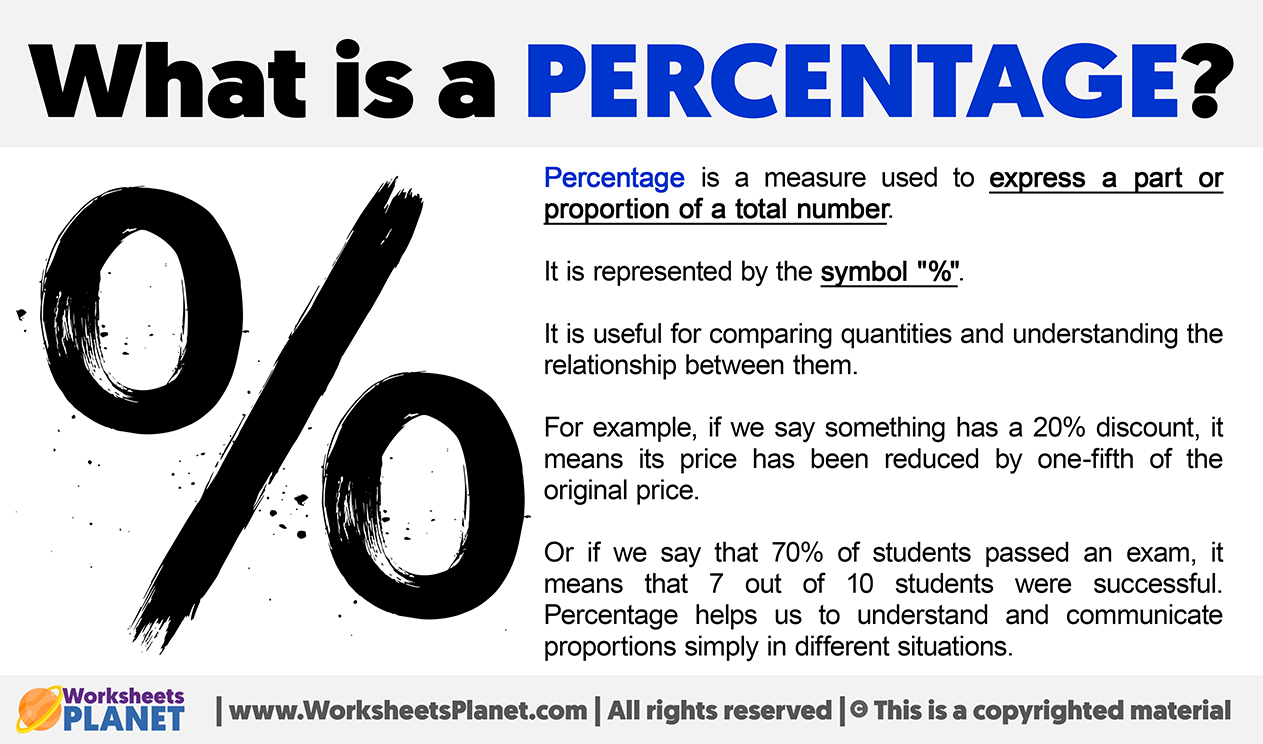
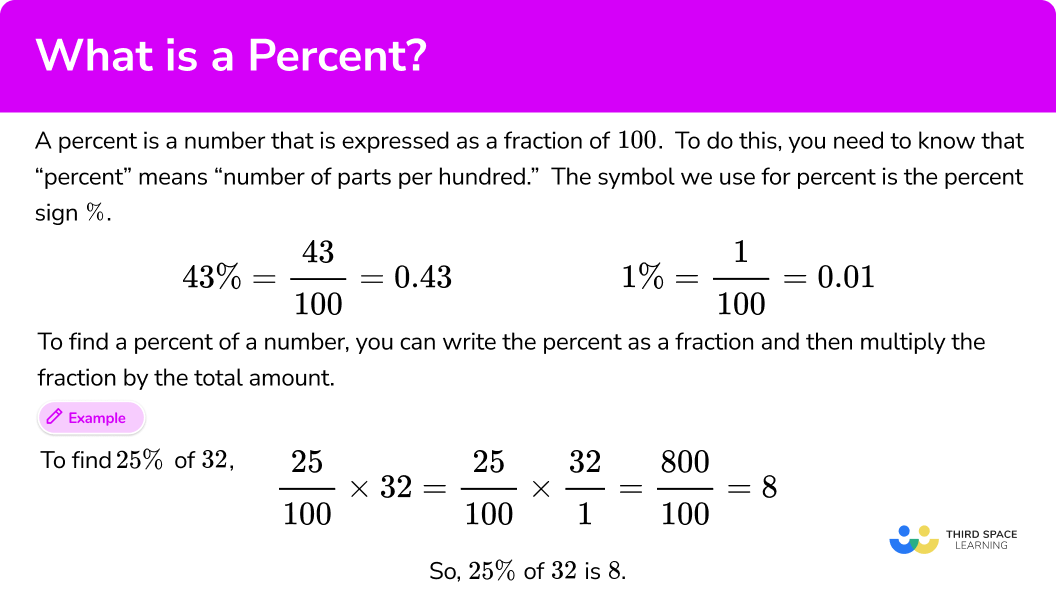
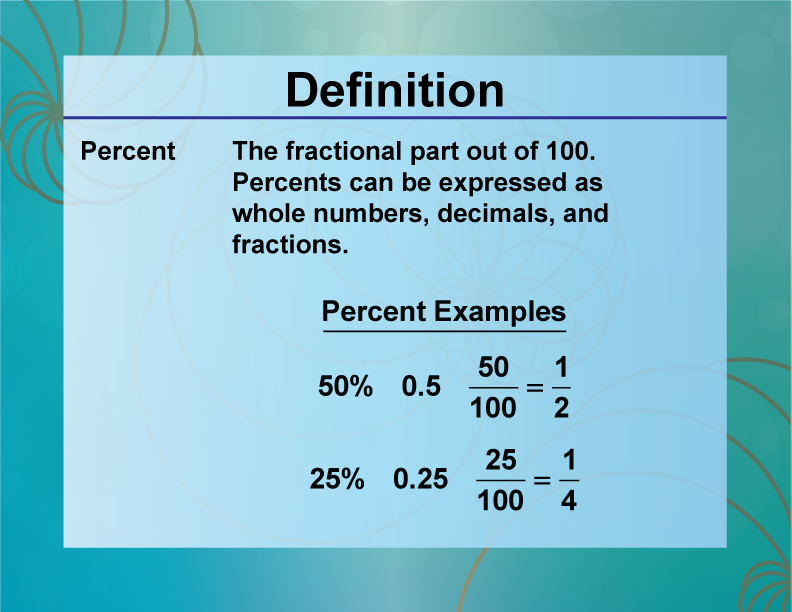
At its core, a percentage (from the Latin “per centum,” meaning “by the hundred”) is a dimensionless number used to express a fraction of 100. This simplicity, however, belies its profound utility. In finance, percentages enable the comparison of disparate figures, normalizing them to a common scale. Whether evaluating a stock’s quarterly growth, the interest rate on a loan, or the allocation of assets in a portfolio, percentages provide immediate context and facilitate informed judgment. They transform raw numbers into actionable insights, revealing trends, highlighting anomalies, and forecasting potential outcomes.
The impact of percentages spans every financial domain. For the individual, they dictate the cost of borrowing, the return on savings, and the efficiency of a budget. For investors, percentages are crucial for evaluating investment performance, assessing risk exposure, and constructing diversified portfolios. In the corporate world, percentages are the backbone of financial reporting, performance measurement, and strategic planning, guiding decisions on everything from pricing and profitability to market share and operational efficiency. Understanding “what the percentage” truly means in any given context is therefore not just a matter of arithmetic, but a critical skill for financial literacy and success.
Navigating Personal Finance: Percentages as Your Compass
For individuals, percentages serve as indispensable tools for managing personal finances effectively, transforming complex financial realities into digestible, actionable metrics.
Budgeting and Savings: The Rule of Thumb
Effective personal finance begins with a budget, and percentages provide the framework for disciplined spending and saving. Common guidelines, like the 50/30/20 rule, recommend allocating 50% of after-tax income to needs, 30% to wants, and 20% to savings and debt repayment. Such percentage-based rules offer a clear, adaptable structure for managing cash flow, ensuring that essential expenses are covered while simultaneously promoting financial growth and security. Moreover, setting a target percentage of income to save each month, or aiming for an emergency fund equivalent to a certain percentage of annual expenses, provides tangible, measurable goals that simplify long-term financial planning. Tracking one’s savings rate—the percentage of income saved—is a powerful indicator of financial health and progress towards future aspirations like retirement or a down payment on a home.
Debt Management: Interest Rates and Amortization
Debt, a pervasive element of modern finance, is almost universally defined and quantified by percentages. The Annual Percentage Rate (APR) on credit cards, mortgages, and personal loans tells borrowers the true cost of borrowing, encompassing interest and certain fees. Understanding the APR is crucial for comparing loan offers and recognizing the long-term financial burden of debt. Furthermore, the concept of amortization, where a portion of each payment goes towards the principal and another towards interest, is inherently percentage-driven. Over time, the percentage of the payment allocated to principal increases, illustrating the gradual reduction of the loan balance. Ignorance of these percentages can lead to costly financial mistakes, while a savvy understanding can empower individuals to make informed decisions about borrowing, refinancing, and accelerating debt repayment.
Financial Goals: Tracking Progress
Whether saving for a child’s education, a new car, or retirement, percentages are vital for tracking progress towards financial goals. Expressing goals as a percentage of the total needed (e.g., “I’ve saved 30% of my retirement target”) provides a clear, motivating benchmark. This approach allows for adjustments along the way, helping individuals stay on course even if circumstances change. It simplifies complex long-term objectives into understandable, incremental achievements, fostering a sense of accomplishment and maintaining focus on the larger financial picture.
Investing: Decoding Returns, Risk, and Diversification
In the realm of investing, percentages are the lingua franca for performance measurement, risk assessment, and portfolio construction. They enable investors to make sense of market fluctuations and strategize for future growth.
Measuring Performance: ROI, CAGR, and Yields
The performance of an investment is almost exclusively expressed in percentages. Return on Investment (ROI) calculates the profit or loss relative to the initial cost, often expressed as a percentage. This allows for direct comparison of different investments regardless of their initial outlay. Compound Annual Growth Rate (CAGR) offers a smoothed, annualized rate of return over multiple periods, providing a more accurate picture of an investment’s growth trajectory, especially when returns fluctuate year-to-year. Furthermore, income-generating investments rely heavily on yield percentages. Dividend yield indicates the percentage of a company’s stock price paid out in dividends annually, while bond yields represent the return an investor receives on a bond relative to its market price. These percentages are critical for investors seeking regular income or evaluating the attractiveness of an asset.
Assessing Risk: Volatility and Asset Allocation
Percentages are equally crucial for understanding and managing investment risk. Volatility, a measure of how much an investment’s price fluctuates, is often expressed as a percentage deviation from its average. A higher percentage of volatility implies higher risk. Perhaps even more importantly, asset allocation—the distribution of an investor’s portfolio across different asset classes like stocks, bonds, and cash—is entirely percentage-based. A common recommendation might be a 60% stocks, 30% bonds, 10% cash portfolio, tailored to an individual’s risk tolerance and time horizon. This percentage-based approach to diversification is a cornerstone of prudent investing, aiming to balance risk and return by spreading investments across different asset types that may perform differently under various market conditions.
Understanding Fees and Expenses
The seemingly small percentages charged as investment fees can have a profound impact on long-term returns. Expense ratios for mutual funds and ETFs, management fees for financial advisors, and transaction costs are all expressed as percentages of assets under management or trade value. A 1% annual fee might seem minor, but compounded over decades, it can erode a substantial portion of an investor’s gains. Understanding and scrutinizing these percentage-based costs is therefore vital for maximizing net returns over an investment lifetime.
Business Finance: Strategic Insights from Percentage Metrics
For businesses, percentages are not merely accounting figures; they are strategic indicators that drive operational efficiency, profitability, and long-term growth.
Profitability and Efficiency: Key Ratios
Core business performance is often distilled into percentage-based ratios. Gross profit margin (gross profit as a percentage of revenue) reveals the profitability of core operations after direct costs. Net profit margin (net profit as a percentage of revenue) indicates the percentage of revenue remaining after all expenses, including taxes. Operating margin, another crucial percentage, shows how much profit a company makes from its operations before interest and taxes. These percentages allow management to benchmark their performance against competitors, identify areas for cost reduction, and make pricing decisions. Beyond profitability, efficiency metrics like the overhead percentage (overhead costs as a percentage of revenue) or inventory turnover ratios (though not strictly percentages, they often inform percentage-based inventory management strategies) guide operational improvements and resource allocation.
Growth and Valuation: Market Share and Revenue Growth
A company’s growth trajectory is frequently communicated through percentage changes. Revenue growth percentage year-over-year or quarter-over-quarter is a primary indicator of a company’s expansion. Market share, expressed as the percentage of the total market that a company commands, is a critical metric for assessing competitive position and market dominance. For startups, customer acquisition cost as a percentage of customer lifetime value is a vital metric for determining the viability and scalability of their business model. These percentages are not just historical figures; they are forward-looking indicators used by investors to assess a company’s potential for future earnings and by management to set strategic goals.
Capital Structure and Solvency
Percentages also play a key role in understanding a company’s financial health and its ability to meet its obligations. The debt-to-equity ratio, though typically expressed as a ratio, is fundamentally comparing the percentage of financing from debt versus equity. A high percentage of debt indicates greater financial leverage and potentially higher risk. Current ratio and quick ratio, while also ratios, are analyzed to determine a company’s ability to cover its short-term liabilities, with thresholds often interpreted in percentage terms (e.g., current assets being a certain percentage higher than current liabilities). These solvency and liquidity percentages are critical for lenders, investors, and management to gauge financial stability and navigate economic uncertainties.
The Art of Interpretation: Beyond the Raw Number
While percentages offer unparalleled clarity in financial analysis, their true power lies in thoughtful interpretation. A percentage, in isolation, can be misleading. Understanding “what the percentage” refers to—its base number, the timeframe, and the context—is paramount. A 100% return on a $100 investment is very different from a 10% return on a $1 million investment, even though the former appears numerically more impressive as a percentage. Similarly, a 5% increase in sales might be phenomenal for a mature industry leader but disappointing for a rapidly scaling startup.
The phenomenon of compounding, where percentages apply not just to the initial amount but also to accumulated interest or returns, dramatically alters outcomes over time. A seemingly small percentage difference in interest rates on a loan or investment returns can translate into vast sums over decades. Moreover, percentages can be used deceptively, highlighting favorable comparisons while obscuring less flattering absolute figures. Therefore, financial literacy demands not just the ability to calculate percentages, but the critical thinking to contextualize, compare, and question them. When wielded wisely, percentages are indispensable tools that illuminate financial landscapes, empowering individuals and organizations to make astute decisions and navigate the complex currents of the money world.
aViewFromTheCave is a participant in the Amazon Services LLC Associates Program, an affiliate advertising program designed to provide a means for sites to earn advertising fees by advertising and linking to Amazon.com. Amazon, the Amazon logo, AmazonSupply, and the AmazonSupply logo are trademarks of Amazon.com, Inc. or its affiliates. As an Amazon Associate we earn affiliate commissions from qualifying purchases.