
In the world of finance, percentages are ubiquitous. From calculating interest rates and investment returns to understanding discounts and tax implications, a solid grasp of percentage mechanics is fundamental for both personal and business financial success. While basic percentage calculations are straightforward, the concept of a “percentage of a percentage” often presents a nuanced challenge, yet it is critically important for accurate financial analysis and decision-making. This deeper understanding is essential for evaluating complex financial scenarios, such as stacked discounts, net returns after fees, or multi-tiered commission structures.
Understanding the Foundation: What is a Percentage?
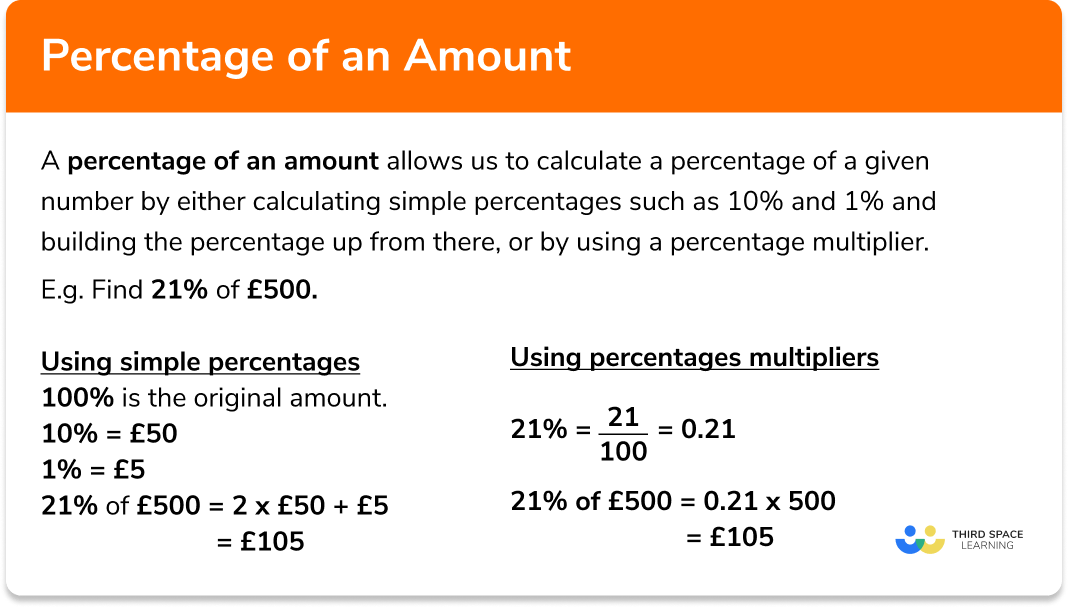
Before delving into the intricacies of percentages of percentages, it’s crucial to solidify our understanding of what a percentage truly represents. A percentage is simply a way to express a proportion or a fraction of a whole, where the whole is considered to be 100. The term “percent” literally means “per hundred.”
The Basics of Percentage Calculation
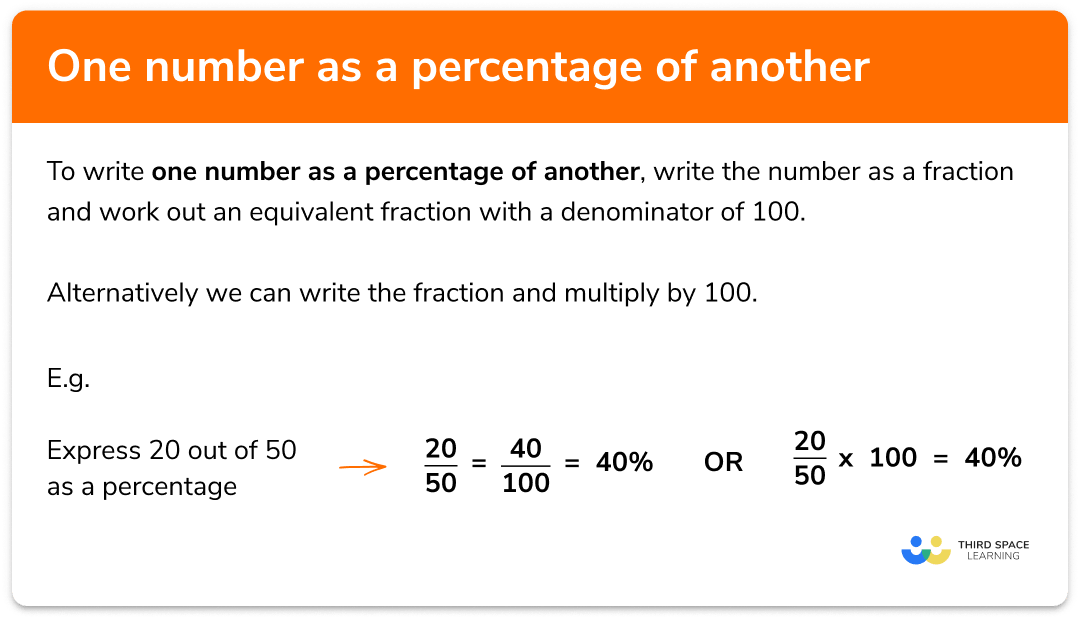
To express a fraction as a percentage, you divide the numerator by the denominator and multiply by 100. For example, if you scored 80 out of 100 on a test, your score is (80/100) * 100% = 80%. If you scored 15 out of 20, it’s (15/20) * 100% = 75%.
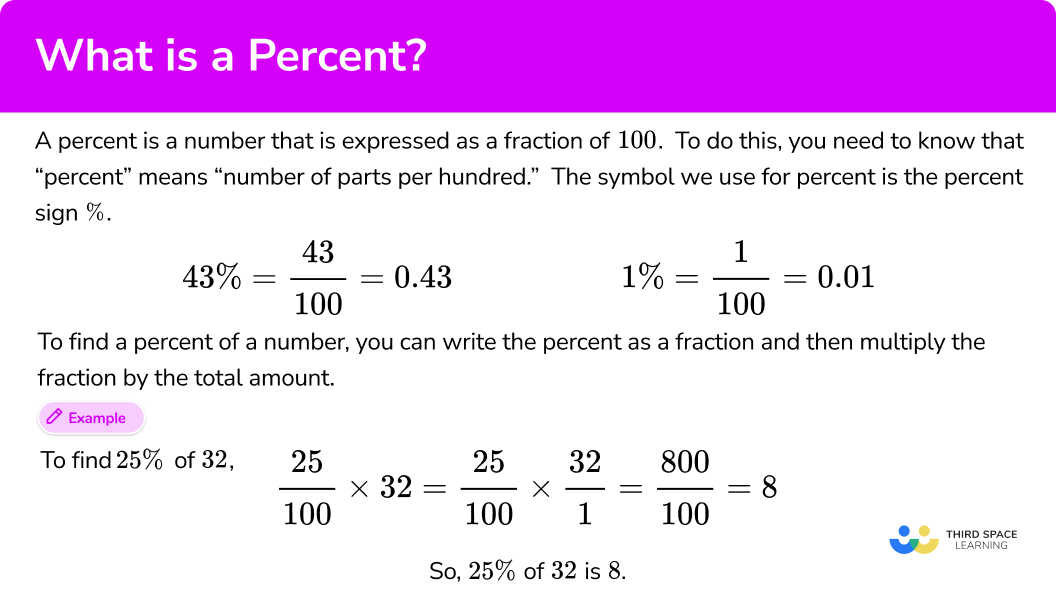
Conversely, to use a percentage in a calculation, you convert it back to a decimal by dividing by 100. So, 25% becomes 0.25, and 7% becomes 0.07. If you want to find 25% of $200, you calculate 0.25 * $200 = $50. This foundational understanding is the bedrock upon which more complex percentage calculations are built.
Why Percentages Matter in Finance
Percentages are the language of financial comparison and growth. They allow us to:
-
Compare different values on a relative basis: A 10% return on a $1,000 investment ($100 profit) can be compared directly to a 10% return on a $100,000 investment ($10,000 profit), showing the proportional gain.
-
Analyze trends and changes: We use percentages to describe growth rates, inflation rates, and changes in stock prices.
-
Calculate financial implications: Discounts, interest, taxes, commissions, and fees are almost universally expressed as percentages.
-
Set financial goals and allocate resources: Budgeting often involves allocating a certain percentage of income to savings, housing, or debt repayment.
The Concept of a Percentage of a Percentage
Calculating a percentage of a percentage arises when one percentage is applied to a value that has already been affected by another percentage. This is not the same as simply adding or subtracting percentages; it involves sequential application.
Two Common Scenarios
-
Chained Applications: This is the most common scenario, where one percentage modification is applied, and then a second percentage modification is applied to the result of the first. Examples include:
-
A discount on an already discounted item.
-
An investment return, net of management fees calculated on the total return.
-
Tax calculated on a specific portion of income that has already been reduced by a deduction.
-
-
Part of a Part: Less common in direct “percentage of a percentage” phrasing, but still relevant. This involves finding what percentage a smaller component represents of a larger component, where both are expressed as percentages of an original whole. For instance, if 20% of a portfolio is in tech stocks, and 5% of that tech stock allocation is in AI, then 5% of 20% would be in AI.
The Step-by-Step Calculation Method
The most reliable method to calculate a percentage of a percentage is to convert all percentages to their decimal equivalents and perform the multiplication sequentially.
Step 1: Convert all percentages to decimals.
To convert a percentage to a decimal, divide it by 100.
Example: 20% = 0.20, 15% = 0.15, 3% = 0.03.
Step 2: Apply the percentages sequentially.
If you want to find ‘X% of Y%’, you multiply the decimal equivalent of X by the decimal equivalent of Y. The result will be a decimal representing the combined percentage.
Example: What is 20% of 15%?
0.20 * 0.15 = 0.03
Step 3: Convert the final decimal back to a percentage (if desired).
Multiply the resulting decimal by 100.
Example: 0.03 * 100% = 3%.
So, 20% of 15% is 3%. This means if a financial instrument yields 15% interest, and a tax of 20% is levied on that interest, the effective tax rate on the original principal through the interest earned is 3%.
Practical Applications in Personal Finance
Understanding percentages of percentages is not an abstract mathematical exercise; it has tangible implications for managing your personal finances effectively.
Calculating Discounts on Sale Items with Additional Promotions
A classic scenario involves retail sales. Imagine a shirt originally priced at $100. It’s marked down by 20%, and then an additional 10% discount is applied at checkout for loyalty members.
-
Incorrect approach (adding percentages): 20% + 10% = 30% off, so $100 * 0.70 = $70. This is usually wrong.
-
Correct approach (sequential calculation):
-
First discount: $100 * (1 – 0.20) = $100 * 0.80 = $80.
-
Second discount applied to the new price: $80 * (1 – 0.10) = $80 * 0.90 = $72.
The effective total discount is $100 – $72 = $28, or 28% of the original price. This is crucial for knowing the actual saving.
-
Understanding Investment Returns with Fees
Consider an investment that generated a 12% return over a year. However, your financial advisor charges a 1.5% management fee, calculated on the total return.
-
Calculate the return amount: If your initial investment was $10,000, the return is $10,000 * 0.12 = $1,200.
-
Calculate the fee amount: The fee is 1.5% of the return, so $1,200 * 0.015 = $18.
-
Net return: $1,200 – $18 = $1,182.
-
Effective net return percentage (on original investment): $1,182 / $10,000 = 0.1182, or 11.82%.
Here, the 1.5% fee on the 12% return effectively reduces your overall percentage return from 12% to 11.82%.
Analyzing Taxable Income and Deductions
Suppose your total income is $60,000. You have a deduction that reduces your taxable income by 10%. On the remaining taxable income, a specific local tax rate of 2% applies.
-
Calculate taxable income after deduction: $60,000 * (1 – 0.10) = $60,000 * 0.90 = $54,000.
-
Calculate local tax: $54,000 * 0.02 = $1,080.
The effective tax rate, if considered against your original total income, would be ($1,080 / $60,000) = 0.018 or 1.8%. This shows how a percentage deduction followed by a percentage tax rate impacts the overall financial burden.
Business Finance and Strategic Planning
For businesses, calculating percentages of percentages is vital for accurate financial reporting, strategic pricing, and performance evaluation.
Profit Margins and Sales Commissions
A common scenario involves calculating a sales commission based on profit, or a tiered commission structure.
-
Example 1: Commission on Net Profit. A product sells for $50, and its cost of goods sold (COGS) is $30, leaving a gross profit of $20. The sales representative earns a 10% commission on the gross profit.
-
Gross profit margin: ($20 / $50) * 100% = 40%.
-
Commission: $20 * 0.10 = $2.
-
The commission of $2 represents ($2 / $50) * 100% = 4% of the sales price. This is finding 10% (commission rate) of 40% (gross profit margin), which is 4%.
-
Financial Ratios and Performance Analysis
Businesses often use ratios to analyze performance, and sometimes these ratios are themselves components of a larger percentage.
-
Example: Marketing ROI. A company invests 5% of its revenue in marketing. It finds that 20% of its marketing investment directly translates into new sales. What percentage of total revenue is generated by this direct marketing channel?
-
20% of 5% = 0.20 * 0.05 = 0.01.
-
This means 1% of total revenue is directly attributable to this marketing effort. This insight helps in optimizing marketing spend.
-
Impact of Multiple Price Adjustments
When businesses offer trade discounts, volume discounts, or seasonal promotions, understanding the cumulative effect is critical for profitability. A supplier might offer a 15% trade discount, and then a 5% early payment discount on the net amount.
-
Original price: $1,000.
-
After 15% trade discount: $1,000 * (1 – 0.15) = $850.
-
After 5% early payment discount: $850 * (1 – 0.05) = $807.50.
The total reduction is $1,000 – $807.50 = $192.50, or 19.25% off the original price. This is not 15% + 5% = 20%. Miscalculating this can significantly impact revenue and profit forecasts.
Common Pitfalls and Best Practices
While the method for calculating a percentage of a percentage is straightforward, several common mistakes can lead to inaccurate financial outcomes.
Order of Operations Matters
As demonstrated with the discount examples, the order in which percentages are applied can change the final outcome, especially when dealing with successive increases or decreases. Always apply the percentages in the sequence they occur. For instance, increasing a price by 10% and then by another 10% is not the same as increasing it by 20%.
-
$100 + 10% = $110.
-
$110 + 10% = $121.
-
$100 + 20% = $120.
The difference is clear.
Distinguishing Between Percentage Points and Percentage
This is a critical distinction in financial discussions. If an interest rate increases from 5% to 6%, it has increased by one percentage point. However, it has increased by (6-5)/5 * 100% = 20% relative to its original value. Mixing these concepts can lead to significant misunderstandings, especially in investment performance or economic reporting.
Leveraging Financial Tools for Accuracy
For complex financial models or frequent calculations involving percentages of percentages, relying solely on manual calculation is prone to error.
-
Spreadsheets (e.g., Excel, Google Sheets): These are invaluable. You can set up formulas to automatically calculate chained percentages, ensuring accuracy and allowing for easy modification of inputs. For example,
=(A1*(1-B1))*(1-C1)for successive discounts. -
Financial Calculators: Many advanced financial calculators have features that streamline complex percentage calculations.
-
Specialized Software: Accounting, investment, and tax software automatically handle these intricate calculations, minimizing human error and ensuring compliance.
Mastering the calculation of a percentage of a percentage is a powerful tool in your financial arsenal. It enables more precise budgeting, astute investment analysis, accurate business pricing, and overall more informed financial decision-making. By understanding the sequential nature of these calculations and converting percentages to decimals, you can navigate complex financial scenarios with confidence and precision.
aViewFromTheCave is a participant in the Amazon Services LLC Associates Program, an affiliate advertising program designed to provide a means for sites to earn advertising fees by advertising and linking to Amazon.com. Amazon, the Amazon logo, AmazonSupply, and the AmazonSupply logo are trademarks of Amazon.com, Inc. or its affiliates. As an Amazon Associate we earn affiliate commissions from qualifying purchases.