
In the intricate world of personal finance, business operations, and investment strategies, numbers reign supreme. Yet, raw figures alone can often obscure critical insights, making comparisons difficult and understanding elusive. This is where percentages step in, transforming complex data into universally understandable metrics. Mastering the art of turning a number into a percentage isn’t merely a mathematical exercise; it’s a fundamental skill for anyone seeking to navigate the financial landscape with confidence and make informed decisions.
From calculating discounts on a purchase to deciphering interest rates on a loan, evaluating investment returns, or allocating funds in a budget, percentages are the silent workhorses of financial literacy. They provide context, allow for standardized comparisons, and empower individuals to comprehend the magnitude of changes and relationships between different financial components. This article will demystify the process of converting numbers into percentages, equipping you with the practical knowledge to apply this essential skill across various financial scenarios, ultimately empowering you to achieve greater financial mastery.

Understanding the Essence of Percentages in Finance
At its core, a percentage is a way to express a number as a fraction of 100. It’s a relative value that provides context, making it an indispensable tool in the financial realm where understanding proportions and rates of change is paramount.
The “Per Cent” Concept: A Universal Financial Language
The term “percent” literally translates to “per hundred” or “out of one hundred.” This simple definition underpins its immense utility. Imagine trying to compare the performance of two investments: one grew by $500, and another by $5,000. Without knowing the initial investment amounts, these absolute numbers tell you little about which performed better proportionally. If the first investment started at $1,000 and the second at $100,000, then both grew by 50% ($500/$1,000 = 0.50; $5,000/$100,000 = 0.05). In this scenario, the first investment was significantly more effective. Percentages normalize these comparisons, allowing us to evaluate performance, growth, or decline on a level playing field, regardless of the absolute scale of the numbers involved.
This standardization is crucial for financial professionals and individuals alike. It allows us to speak a common financial language, whether discussing inflation rates across countries, profit margins across industries, or the percentage of income allocated to housing in a personal budget. Without percentages, financial discussions would be bogged down in absolute figures that are hard to contextualize and compare.
Why Percentages Matter for Your Wallet
The practical applications of percentages are woven into almost every aspect of our financial lives. Consider these common scenarios:
-
Interest Rates: Whether it’s the interest you earn on savings, the rate you pay on a mortgage or credit card, or the yield on a bond, interest is almost universally expressed as a percentage. Understanding how to calculate interest or analyze different percentage rates is key to managing debt and growing savings.
-
Discounts and Sales: Every time you see a “20% off” or “buy one get one 50% off” sign, percentages are at play. Calculating the actual savings requires converting these percentages back into dollar amounts, and conversely, determining the percentage discount helps you compare deals effectively.
-
Taxes: Income tax rates, sales tax, property tax — these are all typically calculated as percentages of a base amount. Accurately figuring out your tax liability or the total cost of a purchase depends on a solid grasp of percentage calculations.
-
Investment Returns: The success of an investment is almost always measured by its percentage return or gain. A 10% annual return gives a clear, comparable metric that a simple dollar gain does not, especially when comparing different investment vehicles or timeframes.
-
Budgeting: To understand where your money goes and to allocate it effectively, expressing expenses as a percentage of your total income or total expenses is incredibly insightful. For instance, knowing that 30% of your income goes to housing or 15% to food helps you identify areas for adjustment and track financial goals.
-
Inflation: The rate at which prices for goods and services rise, eroding purchasing power, is measured as a percentage. Understanding inflation helps you assess the real return on your investments and adjust your financial planning accordingly.
Ignoring the power of percentages can lead to costly mistakes, missed opportunities, and a general lack of control over your financial destiny. Conversely, a solid understanding equips you to make smarter, more strategic decisions.
The Core Mechanics: Converting Numbers to Percentages
The process of turning a number into a percentage is straightforward, relying on a fundamental formula that, once understood, can be applied to myriad financial scenarios.
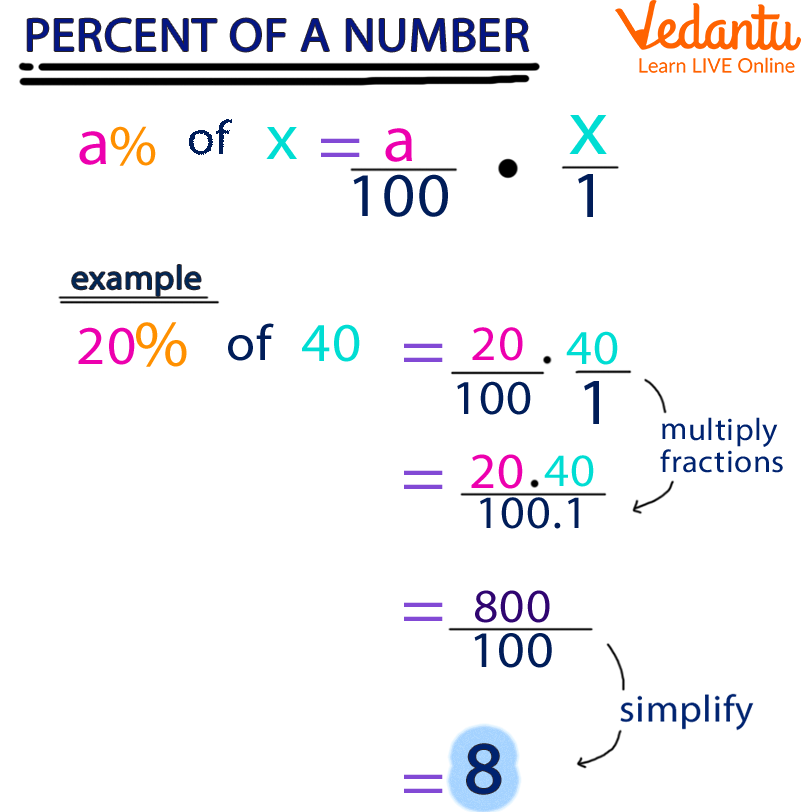
The Fundamental Formula: Part/Whole x 100
At its heart, converting a number into a percentage involves two key components: the “part” and the “whole.” The formula is as follows:
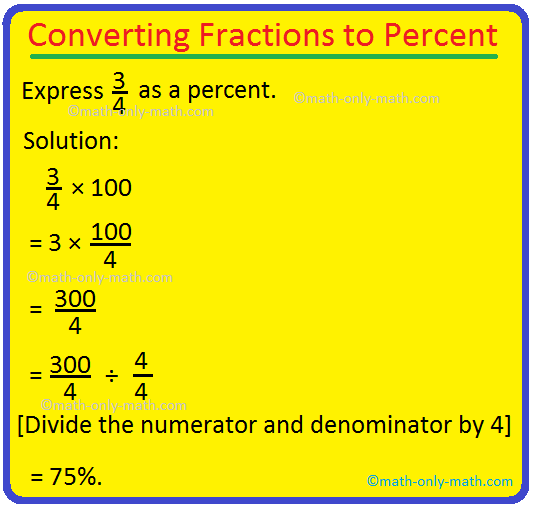
Percentage = (Part / Whole) x 100
Let’s break down these elements:
-
Part: This is the specific amount or quantity you want to express as a percentage. It’s the portion you’re focusing on.
-
Whole: This is the total amount or quantity against which the “part” is being compared. It represents the entire entity or the base value.
-
Divide (Part / Whole): This step calculates the proportion of the part relative to the whole, resulting in a decimal.
-
Multiply by 100: This final step converts the decimal proportion into a percentage by moving the decimal point two places to the right and adding the “%” symbol.
For example, if you scored 80 points on a test that was worth a total of 100 points, the “part” is 80, and the “whole” is 100. (80 / 100) = 0.80. Multiply by 100, and you get 80%. This means you scored 80 percent of the total points. The beauty of this formula is its universal applicability across all financial calculations.
Step-by-Step Examples: From Theory to Practice
Let’s apply this fundamental formula to common financial situations to solidify your understanding.
Example 1: Calculating a Discount Rate
Imagine you find a product originally priced at $250, but it’s now on sale for $200. You want to know the percentage discount you’re receiving.
-
Calculate the absolute discount: Original Price – Sale Price = $250 – $200 = $50. This $50 is our “part” (the amount saved).
-
Identify the “whole”: The original price ($250) is the base against which the discount is measured.
-
Apply the formula:
Percentage Discount = ($50 / $250) x 100
Percentage Discount = 0.20 x 100
Percentage Discount = 20%
You are receiving a 20% discount on the item.
Example 2: Determining Investment Returns
Suppose you invested $5,000 in a stock, and after a year, its value grew to $5,800. What is your percentage gain?
-
Calculate the absolute gain: Current Value – Initial Investment = $5,800 – $5,000 = $800. This is our “part” (the profit).
-
Identify the “whole”: The initial investment ($5,000) is the base.
-
Apply the formula:
Percentage Gain = ($800 / $5,000) x 100
Percentage Gain = 0.16 x 100
Percentage Gain = 16%
Your investment yielded a 16% gain over the year.
Example 3: Analyzing Budget Allocation
You have a monthly income of $4,000, and you spend $1,200 on housing. What percentage of your income is allocated to housing?
-
Identify the “part”: Your housing expense, $1,200.
-
Identify the “whole”: Your total monthly income, $4,000.
-
Apply the formula:
Percentage Allocated to Housing = ($1,200 / $4,000) x 100
Percentage Allocated to Housing = 0.30 x 100
Percentage Allocated to Housing = 30%
You are allocating 30% of your income to housing costs. This insight is crucial for comparing against budgeting rules of thumb or identifying areas for potential savings.
Advanced Applications: Leveraging Percentages for Smarter Financial Decisions
Beyond basic calculations, percentages underpin more sophisticated financial concepts, providing a powerful lens for strategic planning and wealth building.
Compound Interest and Growth Rates: The Power of Percentages Over Time
The concept of compound interest, often hailed as the “eighth wonder of the world,” is entirely dependent on percentages. It’s the interest you earn on both your initial principal and the accumulated interest from previous periods. When your investments grow at a certain percentage rate year after year, the compounding effect means that even small percentage differences in annual returns can lead to vastly different outcomes over the long term.
For example, a consistent 7% annual return on an investment will generate significantly more wealth over 30 years than a 5% return, even if the absolute dollar difference seems small initially. This exponential growth is purely a function of percentages applied iteratively over time. Understanding and calculating Compound Annual Growth Rate (CAGR) for your investments, which expresses the average annual growth rate over a specified period, is another critical application of percentages that provides a smoother, more representative picture of performance than simple annual returns.
Understanding Financial Ratios and Benchmarking
In business finance, percentages are used to create crucial financial ratios that reveal a company’s health, profitability, and efficiency. Ratios like profit margins (net income as a percentage of revenue), debt-to-equity ratio (debt as a percentage of equity), and return on investment (profit as a percentage of initial investment) are standard metrics used by investors and analysts.
Individuals can adopt a similar mindset. Calculating your personal savings rate (savings as a percentage of income), debt-to-income ratio (debt payments as a percentage of income), or even your “burn rate” (monthly expenses as a percentage of available cash) can provide invaluable insights into your financial standing. Benchmarking these personal percentages against financial goals, industry averages, or recommended guidelines (e.g., the 50/30/20 budget rule) allows for objective self-assessment and strategic adjustments, ensuring you remain on track toward your financial aspirations.
Decoding Economic Indicators
Many key economic indicators that influence our financial decisions are expressed as percentages. Inflation rates, unemployment rates, gross domestic product (GDP) growth, and central bank interest rate changes are all percentage-based metrics reported by governments and financial institutions.
Understanding what these percentages mean and how they are calculated allows you to better comprehend the economic environment and make informed financial adjustments. For instance, a high inflation rate (e.g., 5%) means your money’s purchasing power is eroding rapidly, prompting you to seek higher-yielding investments or adjust spending habits. A declining GDP growth rate (e.g., from 3% to 1%) might signal an economic slowdown, influencing investment decisions. These percentage-based indicators are vital for macro-level financial planning and risk management.
Common Pitfalls and How to Avoid Them
While powerful, percentages can be misleading if not interpreted correctly and with full context. Being aware of common pitfalls is crucial for accurate financial analysis.
Misinterpreting Percentage Changes
A frequent source of confusion lies in differentiating between a percentage point change and a percentage rate change. For example, if an interest rate goes from 5% to 6%, that’s an increase of 1 percentage point. However, it’s a 20% rate increase (the 1 percentage point increase is 20% of the original 5%). Misunderstanding this distinction can significantly skew perceptions of financial changes, particularly in discussions about interest rates, taxes, or market volatility.
Another common error is failing to consider the “base” number. A 10% increase on $100 is only $10, whereas a 10% increase on $1,000,000 is $100,000. While the percentage is the same, the absolute impact is drastically different. Always consider the magnitude of the underlying numbers when evaluating percentage changes.
The Impact of Fees and Taxes
Fees and taxes, often expressed as percentages, can significantly erode your net returns or increase your actual costs. A seemingly small 1% annual management fee on an investment portfolio, for instance, can siphon off a substantial portion of your long-term gains, especially due to compounding. Similarly, understanding the effective tax rate on your income or capital gains requires calculating the percentage of your earnings that goes to taxes after all deductions and credits. Overlooking these percentage-based deductions can lead to an overestimation of your net financial position. Always factor in all applicable fees and taxes to determine true percentage yields or costs.
Overlooking the Context
Percentages, while excellent for comparison, should never be viewed in isolation. A 100% return on a $10 investment is only a $10 profit, whereas a 1% return on a $1,000,000 investment is a $10,000 profit. The context provided by the absolute numbers is indispensable. A high percentage gain might be exciting, but if it’s on a negligible amount of capital, its impact on your overall financial well-being might be minimal. Conversely, a seemingly small percentage increase in a very large recurring expense can amount to a significant absolute dollar increase over time. Always pair your percentage analysis with an understanding of the underlying dollar figures to gain a complete and accurate financial picture.
Conclusion
The ability to turn a number into a percentage is far more than a basic arithmetic skill; it is a cornerstone of financial literacy and a potent tool for effective money management. From understanding the dynamics of interest rates and investment returns to meticulously planning budgets and dissecting economic data, percentages empower individuals to quantify, compare, and comprehend the financial forces at play in their lives.
By mastering the simple yet powerful formula of (Part / Whole) x 100, and by applying it thoughtfully to real-world financial scenarios, you unlock a deeper understanding of your financial health and the broader economic environment. This mastery enables you to identify opportunities, mitigate risks, and make decisions grounded in solid numerical reasoning. Embrace percentages not just as mathematical constructs, but as powerful lenses through which to view, analyze, and ultimately control your financial world, paving the way for sustained financial success.
aViewFromTheCave is a participant in the Amazon Services LLC Associates Program, an affiliate advertising program designed to provide a means for sites to earn advertising fees by advertising and linking to Amazon.com. Amazon, the Amazon logo, AmazonSupply, and the AmazonSupply logo are trademarks of Amazon.com, Inc. or its affiliates. As an Amazon Associate we earn affiliate commissions from qualifying purchases.