
Understanding the Foundation of Percentages in Finance
In the world of money, numbers tell a story, and percentages provide the most potent narrative. From understanding investment returns to deciphering discount offers, or evaluating business profitability, percentages are the universal language of financial comparison and change. Mastering the simple mechanics of calculating a percentage between two numbers is a foundational skill that empowers individuals and businesses to make informed, strategic decisions.
What Exactly is a Percentage?
A percentage is a way of expressing a number as a fraction of 100. It is denoted by the percent sign (%). Essentially, when we say “X percent,” we mean “X out of every 100.” For example, 25% means 25 out of 100, which can also be written as the fraction 25/100 or the decimal 0.25. In finance, this concept allows us to standardize comparisons, irrespective of the absolute size of the numbers involved. Whether you’re comparing the growth of a small personal savings account or the market share of a multinational corporation, percentages provide a relatable and intuitive scale.
The Basic Formula for Financial Calculation
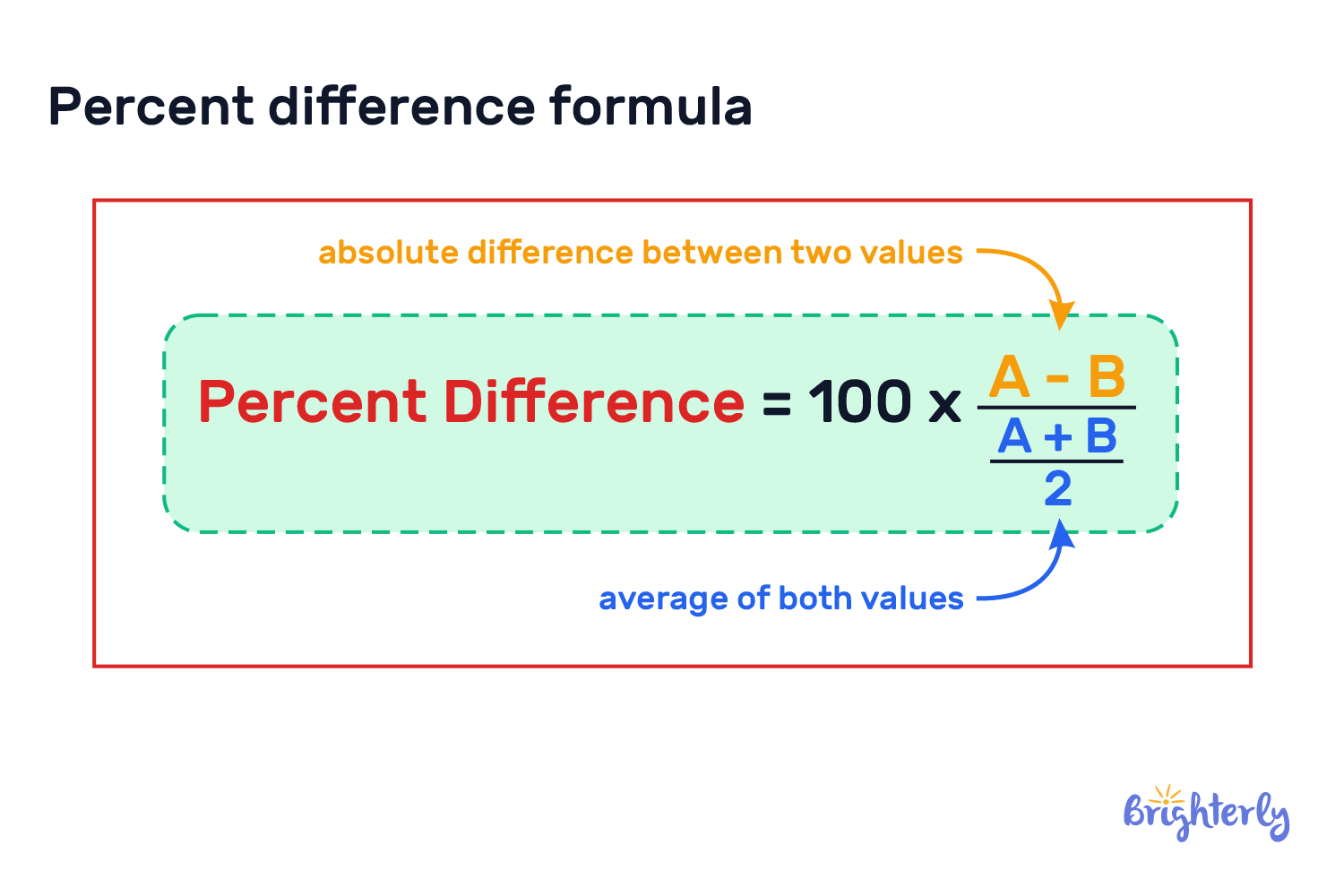
The core formula for calculating a percentage is remarkably straightforward, yet it forms the bedrock for countless financial analyses. To find what percentage one number (part) is of another number (whole), you use the following formula:
Percentage = (Part / Whole) × 100
Let’s break down the components in a financial context:
-
Part: This is the specific amount or component you are interested in. It could be your monthly spending on dining out, the profit generated from a specific product, or the discount amount received.
-
Whole: This represents the total or the base amount against which you are comparing the “part.” Examples include your total monthly income, the total revenue of your business, the original price of an item, or your initial investment.
-
100: This multiplier converts the decimal fraction into a percentage, making it easier to understand and compare.
For instance, if you spent $300 on groceries in a month and your total monthly budget is $2000, your grocery spending is ($300 / $2000) * 100 = 15% of your budget. This simple calculation provides instant clarity on where your money is going, a critical step in personal financial management.
Calculating Core Financial Percentages
The basic percentage formula finds diverse applications across personal and business finance. Understanding these specific applications helps in making the formula truly impactful.
Percentage of a Whole: Budgeting and Allocations
One of the most common applications of percentages in personal finance is budgeting. By calculating what percentage each expenditure category represents of your total income or budget, you gain critical insights into your spending habits and financial priorities.
Example:
Suppose your net monthly income is $4,500.
-
Rent: $1,200
-
Utilities: $250
-
Groceries: $500
-
Transportation: $300
-
Savings: $800
To find the percentage for each category:
-
Rent: ($1,200 / $4,500) × 100 = 26.67%
-
Utilities: ($250 / $4,500) × 100 = 5.56%
-
Groceries: ($500 / $4,500) × 100 = 11.11%
-
Transportation: ($300 / $4,500) × 100 = 6.67%
-
Savings: ($800 / $4,500) × 100 = 17.78%
Understanding these percentages allows you to identify areas where you might be overspending or where you could allocate more towards savings or investments, aligning your spending with your financial goals.
Percentage Change: Tracking Investment Growth and Fluctuations
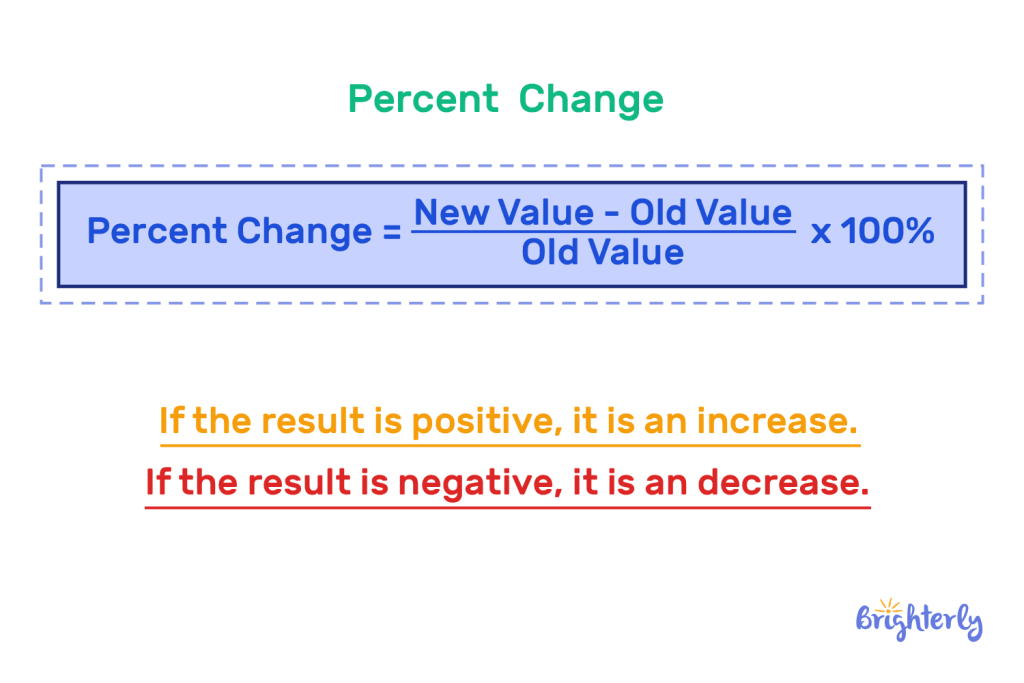
Percentage change is indispensable for evaluating the performance of investments, tracking income growth, or analyzing market fluctuations. It tells you how much a value has increased or decreased relative to its initial amount.
The formula for percentage change is:
Percentage Change = [(New Value – Old Value) / Old Value] × 100
-
A positive result indicates a percentage increase.
-
A negative result indicates a percentage decrease.
Example: Investment Performance
You invested $10,000 in a stock, and after one year, its value grew to $11,500.
-
Old Value (Initial Investment): $10,000
-
New Value (Current Value): $11,500
-
Percentage Change = [($11,500 – $10,000) / $10,000] × 100
-
Percentage Change = ($1,500 / $10,000) × 100 = 0.15 × 100 = 15%
This means your investment saw a 15% return, a key metric for comparing different investment opportunities over time. Conversely, if the investment dropped to $9,000, the percentage change would be [($9,000 – $10,000) / $10,000] × 100 = -10%, indicating a 10% loss.
Discount and Markup Percentages: Consumer and Retail Finance
Consumers frequently encounter percentages in the form of discounts, while businesses rely on markups to price their products profitably.
Discount Percentage
When an item is on sale, the discount is usually expressed as a percentage. To calculate the actual discount amount or the final price, you first need to understand the percentage.

Example:
A jacket originally priced at $120 is on sale for 25% off.
-
Discount Amount = Original Price × Discount Percentage
-
Discount Amount = $120 × 0.25 = $30
-
Sale Price = Original Price – Discount Amount
-
Sale Price = $120 – $30 = $90
Alternatively, to find the sale price directly:
-
Sale Price = Original Price × (1 – Discount Percentage)
-
Sale Price = $120 × (1 – 0.25) = $120 × 0.75 = $90
Markup Percentage
Businesses use markup to determine the selling price of a product by adding a certain percentage to its cost. This ensures coverage of overheads and generation of profit.
Example:
A retailer buys a product for $50 and wants to apply a 40% markup.
-
Markup Amount = Cost × Markup Percentage
-
Markup Amount = $50 × 0.40 = $20
-
Selling Price = Cost + Markup Amount
-
Selling Price = $50 + $20 = $70
Markup percentages are vital for businesses to set competitive and profitable prices.
Profit Margin Percentage: Business Health Metrics
For businesses, calculating profit margins is crucial for assessing financial health and operational efficiency. There are different types of profit margins (gross, operating, net), but they all rely on percentage calculations.
Gross Profit Margin
This measures the percentage of revenue left after deducting the cost of goods sold (COGS).
Gross Profit Margin = [(Revenue – COGS) / Revenue] × 100
Example:
A company has revenues of $500,000 and COGS of $300,000.
-
Gross Profit Margin = [($500,000 – $300,000) / $500,000] × 100
-
Gross Profit Margin = ($200,000 / $500,000) × 100 = 0.40 × 100 = 40%
A 40% gross profit margin means that for every dollar of revenue, 40 cents remain to cover operating expenses and contribute to net profit.
Net Profit Margin
This measures the percentage of revenue remaining after all expenses, including taxes and interest, have been deducted. It’s often considered the ultimate indicator of a company’s profitability.
Net Profit Margin = (Net Income / Revenue) × 100
Example:
If the company from the previous example had a net income of $75,000 from its $500,000 revenue.
-
Net Profit Margin = ($75,000 / $500,000) × 100
-
Net Profit Margin = 0.15 × 100 = 15%
This means 15 cents of every revenue dollar turned into actual profit for the business. Monitoring these margins over time helps businesses identify trends, control costs, and make strategic decisions to improve profitability.
Practical Applications and Tools for Financial Percentages
While the core formulas are simple, managing numerous percentage calculations, especially for complex financial scenarios, benefits greatly from specific tools.
Leveraging Spreadsheets for Financial Analysis
Spreadsheet software like Microsoft Excel or Google Sheets are invaluable tools for working with percentages in finance. They automate calculations, reduce errors, and allow for dynamic analysis.
To calculate a percentage in a spreadsheet:
-
Percentage of a Whole: If A1 contains the “part” and B1 contains the “whole,” the formula would be
= (A1/B1)*100. You can also format the cell as a percentage to display it directly without multiplying by 100 (e.g.,= A1/B1formatted as Percentage). -
Percentage Change: If A1 is the “Old Value” and B1 is the “New Value,” the formula would be
= ((B1-A1)/A1)*100. Again, direct percentage formatting is also an option.
Spreadsheets are particularly powerful for budgeting, investment tracking, and business financial modeling, as they allow you to change input numbers and instantly see the impact on all related percentage calculations.
Quick Calculations with Financial Calculators
For on-the-go calculations or simpler tasks, dedicated financial calculators (physical or app-based) often have specific functions for percentages, making them swift and efficient. Even standard calculators can handle the basic operations. Understanding the order of operations and the specific percentage functions on your calculator can save time and ensure accuracy.
Why Mastering Percentages is Crucial for Financial Success
Beyond the mere mechanics, understanding how to get a percentage between two numbers is a cornerstone of financial literacy. It empowers you to:
-
Evaluate Opportunities: Compare investment returns, loan interest rates, or savings account yields accurately.
-
Manage Debt: Understand interest accrual on credit cards or loans and assess repayment strategies.
-
Budget Effectively: Allocate income, track spending, and identify areas for savings with precision.
-
Assess Business Performance: Analyze profit margins, growth rates, and market share to guide strategic decisions.
-
Make Informed Purchases: Clearly comprehend discounts, sales tax, and financing terms.
In a financially complex world, the ability to quickly and accurately interpret and calculate percentages is not just a skill but a superpower, enabling smarter decisions that pave the way to greater financial stability and growth.
aViewFromTheCave is a participant in the Amazon Services LLC Associates Program, an affiliate advertising program designed to provide a means for sites to earn advertising fees by advertising and linking to Amazon.com. Amazon, the Amazon logo, AmazonSupply, and the AmazonSupply logo are trademarks of Amazon.com, Inc. or its affiliates. As an Amazon Associate we earn affiliate commissions from qualifying purchases.