
In the intricate world of finance, understanding percentages is not merely an academic exercise; it’s a fundamental skill that underpins sound decision-making, from personal budgeting and investment strategies to complex business valuations and financial modeling. While calculating a single percentage is straightforward, financial realities often involve scenarios where one percentage is applied to a value that has already been subject to another percentage change. This “percentage of a percentage” concept is crucial for accurately assessing financial outcomes, yet it’s frequently misunderstood, leading to costly errors. Mastering this calculation empowers individuals and businesses to navigate layered discounts, analyze compound returns, evaluate multi-tier commission structures, and truly grasp the cumulative impact of various financial factors.
The Financial Significance of Nested Percentages
The ability to accurately calculate a percentage of a percentage is more than a mathematical trick; it’s a vital tool for making informed financial decisions. Many real-world financial situations involve sequential percentage adjustments, where ignoring the order or method of application can lead to significantly miscalculated outcomes.
Unpacking Compound Returns
One of the most powerful concepts in investing is compound interest, often hailed as the “eighth wonder of the world.” This phenomenon directly involves the percentage of a percentage. When your investments earn a return, and that return itself starts earning returns, you are experiencing compounding. An investment that grows by 7% year after year isn’t just adding 7% of the initial principal each time; it’s adding 7% of the new, larger total value from the previous year. Understanding how to calculate this incrementally, or over multiple periods, is essential for projecting wealth accumulation and evaluating the true long-term performance of your portfolio. Fees applied annually, often expressed as a percentage of assets under management, also compound in their impact, reducing your effective return over time.
Navigating Layered Discounts and Markups
Retail and business transactions frequently feature multiple percentage adjustments. Imagine an item that is first marked down by 20%, and then an additional 10% discount is applied at the checkout. Many incorrectly assume a total 30% discount. However, the second discount is applied to the already reduced price, not the original price. This sequential application of percentages dictates the final cost and, consequently, the actual savings for the consumer or the effective revenue for the business. Similarly, markups can be layered, affecting wholesale and retail pricing tiers, where a certain percentage is added at each stage of the supply chain.
Understanding Multi-Stage Fees and Commissions
In financial services, real estate, and sales, multi-stage fees or commissions are common. For example, a mutual fund might have an annual management fee of 0.75%, and then a portion of the fund’s assets might be invested in underlying funds that themselves carry an expense ratio of 0.20%. Or, a sales agent might earn a 5% commission on a deal, but their firm then takes a 20% cut of that commission. These scenarios require calculating a percentage of a percentage to determine the net fees paid or the actual income received after all deductions.
The Core Mechanics: Calculating a Percentage of a Percentage
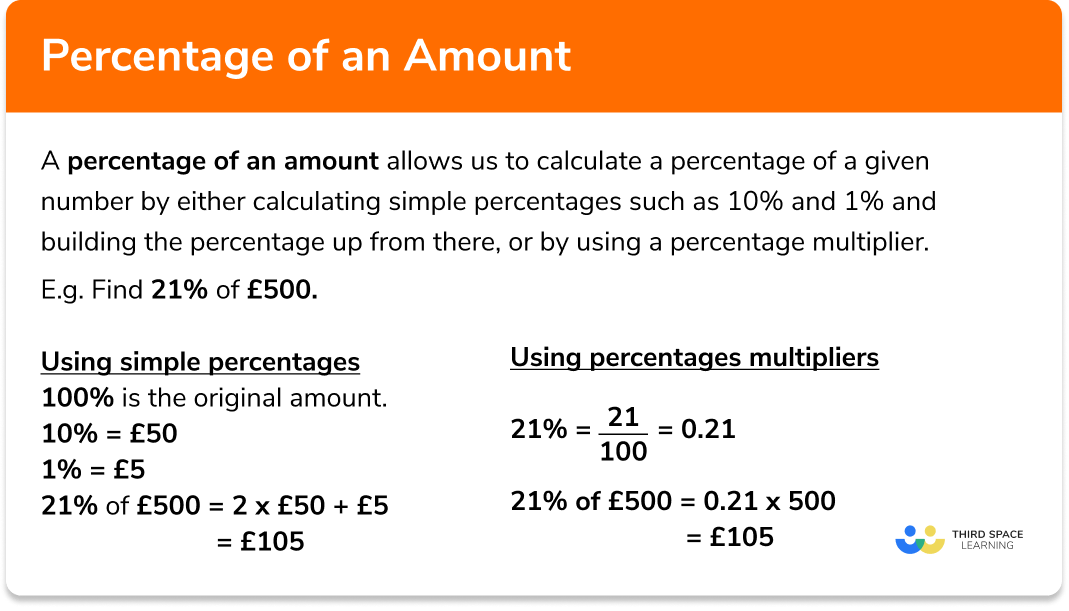
The underlying principle for calculating a percentage of a percentage is surprisingly straightforward, relying on converting percentages to decimals and then applying sequential multiplication.
Converting Percentages to Decimals
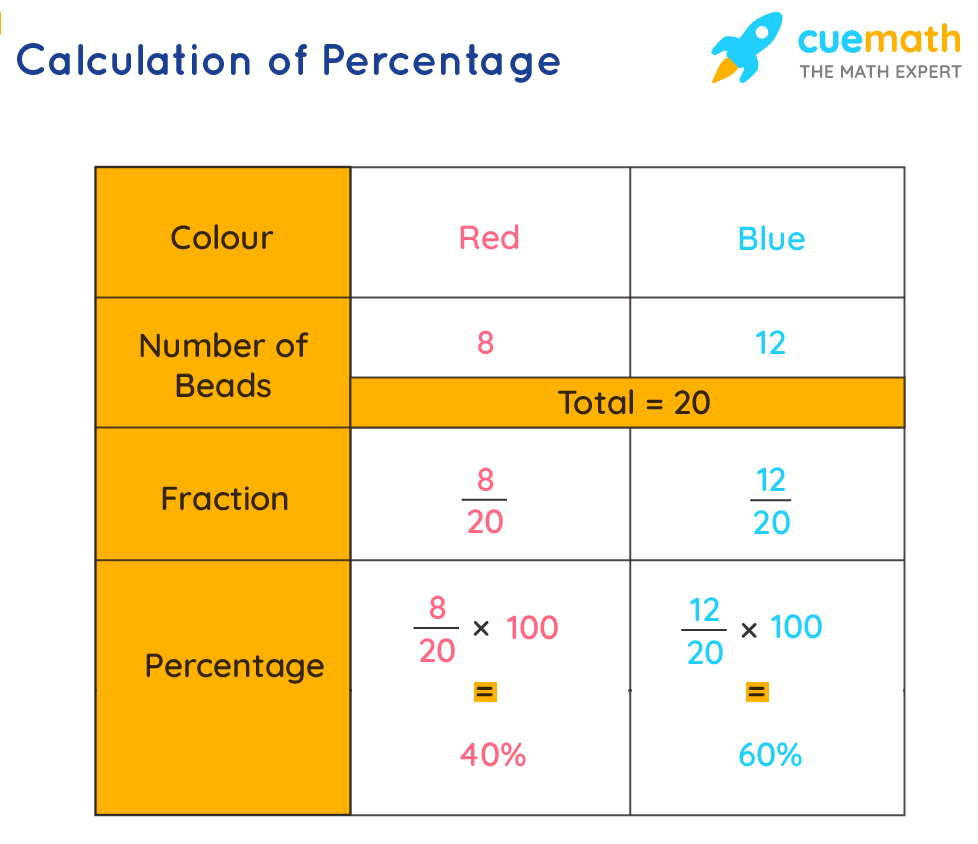
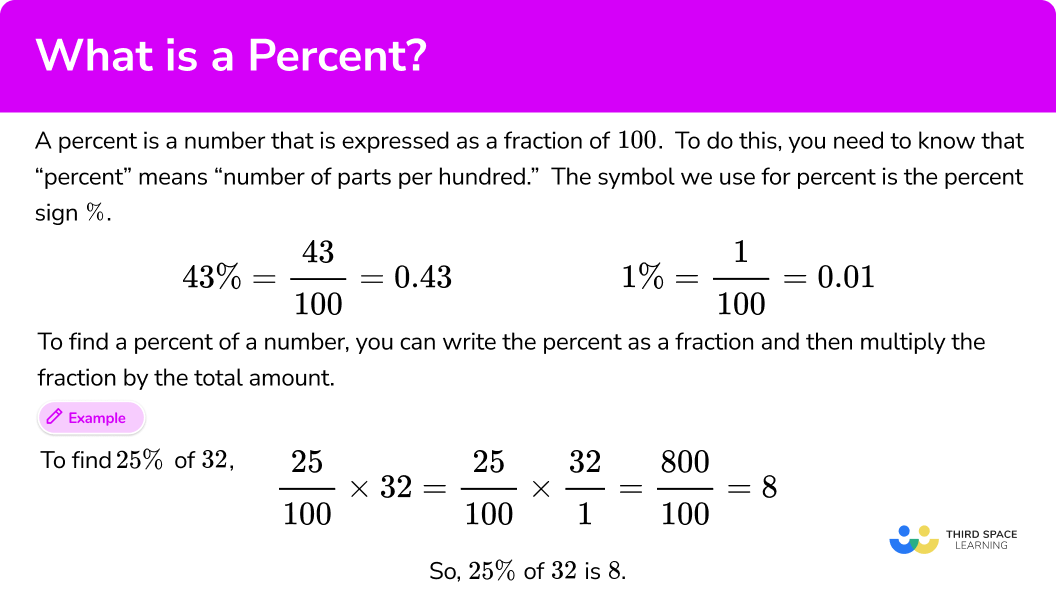
The first crucial step in any percentage calculation is to convert percentages into their decimal equivalents. A percentage literally means “per one hundred,” so 25% is 25 out of 100, which can be written as 25/100 or 0.25. Similarly, 5% is 0.05, and 100% is 1.00.
To convert a percentage that represents a decrease, you subtract the decimal equivalent from 1. For example, a 20% decrease means you retain 80% of the original value (1 – 0.20 = 0.80).
To convert a percentage that represents an increase, you add the decimal equivalent to 1. For example, a 10% increase means you have 110% of the original value (1 + 0.10 = 1.10).
Sequential Multiplication for Multi-Stage Changes
Once percentages are converted to decimals, the calculation involves sequential multiplication. You apply each percentage change to the current resulting value, not always to the initial base.
Let’s consider an item priced at $100.
Scenario 1: A 20% discount.
New price = $100 * (1 – 0.20) = $100 * 0.80 = $80.
Scenario 2: An additional 10% discount is applied to the already discounted price.
This is where the “percentage of a percentage” comes in. The 10% discount is applied to $80, not $100.
New price = $80 * (1 – 0.10) = $80 * 0.90 = $72.
Alternatively, you can multiply the decimal factors directly:
Final price = Original price * (1 – first discount as decimal) * (1 – second discount as decimal)
Final price = $100 * 0.80 * 0.90 = $100 * 0.72 = $72.
This shows that a 20% discount followed by a 10% discount is equivalent to a single 28% discount (1 – 0.72 = 0.28). It is not a 30% discount.
The same logic applies to increases. If an investment of $1,000 grows by 5% in year 1 and then by 8% in year 2:
Year 1 end value = $1,000 * 1.05 = $1,050.
Year 2 end value = $1,050 * 1.08 = $1,134.
Or, directly: $1,000 * 1.05 * 1.08 = $1,000 * 1.134 = $1,134.
The ‘Of’ Implies Multiplication Rule
A simple linguistic cue often helps: the word “of” in “percentage of a percentage” directly translates to multiplication. When you need to find 20% of 10%, you multiply their decimal equivalents: 0.20 * 0.10 = 0.02. This means 20% of 10% is 2%. While this specific phrasing is less common for sequential price changes, it’s a useful reminder that percentages acting on other percentages (or values derived from percentages) usually involve multiplication.
Practical Applications in Personal Finance
Accurate percentage calculations are paramount in personal finance, impacting everything from daily spending to long-term wealth building.
Investment Growth and Compounding Interest
Understanding how percentages compound is vital for long-term investing. If you project an average annual return of 7% on your investment portfolio, calculating the future value requires compounding this percentage over many years. A simple calculation like $10,000 * 1.07^10$ will show the power of compounding. For more complex scenarios, such as withdrawing a percentage of your portfolio annually while the remaining balance still grows by another percentage, understanding these sequential calculations helps gauge portfolio longevity. Similarly, fees are a percentage of your assets that eat into your returns. If your portfolio grows by 8% but has a 1% annual fee, your net growth is not simply 7%; it’s closer to 8% applied to the current balance, then 1% applied to the same balance, reducing the effective growth.
Budgeting with Variable Expenses and Income
Some income streams or expenses might be tied to percentages that are themselves variable. For instance, if your bonus is 10% of your sales, and your sales are projected to grow by 15% next year, calculating next year’s bonus involves finding 10% of a value that has already increased by 15%. This helps in forecasting income accurately. On the expense side, if you’re saving for a down payment and your housing costs (which include taxes and insurance, often percentages of the home value) are projected to increase by a certain percentage, knowing how to calculate this helps refine your budget.
Loan Interest and Effective Rates
When taking out loans, interest rates are the most obvious percentage. However, sometimes additional fees are expressed as percentages of the loan amount, or interest accrues and compounds, meaning you pay interest on previously accrued interest. Understanding the true “effective annual rate” often requires complex percentage calculations that go beyond the stated APR, especially with loans that have variable rates or additional charges. For credit cards, interest can compound daily, making the effective rate much higher than the monthly stated rate.
Business Finance Scenarios
Businesses constantly deal with layers of percentages, from pricing products to analyzing profitability and managing financial health.
Profit Margins and Multi-Tiered Pricing
Calculating true profit margins often involves several percentage steps. A product might be purchased from a supplier at a certain cost. A markup percentage is applied to determine the wholesale price. Then, another markup percentage is applied to the wholesale price to arrive at the retail price. Finally, sales discounts (another percentage) might be applied. To understand the actual gross profit margin at each stage or the overall profit for the business, these sequential percentage applications must be calculated accurately. For example, if a product costs $50 to produce, is marked up 40% for wholesale, and then another 50% for retail, the final retail price is not simply $50 * (1 + 0.40 + 0.50). It’s $50 * 1.40 * 1.50 = $105.
Sales Tax and Discount Stacking
Businesses regularly encounter situations where discounts are offered, and then sales tax is applied. Crucially, sales tax is almost always applied after all discounts have been factored in. So, for a $200 item with a 25% discount and an 8% sales tax, the calculation is:
Discounted price = $200 * (1 – 0.25) = $200 * 0.75 = $150.
Final price with tax = $150 * (1 + 0.08) = $150 * 1.08 = $162.
Miscalculating this can lead to incorrect pricing, under-collection of tax, or frustrated customers.
Analyzing Financial Statements for Growth and Efficiency
When reviewing financial statements, analysts often look at year-over-year growth percentages for revenue, profit, or expenses. If revenue grew by 10% last year, and then by 8% this year, understanding the cumulative growth over two years involves calculating (1 + 0.10) * (1 + 0.08). Similarly, efficiency ratios might involve percentages where one factor has already been influenced by another percentage change. For example, if a company’s operating expenses are 25% of its revenue, and revenue is projected to grow by 12%, then the operating expenses will also increase, but the actual dollar amount will be 25% * (Revenue * 1.12), not just 25% * Revenue * 1.12 applied directly to the original expense amount.
Common Pitfalls and How to Avoid Them
Even seasoned financial professionals can fall prey to common errors when dealing with nested percentages. Awareness and careful application are key to avoiding these mistakes.
The Error of Adding Percentages
The most frequent mistake is simply adding percentages together when they should be multiplied sequentially. As demonstrated with the $100 item first discounted by 20% then by 10%, adding them to get a 30% discount yields $70, which is incorrect. The actual final price is $72. Always remember that sequential percentage changes are multiplicative, not additive, especially when they refer to the same base value being changed multiple times.
Ignoring the Base Value
Another common error is applying a subsequent percentage to the original base value instead of the current, modified base value. This is particularly relevant with discounts or markups. Always ask: “What is this percentage being applied to?” The answer is usually the latest value in the sequence, not necessarily the starting value.
Utilizing Financial Calculators and Spreadsheets Wisely
While understanding the manual calculation is crucial, for complex or repetitive tasks, financial calculators and spreadsheets (like Microsoft Excel or Google Sheets) are invaluable. Functions for compound interest (FV – Future Value), net present value (NPV), and simply using cells to chain calculations (e.g., A1 * 0.80, then A2 * 0.90) can prevent manual errors. However, users must still input the correct formulas and understand the underlying logic; a tool is only as good as the instructions it’s given. Double-checking formulas and ensuring they reflect the sequential application of percentages is vital.
Mastering the calculation of a percentage of a percentage is more than a mathematical exercise; it’s a cornerstone of financial literacy and sound decision-making. Whether managing personal investments, evaluating business profitability, or simply making a smart purchase, understanding how these nested percentages interact can significantly impact your financial outcomes. By converting percentages to decimals and applying them sequentially, individuals and businesses can confidently navigate the complexities of financial calculations and make more informed choices.
aViewFromTheCave is a participant in the Amazon Services LLC Associates Program, an affiliate advertising program designed to provide a means for sites to earn advertising fees by advertising and linking to Amazon.com. Amazon, the Amazon logo, AmazonSupply, and the AmazonSupply logo are trademarks of Amazon.com, Inc. or its affiliates. As an Amazon Associate we earn affiliate commissions from qualifying purchases.