
Understanding how to calculate and interpret monthly interest is a cornerstone of sound financial management. Whether you’re borrowing money, saving for the future, or investing in your retirement, interest is a force that profoundly impacts your financial trajectory. It can be a cost, a reward, a burden, or a boon, but its presence is ubiquitous in personal and business finance. This guide demystifies monthly interest, offering clear explanations, practical calculation methods, and strategic insights to help you navigate your financial landscape with greater confidence and control. By the end, you’ll not only know how to find monthly interest but also how to leverage this knowledge to make smarter financial decisions.
Understanding the Fundamentals of Interest
Before diving into calculations, it’s crucial to grasp the basic concepts that underpin all interest computations. A solid foundation here will empower you to understand various financial products and make informed choices.
What is Interest and Why Does it Matter?
At its core, interest is the cost of borrowing money or the return on lending money. For borrowers, it’s the extra amount paid to a lender in exchange for the use of their capital. For savers and investors, it’s the compensation received for depositing or investing their funds. Interest is expressed as a percentage of the principal amount (the original sum borrowed or invested) over a specific period.
Why does it matter so much? Because interest has a compounding effect over time. A small difference in an interest rate or how it’s applied can translate into thousands, or even tens of thousands, of dollars in costs or earnings over the life of a loan or investment. For businesses, understanding interest is vital for managing cash flow, evaluating debt, and assessing investment opportunities. For individuals, it dictates the affordability of mortgages, the growth of retirement savings, and the overall cost of living.
Distinguishing Between Simple and Compound Interest
The two primary types of interest are simple and compound, and their distinction is critical:
-
Simple Interest: Calculated only on the principal amount. The interest earned or paid remains constant over time, assuming the principal doesn’t change. While simpler to calculate, it’s less common for long-term financial products, especially savings and loans.
-
Formula for Simple Interest:
I = P × R × T-
I= Interest -
P= Principal amount -
R= Annual interest rate (as a decimal) -
T= Time in years
-
-
-
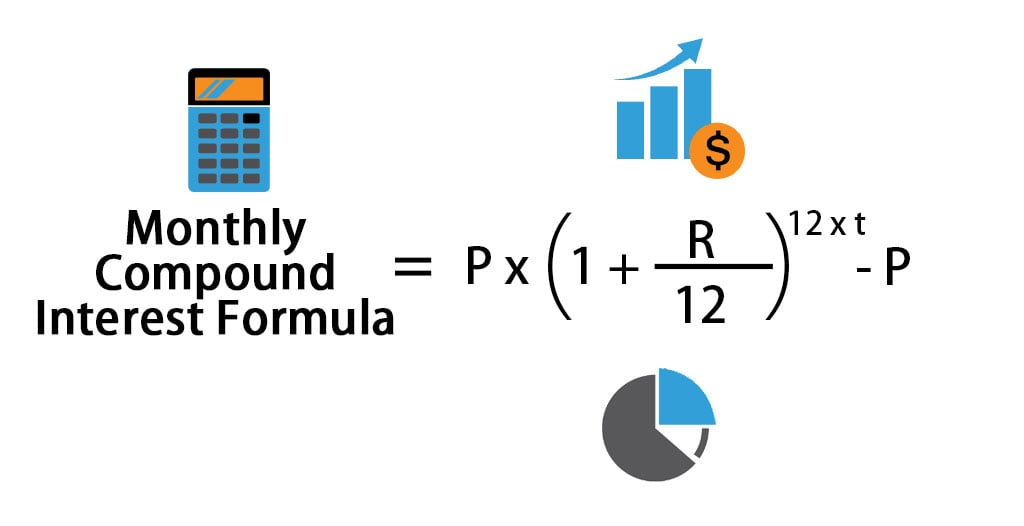
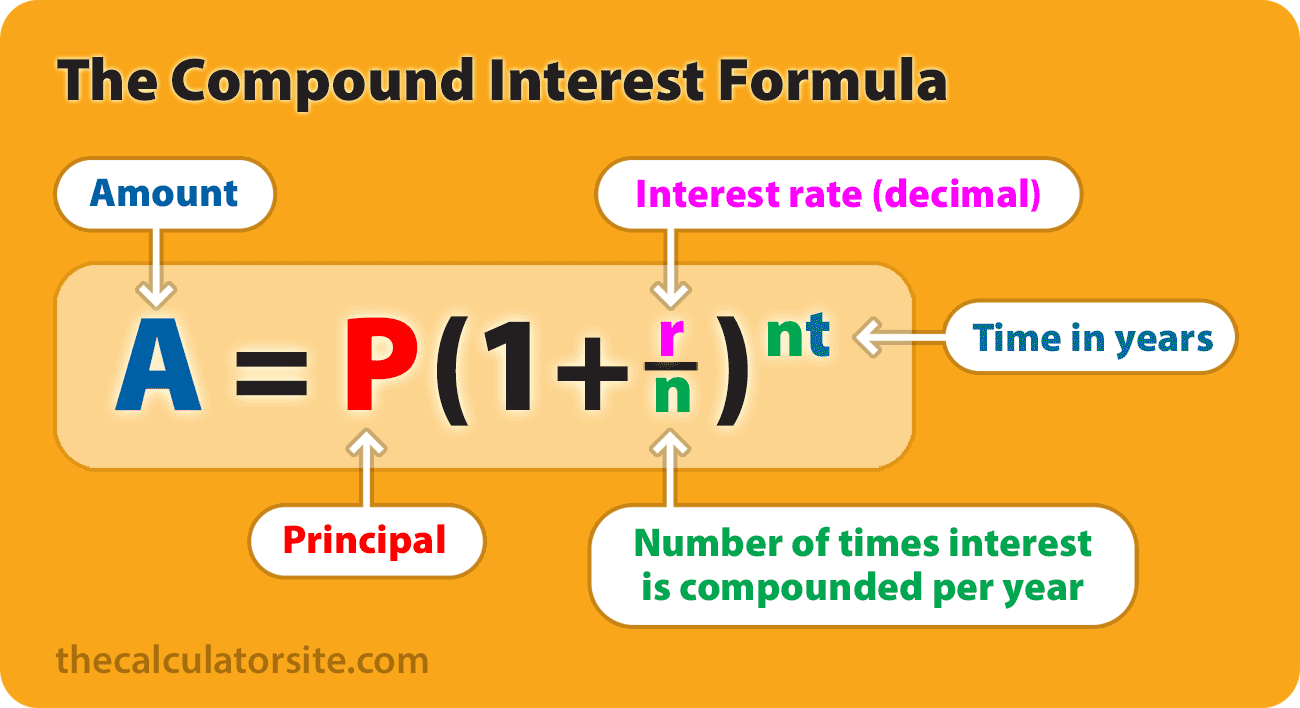
Compound Interest: This is where the magic (or the pain) happens. Compound interest is calculated on the initial principal and also on the accumulated interest from previous periods. It means you earn interest on your interest, or you pay interest on your interest. This “interest on interest” effect can lead to substantial growth over time for investments and significant costs for debts. Most loans (mortgages, credit cards) and savings accounts operate on compound interest. The frequency of compounding (daily, monthly, quarterly, annually) significantly impacts the total amount. More frequent compounding leads to greater interest accumulation.
Decoding APR and APY for Monthly Calculations
When dealing with interest, you’ll frequently encounter the terms Annual Percentage Rate (APR) and Annual Percentage Yield (APY). While both relate to annual interest, they convey different information critical for monthly calculations:
-
APR (Annual Percentage Rate): This represents the annual cost of borrowing money, including the nominal interest rate and any additional fees or charges (like origination fees). APR is usually quoted for loans (mortgages, car loans, credit cards) and does not typically account for compounding within the year. It provides a standardized way to compare the cost of different loan products. To find the monthly interest rate from an APR, you generally divide the APR by 12. For instance, a 6% APR loan would have a nominal monthly rate of 0.5% (6% / 12).
-
APY (Annual Percentage Yield): This represents the effective annual rate of return on an investment or savings account, taking into account the effect of compounding interest. APY is usually quoted for savings accounts, CDs, and other interest-bearing deposits. Because APY factors in compounding, it provides a more accurate picture of the actual earnings. If an account has a 5% APY with monthly compounding, its effective monthly rate is slightly less than 5%/12, but the total annual yield after compounding will be exactly 5%. For example, an account with a 4.9% nominal annual rate compounded monthly might yield a 5% APY.
Understanding the difference is key: APR helps you compare loan costs, while APY helps you compare savings earnings, both providing crucial context for deriving monthly interest figures.
Calculating Monthly Interest on Debt Obligations
For many, understanding monthly interest is most pressing when it comes to managing debt. Mortgages, personal loans, and credit cards each have distinct ways interest is applied, impacting your monthly payments and the total cost over the loan’s life.
Mortgage Interest: A Deep Dive into Amortization
Mortgage interest calculations are complex primarily due to amortization – the process of paying off debt over time in regular installments. Each monthly mortgage payment consists of both principal and interest. In the early years of a typical mortgage, a larger portion of your payment goes towards interest, and a smaller portion towards the principal. As the loan matures, this ratio reverses.
To find the monthly interest on a mortgage payment, you’ll need the outstanding principal balance, your annual interest rate, and the amortization schedule. The formula for the interest portion of a single month’s payment is:
Monthly Interest Payment = (Outstanding Principal Balance × Annual Interest Rate) / 12
For example, if you have an outstanding principal of $200,000 and an annual interest rate of 4.5%, your interest payment for that month would be:
($200,000 × 0.045) / 12 = $750
The remainder of your total monthly payment would then go towards reducing your principal. As your principal balance decreases each month, the interest portion of your payment also decreases, which is why paying extra on your mortgage can significantly reduce the total interest paid over the life of the loan.
Personal Loans and Credit Cards: Variable vs. Fixed Rates
Personal loans and credit cards apply interest differently:
-
Personal Loans: Often have a fixed interest rate (APR) for the entire loan term. The calculation for monthly interest is straightforward, similar to the mortgage example but applied to the outstanding balance. If your personal loan has a 10% APR and your current balance is $5,000, the interest for one month would be
($5,000 × 0.10) / 12 = $41.67. Payments are usually amortized, meaning a portion goes to interest and the rest to principal. -
Credit Cards: These typically have variable interest rates and calculate interest daily on your average daily balance, then compound it monthly. This makes calculating monthly interest more complex. If you carry a balance, the interest is computed on your average daily balance during the billing cycle. The monthly statement will show the total interest charged. To avoid credit card interest, always pay your statement balance in full by the due date. Credit card APRs are often much higher than other loan types, making understanding monthly interest crucial to avoid accumulating significant debt.
Auto Loans and Other Installment Debts
Auto loans, student loans, and other installment debts typically feature fixed interest rates and an amortization schedule, much like personal loans. The interest is calculated on the remaining principal balance, and your monthly payment remains constant.
Example: An auto loan of $25,000 at a 6% APR over 5 years.
While your total monthly payment will be fixed, the interest portion of that payment will decrease over time as the principal is paid down. To find the specific interest paid in any given month, you would apply the annual interest rate (divided by 12) to the outstanding principal balance for that month. Your loan statement or amortization schedule will detail this breakdown.
Unlocking Growth: Monthly Interest on Savings and Investments
On the flip side, understanding monthly interest is vital for maximizing the growth of your savings and investments. Here, interest works for you.
Savings Accounts and Certificates of Deposit (CDs)
-
Savings Accounts: Most high-yield savings accounts pay compound interest, usually compounded daily or monthly, and credited monthly. The APY quoted already reflects this compounding. To find your actual monthly interest earned, you simply take your average daily balance for the month and multiply it by the monthly periodic rate. For an account with a 4% APY that compounds monthly, the nominal monthly rate is slightly less than 4%/12 (e.g., 0.327%). If you have $10,000 in the account, your interest for the first month would be approximately $32.74, and this amount then gets added to your principal, earning even more interest next month.
-
Certificates of Deposit (CDs): CDs offer a fixed interest rate for a specified term. Interest can be compounded daily, monthly, quarterly, or annually. Often, you have the option to receive interest payments monthly, or you can allow the interest to compound within the CD, leading to a higher return upon maturity. The calculation is similar to savings accounts, using the nominal rate and compounding frequency.
Bonds and Fixed-Income Investments
Bonds represent a loan made by an investor to a borrower (corporate or government). In return, the borrower promises to pay back the principal at maturity and make regular interest payments, known as “coupon payments.”
-
Coupon Payments: These are typically paid semi-annually, but if you want to understand the monthly equivalent of your bond income, you would simply divide the annual coupon payment by 12. For example, a bond with a 4% coupon rate paying $40 annually on a $1,000 face value would equate to about $3.33 per month in income.
-
Yield to Maturity (YTM): This is the total return an investor can expect if they hold the bond until maturity, taking into account the current market price, par value, coupon interest rate, and time to maturity. While YTM is an annual figure, understanding it helps assess the overall attractiveness of a bond’s “monthly interest equivalent” compared to other investments.
Understanding Investment Returns and Compounding Frequency
For broader investment accounts (brokerage accounts, retirement funds), monthly interest isn’t typically quoted as it is for savings accounts. Instead, you look at capital gains, dividends, and overall returns. However, the principle of compounding is still paramount. Dividends from stocks or interest from bonds held in these accounts are often reinvested, allowing them to purchase more assets and compound returns over time. The more frequently these returns are reinvested and compounded, the faster your investment portfolio can grow. This is the power of compounding in action, making consistent, long-term investing incredibly potent.
Practical Approaches to Finding Monthly Interest
While understanding the theory is essential, practical application requires the right tools and methods. From manual formulas to advanced software, multiple avenues exist to accurately determine monthly interest.
Manual Calculations: The Essential Formulas
For simple scenarios or to check the accuracy of digital tools, knowing the core formulas is invaluable:
-
For Simple Monthly Interest (from an annual rate):
Monthly Interest Amount = (Principal Balance × Annual Interest Rate) / 12- Example: $1,000 loan at 6% APR. Monthly interest = ($1,000 * 0.06) / 12 = $5.00
-
To Estimate Monthly Interest with Compounding (simplified):
This is trickier without a full amortization or compounding schedule, but for a single month’s compound interest on a balance, you’d apply the monthly periodic rate.
Monthly Interest Amount = Previous Month's Ending Balance × (Annual Interest Rate / 12)- Example: $10,000 in a savings account at 4% APY (which might translate to a nominal monthly rate of roughly 0.00327). Monthly interest = $10,000 * 0.00327 = $32.70. This new interest is added to the balance for the next month’s calculation.
These manual methods are best for straightforward scenarios or verifying small calculations. For complex loans or investments, digital tools are more efficient.
Utilizing Online Interest Calculators and Spreadsheets
For accuracy and convenience, particularly with compound interest and amortization, digital tools are indispensable:
-
Online Interest Calculators: A plethora of free online calculators are available for mortgages, personal loans, credit card interest, and savings growth. Simply input the principal, interest rate, and loan/savings term, and these tools will instantly provide monthly payment breakdowns, total interest paid/earned, and often full amortization schedules. They are invaluable for “what-if” scenarios (e.g., how much extra interest would I pay if my rate increased by 0.5%?).
-
Spreadsheets (Excel, Google Sheets): For personalized and flexible calculations, spreadsheets are powerful.
-
PMT Function: To calculate monthly loan payments (principal + interest).
-
IPMT Function: To calculate the interest portion of a loan payment for a specific period.
-
FV Function: To calculate the future value of an investment with compounding interest.
-
PV Function: To calculate the present value of an investment or loan.
These functions allow you to build custom financial models, analyze different scenarios, and precisely track monthly interest over time. Many free templates for loan amortization or savings growth are also available.
-
Reading Financial Statements and Loan Amortization Schedules
Your financial statements are your primary source of truth for actual interest paid or earned:
-
Loan Statements: Monthly loan statements (mortgage, auto, personal) clearly break down how much of your payment went to principal and how much to interest for that specific billing cycle. They also show your remaining principal balance, which is key for future interest calculations.
-
Savings/Investment Statements: These statements show the interest credited to your account, often with the calculation method or periodic rate.
-
Amortization Schedules: For fixed-rate, amortized loans (like mortgages), a detailed amortization schedule provides a precise month-by-month breakdown of every payment, showing exactly how much goes to principal and how much to interest for the entire life of the loan. Requesting or generating one for your loans is a powerful way to understand your interest obligations over time.
Strategic Implications and Management of Monthly Interest
Knowing how to find monthly interest is just the first step. The true value lies in using this knowledge strategically to improve your financial health, minimize costs, and maximize earnings.
The Impact of Interest on Your Financial Health
Interest is a double-edged sword:
-
Debt Burden: High-interest debt (like credit cards) can quickly spiral out of control, making it difficult to pay down principal and trapping individuals in a cycle of debt. The monthly interest charges eat into disposable income, hindering financial progress. Understanding monthly interest allows you to prioritize high-interest debts for repayment.
-
Wealth Accumulation: On the other hand, compound interest is a powerful engine for wealth creation. Consistently saving and investing, even small amounts, allows interest to compound over time, leading to substantial growth. Early investment and a higher interest rate (or return) can significantly accelerate your journey towards financial goals like retirement or a down payment.
Strategies for Minimizing Interest Paid
Armed with the ability to calculate monthly interest, you can implement strategies to reduce your debt costs:
-
Extra Payments: Any extra payment beyond the minimum on an amortized loan (especially high-interest ones) directly reduces your principal balance. Since future interest is calculated on this lower principal, you pay less interest over the remaining life of the loan and may shorten the loan term.
-
Refinancing: If interest rates have dropped or your credit score has improved, refinancing a loan (like a mortgage or personal loan) can secure a lower interest rate, thereby reducing your monthly interest payments and the total cost of the loan.
-
Debt Consolidation: Consolidating multiple high-interest debts into a single loan with a lower interest rate can reduce your overall monthly interest burden and simplify payments.
-
Negotiation: For credit card debt, sometimes negotiating a lower APR with your issuer is possible, especially if you have a good payment history.

Maximizing Interest Earned on Your Assets
Just as important as minimizing interest paid is maximizing interest earned:
-
High-Yield Savings Accounts: Move idle cash from traditional savings accounts with negligible interest to high-yield online savings accounts, which often offer significantly higher APYs.
-
Certificates of Deposit (CDs): For funds you don’t need immediately, laddering CDs can offer higher fixed interest rates than standard savings accounts.
-
Investment Diversification: Explore various investment vehicles (stocks, bonds, mutual funds, ETFs) to diversify your portfolio and aim for optimal risk-adjusted returns. Reinvesting dividends and interest earned from investments allows compounding to work its magic more effectively.
-
Automate Savings: Set up automatic transfers to savings or investment accounts. Consistent contributions, combined with the power of compound interest, are key to long-term wealth growth.
In conclusion, “how to find monthly interest” is far more than a simple calculation; it’s a gateway to comprehensive financial literacy and strategic empowerment. By understanding its mechanics, leveraging the right tools, and applying insightful strategies, you transform interest from a confusing financial term into a powerful lever for controlling your financial destiny. Whether you’re managing debt or building wealth, mastering monthly interest is an indispensable skill for achieving your financial aspirations.
aViewFromTheCave is a participant in the Amazon Services LLC Associates Program, an affiliate advertising program designed to provide a means for sites to earn advertising fees by advertising and linking to Amazon.com. Amazon, the Amazon logo, AmazonSupply, and the AmazonSupply logo are trademarks of Amazon.com, Inc. or its affiliates. As an Amazon Associate we earn affiliate commissions from qualifying purchases.