
Compound interest is often hailed as the “eighth wonder of the world” by none other than Albert Einstein, a testament to its profound yet often underestimated power in wealth creation. For many, the concept remains shrouded in financial jargon, yet understanding and harnessing it is fundamental to achieving significant financial growth and security. This article demystifies compound interest, revealing its mechanics, exploring practical strategies for its application, and guiding you towards maximizing its transformative potential for your financial future.
The Unseen Force: What is Compound Interest?
At its core, compound interest is interest calculated on the initial principal, which also includes all of the accumulated interest from previous periods on a deposit or loan. It’s the phenomenon where your money starts earning money, and then that money starts earning even more money, creating a powerful snowball effect over time. Unlike simple interest, which is calculated only on the principal amount, compound interest allows your earnings to grow exponentially.
Simple vs. Compound Interest: A Fundamental Distinction
To truly appreciate compound interest, it’s vital to differentiate it from simple interest. Simple interest is straightforward: it’s a fixed percentage of your original principal balance. If you invest $1,000 at a 5% simple interest rate for 10 years, you’ll earn $50 each year, totaling $500. Your principal remains $1,000, and only that amount generates interest.
Compound interest, however, is a game-changer. Using the same example, if your $1,000 investment at a 5% compound interest rate has its interest compounded annually, in the first year, you earn $50. But in the second year, you earn 5% on $1,050 (your original $1,000 plus the $50 interest), which is $52.50. This additional $2.50 might seem negligible at first, but over extended periods, this difference multiplies dramatically, turning modest sums into substantial wealth.
The Snowball Effect: How Compounding Works Over Time
The “snowball effect” vividly illustrates how compound interest gains momentum. Imagine a small snowball rolling down a long, snowy hill. Initially, it’s tiny and picks up snow slowly. But as it grows larger, its surface area increases, allowing it to collect snow at an accelerating rate. Before long, it’s a massive, unstoppable force.
Your investments behave similarly. In the early years, the growth from compound interest might appear modest. However, as the accumulated interest becomes a larger portion of your principal, the interest earned each subsequent period becomes significantly higher. This exponential growth curve is why starting early is so frequently emphasized in financial planning; it gives your “snowball” more time to gather momentum and become truly formidable.
Why Albert Einstein Called it the 8th Wonder of the World
Einstein’s famous quote underscores the sheer, almost magical, power of compound interest. It’s not merely an arithmetic calculation; it’s a principle that allows wealth to generate more wealth autonomously. For the investor, it means that disciplined savings and investing over time can lead to a future far more prosperous than they might initially envision, even with relatively small initial contributions. It’s a mechanism that rewards patience, consistency, and a long-term perspective, making financial growth accessible to anyone willing to engage with it.
Pillars of Compounding: Key Factors Influencing Growth
While the concept of compound interest is powerful, its actual impact on your wealth is dictated by several critical factors. Understanding and optimizing these pillars can significantly accelerate your financial growth trajectory.
The Power of Time: Starting Early is Paramount
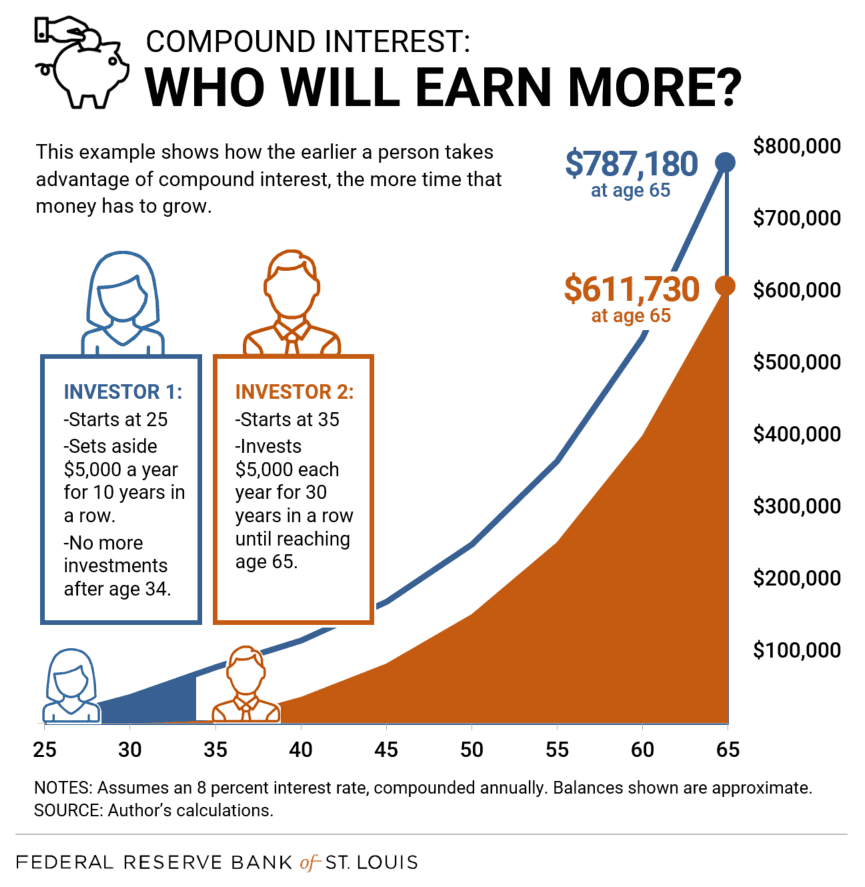
Of all the variables influencing compound interest, time is arguably the most crucial. The longer your money has to compound, the greater its potential for exponential growth. This is due to the non-linear nature of compounding; the growth in later years far outstrips that of earlier years. A person who starts investing $200 a month at age 25 will likely accumulate significantly more wealth by retirement than someone who starts investing $400 a month at age 35, assuming similar returns. The decade of early compounding provides an insurmountable advantage. This emphasizes the financial adage: “The best time to plant a tree was 20 years ago. The second best time is now.”
Initial Capital and Consistent Contributions
While time is the ultimate amplifier, you need something to amplify. Your initial capital provides the foundation for compounding. A larger starting sum means more money is earning interest from day one. Beyond the initial investment, consistent contributions are equally vital. Regularly adding to your principal – whether monthly, quarterly, or annually – acts like feeding the snowball more snow. Each new contribution immediately becomes part of the compounding base, accelerating growth. Even small, regular additions can make a monumental difference over decades, transforming seemingly insignificant amounts into substantial nest eggs.
Interest Rate: The Accelerator of Your Returns
The interest rate (or rate of return for investments) directly impacts how quickly your money grows. A higher interest rate means your principal and accumulated interest earn more in each compounding period. For instance, an investment earning 8% compounded annually will grow much faster than one earning 4%. However, higher returns often come with higher risk. It’s crucial to find a balance between aiming for competitive returns and taking on a level of risk you are comfortable with. Researching various financial products and understanding their associated rates and risks is essential for informed decision-making.
Compounding Frequency: More Often, Better Results
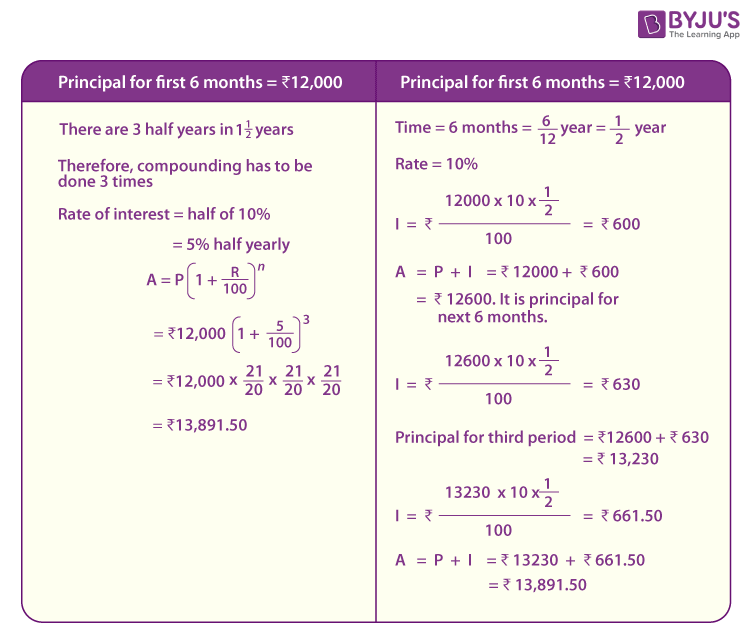
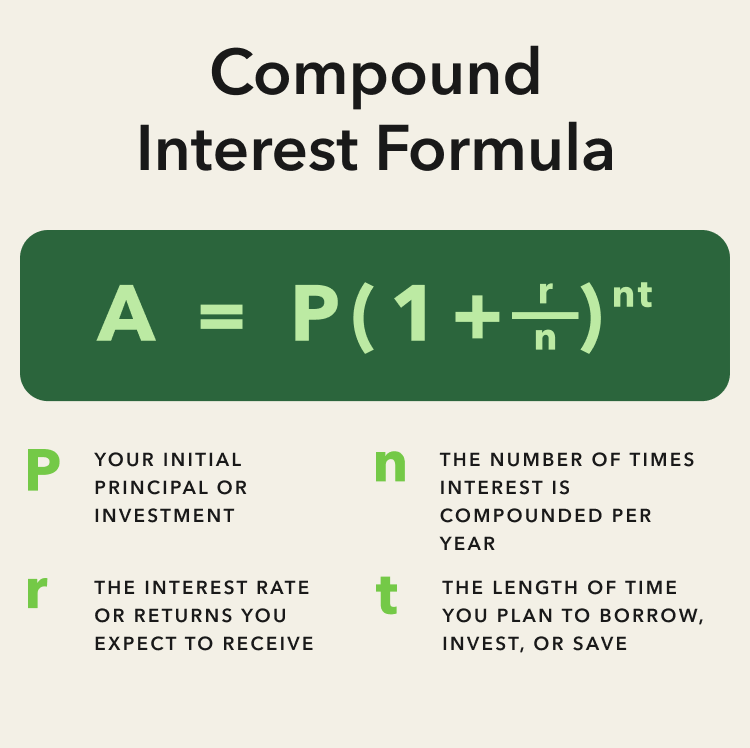
Compounding frequency refers to how often the interest is calculated and added to the principal. Interest can be compounded annually, semi-annually, quarterly, monthly, or even daily. The more frequently interest is compounded, the faster your money grows. For example, $1,000 at a 5% annual interest rate compounded daily will yield slightly more than if it were compounded annually, because the interest earned on day one immediately starts earning interest on day two, and so on. While the difference might be marginal over a short period, over many years, the continuous compounding can add a notable boost to your overall returns. When comparing savings accounts or investments, always look for the Annual Percentage Yield (APY), which accounts for compounding frequency, rather than just the Annual Percentage Rate (APR).
Practical Strategies to Put Your Money to Work
Understanding the theoretical power of compound interest is one thing; actively harnessing it through practical financial instruments is another. A wide array of financial products and strategies allow individuals to leverage compounding for wealth accumulation.
High-Yield Savings Accounts (HYSAs) and Certificates of Deposit (CDs)
For those prioritizing safety and liquidity, High-Yield Savings Accounts (HYSAs) offer a straightforward way to earn compound interest. These accounts typically offer significantly higher interest rates than traditional savings accounts, with interest often compounded monthly or daily. While returns are modest compared to investments, HYSAs provide a secure place for emergency funds and short-term savings goals. Certificates of Deposit (CDs) are another low-risk option. You deposit a fixed amount of money for a set period (e.g., 6 months to 5 years) and earn a fixed interest rate, which is typically compounded. CDs usually offer higher rates than HYSAs in exchange for locking up your money for the duration of the term.
Investment Accounts: Stocks, Bonds, and Mutual Funds
To truly maximize the power of compounding for long-term growth, investment accounts are essential.
-
Stocks: Investing in stocks means owning a share of a company. As the company grows and profits, the stock’s value can increase. Dividends, if paid, can be reinvested to buy more shares, allowing compounding to occur.
-
Bonds: Bonds are essentially loans to governments or corporations, which pay you interest regularly. This interest can be reinvested to buy more bonds or other assets, furthering your compounding journey. Bonds are generally less volatile than stocks but offer lower returns.
-
Mutual Funds and Exchange-Traded Funds (ETFs): These funds pool money from many investors to buy a diversified portfolio of stocks, bonds, or other assets. They are an excellent way to gain broad market exposure and diversification with a single investment. When these funds pay dividends or capital gains, reinvesting them automatically buys more fund units, accelerating your compounding.
Retirement Accounts: 401(k)s and IRAs
Retirement accounts are arguably the most effective vehicles for leveraging compound interest due to their tax advantages and long investment horizons.
-
401(k)s: Employer-sponsored retirement plans that allow pre-tax contributions, meaning your contributions lower your taxable income. Investments within a 401(k) grow tax-deferred until retirement. Many employers offer matching contributions, which is essentially “free money” that compounds alongside your own.
-
IRAs (Individual Retirement Accounts): Available to anyone with earned income. Traditional IRAs offer tax-deductible contributions and tax-deferred growth, similar to a 401(k). Roth IRAs, on the other hand, use after-tax contributions, but qualified withdrawals in retirement are completely tax-free. Both types of IRAs provide a powerful environment for long-term compound growth without annual tax implications on earnings.
Debt Reduction: The Reverse Power of Compounding
While the focus is usually on earning compound interest, it’s equally crucial to understand its reverse effect when it comes to debt. High-interest debt, such as credit card balances or personal loans, works against you through the same compounding mechanism. The interest on your debt compounds, meaning you owe interest on the original amount borrowed plus the accumulated interest. Aggressively paying down high-interest debt is, in essence, a form of earning compound interest in reverse – you’re saving yourself from paying exponential interest, freeing up more capital to invest and earn compound interest for yourself. Prioritizing debt reduction before or alongside investing is a cornerstone of sound financial health.
Optimizing Your Compound Interest Journey
Harnessing compound interest effectively requires more than just understanding its mechanics; it demands a strategic approach to managing your finances and investments. Optimizing your journey involves making deliberate choices that amplify the compounding effect.
Automate Your Savings and Investments
One of the simplest yet most effective ways to ensure consistent contributions, a key pillar of compounding, is to automate them. Set up automatic transfers from your checking account to your savings, investment, or retirement accounts on payday. This “set it and forget it” approach removes the temptation to spend the money and ensures that your capital is continuously growing. Automation helps build financial discipline and consistency, which are critical for long-term compounding success. Whether it’s $50 or $500, regular automated contributions consistently feed your financial snowball.
Reinvesting Your Earnings: Don’t Touch the Principal!
The very essence of compound interest lies in reinvesting your earnings. If your investments pay dividends or generate interest, ensure these returns are automatically reinvested to purchase more shares or accrue to your principal balance. Cashing out these earnings defeats the purpose of compounding, as you prevent that money from generating further returns. The magic happens when your interest starts earning interest. This discipline is particularly important in the early and middle stages of your wealth accumulation journey.
Understanding Inflation and Taxes
While compound interest can lead to significant nominal gains, it’s crucial to consider the impact of inflation and taxes on your real returns. Inflation erodes the purchasing power of money over time. An investment that grows 5% annually might only provide a 2% real return if inflation is 3%. Therefore, your investment strategy should aim for returns that comfortably outpace inflation.
Taxes also reduce your net gains. Interest earned in taxable savings accounts, dividends, and realized capital gains are subject to income or capital gains taxes. Utilizing tax-advantaged accounts like 401(k)s, IRAs, and HSAs allows your money to grow tax-deferred or even tax-free, significantly enhancing the compounding effect by preventing taxes from eating into your principal and earnings year after year. Understanding these factors ensures your compounding efforts lead to true wealth growth.
Regular Review and Adjustment of Your Portfolio
Financial markets, economic conditions, and your personal circumstances are constantly evolving. Therefore, it’s vital to regularly review and, if necessary, adjust your investment portfolio. This doesn’t mean reactive day-trading but rather an annual or semi-annual check-up.
-
Rebalancing: Ensure your asset allocation (the mix of stocks, bonds, etc.) aligns with your risk tolerance and financial goals. If one asset class has performed exceptionally well, you might need to sell some of it to buy others, bringing your portfolio back to its target allocation.
-
Goal Tracking: Are you still on track for your retirement or other financial goals?
-
Fee Awareness: Are you paying high fees on any investments that could be reduced?
Regular review ensures your investments remain optimized for compound growth and continue to serve your long-term objectives.
The Long Game: Patience and Persistence
The journey of earning compound interest is not a sprint; it’s a marathon. The most profound rewards of compounding are reserved for those who embrace patience and exhibit unwavering persistence over decades.
Avoiding Common Pitfalls: Market Timing and Emotional Decisions
One of the biggest threats to compound growth is the urge to “time the market” or make emotional investment decisions. Attempting to buy low and sell high consistently is notoriously difficult, even for seasoned professionals. Panicking during market downturns and selling off investments locks in losses and prevents your portfolio from recovering and benefiting from the subsequent rebound, which is when compounding truly gets back to work. Stick to your long-term investment plan, continue with automated contributions, and resist the urge to react impulsively to short-term market fluctuations. Discipline trumps emotion in the world of compounding.
Cultivating a Long-Term Mindset
A successful compound interest strategy is underpinned by a robust long-term mindset. This means understanding that significant wealth doesn’t appear overnight. It requires years, often decades, of consistent saving, disciplined investing, and allowing your money the time it needs to grow exponentially. Focus on your ultimate financial goals – be it retirement, a child’s education, or financial independence – and remember that each small, consistent action you take today contributes to that future vision. Cultivate patience, celebrate small victories, and stay focused on the horizon.
The Ultimate Reward: Financial Freedom and Security
The ultimate reward for diligently harnessing compound interest is the attainment of financial freedom and security. Imagine a future where your accumulated wealth generates sufficient passive income to cover your living expenses, allowing you to work because you want to, not because you have to. This level of financial independence offers unprecedented choices, reduces stress, and opens up new possibilities for how you live your life. Compound interest is not just about accumulating money; it’s about building a bridge to a future where you have the resources and flexibility to pursue your dreams and live life on your own terms. Start today, stay disciplined, and let the eighth wonder of the world work its magic for you.
aViewFromTheCave is a participant in the Amazon Services LLC Associates Program, an affiliate advertising program designed to provide a means for sites to earn advertising fees by advertising and linking to Amazon.com. Amazon, the Amazon logo, AmazonSupply, and the AmazonSupply logo are trademarks of Amazon.com, Inc. or its affiliates. As an Amazon Associate we earn affiliate commissions from qualifying purchases.