
In the intricate world of money, numbers speak volumes, and among them, percentages hold a uniquely powerful position. From the seemingly simple act of calculating a tip to the complex analysis of investment returns, understanding “how to do a percent” isn’t just a mathematical exercise; it’s a fundamental pillar of financial literacy. Whether you’re managing personal finances, strategizing business growth, or navigating the volatile landscape of investments, percentages are the universal language that translates raw data into actionable insights.
This article delves into the indispensable role percentages play across the spectrum of financial activities. We’ll break down the core concept, explore its myriad applications in everyday money management and sophisticated investment strategies, and highlight how mastering this fundamental skill can empower you to make smarter, more informed financial decisions. Forget the intimidating formulas; we’ll focus on practical understanding and real-world utility, transforming percentages from abstract mathematical notions into your most valuable financial tool.
The Core Concept: What Exactly is a Percent?
At its heart, a percent is simply a way to express a proportion or a fraction out of 100. The word “percent” itself originates from the Latin “per centum,” meaning “by the hundred.” It’s a standardized way to compare parts to a whole, making it incredibly versatile for financial analysis where understanding relationships between different figures is paramount.
Deciphering the Symbol: % and /100
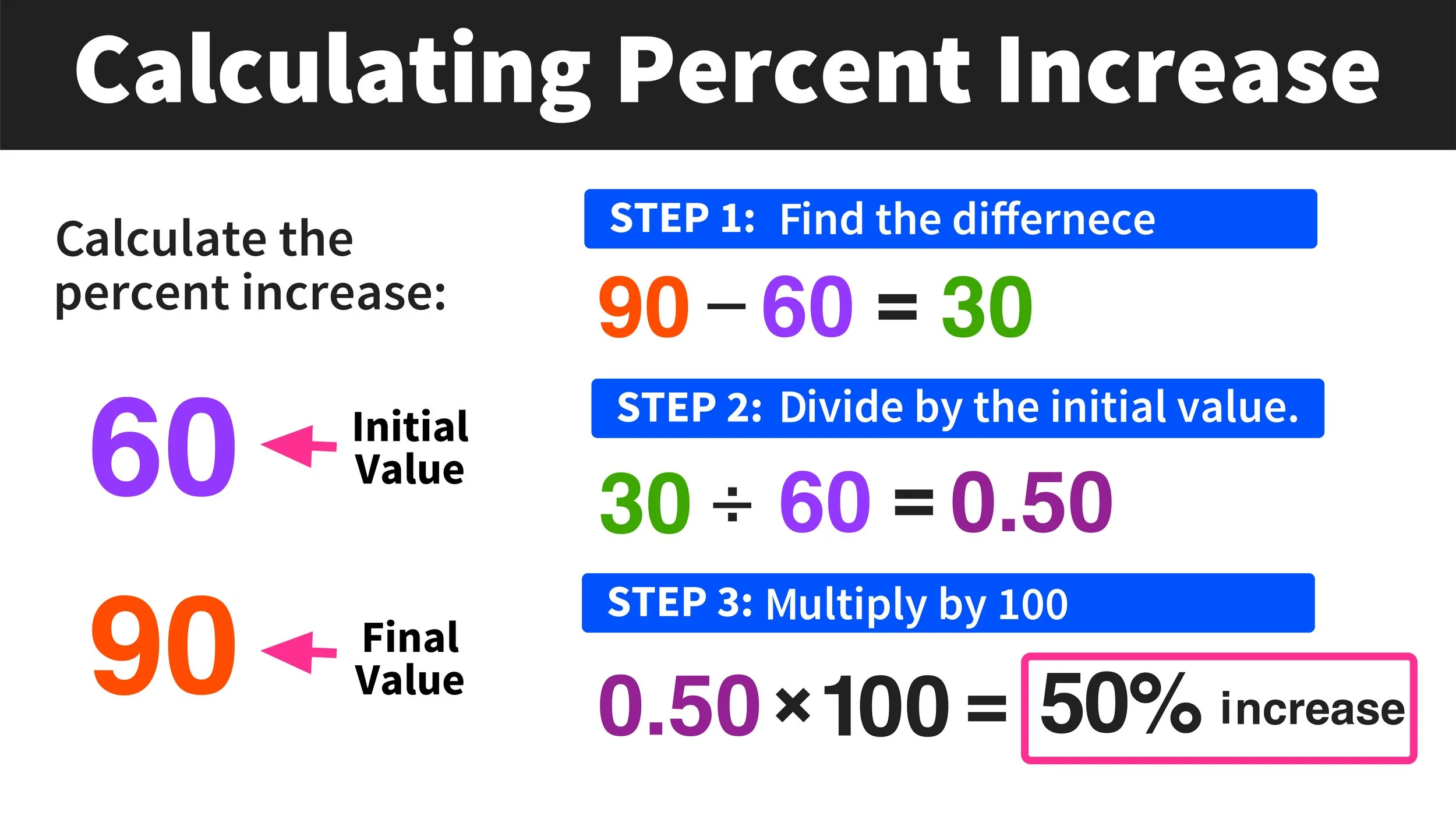
The symbol ‘%’ is universally recognized as the indicator of a percent. When you see a number followed by this symbol, it means that number is being expressed as a fraction of 100. For example, 50% means 50 out of 100, which can also be written as the fraction 50/100 or the decimal 0.50. This direct relationship to 100 is what makes percentages so intuitive and easy to compare. Imagine trying to compare 3/7 to 5/12 directly; it’s much harder than comparing 42.8% to 41.7%. Percentages provide a common baseline for comparison.
Converting Between Decimals, Fractions, and Percents
To truly “do a percent,” you must be able to fluently convert between its three primary forms: fractions, decimals, and percentages. This flexibility is crucial for applying percentages in different financial contexts, whether you’re punching numbers into a calculator or interpreting data in a report.
-
Decimal to Percent: Multiply the decimal by 100. For instance, if you have 0.75, multiply it by 100 to get 75%. This is the most common conversion for financial calculations, especially when working with interest rates or growth factors.
-
Percent to Decimal: Divide the percentage by 100. So, 25% becomes 25 ÷ 100 = 0.25. This is essential when you need to use a percentage in a mathematical formula, such as calculating a discount amount.
-
Fraction to Percent: First, convert the fraction to a decimal by dividing the numerator by the denominator. Then, convert the resulting decimal to a percent. For example, 3/4 is 3 ÷ 4 = 0.75, which then becomes 75%.
-
Percent to Fraction: Express the percentage as a fraction over 100 and simplify. 40% becomes 40/100, which simplifies to 2/5. This is less common in day-to-day finance but can be useful for conceptual understanding.
Mastering these conversions is the bedrock for all subsequent financial applications of percentages. Without this foundational understanding, the more complex calculations become confusing and prone to error.
Everyday Financial Applications of Percentages
Percentages are not confined to the boardrooms of Wall Street; they are woven into the very fabric of our daily financial lives. From grocery shopping to paying bills, understanding percentages empowers you to make savvy decisions and manage your money effectively.
Budgeting and Expense Tracking: The Path to Financial Control
One of the most powerful applications of percentages in personal finance is budgeting. By allocating your income into different categories as percentages, you gain a clear, visual understanding of where your money is going. The popular 50/30/20 rule, for example, suggests dedicating 50% of your after-tax income to needs, 30% to wants, and 20% to savings and debt repayment.
- Calculating Budget Percentages: To determine what percentage of your income you spend on a particular category, simply divide the amount spent on that category by your total income, then multiply by 100. For example, if your monthly income is $4,000 and you spend $1,200 on housing, that’s ($1,200 / $4,000) * 100 = 30%. This helps you identify areas where you might be overspending or under-saving relative to your financial goals.
Understanding Discounts, Sales Tax, and Tips
Every consumer regularly encounters percentages when shopping or dining out.
-
Discounts: When an item is advertised at “20% off,” knowing how to calculate that percentage reduction is key to understanding the final price. If an item costs $150 and is 20% off, you calculate 20% of $150 ($150 * 0.20 = $30) and subtract it from the original price ($150 – $30 = $120).
-
Sales Tax: Sales tax is a percentage added to the price of goods and services. If you buy an item for $50 and the sales tax is 8%, you calculate 8% of $50 ($50 * 0.08 = $4) and add it to the price ($50 + $4 = $54).
-
Tips: Tipping in restaurants is a common application of percentages. If a bill is $60 and you want to leave a 15% tip, you calculate 15% of $60 ($60 * 0.15 = $9) and add it to the bill ($60 + $9 = $69).
These seemingly small calculations add up quickly and directly impact your daily spending.
Interest Rates: Loans, Savings, and Investments
Interest rates are arguably the most impactful application of percentages in finance. They dictate how much you pay to borrow money and how much you earn when you save or invest.
-
Loans: Whether it’s a mortgage, car loan, or credit card, the Annual Percentage Rate (APR) determines the cost of borrowing. A higher APR means more interest paid over the life of the loan. Understanding how to calculate the interest accrued on a loan balance is vital to managing debt.
-
Savings and Investments: Conversely, interest rates (like Annual Percentage Yield or APY) work in your favor when you save money or invest. Your bank might offer a savings account with a 0.5% APY, while an investment might promise an average annual return of 7%. Calculating the growth of your money based on these percentages is critical for long-term wealth building.
Percentages in Investment and Wealth Building
Beyond day-to-day spending, percentages are the bedrock of investment analysis and wealth management. They help quantify performance, assess risk, and project future growth.
Calculating Returns on Investment (ROI)

ROI is a crucial metric for evaluating the profitability of an investment. It’s expressed as a percentage and calculated as:
ROI = [(Current Value of Investment – Original Cost of Investment) / Original Cost of Investment] * 100
For example, if you invested $10,000 in a stock that is now worth $12,000, your ROI is [($12,000 – $10,000) / $10,000] * 100 = 20%. This single percentage allows you to quickly compare the performance of different investment opportunities, regardless of their initial cost.
Growth Rates, Inflation, and Compound Interest
-
Growth Rates: The growth of a company’s revenue, an economy’s GDP, or your personal net worth is typically expressed as a percentage. Understanding these growth rates is essential for making investment decisions and assessing financial health.
-
Inflation: Inflation, the rate at which the general level of prices for goods and services is rising, is expressed as a percentage. A 3% inflation rate means your purchasing power decreases by 3% each year. This percentage is crucial for understanding the real return on your investments and savings.
-
Compound Interest: Often called the “eighth wonder of the world,” compound interest refers to earning interest on your initial principal and the accumulated interest from previous periods. The higher the interest rate (percentage) and the longer the money is invested, the more dramatic the compounding effect. Calculating the future value of an investment using a percentage-based interest rate (e.g., FV = P * (1 + r)^n) is fundamental to long-term financial planning.
Risk Assessment and Portfolio Allocation
Percentages are also vital in managing investment risk.
-
Portfolio Allocation: Investors often diversify their portfolios by allocating specific percentages of their assets to different categories (e.g., 60% stocks, 30% bonds, 10% cash). This percentage-based allocation strategy helps manage risk and align investments with personal financial goals and risk tolerance.
-
Drawdowns: Understanding percentage drawdowns (the peak-to-trough decline of an investment) helps investors quantify potential losses and manage their expectations during market volatility.
Business and Income: Leveraging Percentages for Growth
For entrepreneurs, business owners, and those managing their online income, percentages are indispensable tools for analysis, strategy, and performance measurement.
Profit Margins and Markup Calculations
-
Profit Margin: A key indicator of a business’s financial health, profit margin is expressed as a percentage. It measures how much profit a company makes per dollar of revenue. Gross profit margin, operating profit margin, and net profit margin are all percentage calculations that tell a story about efficiency and profitability.
- Net Profit Margin = (Net Profit / Revenue) * 100
-
Markup: Businesses use markup percentages to price their products and ensure profitability. If an item costs $20 to produce and you want a 50% markup, you calculate 50% of $20 ($10) and add it to the cost, selling the item for $30.
Commission Structures and Sales Performance
-
Commissions: Many sales roles involve commission, which is a percentage of the sales revenue. Understanding how to calculate commissions is crucial for both salespeople (to project income) and businesses (to structure compensation plans).
-
Sales Performance: Tracking sales growth (e.g., 15% year-over-year increase) or conversion rates (e.g., 5% of website visitors make a purchase) through percentages provides clear metrics for evaluating performance and identifying areas for improvement.
Market Share and Business Performance Metrics
-
Market Share: Businesses gauge their competitive standing by calculating their market share – the percentage of total sales in an industry generated by a particular company. This metric is vital for strategic planning and competitive analysis.
-
Website Analytics: For online businesses, metrics like bounce rate, conversion rate, and click-through rate are all expressed as percentages, offering insights into customer behavior and website effectiveness. These percentages directly inform digital marketing strategies and optimize online income streams.
Avoiding Common Percentage Pitfalls
While percentages are incredibly useful, they can also be misleading if not understood correctly. Misinterpreting percentages can lead to flawed financial decisions.
The Difference Between Percentage Point and Percentage Change
This is a common source of confusion.
-
Percentage Point: Refers to the absolute difference between two percentages. If an interest rate increases from 5% to 7%, that’s a 2 percentage point increase.
-
Percentage Change: Refers to the relative change. An increase from 5% to 7% is a [(7-5)/5] * 100 = 40% percentage change. This distinction is critical when discussing financial growth, economic shifts, or investment performance. A 2-percentage point increase in interest rates sounds less dramatic than a 40% increase in the cost of borrowing, but they describe the same event.
Understanding Basis Points
In finance, particularly in bond markets and interest rates, changes are often quoted in “basis points” (BPS). One basis point is 0.01% (one hundredth of a percentage point). So, 100 basis points equals 1 percentage point. If an interest rate rises by 50 basis points, it means it has increased by 0.50%. This precision is crucial in financial markets where small percentage changes can have massive monetary implications.
Misinterpreting Data: Context is Key
Always consider the context when interpreting percentages. A “200% increase” sounds impressive, but if it’s an increase from $1 to $3, the absolute monetary value is still small. Conversely, a “1% decrease” in a multi-billion dollar economy represents a significant financial loss. Percentages are tools for comparison and understanding proportions, but they must always be viewed alongside the absolute numbers they represent.

Conclusion
The phrase “how to do a percent” might initially conjure images of elementary math class, but its implications in the world of money are anything but rudimentary. From balancing your personal budget and understanding the true cost of a loan to analyzing investment performance and driving business profitability, percentages are the silent workhorses of financial intelligence.
By mastering the simple conversions and applying them to diverse financial scenarios, you gain a powerful lens through which to view and interact with your money. This isn’t just about calculation; it’s about empowerment. It’s about being able to discern a good deal from a bad one, to project future wealth, and to make strategic decisions that align with your financial goals. Embrace the percent – it’s not just a number, it’s a key to unlocking a more secure, prosperous, and financially aware future.
aViewFromTheCave is a participant in the Amazon Services LLC Associates Program, an affiliate advertising program designed to provide a means for sites to earn advertising fees by advertising and linking to Amazon.com. Amazon, the Amazon logo, AmazonSupply, and the AmazonSupply logo are trademarks of Amazon.com, Inc. or its affiliates. As an Amazon Associate we earn affiliate commissions from qualifying purchases.