
Understanding how to calculate value is fundamental in personal finance, investing, and business decision-making. At its core, value represents the worth or utility of an asset, service, or even an idea. However, this seemingly simple concept unravels into complex methodologies and considerations depending on the context. From determining the fair price of a stock to assessing the health of a personal balance sheet, robust valuation techniques provide the clarity needed for informed financial actions.
Understanding Value: More Than Just a Number
Before diving into specific calculations, it’s crucial to grasp the various dimensions of “value.” It’s not always a single, immutable figure but often a range, influenced by perception, market dynamics, and future expectations.
Intrinsic vs. Market Value
Intrinsic value refers to the true, inherent worth of an asset, derived from its fundamental characteristics and future earning potential. It is an objective estimation based on thorough analysis, independent of current market fluctuations. For a company, this might involve analyzing its cash flow, assets, and liabilities. For a property, it might consider its rental income potential, construction costs, and land value.
Market value, conversely, is the price at which an asset can be bought or sold in an open market. It is determined by supply and demand, investor sentiment, and prevailing economic conditions. While market value often converges with intrinsic value over time, short-term discrepancies are common, creating opportunities for savvy investors. A stock trading below its intrinsic value might be considered undervalued, whereas one trading above might be overvalued.
Subjective and Objective Value
Value can also be categorized as subjective or objective. Subjective value is the personal worth an individual places on an item or experience, often driven by emotional connection, utility, or scarcity from their perspective. For instance, a vintage car might hold immense subjective value for a collector, far exceeding its objective market price.
Objective value is based on measurable facts and generally accepted standards, aiming for impartiality. Financial valuation methods primarily focus on objective value, using quantifiable data and established formulas to arrive at a measurable worth. While pure objectivity is challenging, these methods strive for consistency and rationality in financial assessments.
Core Principles of Valuation in Finance
Financial valuation relies on several foundational principles that underpin most calculation methodologies. These principles help convert future expectations and present data into a quantifiable value.
Time Value of Money (TVM)
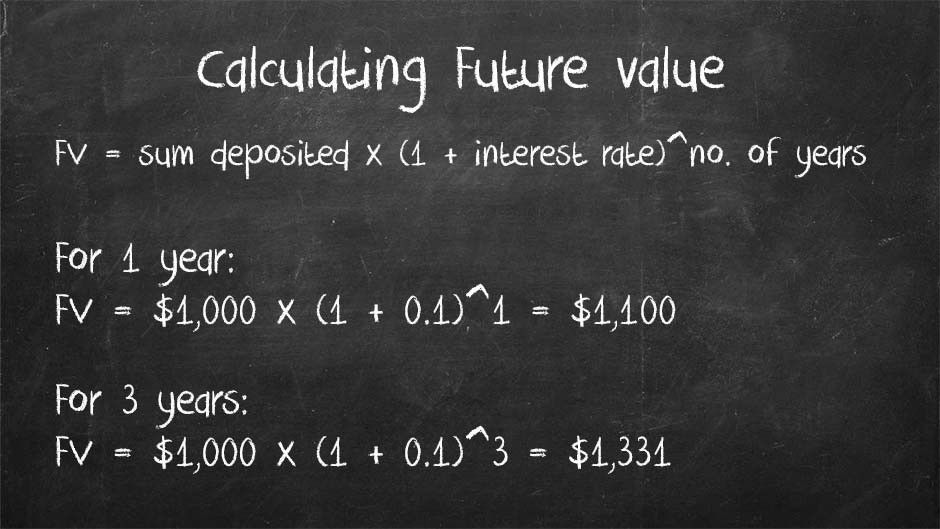
The Time Value of Money (TVM) is perhaps the most critical concept in finance. It states that a dollar today is worth more than a dollar tomorrow due to its potential earning capacity. Money available now can be invested and grow, generating returns over time. Therefore, future cash flows must be discounted back to their present value to reflect this opportunity cost. This principle is applied universally, from simple savings calculations to complex business valuations.
Discounted Cash Flow (DCF) Analysis
Discounted Cash Flow (DCF) analysis is a widely used valuation method that estimates the value of an investment based on its expected future cash flows. It involves projecting a company’s free cash flow (cash available to investors after all expenses and reinvestments) for a specific period and then discounting these future cash flows back to their present value using a discount rate. The sum of these present values, plus the present value of the terminal value (the value of the company beyond the projection period), yields the intrinsic value. The discount rate, often the Weighted Average Cost of Capital (WACC), reflects the riskiness of the investment.
Comparable Company Analysis (CCA)
Comparable Company Analysis (CCA), also known as “multiples approach,” estimates a company’s value by looking at the valuation multiples of similar businesses that have recently been sold or are publicly traded. Common multiples include Enterprise Value/EBITDA, Price/Earnings (P/E) ratio, and Price/Sales. By applying the average or median multiples of comparable companies to the target company’s financial metrics (e.g., its EBITDA, earnings, or sales), an approximate valuation can be derived. This method is straightforward but highly dependent on finding truly comparable companies and making appropriate adjustments.
Calculating Value for Different Financial Contexts
The approach to calculating value varies significantly depending on whether you’re assessing personal wealth, a business, or an investment asset.
Personal Finance: Net Worth and Asset Valuation
In personal finance, calculating value primarily revolves around determining your net worth and the worth of individual assets.
Calculating Net Worth: Your net worth is a snapshot of your financial health, calculated as the sum of all your assets minus the sum of all your liabilities.
Net Worth = Total Assets - Total Liabilities
Assets include cash, savings accounts, investments (stocks, bonds, mutual funds), real estate, retirement accounts, vehicles, and other valuables. Liabilities include mortgages, car loans, credit card debt, student loans, and other personal debts. Regularly calculating and tracking net worth helps monitor financial progress.
Valuing Personal Assets (Real Estate, Investments, Collectibles):
-
Real Estate: Value is typically determined by market comparables (recent sales of similar properties in the area), professional appraisals, or assessed value for tax purposes.
-
Investments: Publicly traded stocks, bonds, and mutual funds have readily available market values. Private investments require more complex valuation methods, often akin to business valuation techniques.
-
Collectibles & Valuables: Jewelry, art, antiques, or rare items are valued through appraisals by experts, auction results, or specialized market data.
Business Finance: Enterprise and Equity Value
For businesses, two key valuation metrics are commonly used: Enterprise Value and Equity Value.

Enterprise Value (EV): EV represents the total value of a company, including both equity and debt, adjusted for cash. It is often seen as the theoretical takeover price of a company.
EV = Market Capitalization + Total Debt - Cash & Cash Equivalents
This metric is particularly useful for comparing companies with different capital structures, as it provides a comprehensive view of the company’s worth to all its capital providers.
Equity Value (Market Capitalization): Equity value, also known as market capitalization, represents the total value of a company’s outstanding shares.
Market Capitalization = Share Price × Number of Outstanding Shares
This is the value of the company attributable to its shareholders. For private companies, calculating equity value involves similar methods to DCF or CCA, but without a publicly traded share price, it requires more estimation.
Investing: Stock and Bond Valuation
Investors calculate value to identify opportunities where an asset’s market price deviates from its perceived intrinsic worth.
Stock Valuation Models:
-
Dividend Discount Model (DDM): For dividend-paying stocks, the DDM calculates the intrinsic value of a stock as the present value of all future expected dividends. It assumes the value of a stock is derived from the income it provides.
-
Price-to-Earnings (P/E) Ratio: This multiple compares a company’s current share price to its earnings per share. A high P/E ratio might indicate that investors expect higher earnings growth in the future, but it can also signal an overvalued stock relative to peers.
-
Price-to-Book (P/B) Ratio: Compares a company’s market price to its book value per share (assets minus liabilities). It’s often used for financial institutions where assets are more tangible.
Bond Valuation: The value of a bond is the present value of its future cash flows, which consist of periodic coupon payments and the principal repayment at maturity.
Bond Value = Σ (Coupon Payment / (1 + r)^t) + (Face Value / (1 + r)^n)
Where ‘r’ is the yield to maturity (the required rate of return for similar bonds) and ‘t’/’n’ represents the time periods. When a bond’s coupon rate is higher than the market yield, it trades at a premium; if lower, at a discount.
Online Income & Side Hustles: Valuing a Business Idea or Venture
Even nascent online businesses or side hustles require a valuation framework, especially if seeking investment or considering a sale.
Revenue Multiples: For early-stage or service-based businesses, a multiple of annual recurring revenue (ARR) or gross revenue might be used. For instance, a software-as-a-service (SaaS) business might be valued at 3x-10x its ARR, depending on growth, churn, and market conditions.
Profitability Metrics: As the venture matures, valuation can shift to multiples of EBITDA or Net Income, similar to traditional business valuation, reflecting its ability to generate sustainable profits.
Future Growth Potential: For highly speculative ventures, valuation often incorporates significant weight on market size, intellectual property, scalability, and team expertise, even with limited current revenue or profit.
Practical Tools and Resources for Valuation
While the underlying principles are complex, numerous tools and resources can simplify the valuation process.
Financial Calculators and Software
Online financial calculators can quickly compute present values, future values, bond yields, and basic DCF scenarios. More sophisticated financial software (e.g., Bloomberg Terminal, Capital IQ, or even advanced Excel models) provides robust platforms for detailed financial modeling, sensitivity analysis, and scenario planning, crucial for complex valuations.
Professional Valuators and Advisors
For critical decisions involving significant assets or businesses (e.g., mergers & acquisitions, legal disputes, estate planning), engaging professional valuators or financial advisors is often essential. These experts possess specialized knowledge, access to proprietary data, and adhere to industry standards, providing credible and defensible valuations.
Publicly Available Data and Reports
A wealth of data is publicly available to aid in valuation. Company financial statements (10-K, 10-Q filings with the SEC), industry reports, economic forecasts, and equity research reports from brokerage firms provide crucial inputs for DCF models, comparable analysis, and understanding market trends. Websites like Yahoo Finance, Google Finance, and reputable financial news outlets offer accessible data for publicly traded companies.
The Art and Science of Valuation: Challenges and Considerations
Valuation is not merely a rote application of formulas; it’s a blend of analytical rigor and informed judgment. Several factors introduce complexities and necessitate careful consideration.
The Impact of Assumptions
Every valuation model is built upon a set of assumptions: projected growth rates, discount rates, margins, and market conditions. Small changes in these assumptions can lead to significant variations in the calculated value. Sensitivity analysis, which tests how the output changes when key assumptions vary, is vital to understand the range of potential values and the robustness of the valuation.
Market Volatility and External Factors
Economic cycles, geopolitical events, regulatory changes, and industry-specific disruptions can profoundly impact market sentiment and asset values. These external factors are often unpredictable but must be considered when interpreting any valuation. A technically sound valuation might still be overridden by sudden shifts in investor confidence or macroeconomic forces.

Non-Financial Considerations (Brand, Management Quality)
While financial models focus on quantifiable metrics, qualitative factors often play a critical role in an asset’s or company’s true value. A strong brand reputation, innovative technology, superior management team, loyal customer base, or unique intellectual property can create significant intangible value that is difficult to capture purely through numbers. Experienced valuators attempt to factor these elements into their assumptions and narratives, even if they don’t appear directly in a spreadsheet.
Ultimately, calculating value is an ongoing process of analysis, adjustment, and interpretation. By understanding the core principles, employing appropriate methodologies, and acknowledging inherent limitations, individuals and businesses can make more informed financial decisions, navigate markets more effectively, and build lasting wealth.
aViewFromTheCave is a participant in the Amazon Services LLC Associates Program, an affiliate advertising program designed to provide a means for sites to earn advertising fees by advertising and linking to Amazon.com. Amazon, the Amazon logo, AmazonSupply, and the AmazonSupply logo are trademarks of Amazon.com, Inc. or its affiliates. As an Amazon Associate we earn affiliate commissions from qualifying purchases.