
Understanding how bank interest is calculated is a fundamental skill for anyone managing their personal finances. Whether you’re saving for a down payment, paying off a student loan, or simply trying to grow your retirement fund, interest plays a pivotal role. It can be your best friend, steadily compounding your wealth over time, or your worst enemy, increasing the cost of your debts significantly. This guide will demystify bank interest, breaking down the formulas, terminology, and practical applications so you can confidently navigate your financial landscape.

At its core, interest is the cost of borrowing money or the reward for lending it. When you deposit money into a savings account or certificate of deposit (CD), you are essentially lending money to the bank, and they pay you interest in return. Conversely, when you take out a loan—be it for a home, car, or personal expenses—you are borrowing money from the bank, and you pay them interest for the privilege. Grasping these mechanics is not just academic; it’s essential for making informed decisions that can profoundly impact your financial future.
The Fundamentals of Bank Interest
Before diving into calculations, it’s crucial to establish a solid understanding of what interest is and the key terms associated with it. This foundational knowledge will empower you to interpret financial products and make smarter choices.
What is Bank Interest?
Bank interest is a fee paid by a borrower to a lender for the use of borrowed money, or money earned by a depositor from a bank for holding their funds. For banks, interest is their primary business model: they pay interest to depositors to attract funds, and then lend those funds out at a higher interest rate to borrowers, profiting from the spread.
There are two primary ways you’ll encounter interest:
-
Interest Earned: This is the money you receive when you deposit funds into a savings account, money market account, or CD. It’s the bank’s way of thanking you for entrusting them with your capital.
-
Interest Paid: This is the additional cost you incur when you borrow money through loans, mortgages, or credit cards. It’s the price of accessing capital that isn’t immediately yours.
Understanding this dual nature is key. Maximizing interest earned while minimizing interest paid is a cornerstone of sound personal finance.
Key Terminology You Need to Know
To accurately calculate and comprehend bank interest, familiarizing yourself with specific financial terms is essential.
-
Principal (P): This is the initial amount of money deposited or borrowed. For a savings account, it’s your starting balance; for a loan, it’s the original loan amount.
-
Interest Rate (R): Expressed as a percentage (e.g., 5%), this is the annual cost of borrowing or the annual rate of return on an investment. When used in calculations, it must be converted to a decimal (e.g., 5% becomes 0.05).
-
Time (T): This refers to the duration over which the interest is calculated, typically expressed in years. If the period is in months, it needs to be converted to a fraction of a year (e.g., 6 months = 0.5 years).
-
Compounding Frequency (N): This is how often interest is calculated and added to the principal within a year. It can be annually (N=1), semi-annually (N=2), quarterly (N=4), monthly (N=12), or even daily (N=365). The more frequent the compounding, the more rapidly your interest can grow (or your debt can accrue).
-
Annual Percentage Yield (APY): This represents the real rate of return earned on an investment, taking into account the effect of compounding interest. APY is crucial for comparing savings products because it reflects the actual amount of interest earned over a year.
-
Annual Percentage Rate (APR): This is the annual rate charged for borrowing, or earned through an investment, before accounting for compounding. For loans, APR provides a standardized way to compare interest rates, but it doesn’t always reflect the total cost because it might not include all fees or the effect of compounding.
Simple Interest: The Basic Calculation
Simple interest is the most straightforward form of interest calculation. It’s often used for short-term loans or basic savings accounts where the interest isn’t reinvested or added back to the principal.
Understanding Simple Interest
Simple interest is calculated solely on the original principal amount. This means that the interest earned or paid remains constant over the loan or deposit period, assuming the principal doesn’t change. It does not factor in the interest earned in previous periods. While less common for long-term investments, it’s vital for understanding the basic mechanics before moving to more complex concepts.
Think of it this way: if you deposit $1,000 at a 5% simple annual interest rate, you will earn $50 every year, regardless of how long the money stays in the account. The $50 itself doesn’t start earning interest.
The Simple Interest Formula
The formula for calculating simple interest is:
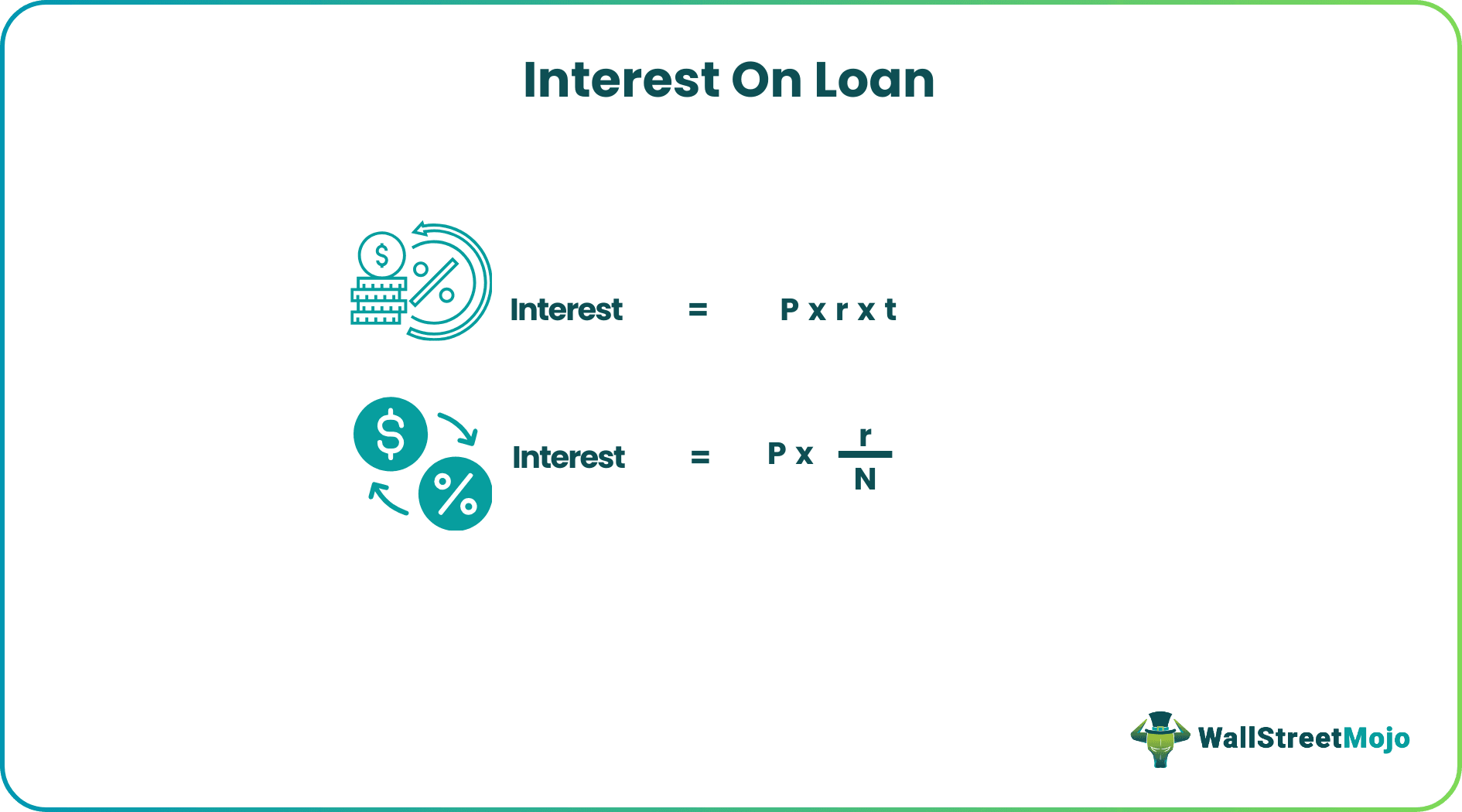
I = P * R * T
Where:
-
I = Total Interest
-
P = Principal amount
-
R = Annual interest rate (as a decimal)
-
T = Time in years
Let’s look at an example:
Example 1 (Savings Account):
You deposit $2,000 into a savings account that pays 3% simple annual interest for 5 years.
P = $2,000
R = 0.03
T = 5 years
I = $2,000 * 0.03 * 5 = $300
After 5 years, you will have earned $300 in interest, and your total balance will be $2,000 (principal) + $300 (interest) = $2,300.
Example 2 (Short-Term Loan):
You take out a personal loan of $5,000 at a 7% simple annual interest rate for 2 years.
P = $5,000
R = 0.07
T = 2 years
I = $5,000 * 0.07 * 2 = $700
The total interest paid over 2 years will be $700. Your total repayment will be $5,000 (principal) + $700 (interest) = $5,700.
Compound Interest: The Power of Growth (and Debt)
Compound interest is often referred to as the “eighth wonder of the world” because of its immense power to grow wealth over time. However, this power works both ways – it can also dramatically increase the cost of your debts.
What is Compound Interest?
Unlike simple interest, compound interest is calculated on the principal amount and on the accumulated interest from previous periods. This means your interest itself starts earning interest. It’s “interest on interest.” The more frequently interest is compounded, the faster your money grows (or your debt accumulates).
This concept is crucial for long-term financial planning. For savings, it means your money grows exponentially. For loans, particularly those with high interest rates like credit cards, it can lead to a rapidly increasing debt burden if not managed effectively.
The Compound Interest Formula
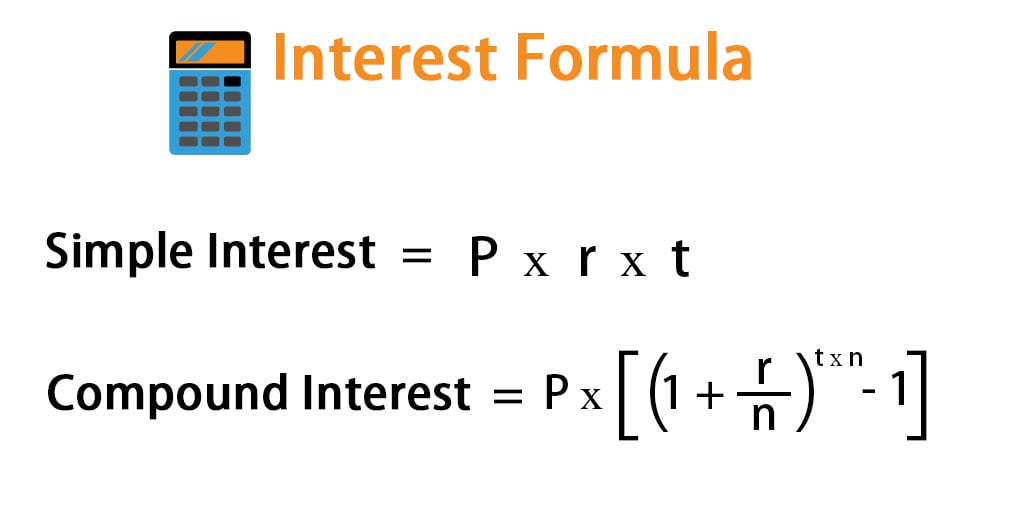
The formula for compound interest that calculates the future value of an investment or loan is:
A = P (1 + R/N)^(NT)
Where:
-
A = The future value of the investment/loan, including interest
-
P = The principal investment amount (the initial deposit or loan amount)
-
R = The annual interest rate (as a decimal)
-
N = The number of times that interest is compounded per year
-
T = The number of years the money is invested or borrowed for
Let’s illustrate with an example:
Example (Savings Account with Compounding):
You deposit $2,000 into a savings account that pays 3% annual interest, compounded quarterly, for 5 years.
P = $2,000
R = 0.03
N = 4 (quarterly compounding)
T = 5 years
A = $2,000 (1 + 0.03/4)^(4*5)
A = $2,000 (1 + 0.0075)^(20)
A = $2,000 (1.0075)^(20)
A = $2,000 * 1.16118 (approximately)
A = $2,322.36
In this scenario, after 5 years, your total balance would be $2,322.36. The total interest earned is $2,322.36 – $2,000 = $322.36.
Comparing this to the simple interest example ($300 over 5 years), the effect of compounding has added an extra $22.36, even with the same principal and annual rate. Over longer periods or with higher amounts, this difference becomes significantly more substantial.
Understanding Compounding Frequency
The frequency of compounding directly impacts how much interest is earned or paid.
-
Annually (N=1): Interest calculated once a year.
-
Semi-annually (N=2): Interest calculated twice a year.
-
Quarterly (N=4): Interest calculated four times a year.
-
Monthly (N=12): Interest calculated twelve times a year.
-
Daily (N=365): Interest calculated every day.
Generally, the more frequently interest is compounded, the higher the effective annual return (APY) for savings or the higher the total cost for loans. This is because interest starts earning interest more quickly. For instance, a 5% interest rate compounded daily will yield slightly more than 5% compounded annually. When comparing savings accounts, always look at the APY, as it accounts for compounding. For loans, the APR is often stated without factoring in compounding, so understanding the true cost can be more complex.
Practical Applications and Real-World Scenarios
Now that we understand the formulas, let’s explore how these concepts apply to common financial products.
Calculating Interest on Savings Accounts and CDs
For savings products, banks almost always quote an Annual Percentage Yield (APY) which already factors in the effect of compounding. This makes comparing different accounts much easier. A higher APY means more money earned.
However, it’s still useful to understand the underlying calculation. If a bank advertises a nominal annual rate and a compounding frequency (e.g., “2% interest compounded monthly”), you can use the compound interest formula to verify their stated APY or calculate your projected earnings. Always confirm the APY, as it’s the most transparent figure for your earnings.
Calculating Interest on Loans (Mortgages, Personal Loans, Credit Cards)
Loan interest calculations are typically more complex than savings, largely due to varying repayment structures, variable rates, and additional fees.
-
Mortgages: These are usually structured with an amortization schedule, where each monthly payment covers both principal and interest. In the early years, a larger portion of your payment goes towards interest, gradually shifting towards principal as the loan matures. Mortgage APRs typically include certain fees in addition to the interest rate, giving a more complete picture of the annual cost. Online mortgage calculators are invaluable here, as they can generate full amortization schedules.
-
Personal Loans: These often have fixed interest rates and fixed repayment terms. The interest can be simple or compounded, depending on the lender. It’s crucial to understand the APR and any fees, as these can add to the total cost.
-
Credit Cards: Credit card interest is notorious for its compounding effect. Rates are usually variable and expressed as an APR. Interest is typically calculated daily on your average daily balance, compounding monthly. If you carry a balance, the interest quickly accumulates. Paying off your credit card balance in full each month is the best way to avoid paying any interest.
The Impact of Fees and Taxes
Beyond the interest rate itself, other factors can influence the true cost of borrowing or the net return on savings.
-
Fees: Banks may charge various fees such as maintenance fees for savings accounts, origination fees for loans, or late payment fees for credit cards. These fees directly reduce your net interest earned or increase your total cost of borrowing. When comparing financial products, always consider the total cost or total earnings after all fees.
-
Taxes: Interest earned on savings accounts, CDs, and other investments is generally considered taxable income by most governments. This means a portion of your interest earnings will be paid to the government. The effective after-tax interest rate will be lower than the advertised rate. It’s important to factor taxes into your financial planning, especially for significant interest earnings.
Tools and Strategies for Managing Interest
Understanding the calculations is the first step; the next is using that knowledge to your advantage.
Leveraging Online Calculators and Financial Apps
You don’t need to be a math expert to manage interest effectively. Numerous online calculators and financial planning apps can do the heavy lifting for you.
-
Interest Calculators: Many websites offer free simple and compound interest calculators where you can plug in your principal, rate, time, and compounding frequency to see projected outcomes.
-
Loan Calculators: These are particularly useful for mortgages and personal loans, showing you how different rates or extra payments can affect your total interest paid and repayment timeline.
-
Budgeting Apps: Many apps can track your interest earnings and payments, helping you visualize your financial progress and identify areas for improvement.
Utilizing these tools can provide clarity, aid in financial planning, and help you make quick, informed decisions without manual calculations.
Strategies for Maximizing Interest Earnings
To make your money work harder for you:
-
High-Yield Savings Accounts: Seek out online banks or credit unions that offer significantly higher interest rates than traditional brick-and-mortar banks. Even a percentage point difference can lead to substantial gains over time due to compounding.
-
Certificate of Deposits (CDs): CDs offer higher interest rates in exchange for locking up your money for a fixed term. Consider a “CD ladder” strategy to maintain liquidity while benefiting from higher rates.
-
Long-Term Investing: While beyond basic bank interest, understanding compounding is fundamental to investing. Stocks, bonds, and mutual funds offer the potential for much higher returns over the long term, leveraging the power of compounding.
Strategies for Minimizing Interest Paid
To reduce the burden of debt:
-
Pay Down High-Interest Debt First: Prioritize paying off credit cards and other high-interest loans. The compound interest on these debts can quickly spiral out of control.
-
Make Extra Payments: Even small additional payments on loans can significantly reduce the total interest paid and shorten the loan term. For mortgages, making just one extra principal payment a year can shave years off your loan.
-
Refinance Loans: If interest rates have dropped or your credit score has improved, consider refinancing high-interest loans (like mortgages or student loans) to secure a lower rate and reduce your overall interest burden.
-
Negotiate Rates: For credit cards or personal loans, sometimes a simple call to your lender can result in a lower interest rate, especially if you have a good payment history.
In conclusion, understanding how to calculate bank interest is a core competency for financial literacy. It’s not just about crunching numbers; it’s about gaining control over your financial destiny. By grasping the concepts of simple and compound interest, recognizing key terminology like APY and APR, and leveraging available tools, you can strategically maximize your earnings and minimize your borrowing costs. This knowledge empowers you to make smarter decisions, build wealth more effectively, and achieve your financial goals with greater confidence.
aViewFromTheCave is a participant in the Amazon Services LLC Associates Program, an affiliate advertising program designed to provide a means for sites to earn advertising fees by advertising and linking to Amazon.com. Amazon, the Amazon logo, AmazonSupply, and the AmazonSupply logo are trademarks of Amazon.com, Inc. or its affiliates. As an Amazon Associate we earn affiliate commissions from qualifying purchases.