
In the dynamic world of finance, understanding how to quantify change is not merely an academic exercise; it’s a critical skill for making informed decisions. Whether you’re tracking your personal spending, analyzing investment performance, evaluating business profitability, or deciphering economic reports, the ability to calculate a decrease in percentage provides invaluable insight. It transforms raw numbers into relatable metrics, allowing for clearer comparisons and more strategic planning. This guide will demystify the process, offering a clear, step-by-step approach to calculating percentage decreases and illustrating its widespread applications in the realm of money.
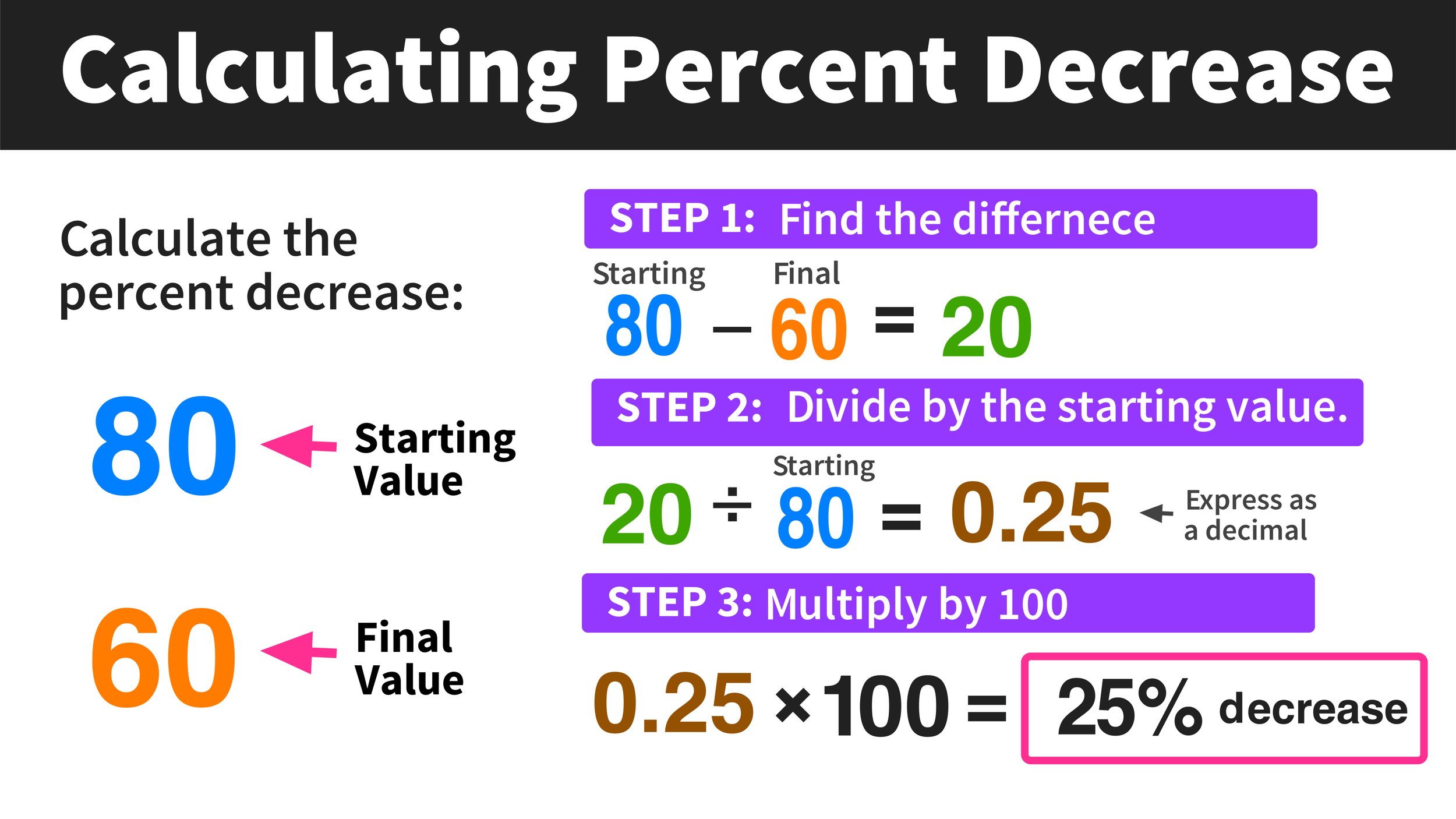
At its core, calculating a percentage decrease helps us answer the question: “By what proportion has a value fallen relative to its original state?” This seemingly simple calculation is the bedrock for identifying trends, assessing the impact of events, and setting realistic financial goals. From understanding the discount on a sale item to analyzing a decline in quarterly revenue, mastering this skill empowers individuals and businesses to navigate their financial landscapes with greater confidence and precision.
The Core Formula: Understanding the Basics
The journey to mastering percentage decrease begins with grasping a straightforward formula. This mathematical construct serves as the universal language for expressing proportional reductions, making it indispensable across all facets of finance.
Deconstructing the Formula
The fundamental formula for calculating a percentage decrease is as follows:
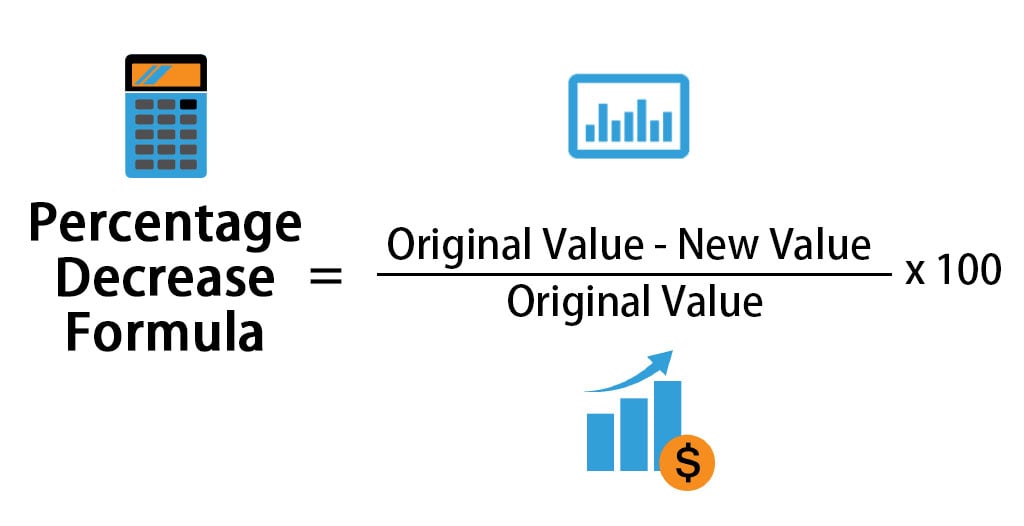
Percentage Decrease = ((Original Value - New Value) / Original Value) * 100
Let’s break down each component to understand its role:
-
Original Value: This is your starting point, the initial amount or baseline figure from which the decrease occurred. It’s crucial to correctly identify this value, as it serves as the denominator, anchoring the entire calculation.
-
New Value: This is the current or final amount after the decrease has taken place.
-
Original Value – New Value: This first step calculates the absolute decrease or the raw numerical difference between the starting and ending values. This tells you how much the value has gone down in absolute terms.
-
(Original Value – New Value) / Original Value: This division step is perhaps the most critical. It expresses the absolute decrease as a proportion or a decimal fraction of the original value. For instance, if a value dropped by 10 units from an original 100 units, this step calculates 10/100 = 0.10.
-
*100: Finally, multiplying the result by 100 converts that decimal proportion into a percentage. This makes the number more intuitive and universally understood. A 0.10 proportion becomes 10%.
Example: Imagine an item that originally cost $50 and is now on sale for $40.
-
Original Value = $50
-
New Value = $40
-
Absolute Decrease = $50 – $40 = $10
-
Proportion = $10 / $50 = 0.20
-
Percentage Decrease = 0.20 * 100 = 20%
The item has decreased by 20%.
Step-by-Step Calculation Guide
To ensure accuracy and clarity, follow these steps systematically:
Step 1: Identify the Original Value and the New Value.
Clearly define what your starting point is and what the ending point is. This might sound obvious, but mistaking one for the other is a common source of error.
Step 2: Calculate the Absolute Decrease.
Subtract the New Value from the Original Value. This difference represents the actual amount by which the value has fallen.
Absolute Decrease = Original Value - New Value
Step 3: Divide the Absolute Decrease by the Original Value.
This step yields a decimal representing the proportion of the decrease relative to the initial value.
Proportion = Absolute Decrease / Original Value
Step 4: Multiply the Result by 100 to Express it as a Percentage.
This final conversion makes the number easy to understand and communicate.
Percentage Decrease = Proportion * 100
Let’s try another example: Your monthly grocery budget was $600, but through careful planning, you managed to reduce it to $540 this month.
-
Original Value = $600
-
New Value = $540
-
Absolute Decrease = $600 – $540 = $60
-
Proportion = $60 / $600 = 0.10
-
Percentage Decrease = 0.10 * 100 = 10%
You successfully decreased your grocery spending by 10%.
Practical Applications in Personal Finance
For individuals, understanding percentage decrease is not just theoretical; it’s a vital tool for managing money effectively, making smart purchasing decisions, and evaluating personal financial health.
Budgeting and Expense Management
Effective budgeting is about more than just tracking income and outgo; it’s about optimizing spending. Calculating percentage decreases allows you to:
-
Monitor Spending Habits: Compare current month’s spending in a category (e.g., dining out, utilities) against previous months to see if your efforts to cut back are working. A 15% decrease in your entertainment budget signals positive progress.
-
Identify Savings Opportunities: Pinpoint areas where expenses have increased and need attention, or celebrate areas where you’ve successfully reduced spending, encouraging further cuts.
-
Track Financial Goals: If your goal is to reduce your overall expenses by 5% each quarter, percentage decrease calculations provide a clear metric for progress.
Example: You spent $150 on utilities last month. This month, you made an effort to conserve energy, bringing your utility bill down to $120.
Percentage Decrease = ((150 – 120) / 150) * 100 = (30 / 150) * 100 = 0.20 * 100 = 20%. You reduced your utility expenses by 20%.
Investment Losses and Portfolio Performance
In the world of investing, values fluctuate constantly. While investors hope for increases, understanding decreases is equally important for risk management and realistic assessment.
-
Assess Impact of Downturns: A stock dropping from $100 to $80 is a 20% decrease. This percentage helps contextualize the loss relative to the original investment, allowing you to compare it with other assets or market benchmarks.
-
Evaluate Portfolio Risk: Regularly calculating the percentage drop of individual holdings or your entire portfolio during volatile periods can inform your risk tolerance and future investment strategies.
-
Calculate Stop-Loss Levels: Many investors use percentage decreases to set stop-loss orders, automatically selling an asset if it falls by a certain percentage to limit potential losses.
Example: You bought shares of a company at $75 per share. Due to market conditions, the price drops to $60 per share.
Percentage Decrease = ((75 – 60) / 75) * 100 = (15 / 75) * 100 = 0.20 * 100 = 20%. Your investment has decreased by 20%.
Discounts and Savings
Every shopper loves a deal. Calculating percentage decreases is fundamental to understanding the true value of sales and discounts.
-
Determine Actual Savings: When a store advertises “30% off,” knowing how to calculate this helps you confirm the discount and compare it across different retailers.
-
Make Informed Purchases: Distinguish between a significant markdown and a trivial one. A product reduced from $200 to $180 is a 10% discount, while one reduced from $50 to $30 is a 40% discount, providing a clear basis for comparison.
-
Calculate Your Net Cost: Understand not just the dollar amount saved, but the percentage of the original price you’re truly getting off.
Example: A new appliance originally priced at $800 is now on sale for $680.
Percentage Decrease = ((800 – 680) / 800) * 100 = (120 / 800) * 100 = 0.15 * 100 = 15%. You are getting a 15% discount.
Strategic Uses in Business Finance
For businesses, calculating percentage decreases moves beyond personal budgeting to become a strategic tool for performance analysis, operational efficiency, and competitive positioning.
Revenue and Sales Declines
Any drop in a company’s sales or revenue is a red flag that demands immediate attention. Percentage decreases provide the clearest metric for this analysis.
-
Identify Market Shifts: A year-over-year 10% decrease in sales might indicate changing consumer preferences, increased competition, or broader economic downturns.
-
Assess Marketing Effectiveness: If a new marketing campaign fails, a percentage decrease in sales following its launch can help quantify its negative impact.
-
Quantify Business Performance: Investors and stakeholders closely watch revenue trends. A reported 5% quarterly revenue decrease immediately signals areas for concern and requires strategic response.
Example: A company’s quarterly revenue dropped from $2.5 million last quarter to $2.25 million this quarter.
Percentage Decrease = ((2,500,000 – 2,250,000) / 2,500,000) * 100 = (250,000 / 2,500,000) * 100 = 0.10 * 100 = 10%. The company experienced a 10% revenue decrease.
Cost Reduction and Efficiency
Optimizing operational costs is a continuous goal for any business. Percentage decrease calculations are vital for measuring the success of these initiatives.
-
Evaluate Cost-Cutting Measures: If a company implements new energy-saving protocols, calculating the percentage decrease in utility bills year-over-year demonstrates the initiative’s effectiveness.
-
Negotiate Supplier Deals: A business can track the percentage decrease in raw material costs after negotiating new supplier contracts, quantifying the benefits.
-
Improve Profit Margins: By reducing various operational expenses, businesses can increase their profit margins. Measuring these reductions as percentages provides clear targets and achievements.
Example: A manufacturing plant reduced its production waste from 500 units per month to 400 units per month.
Percentage Decrease = ((500 – 400) / 500) * 100 = (100 / 500) * 100 = 0.20 * 100 = 20%. Waste production decreased by 20%.
Profitability Analysis
Profitability is the lifeblood of a business. Tracking percentage decreases in profit margins helps identify challenges and informs strategic adjustments.
-
Monitor Gross and Net Profit: A decrease in gross profit margin might indicate rising production costs or falling selling prices, while a decrease in net profit margin points to issues with overall expenses or tax burden.
-
Benchmark Performance: Comparing a company’s percentage decrease in profit against industry averages or competitors provides context for its financial health.
-
Guide Pricing Strategies: If a product’s profit margin decreases by 8%, it might necessitate a review of its pricing, production costs, or sales volume targets.
Example: A product’s gross profit margin was 40% last year, but due to increased raw material costs, it has fallen to 36% this year.
Percentage Decrease = ((40 – 36) / 40) * 100 = (4 / 40) * 100 = 0.10 * 100 = 10%. The gross profit margin has decreased by 10% (relative to its original value of 40%).
Common Pitfalls and Advanced Considerations
While the core calculation is straightforward, certain nuances and advanced scenarios require careful attention to avoid misinterpretations.
The Importance of the Original Value
The most common mistake when calculating percentage decrease is incorrectly identifying the “Original Value.” This value must be the baseline from which the change occurred. Using the new value as the denominator will lead to an incorrect result and a misunderstanding of the actual proportion of the decrease.
Remember, the formula for percentage increase uses the same logic but swaps the numerator to (New Value - Original Value). The denominator, however, always remains the Original Value.
Chained Percentage Changes
A critical concept to understand is that successive percentage changes do not simply add or subtract. If an investment drops by 10% and then increases by 10%, it does not return to its original value.
Example: An investment starts at $100.
-
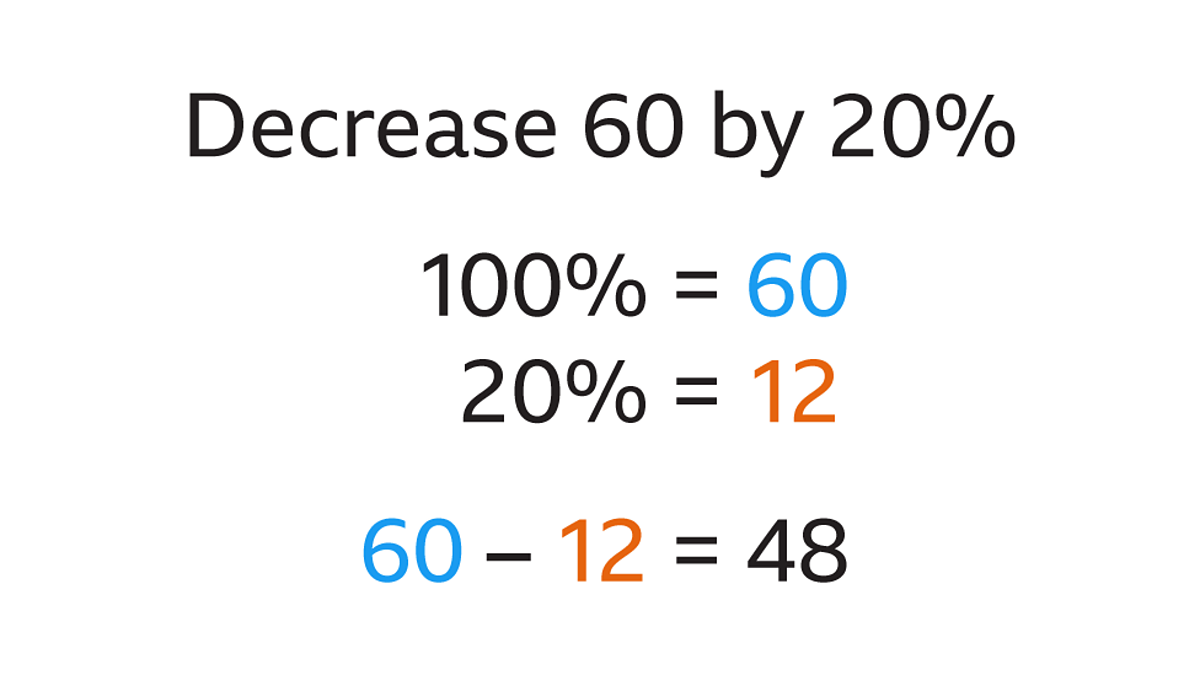
It decreases by 10%: $100 – (10% of $100) = $100 – $10 = $90.
-
Then it increases by 10%: $90 + (10% of $90) = $90 + $9 = $99.
The final value is $99, not $100.
To accurately calculate chained percentage changes, convert percentages to decimals (e.g., 10% decrease is 0.90, 10% increase is 1.10) and multiply them.
$100 * 0.90 * 1.10 = $99. This method correctly accounts for the changing base value.
Using Financial Tools
While manual calculation is essential for understanding, for everyday tasks and complex scenarios, leverage technology:
-
Spreadsheets (Excel, Google Sheets): These are invaluable. You can simply input your original and new values into cells and use a formula like
=(B2-A2)/A2(where A2 is the original and B2 is the new value) to get the decimal, then format the cell as a percentage. -
Online Calculators: Numerous websites offer quick percentage change calculators.
-
Financial Calculators: Dedicated financial calculators also have functions to compute percentage changes.
These tools reduce the chance of computational errors and speed up analysis, especially when dealing with large datasets.
Mastering the Skill for Financial Empowerment
Calculating a decrease in percentage is more than just a mathematical operation; it’s a powerful lens through which to view and interpret financial data. From the personal realm of budgeting and investing to the strategic demands of business finance, this skill provides clarity, precision, and the ability to make data-driven decisions.
By understanding the core formula, applying it systematically, and being aware of common pitfalls, you equip yourself with an indispensable tool for financial literacy. It allows you to track progress towards savings goals, assess the true impact of market fluctuations, evaluate the efficacy of cost-cutting measures, and ultimately, gain a deeper control over your financial destiny. Practice these calculations regularly, apply them to your own financial figures, and witness firsthand how this fundamental skill transforms your understanding and management of money.
aViewFromTheCave is a participant in the Amazon Services LLC Associates Program, an affiliate advertising program designed to provide a means for sites to earn advertising fees by advertising and linking to Amazon.com. Amazon, the Amazon logo, AmazonSupply, and the AmazonSupply logo are trademarks of Amazon.com, Inc. or its affiliates. As an Amazon Associate we earn affiliate commissions from qualifying purchases.