
In the world of finance, numbers are the universal language. From investment returns to loan interest rates, budget allocations to sales discounts, understanding how to manipulate and interpret these figures is paramount. One of the most fundamental yet frequently overlooked skills is the ability to convert a whole number into a percentage. While seemingly straightforward, mastering this conversion is not just about mathematical accuracy; it’s about gaining a deeper insight into financial relationships, making informed decisions, and confidently navigating the complexities of personal finance, investing, and business.

This article will demystify the process of transforming a whole number into a percentage, anchoring it firmly within the context of financial literacy. We’ll explore why this conversion is crucial for managing your money effectively, provide a clear, step-by-step guide, address common misunderstandings, and highlight how this basic skill underpins more advanced financial concepts. By the end, you’ll not only know how to perform the conversion but also why it’s a cornerstone of financial intelligence.
The Fundamental Conversion: Why Percentages Matter in Finance
Percentages are ubiquitous in finance because they provide a standardized way to express proportions, changes, and relationships, regardless of the absolute values involved. They offer a common ground for comparison and understanding, making complex financial data more digestible and actionable.
Understanding the “Per Cent” Concept
The term “percent” literally means “per hundred” or “out of one hundred.” It’s a way of expressing a number as a fraction of 100. For instance, 50% means 50 out of 100, or 50/100, which simplifies to 1/2. This fundamental understanding is critical because it tells us that any percentage is ultimately a fraction or a decimal that has been scaled to a base of 100. When we convert a whole number to a percentage, we are essentially asking, “How many hundreds does this whole number represent?” or more accurately, “If 1 represents 100%, what percentage does this whole number represent?”
Everyday Financial Applications
The utility of percentages permeates nearly every aspect of our financial lives:
-
Interest Rates: Whether it’s the interest you earn on a savings account (e.g., 2% APY), the interest you pay on a mortgage (e.g., 6.5% APR), or the exorbitant rates on credit card debt (e.g., 20% APR), percentages dictate the cost of borrowing and the reward of saving.
-
Discounts and Sales: Black Friday, clearance sales, and promotional offers are all presented in percentages (e.g., “30% off,” “save 15% on your next purchase”). Calculating the actual savings requires converting these percentages back into dollar amounts, which in turn reinforces the understanding of percentages.
-
Taxes: Income tax brackets (e.g., “you’re in the 22% tax bracket”), sales tax (e.g., 7% sales tax on goods), and property taxes are all expressed as percentages, impacting how much of your earnings or purchases go to the government.
-
Investment Returns and Portfolio Allocation: Evaluating the performance of your investments (e.g., “your stock portfolio gained 10% this quarter”) and determining how your assets are divided (e.g., “60% stocks, 30% bonds, 10% cash”) relies entirely on percentages.
-
Budgeting: Crafting a personal budget often involves allocating percentages of your income to different categories like housing (e.g., 30%), food (e.g., 15%), savings (e.g., 10%), and discretionary spending. This helps in maintaining financial discipline and achieving long-term goals.
Without a solid grasp of percentage conversion, navigating these financial scenarios effectively becomes a significant challenge, potentially leading to miscalculations, missed opportunities, or costly errors.
The Step-by-Step Guide to Conversion
Converting a whole number to a percentage is a remarkably simple process. It hinges on the definition of a percentage: a value out of one hundred. A whole number, by itself, is expressed as a complete unit or multiple of units. To convert it into a percentage, you need to express it relative to 100.
Step 1: Conceptualizing the Whole Number
Every whole number can be thought of as having an invisible decimal point and zeros following it (e.g., 5 is 5.0, 10 is 10.00). More importantly, in the context of percentages, a whole number can be seen as a multiple of “one whole.” If “one whole” is considered 100%, then any whole number represents that many multiples of 100%. For instance, the number 1 represents one whole, or 100%. The number 2 represents two wholes, or 200%.
Step 2: The Multiplication Method
The most direct and accurate way to convert a whole number to a percentage is to multiply it by 100.
Let’s illustrate with examples:
-
To change 1 to a percent:
1 x 100 = 100
-
To change 5 to a percent:
5 x 100 = 500
-
To change 12 to a percent:
12 x 100 = 1200
The rationale behind multiplying by 100 is straightforward. Since “percent” means “per hundred,” by multiplying the number by 100, you are explicitly stating how many “hundredths” the number represents. You are scaling the number up to express it on a base-100 system.
Step 3: Adding the Percent Symbol
The final and crucial step is to append the percent symbol (%) to the result. This symbol formally denotes that the number is now being expressed as a percentage, meaning “out of 100.”
Continuing our examples:
-
1 x 100 = 100, then you add the symbol: 100%
-
5 x 100 = 500, then you add the symbol: 500%
-
12 x 100 = 1200, then you add the symbol: 1200%
It’s a common oversight to forget the percent symbol, but without it, the number remains just a numerical value, losing its proportional meaning. A value of “100” is vastly different from “100%.” The former is an absolute count or measure, while the latter signifies “the entirety of something.”
Common Pitfalls and Nuances in Financial Calculations
While the conversion itself is simple, its application in finance often comes with nuances that can lead to confusion if not understood properly.
Confusing Decimals with Whole Numbers
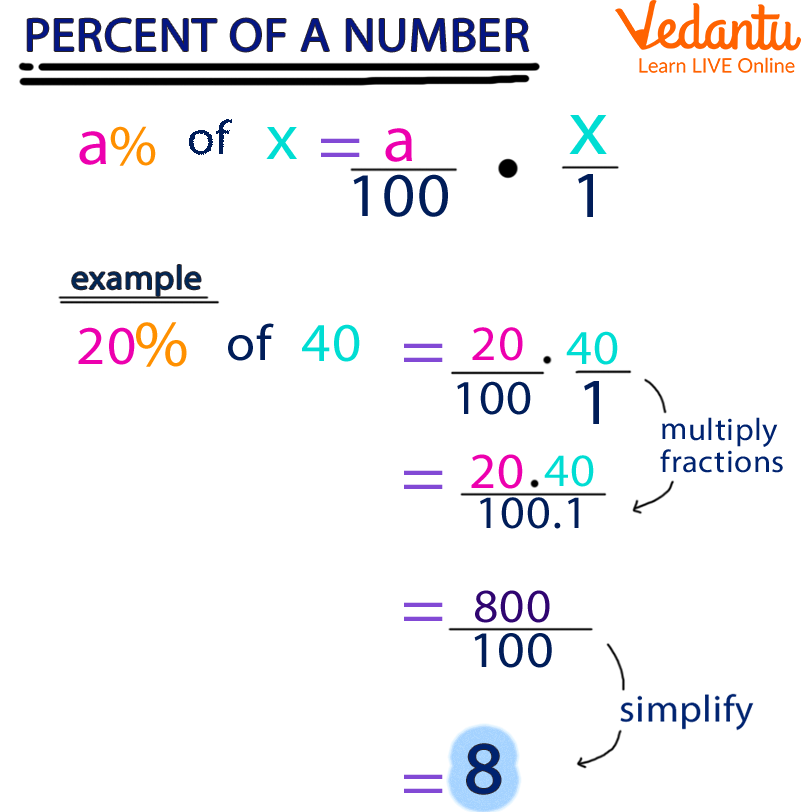
One of the most common mistakes is mixing up the conversion of a decimal (like 0.5) with a whole number (like 5).
-
Converting a Decimal to a Percent: You also multiply by 100. So, 0.5 x 100 = 50%, or 0.25 x 100 = 25%.
-
Converting a Whole Number to a Percent: As discussed, 5 x 100 = 500%, or 1 x 100 = 100%.
The confusion often arises in spoken language. When someone says “the interest rate is 5,” they almost invariably mean 5%, not 500%. In financial contexts, if a number less than 100 is stated as a standalone value for a rate or proportion (e.g., “The discount is 20”), it’s generally implied to be a percentage (20%). However, if you are performing a calculation where your result is a whole number (e.g., you calculated a multiplier of 2, meaning “twice as much”), then converting that literal whole number to a percent would yield 200%. Always be clear about whether you are converting a numerical value into its percentage equivalent or if the context already implies a percentage that needs to be represented numerically.
The Significance of 100%
The number 100% holds special significance in finance because it represents the entirety, the whole, or the complete amount of something.
-
If you own 100% of a company, you own all of it.
-
If you have a 100% completion rate on a project, it’s fully done.
-
If your investment shows a 100% return, it has doubled in value.
Understanding that 1 whole unit equals 100% is the bedrock for all other percentage calculations. It’s the baseline against which all other proportions are measured.
Beyond 100% – Growth and Multiples
Percentages above 100% are not abstract concepts but powerful indicators of growth, multiples, or values exceeding an original base.
-
Growth: If an asset grows by 200%, it means it has become three times its original value (Original Value + 200% of Original Value = Original Value * (1+2)). If a company’s revenue increased by 150%, it means their revenue is now 2.5 times what it was previously.
-
Multiples: If a whole number represents a multiple, converting it to a percentage clearly expresses that multiple. For example, if you say something is “twice as much,” that’s a whole number of 2, which converts to 200%. “Three times as much” is 300%.
These higher percentages are crucial for understanding significant gains in investments, rapid business expansion, or substantial shifts in economic indicators.
Advanced Applications and Financial Literacy
The simple conversion of a whole number to a percent forms the bedrock for more complex financial analyses and calculations, empowering you to make more informed decisions.
Calculating Percentage Increase/Decrease
One of the most common financial calculations involves determining percentage change. This process inherently requires converting the resulting decimal (or sometimes whole number) to a percent.
The formula for percentage change is:
((New Value - Old Value) / Old Value) * 100%
Let’s say a stock you own went from $50 per share to $60 per share.
-
(60 - 50) / 50 = 10 / 50 = 0.2 -
The result, 0.2, is a decimal. To express this as a percentage, you multiply by 100:
0.2 * 100 = 20. -
Add the percent symbol: 20% increase.
Conversely, if it dropped from $60 to $50:
-
(50 - 60) / 60 = -10 / 60 ≈ -0.1667 -
Multiply by 100:
-0.1667 * 100 ≈ -16.67. -
Add the percent symbol: -16.67% (a 16.67% decrease).
The ability to accurately convert the decimal outcome of the division into a percentage is vital for interpreting these changes.
Budgeting and Financial Planning
When creating a budget, you might initially allocate whole dollar amounts to different categories. However, expressing these allocations as percentages of your total income provides a much clearer picture of your spending priorities and financial health.
For instance, if your monthly income is $4,000 and you allocate $1,200 for housing:
-
1200 / 4000 = 0.3 -
Multiply by 100:
0.3 * 100 = 30. -
Add the symbol: 30% of your income goes to housing.
This conversion helps you compare your spending habits against common financial guidelines (e.g., the 50/30/20 rule) and make adjustments to achieve your financial goals.
Interpreting Financial News and Reports
Financial news, annual reports, and economic forecasts are replete with percentages. Understanding how to convert a raw number to a percentage, and vice-versa, allows you to critically analyze information presented by experts. Is a “250% increase in profits” truly as impressive as it sounds, or is it relative to an extremely low base? Is a “30% chance of a market correction” a cause for concern in your portfolio? Your ability to translate these figures into concrete terms and compare them against other benchmarks is a hallmark of financial literacy.
By mastering this fundamental conversion, you move beyond simply accepting numbers at face value. You gain the power to dissect financial information, identify trends, calculate potential outcomes, and ultimately, take control of your financial narrative.

Conclusion
The seemingly simple act of changing a whole number to a percent is far more than a basic arithmetic exercise; it is an indispensable skill in the realm of personal finance and beyond. It empowers you to decode the financial world around you, from understanding interest rates and investment performance to managing your budget and interpreting economic news.
By consistently applying the straightforward method of multiplying by 100 and adding the percent symbol, you transform raw numerical data into meaningful proportional insights. This skill bridges the gap between abstract numbers and tangible financial implications. In an increasingly data-driven world, where financial decisions impact every aspect of our lives, mastering these fundamentals is not just an advantage—it’s a necessity for achieving financial acumen and securing your financial future. Practice this conversion, integrate it into your financial thinking, and watch as your understanding of money grows exponentially.
aViewFromTheCave is a participant in the Amazon Services LLC Associates Program, an affiliate advertising program designed to provide a means for sites to earn advertising fees by advertising and linking to Amazon.com. Amazon, the Amazon logo, AmazonSupply, and the AmazonSupply logo are trademarks of Amazon.com, Inc. or its affiliates. As an Amazon Associate we earn affiliate commissions from qualifying purchases.