
In the world of finance, numbers tell a story. They quantify our efforts, measure our progress, and predict our future. Among the most fundamental operations in this narrative is the ability to increase a number by a percentage. Far from being a mere mathematical exercise, this skill is a cornerstone of financial literacy, empowering individuals and businesses to understand growth, assess value, and make informed decisions.
Whether you’re tracking your salary raises, calculating investment returns, understanding inflation’s bite, or strategizing business markups, mastering this concept is indispensable. It’s the language of financial change, enabling you to translate raw figures into meaningful insights. This article delves into the core mechanics of increasing a number by a percentage, exploring its vast applications across personal finance, investing, and business operations, equipping you with the tools and understanding to confidently navigate your financial journey.
Understanding the Core Concept: The Building Block of Financial Growth
At its heart, increasing a number by a percentage is about calculating a new value that is a certain proportion greater than an original value. This operation forms the bedrock of countless financial calculations, providing a universal method for quantifying growth or appreciation.
The Fundamental Formula: Demystifying the Math
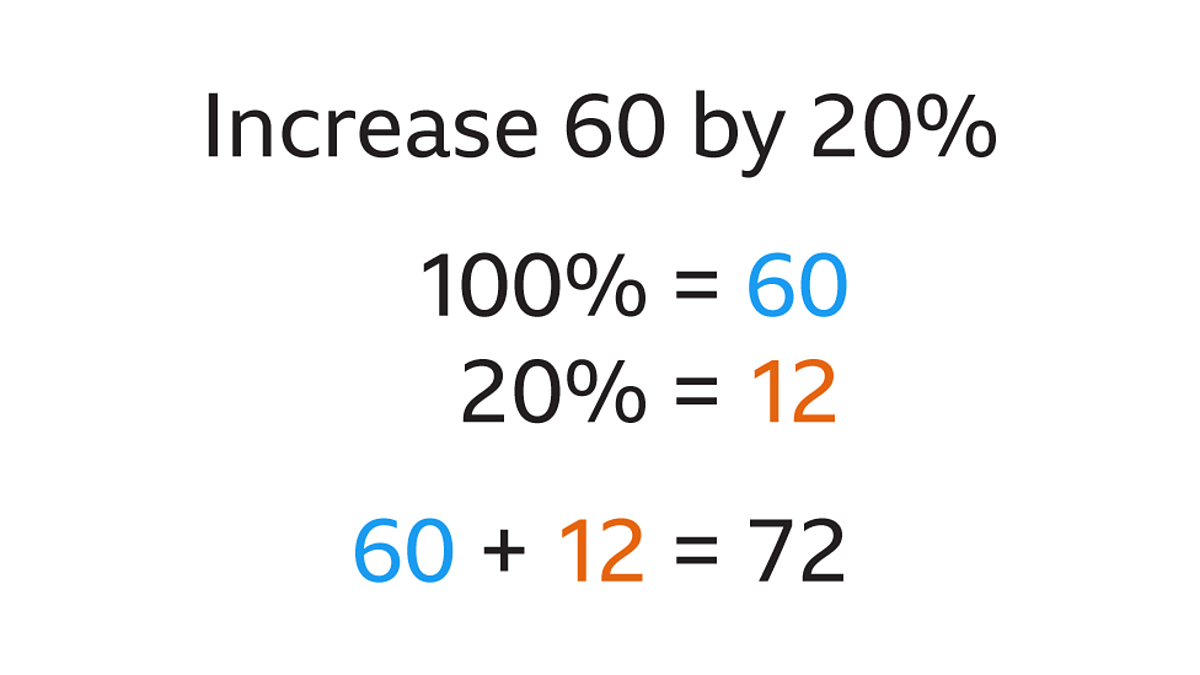
The process is surprisingly straightforward, relying on a simple yet powerful formula. To increase an original number by a specific percentage, you first need to determine the absolute value of that percentage increase and then add it back to the original number.
Let’s break it down:
-
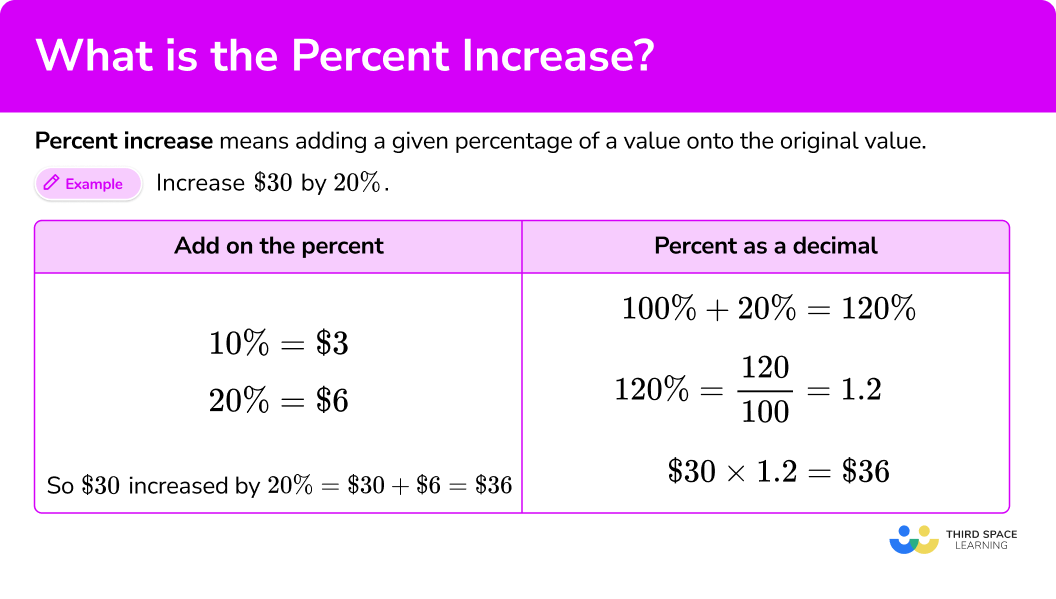
Calculate the Percentage Amount: Convert the percentage into a decimal by dividing it by 100. Then, multiply this decimal by the original number.
- Example: To find 10% of $100: 10% / 100 = 0.10. Then, $100 * 0.10 = $10.
-
Add to the Original Number: Take the calculated percentage amount and add it to the original number.
- Example: $100 (original) + $10 (10% increase) = $110.
This two-step process can be consolidated into a single, elegant formula:
New Value = Original Value * (1 + Percentage / 100)
Using our example:
New Value = $100 * (1 + 10 / 100)
New Value = $100 * (1 + 0.10)
New Value = $100 * 1.10
New Value = $110
This formula directly gives you the new, increased value, streamlining the calculation. Understanding this fundamental arithmetic is the first step towards unlocking deeper financial insights.
Why Percentages Matter: More Than Just Numbers
Percentages are more than just numerical values; they are powerful tools for comparison and understanding relative change. A raw number increase might seem significant, but a percentage increase puts it into context. For instance, an increase of $10 might be negligible for a million-dollar company but transformative for a small startup with a $100 budget.
In finance, percentages allow us to:
-
Normalize Data: Compare growth across different scales, making it easier to see which investment or business segment is performing relatively better.
-
Quantify Impact: Understand the proportional effect of changes, such as how much an interest rate hike impacts loan repayments or how a sales discount affects revenue.
-
Track Trends: Observe consistent growth or decline rates over time, essential for forecasting and strategic planning.
By comprehending how to increase a number by a percentage, you gain a vital lens through which to view and interpret the dynamic world of money.
Practical Applications in Personal Finance: Making Your Money Grow (and Shrink)
For individuals, the ability to increase a number by a percentage is not just theoretical; it’s a daily necessity for effective financial management. From understanding income to managing debt and planning for the future, this skill underpins many personal financial decisions.
Budgeting and Salary Increases: Tracking Your Income
One of the most immediate applications is in understanding your income. If you receive a 5% salary increase on your $60,000 annual salary, how much will your new salary be?
New Salary = $60,000 * (1 + 5 / 100) = $60,000 * 1.05 = $63,000.
This calculation directly impacts your disposable income and budgeting strategies. Similarly, when estimating the growth of a side hustle’s revenue or anticipating a bonus based on a percentage of sales, this formula is your go-to.
Debt and Interest Rates: The Cost of Borrowing
On the flip side, percentages often represent the cost of borrowing money. Credit card interest, loan rates, and mortgage payments all involve increasing an initial balance by a percentage over time. While the sophisticated calculations for compound interest (interest on interest) are more complex, the underlying principle starts with a simple percentage increase.
For example, if you carry a $1,000 balance on a credit card with an 18% annual interest rate, understanding how much that interest adds to your debt each month (or year) begins with this calculation, even if it compounds. Ignorance of this can lead to escalating debt, highlighting the importance of this basic math.
Savings and Inflation: Preserving and Growing Your Wealth
When it comes to savings, bank accounts or investment vehicles often offer interest rates, which are essentially percentage increases on your principal. A 2% interest rate on a $10,000 savings account means an annual increase of $200 (before compounding).
However, the purchasing power of your money is also affected by inflation, which is a percentage decrease in value over time. While inflation formally decreases value, understanding its impact often involves reversing the “increase” concept, asking what an item would cost if its price increased by the inflation rate. If an item costs $100 today and inflation is 3%, it will cost $103 next year to buy the same item, effectively showing your money’s decreased purchasing power for that item. Recognizing these dynamics is crucial for preserving and growing your wealth effectively.
Discounts and Sales: Smart Spending
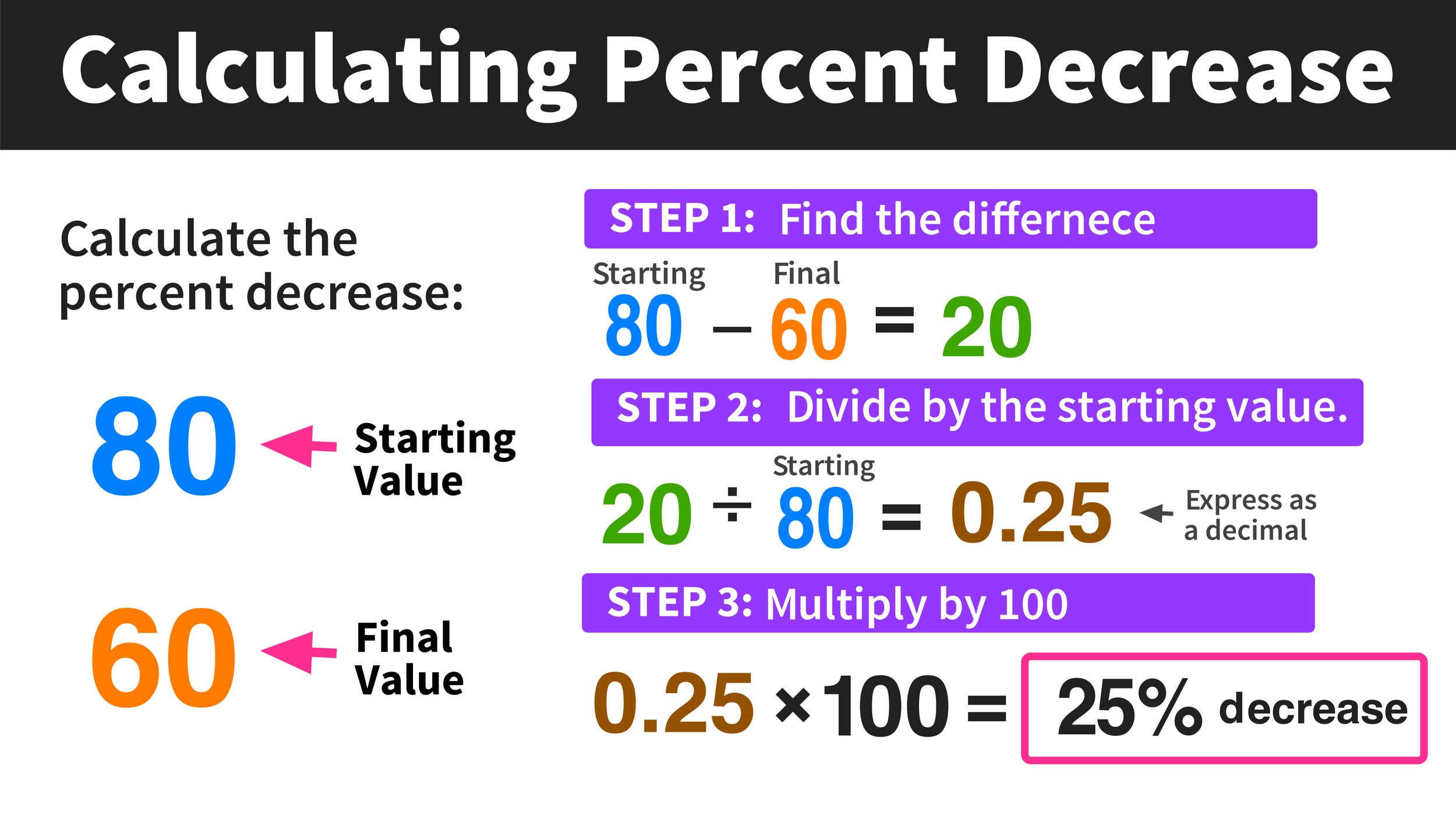
While the core topic is increasing a number, understanding discounts and sales is the inverse operation, requiring the same foundational grasp of percentages. Knowing how to calculate a 25% discount means you’re facile with percentage calculations. If an item costs $200 and is 25% off, you calculate the 25% ($50) and subtract it. This proficiency helps you identify genuine bargains and make smarter spending choices, ultimately saving you money.
Business Finance & Investing: Strategic Growth and Value Creation
For businesses and investors, increasing a number by a percentage is not just an operational task; it’s a strategic imperative. It’s how growth is measured, profitability is assessed, and investment returns are projected.
Revenue Growth and Profit Margins: Driving Business Success
Businesses constantly track their revenue growth. A 15% year-over-year revenue increase on $1,000,000 means the company generated an additional $150,000. This metric is vital for assessing performance, attracting investors, and planning future operations. Similarly, profit margins are expressed as percentages, showing how much profit is generated per dollar of revenue. If a company aims to increase its profit margin from 10% to 12% on a given product line, understanding the impact on its bottom line requires precise percentage calculations.
Investment Returns and Portfolio Performance: Measuring Your Gains
In the investment world, every investor’s primary goal is to increase their capital. This increase is almost universally measured in percentages. If an investment of $10,000 yields a 7% return, its value increases to $10,700. Comparing the percentage returns of different assets – stocks, bonds, real estate – allows investors to evaluate performance regardless of the initial investment amount. This is critical for portfolio diversification and strategic asset allocation.
Pricing Strategies and Markups: Setting Value
For retailers and service providers, setting prices involves markups, which are percentage increases over the cost of goods sold. If a product costs a business $50 and they apply a 40% markup, the selling price will be $50 * (1 + 40/100) = $50 * 1.40 = $70. This ensures profitability and covers operational costs. Understanding how to apply these percentage increases is central to sustainable business models.
Tax Implications and Business Expenses: Financial Prudence
Many business expenses and tax obligations are percentage-based. Sales tax, value-added tax (VAT), payroll taxes, and various levies are calculated as a percentage of a transaction or income. For example, understanding how a 7% sales tax increases the final price of a $100 item to $107 is crucial for accurate billing and compliance. Managing these percentage-based costs effectively is paramount for a business’s financial health.
Tools and Techniques: Calculating with Confidence
While the formula is simple, the practical application often benefits from various tools and techniques, especially when dealing with larger numbers, multiple calculations, or complex financial scenarios.
Manual Calculation and Mental Math: Quick Estimates
For simple, round numbers, manual calculation and mental math can be incredibly efficient. Breaking down percentages into easier chunks often helps. For example, to find a 20% increase:
-
Find 10% (move the decimal one place to the left).
-
Double that amount for 20%.
-
Add it to the original.
This approach is great for quick estimates, checking calculations, or making on-the-spot financial decisions in everyday life.
Spreadsheets (Excel/Google Sheets): Your Financial Navigator
For most people dealing with personal or business finance, spreadsheets like Microsoft Excel or Google Sheets are indispensable. They automate calculations, reduce errors, and allow for easy scenario planning.
To increase a number in a spreadsheet:
-
Enter your original number in a cell (e.g., A1: 100).
-
Enter your percentage (as a decimal or whole number) in another cell (e.g., B1: 0.10 for 10% or 10).
-
In a third cell, use the formula:
-
If percentage is a decimal (e.g., 0.10):
=A1 * (1 + B1) -
If percentage is a whole number (e.g., 10):
=A1 * (1 + B1/100)
-
Spreadsheets are particularly powerful because you can easily change the original number or percentage to see immediate impacts, build financial models, and track multiple increases over time.
Financial Calculators and Apps: On-the-Go Solutions
Numerous dedicated financial calculators, both physical and app-based, simplify percentage calculations. Many online tools are designed specifically for interest, loan payments, or investment growth, often incorporating percentage increases implicitly. These tools are excellent for complex scenarios like calculating mortgage payments or future value with compound interest, where the simple percentage increase formula is just one component of a larger calculation. For everyday use, even a standard calculator can perform the Original Value * (1 + Percentage / 100) operation efficiently.
Beyond the Basics: Compound Growth and Financial Literacy
Understanding how to increase a number by a percentage is a foundational step, but its true power in finance is unleashed when we consider its application over time and its role in broader financial concepts.
The Power of Compounding: Interest on Interest
One of the most profound financial principles that builds directly on percentage increases is compound interest. This is “interest on interest” or “growth on growth.” Instead of calculating a percentage increase just once, compounding applies the percentage increase to the new, larger amount each subsequent period. This exponential growth is why long-term investing can be so powerful. A small percentage increase applied consistently over decades can lead to substantial wealth accumulation, a concept famously dubbed by Albert Einstein as the eighth wonder of the world.
Understanding Rate of Change: Annualized Growth and CAGR
In business and investing, professionals often talk about “annualized growth rates” or “Compound Annual Growth Rate (CAGR).” These metrics are sophisticated ways of representing the average percentage increase of an investment or business over multiple periods, even if the actual yearly increases fluctuated. These advanced calculations rely on the fundamental understanding of how a number grows by a percentage each period.
Strategic Decision-Making: Leveraging Percentage Insights
Ultimately, mastering how to increase a number by a percentage is about empowering better financial decision-making. It enables you to:
-
Evaluate Opportunities: Quickly assess the potential returns of an investment or the impact of a price increase.
-
Identify Risks: Understand how rapidly debt can grow or how inflation erodes purchasing power.
-
Plan for the Future: Project savings growth, plan for retirement, or forecast business revenue.
-
Negotiate Effectively: Have a clear understanding of financial implications in salary negotiations or business deals.
By moving beyond simple arithmetic to grasp the profound financial implications of percentage increases, you transition from merely knowing numbers to truly understanding the financial world around you. This skill isn’t just about math; it’s about building a robust financial foundation for personal prosperity and business success.
aViewFromTheCave is a participant in the Amazon Services LLC Associates Program, an affiliate advertising program designed to provide a means for sites to earn advertising fees by advertising and linking to Amazon.com. Amazon, the Amazon logo, AmazonSupply, and the AmazonSupply logo are trademarks of Amazon.com, Inc. or its affiliates. As an Amazon Associate we earn affiliate commissions from qualifying purchases.