
In the intricate world of personal finance, investing, and business management, numbers tell a story. While absolute figures provide a snapshot, it’s the change in those figures that often reveals the true narrative of growth, decline, or stagnation. Understanding how to calculate a percent increase is not merely an academic exercise; it’s a foundational skill that empowers individuals and entrepreneurs to make informed decisions, set realistic goals, and accurately track progress. Whether you’re assessing the growth of your investment portfolio, analyzing a salary raise, measuring business revenue expansion, or simply understanding rising costs, mastering the percent increase calculation is indispensable.
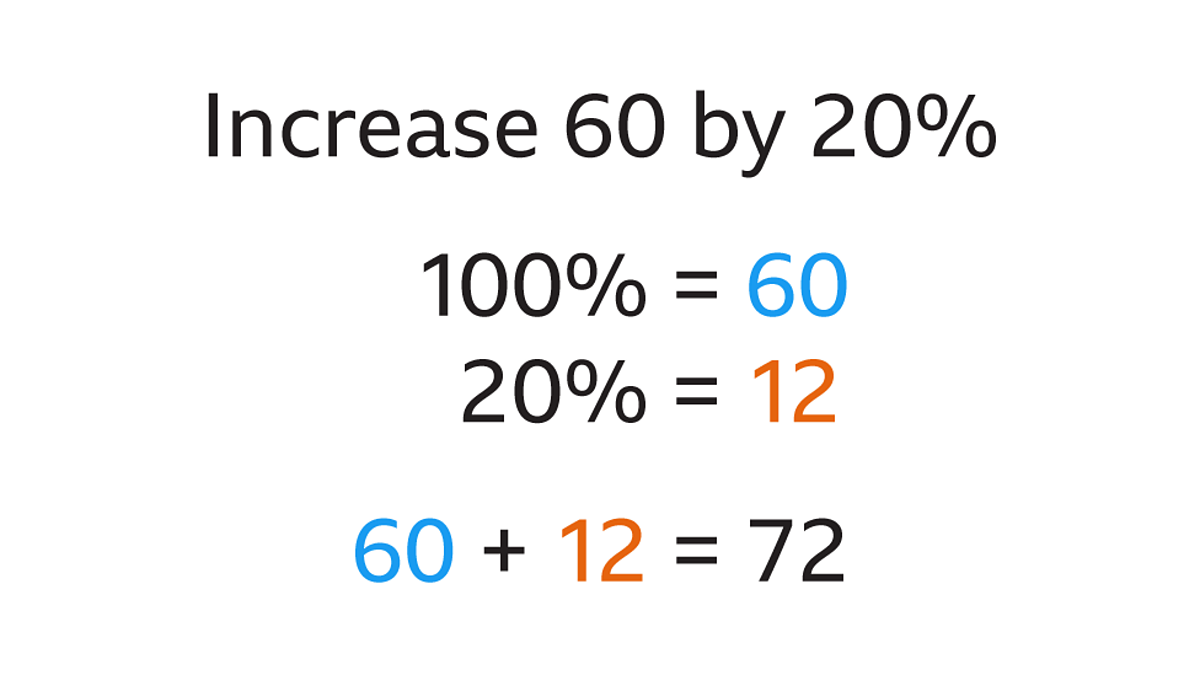
This guide will demystify the concept of percent increase, providing you with the formula, practical examples across various financial scenarios, insights into its nuanced applications, and the tools to calculate it effortlessly. By the end, you’ll not only know how to find a percent increase but also understand why it’s such a critical metric in your financial toolkit.
Understanding the Fundamentals: What is Percent Increase?
At its core, percent increase is a measure of the relative change between an old (original) value and a new (current) value when the new value is greater than the old value. It expresses this change as a percentage of the original value, providing a standardized way to compare growth across different scales. An increase of $100 might seem significant, but if it’s an increase from $1,000, it’s a 10% gain. If it’s an increase from $10,000, it’s only a 1% gain. The percentage contextualizes the absolute change, making it a powerful analytical tool.
The Basic Formula Explained
The formula for calculating percent increase is straightforward and easy to apply:
Percent Increase = ((New Value – Old Value) / Old Value) * 100%
Let’s break down each component:
-
New Value: This is the larger, more recent, or current figure you are comparing.
-
Old Value: This is the smaller, original, or baseline figure from which the change occurred.
-
Difference (New Value – Old Value): This step calculates the absolute amount of increase.
-
Divide by Old Value: Dividing the difference by the original value converts the absolute increase into a decimal ratio relative to the starting point.
-
Multiply by 100%: Multiplying by 100 converts that decimal ratio into a percentage, making it easier to understand and communicate.
Example:
Imagine your stock investment grew from $5,000 (Old Value) to $6,250 (New Value).
-
Difference = $6,250 – $5,000 = $1,250
-
Ratio = $1,250 / $5,000 = 0.25
-
Percent Increase = 0.25 * 100% = 25%
This means your investment increased by 25%.
Why it Matters in Money Management
The significance of percent increase in money management cannot be overstated. It offers a standardized metric that allows for meaningful comparisons, regardless of the absolute sums involved.
-
Contextualizes Growth: A $1,000 gain on a $10,000 investment (10% increase) feels different from a $1,000 gain on a $100,000 investment (1% increase). Percent increase provides this vital context.
-
Enables Benchmarking: You can compare the performance of different investments, businesses, or financial goals against each other or against industry benchmarks. For instance, did your portfolio grow more than the S&P 500 index this year?
-
Facilitates Goal Setting: When setting financial goals, such as increasing savings or reducing debt, expressing targets as a percentage can be more motivating and easier to track than relying solely on absolute numbers.
-
Reveals Trends: Regularly calculating percent increases (and decreases) helps identify patterns, trends, and potential issues in your financial landscape, prompting timely adjustments.
Practical Applications in Personal Finance
In personal finance, the ability to calculate percent increase is a cornerstone of effective money management, helping you track your financial health and progress toward your goals.
Tracking Income and Expenses
Understanding changes in your income and expenses is crucial for budgeting and financial planning.
-
Salary Increases: When you receive a raise, calculating the percent increase helps you understand its true impact. A $5,000 raise on a $50,000 salary (10% increase) is proportionally more significant than the same raise on a $100,000 salary (5% increase). This also allows you to compare your salary growth against inflation or average wage growth.
-
Expense Fluctuations: Monitor increases in recurring expenses like housing, groceries, or transportation. If your grocery bill jumped from $400 to $480 in a month, that’s a 20% increase ($80/$400 * 100%), signaling a need to adjust your budget or spending habits.
-
Savings Growth: Track the percentage growth of your emergency fund or investment accounts year-over-year. This helps you visualize the power of compounding and stay motivated.
Evaluating Investment Growth
For investors, percent increase is perhaps the most fundamental metric for assessing performance.
-
Return on Investment (ROI): Whether it’s stocks, real estate, or a business venture, ROI is typically expressed as a percentage increase. If you bought a stock for $100 and sold it for $125, your percent increase is 25% (($125-$100)/$100 * 100%).
-
Portfolio Performance: Calculate the overall percentage growth of your entire investment portfolio over specific periods (e.g., quarter-to-quarter, year-to-date, annually). This allows you to compare its performance against market benchmarks or other investment options.
-
Asset Appreciation: Understand how much your assets, like a home or valuable collectibles, have appreciated in value over time.
Analyzing Debt Reduction
While “percent increase” might seem counter-intuitive for debt, it’s used to understand how much your equity in a financed asset has increased as debt is paid down, or conversely, to track the percentage by which your remaining debt has decreased relative to the original amount. For example, if you reduce a $10,000 loan to $8,000, you’ve reduced it by 20% (($10,000-$8,000)/$10,000 * 100%). This represents a “percent decrease” in debt, which directly translates to a “percent increase” in your financial freedom or equity.
Percent Increase in Business & Entrepreneurship
For business owners and entrepreneurs, calculating percent increase is an indispensable tool for strategic planning, performance evaluation, and identifying areas for growth.
Measuring Sales and Revenue Growth
The lifeblood of any business is its revenue. Tracking its growth as a percentage provides clear insights into market penetration, product success, and overall business health.

-
Year-over-Year (YoY) or Quarter-over-Quarter (QoQ) Growth: These are standard metrics to assess how much sales or revenue have grown compared to the same period in the previous year or quarter. A 15% YoY revenue increase indicates robust growth and provides a more meaningful comparison than simply stating a $1 million increase, especially if last year’s revenue was $5 million versus $100 million.
-
Product Line Performance: Identify which products or services are experiencing the most significant percentage growth, informing inventory management, marketing efforts, and future product development.
-
Customer Base Expansion: Calculate the percent increase in new customers acquired over a given period. This helps gauge the effectiveness of marketing and sales strategies.
Understanding Profit Margin Changes
Revenue growth is vital, but profit margin growth indicates true financial efficiency.
-
Gross Profit Margin Increase: If your gross profit margin (gross profit / revenue) increases from 40% to 45%, that’s a 5 percentage point increase, but it’s actually a 12.5% percent increase in the margin itself (($45-$40)/$40 * 100%). This distinction is critical for evaluating operational improvements.
-
Net Profit Growth: Tracking the percentage increase in net profit (the bottom line) over time shows the ultimate financial health of the business after all expenses.
Assessing Marketing Campaign Effectiveness
Marketing investments need to yield tangible returns, and percent increase helps quantify these.
-
Website Traffic Growth: If your website sessions increased from 10,000 to 15,000 after a new SEO campaign, that’s a 50% increase in traffic, indicating a successful initiative.
-
Conversion Rate Improvement: If your conversion rate (e.g., website visitors making a purchase) went from 2% to 2.5%, that’s a 25% increase in conversion effectiveness ((2.5-2)/2 * 100%).
-
Lead Generation Increase: Measure the percentage growth in qualified leads generated by specific campaigns to assess their ROI.
Common Pitfalls and Nuances
While the percent increase formula is simple, its interpretation sometimes requires careful attention to avoid misrepresentation or misunderstanding.
The Impact of Negative Starting Values or Zero
The standard percent increase formula is designed for situations where both values are positive and the new value is larger.
-
Zero Old Value: If the old value is zero, the formula
(New Value - 0) / 0results in division by zero, which is mathematically undefined. In practical financial terms, going from nothing to something (e.g., $0 in sales to $10,000) is often described as infinite growth or simply as “starting from zero” rather than a percentage. -
Negative Old Value: If the old value is negative, the interpretation of percent increase becomes complex and often counter-intuitive. For instance, going from -$100 to -$50 is a “gain” towards positive numbers, but the formula might yield a negative percentage. In finance, we typically apply percent change to positive metrics like assets, revenue, or profit. When dealing with losses, a “percent decrease” in loss might be more appropriate.
Differentiating from Percentage Point Change
This is a crucial distinction, especially in financial reporting.
-
Percent Increase: Refers to the proportional change relative to the original value.
-
Percentage Point Change: Refers to the absolute difference between two percentages.
Example:
If a company’s profit margin increased from 10% to 12%.
-
Percentage Point Change: This is a 2 percentage point increase (12% – 10%).
-
Percent Increase: This is a 20% percent increase in the margin itself ((12% – 10%) / 10% * 100% = 2% / 10% * 100% = 0.2 * 100% = 20%).
Misunderstanding this can lead to significant misinterpretations of financial performance. Always clarify whether you are referring to a percent increase in a value or a percentage point change between two percentages.
The Importance of Context and Timeframes
A percentage increase is only as meaningful as the context in which it’s presented.
-
Magnitude Matters: A 100% increase sounds impressive, but if it’s an increase from $1 to $2, it’s less significant than a 100% increase from $1 million to $2 million. Always consider the absolute values alongside the percentage.
-
Timeframe Specificity: A 5% increase over one month is very different from a 5% increase over one year. Always specify the period over which the increase occurred (e.g., “5% monthly increase,” “10% annual growth”). Annualized rates are often preferred for long-term comparisons.
-
External Factors: A significant percent increase might be due to a one-off event or unusual market conditions rather than sustainable growth. Consider the underlying reasons behind the numbers.
Leveraging Financial Tools for Calculation
While you can always calculate percent increase manually, various financial tools can automate the process, saving time and reducing the risk of error.
Spreadsheets (Excel/Google Sheets)
Spreadsheets are incredibly versatile for financial calculations, especially when dealing with multiple data points.
Formula: If your old value is in cell A1 and your new value is in cell B1, the formula for percent increase would be:
=(B1-A1)/A1 (for a decimal)
=((B1-A1)/A1)*100 (for a number representing a percentage)
You can then format the cell to display as a percentage (e.g., 0.00%) directly, which handles the multiplication by 100 for you.
Online Calculators and Apps
Numerous websites and mobile applications offer dedicated percentage increase calculators. These are convenient for quick, one-off calculations without needing to set up a spreadsheet. Simply input your old and new values, and the tool instantly provides the result. Many financial apps also integrate this functionality for tracking specific metrics.

Financial Software
Personal finance software (like Quicken or Mint) and business accounting software often have built-in reporting features that automatically calculate percent changes for various categories, such as income, expenses, investments, and revenue. These tools can display trends and growth rates visually, making it even easier to monitor your financial progress.
Understanding how to find a percent increase is a fundamental building block for financial literacy, applicable across every aspect of your monetary life. From analyzing your salary trajectory and evaluating investment returns to tracking business growth and understanding economic shifts, this simple calculation provides invaluable context and clarity. By mastering the formula, understanding its nuances, and leveraging available tools, you empower yourself to make more informed decisions, set more achievable goals, and navigate the complex world of finance with confidence and precision. Embrace the power of the percentage – it’s a key to unlocking deeper financial insight and driving continuous improvement.
aViewFromTheCave is a participant in the Amazon Services LLC Associates Program, an affiliate advertising program designed to provide a means for sites to earn advertising fees by advertising and linking to Amazon.com. Amazon, the Amazon logo, AmazonSupply, and the AmazonSupply logo are trademarks of Amazon.com, Inc. or its affiliates. As an Amazon Associate we earn affiliate commissions from qualifying purchases.