
For students navigating the complexities of academic life, budgeting isn’t just a recommendation; it’s a fundamental skill. Every dollar counts, and every subscription warrants careful consideration. Amazon Prime, with its extensive suite of services, frequently enters this equation. While the allure of fast shipping, entertainment, and exclusive deals is undeniable, the central question for any financially savvy student remains: what is the cost, and more importantly, what is its true financial value? This article will delve exclusively into the monetary aspects of Amazon Prime Student, dissecting its pricing structure, hidden financial benefits, and how it can either be a shrewd investment or an unnecessary expense for a student budget.

Unpacking the Amazon Prime Student Value Proposition
Amazon Prime Student isn’t merely a discounted version of a popular service; it’s a strategically designed financial offering aimed at a demographic often constrained by limited funds. Understanding its true value requires looking beyond the sticker price and evaluating the economic utility it delivers.
The Core Financial Incentive: Discounted Pricing
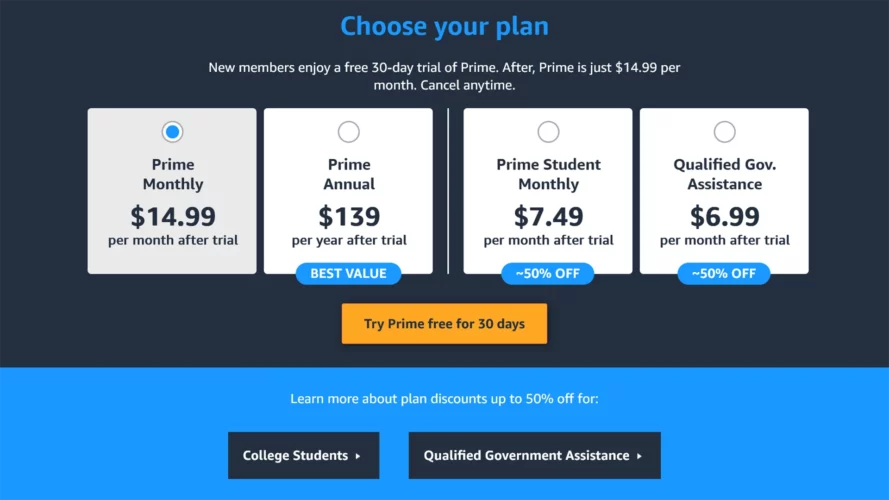
The most immediate and obvious financial benefit of Prime Student is its reduced cost compared to a standard Amazon Prime membership. For a student, this discount is not just a perk; it represents a significant saving that can be reallocated to other essential expenses like textbooks, tuition, or living costs. Amazon leverages this financial incentive to attract and retain a future generation of customers, making the initial outlay considerably more palatable for those on a tight budget. This upfront saving is the cornerstone of its appeal within the student financial ecosystem, directly addressing the primary concern of “how much.”
Beyond the Discount: Financial Benefits Embedded in Services
While the reduced subscription fee is a critical starting point, the financial advantages of Prime Student extend much deeper into the fabric of its included services. Each component, from shipping to entertainment, offers opportunities for direct and indirect monetary savings.
-
Free and Fast Shipping: The cost of shipping, especially for frequent online shoppers, can quickly accumulate. Prime Student eliminates these costs entirely for eligible items, offering not just free but often expedited delivery. For a student needing supplies for a project, a last-minute textbook, or personal items, this saves not only shipping fees but potentially prevents emergency, higher-cost purchases from local stores if online options are unavailable or too slow. The convenience also translates to a saving of time and transportation costs (gas, public transport fares) that would otherwise be spent travelling to physical stores.
-
Prime Video and Music: Entertainment subscriptions can be a substantial drain on a student’s budget. Prime Video provides a vast library of movies and TV shows, potentially negating the need for separate streaming services. Similarly, Prime Music offers ad-free listening. By bundling these services, Prime Student allows students to consolidate their entertainment spending, effectively getting multiple services for the price of one discounted membership. The financial calculation here is clear: subscribing to Prime Student can offset the cost of one or more standalone entertainment platforms.
-
Prime Reading and Textbook Savings: For a student, academic materials are a recurrent and often exorbitant expense. Prime Reading offers access to a rotating selection of free eBooks, magazines, and comics. More importantly, Amazon’s broader ecosystem often provides competitive pricing on textbooks, and Prime shipping ensures they arrive promptly without additional cost. While Prime Reading isn’t a direct substitute for all textbooks, it contributes to overall content accessibility, potentially reducing the need to purchase certain leisure or supplemental reading materials.
-
Exclusive Deals and Discounts: Prime Student members gain access to exclusive promotions, flash sales, and specific student discounts on a variety of products and services. These aren’t just minor reductions; they can be substantial savings on items relevant to student life, from tech gadgets to clothing. Savvy students who regularly check these deals can recoup a significant portion of their membership cost, or even more, through strategic purchases.
The Trial Period: A Risk-Free Financial Exploration
Amazon offers an exceptionally generous 6-month free trial for Prime Student. From a financial perspective, this is invaluable. It allows students to experience the full breadth of Prime benefits without any upfront monetary commitment. This trial period serves as a practical budgeting tool, enabling students to accurately assess if the subsequent paid membership justifies its cost based on their individual usage patterns and financial situation. It removes the financial risk of subscribing to a service that might not ultimately meet their needs or fit into their budget.
A Detailed Look at Prime Student Pricing Structures
Understanding the exact figures and the mechanisms of payment is crucial for integrating Prime Student into a robust personal financial plan. The structure is designed to be accessible, but knowing the nuances can lead to greater financial efficiency.
The Initial Free Trial: Zero Cost Entry
The initial six-month free trial is the most attractive financial aspect for new student members. During this period, students gain full access to Prime benefits—free shipping, Prime Video, Prime Music, Prime Reading, exclusive deals, and more—at absolutely no charge. This is a deliberate strategy by Amazon to allow students to embed Prime into their daily routines before any financial commitment is required. For budgeting, this means six months of potential savings on shipping, entertainment, and other purchases without impacting a student’s cash flow. It’s an opportunity to collect real-world data on whether the service’s benefits genuinely translate into financial advantages for them.
Post-Trial Subscription Costs: Monthly vs. Annual Savings
Once the free trial concludes, students have two primary payment options, each with distinct financial implications:
-
Monthly Subscription: Currently, the monthly cost for Prime Student is typically around $7.49 (prices can vary and are subject to change by Amazon). This offers flexibility, allowing students to cancel at any time without a long-term commitment. For students with highly variable incomes or those unsure of their long-term need, this pay-as-you-go model provides excellent financial control. However, while flexible, it is the more expensive option over a year.
-
Annual Subscription: The annual cost for Prime Student is generally around $69. This represents a significant discount compared to paying monthly for 12 months ($7.49 x 12 = $89.88). Opting for the annual plan saves students approximately $20-$21 per year. From a pure cost-saving perspective, the annual plan is almost always the more financially prudent choice for students who anticipate using Prime throughout the year. The trade-off is the larger upfront payment, which requires careful budgeting to ensure the funds are available.
Students must weigh their financial stability and predicted usage against the convenience of monthly payments versus the savings of an annual commitment. For many, the annual saving makes a compelling case for the upfront payment.
The Transition: From Student to Standard Prime Membership
Amazon Prime Student is typically available for up to four years, or until the student graduates, whichever comes first. After this period, or upon graduation, the membership automatically converts to a standard Amazon Prime membership, which is significantly more expensive (currently around $14.99/month or $139/year). This automatic conversion is a critical financial detail that students must be aware of. Failing to cancel or reassess the membership before this transition can lead to unexpected charges at a higher rate. It underscores the importance of regularly reviewing all subscriptions and budgeting accordingly, even after the student phase. Smart financial planning includes setting reminders for this transition well in advance.
Payment Methods and Financial Flexibility
Amazon accepts various payment methods, including credit cards, debit cards, and Amazon gift cards. For students, the choice of payment method can have minor financial implications:
-
Credit Cards: While convenient, students should use credit cards responsibly to avoid debt. If used strategically (e.g., to earn rewards without carrying a balance), they can offer minor benefits.
-
Debit Cards: Directly linked to a bank account, debit cards ensure spending doesn’t exceed available funds, a crucial control for tight student budgets.
-
Amazon Gift Cards: Students receiving gift cards can use them to offset the cost of their Prime membership or purchases, effectively reducing the out-of-pocket expense from their primary budget.
The key takeaway is that Amazon offers enough flexibility to accommodate different financial management styles, but proactive monitoring of payments remains paramount.
Maximizing the Financial Value of Your Prime Student Membership
Simply subscribing to Prime Student isn’t enough; true financial wisdom lies in actively leveraging its full spectrum of benefits to extract maximum monetary value. This involves a conscious strategy to integrate Prime services into daily life in ways that reduce other expenditures.
Leveraging Free Shipping for Budgetary Control
The most direct and frequently utilized financial benefit is free shipping. To maximize this:
-
Consolidate Purchases: Instead of multiple small orders, plan and consolidate purchases to ensure you’re always hitting the “free shipping” threshold for items not explicitly marked as Prime eligible, or simply to reduce the number of individual transactions.
-
Avoid Impulse Buys: While free shipping might tempt more frequent ordering, a smart student will use it to replace higher-cost alternatives (like urgent store visits or paid express shipping elsewhere) rather than increase overall spending.
-
“Subscribe & Save” Integration: Combine Prime shipping with Amazon’s “Subscribe & Save” program for essential items (toiletries, snacks, certain academic supplies). This offers additional percentage discounts on recurring deliveries, multiplying the savings.
Cutting Entertainment Costs with Prime Video and Music
With Prime Video and Prime Music included, students have a powerful tool to trim their entertainment budget:
-
Prioritize Prime: Before subscribing to Netflix, Spotify, Hulu, or other streaming services, fully explore the content available on Prime Video and Music. You might find your needs are sufficiently met, eliminating the need for additional subscriptions.
-
Share Responsibly (Where Allowed): In some cases, Prime household sharing options might allow a student to share certain benefits with family members, potentially leading to shared cost savings within a household unit, though specific rules apply.
Accessing Exclusive Deals and Student-Specific Discounts
Active engagement with Amazon’s promotional landscape is key to unlocking additional savings:
-
Monitor “Deals of the Day” and Prime Member Deals: Regularly check Amazon’s deal pages. Prime members often get early access or exclusive discounts on popular items.
-
Utilize Student-Specific Offers: Beyond the core Prime benefits, Amazon often partners with other companies to offer specific discounts to Prime Student members on software, travel, and other services. Keeping an eye on emails and the Prime Student landing page can reveal significant financial opportunities.
-
Amazon Warehouse and Renewed: Combine Prime’s free shipping with Amazon’s Warehouse Deals (open-box, used) or Amazon Renewed (refurbished) products. These items are often significantly discounted, and Prime shipping makes them even more appealing.
Utilizing Prime Reading and Textbook Rentals for Academic Savings
Prime can be an academic money-saver:
-
Explore Prime Reading for Supplementals: Before buying a leisure book or an introductory text, check if it’s available through Prime Reading.
-
Consider Textbook Rentals: Amazon offers textbook rentals, and Prime shipping can reduce the overall cost by eliminating delivery fees, making rentals a more cost-effective alternative to purchasing new textbooks.
Budgeting for Amazon Prime Student: A Student’s Financial Guide
Integrating any subscription, even a discounted one, into a student budget requires careful planning and a realistic assessment of needs.
Assessing Your Needs vs. Wants
Before committing to Prime Student, conduct an honest audit of your consumption habits:
-
How often do you order online? If infrequently, the shipping benefits might not justify the cost.
-
How much entertainment do you consume? If you already have multiple streaming services and prefer them, Prime Video might be redundant.
-
Do you genuinely utilize the exclusive deals? Or do they simply tempt you to spend more?
-
What are your alternatives? Can you get books from the library? Can you carpool for errands to avoid shipping?
This self-assessment will help determine if Prime Student is a genuine financial helper or an additional discretionary expense.
Incorporating Prime Student into Your Monthly Budget
If you decide Prime Student is a worthwhile investment, factor it explicitly into your budget:
-
Monthly Plan: Dedicate a specific line item in your monthly budget for the $7.49 fee.
-
Annual Plan: Divide the $69 annual fee by 12 to determine its effective monthly cost (approx. $5.75) and save that amount each month. Alternatively, plan for the full $69 payment during a month when funds are more readily available (e.g., after receiving financial aid or a student loan disbursement).
-
Track Savings: Consciously track the money you save on shipping, other subscriptions, and deals. This reinforces the value and justifies the expense.
Comparing Prime Student with Alternative Services
A financially savvy student doesn’t just evaluate Prime in isolation but compares it against other options:
-
Competitor Shipping Programs: Do other retailers you frequently use offer their own student discounts or free shipping tiers that could serve your needs?
-
Standalone Entertainment Subscriptions: Is subscribing to a single, specialized streaming service more cost-effective if Prime Video’s library doesn’t align with your specific tastes?
-
Local Libraries and Second-Hand Markets: For books and movies, your local library or second-hand stores offer free or very low-cost alternatives.
A cost-benefit analysis will help identify the most financially efficient path for your unique needs.
The Long-Term Financial Perspective: Is it Worth It?
Ultimately, the “worth” of Prime Student is subjective and tied directly to individual usage and financial context. For a student who regularly shops on Amazon, utilizes Prime Video, and takes advantage of deals, the annual savings on shipping alone can quickly offset the membership cost. When combined with entertainment and other benefits, it can become a significant money-saver. However, for a student who rarely orders online and has minimal interest in the bundled services, even the discounted rate might be an unnecessary drain on limited funds. The true worth comes from active utilization and the replacement of higher-cost alternatives, not merely from having the subscription.
The Financial Impact of Prime Student Beyond Direct Savings
The monetary benefits of Prime Student extend beyond straightforward discounts and avoided costs. There are subtle, yet significant, financial impacts related to convenience, decision-making, and financial literacy.
Convenience as a Financial Multiplier (Time Saved = Money Saved)
While often overlooked in direct financial calculations, time has a monetary value, especially for busy students. The convenience of Prime’s fast, free shipping means:
-
Reduced Travel Costs: Fewer trips to physical stores save on gas, public transport fares, and wear-and-tear on vehicles.
-
Increased Productivity: Time saved from shopping or traveling can be reallocated to studying, working a part-time job, or other income-generating activities. For a student balancing academics and a job, this efficiency is a powerful financial tool.
-
Avoidance of Emergency Spending: Having items delivered quickly can prevent last-minute, higher-priced purchases from convenience stores when an essential item runs out.
These indirect savings, while harder to quantify, contribute significantly to a student’s overall financial well-being and stress reduction.
Reducing Impulse Purchases vs. Planned Savings
Prime Student presents a dual edge when it comes to impulse buying:
-
Risk of Increased Spending: The ease of “1-Click” ordering and free shipping can lower the psychological barrier to making frequent, small purchases, potentially leading to increased overall spending if not managed.
-
Opportunity for Planned Savings: Conversely, for the disciplined student, Prime allows for careful planning. One can add items to a wish list, wait for deals, and then purchase them with free shipping, avoiding the urgency and higher prices of physical stores. It supports a strategy of “buying what you need, when you need it, at the best price,” rather than succumbing to immediate gratification at a higher cost.

Building Financial Literacy Through Subscription Management
Engaging with a service like Prime Student, especially through its trial, transition, and renewal phases, offers a practical lesson in personal finance:
-
Evaluating Value: It teaches students to critically assess whether a service’s benefits justify its cost.
-
Budgeting for Subscriptions: It forces students to incorporate recurring expenses into their financial planning.
-
Understanding Auto-Renewal: It highlights the importance of tracking subscription end dates and understanding auto-renewal policies to avoid unwanted charges.
-
Cost-Benefit Analysis: It provides a real-world scenario for performing cost-benefit analyses when choosing between different service tiers (monthly vs. annual) or alternative providers.
In essence, navigating the financial landscape of Amazon Prime Student is more than just knowing “how much it costs”; it’s an exercise in practical financial management that equips students with valuable skills for their future economic lives. It can be a powerful tool for savings and convenience, provided it’s approached with a strategic, budget-conscious mindset.
aViewFromTheCave is a participant in the Amazon Services LLC Associates Program, an affiliate advertising program designed to provide a means for sites to earn advertising fees by advertising and linking to Amazon.com. Amazon, the Amazon logo, AmazonSupply, and the AmazonSupply logo are trademarks of Amazon.com, Inc. or its affiliates. As an Amazon Associate we earn affiliate commissions from qualifying purchases.