
Amazon Prime is more than just a subscription service; it’s a global phenomenon that has profoundly reshaped e-commerce, digital entertainment, and even consumer expectations. For Amazon, it’s a critical financial engine, a loyalty program on steroids, and a sophisticated strategy to entrench customers deeper into its sprawling ecosystem. The question “how many Amazon Prime members are there?” isn’t merely a point of curiosity; it’s a gateway to understanding a monumental financial success story, a powerful lever in Amazon’s business finance, and a significant consideration in the personal finance decisions of millions worldwide.

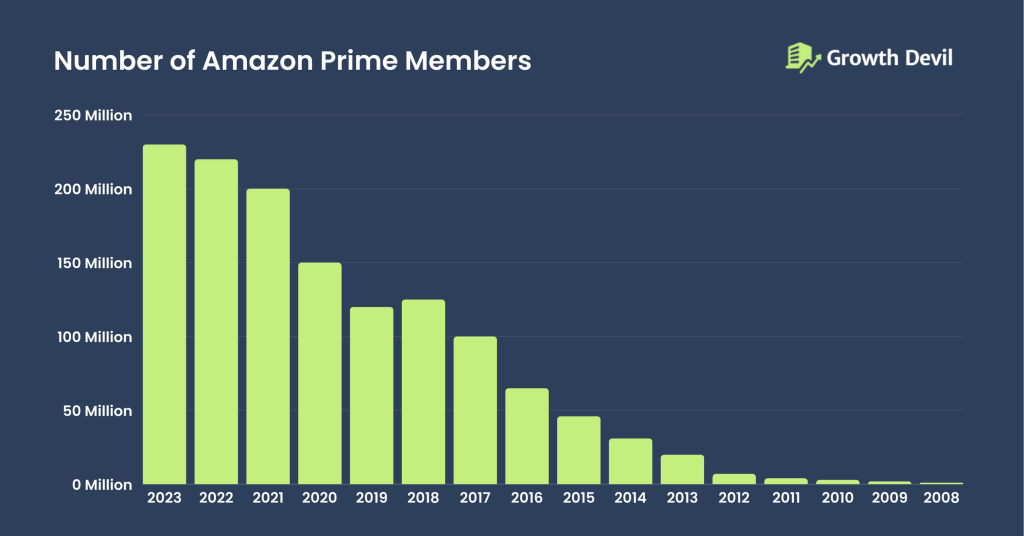
While Amazon is notoriously guarded about specific, up-to-the-minute global Prime subscriber numbers, especially outside of its most recent updates, the general trajectory and scale are breathtaking. The company last explicitly disclosed a global figure in April 2021, stating it had surpassed 200 million paid Prime members worldwide. This milestone underscored a remarkable period of growth, particularly through the pandemic-driven surge in online shopping and streaming. Since then, industry analysts and financial reports have consistently pointed towards continued, albeit perhaps slower, expansion. Estimates frequently place the current global membership well beyond the 200-million mark, potentially nearing 250 million or more, though these are projections based on market trends and Amazon’s reported subscription service revenues. This immense user base is not just a vanity metric; it represents a vast, committed customer segment whose engagement translates directly into revenue streams that are foundational to Amazon’s continued dominance and financial health.
The Astonishing Scale of Prime’s Membership Base
The sheer volume of Amazon Prime subscribers worldwide is a testament to the program’s perceived value and Amazon’s unparalleled market penetration. Far from being a niche offering, Prime has become a staple in many households, transforming from a simple shipping perk into a comprehensive lifestyle subscription.
Global Reach and Subscriber Growth Trajectory
Amazon’s journey to 200 million+ Prime members has been nothing short of extraordinary. Launched in 2005, the service initially offered unlimited two-day shipping for an annual fee. Its growth was steady but truly accelerated as Amazon began bundling an ever-expanding array of benefits, including Prime Video, Prime Music, exclusive deals, and more. This strategy turned Prime into an almost indispensable offering for many consumers. The COVID-19 pandemic provided an unprecedented boost, as lockdowns forced consumers online for both necessities and entertainment, driving millions of new subscribers to Prime. This period highlighted Prime’s resilience and adaptability, demonstrating its capacity to absorb massive increases in demand for both physical goods delivery and digital content consumption. The growth trajectory, while likely moderating from its pandemic peak, continues as Amazon penetrates new international markets and refines its offerings to remain relevant and attractive to diverse consumer segments. Each new market presents a fresh opportunity to replicate its proven subscription model, adapting local content and delivery options to capture a significant share of that region’s e-commerce and digital entertainment spending.
Key Demographics and Market Penetration
In its primary market, the United States, Prime membership penetration is remarkably high. Various independent surveys consistently indicate that over 70% of U.S. households subscribe to Prime, translating to well over 150 million individual members within the U.S. alone. This level of market saturation is unparalleled by almost any other subscription service and speaks volumes about Prime’s integration into daily American life. Globally, while penetration rates vary significantly by country depending on local competition, infrastructure, and consumer habits, Amazon strategically targets affluent, digitally savvy populations who value convenience and a wide selection. Demographically, Prime members tend to be higher-income earners, often families, who are frequent online shoppers. This demographic profile is incredibly valuable from a business finance perspective, as these members not only pay subscription fees but also tend to spend significantly more on Amazon’s platform than non-Prime customers. This deep penetration among a desirable demographic underscores Prime’s role as a powerful customer acquisition and retention tool.
Prime as a Financial Pillar for Amazon
The staggering number of Prime members isn’t just a marketing success story; it’s a colossal financial asset for Amazon, underpinning multiple revenue streams and bolstering its market valuation. Understanding Prime’s financial impact is crucial to comprehending Amazon’s broader business finance strategy.
Direct Revenue from Subscriptions
The most direct financial benefit from Prime membership is the recurring subscription revenue. With millions of members paying annual or monthly fees (e.g., $139/year or $14.99/month in the U.S.), the cumulative sum is immense. Even at conservative estimates of average annual fees across different geographies, Prime subscriptions generate tens of billions of dollars in revenue for Amazon each year. This is a highly predictable and recurring revenue stream, offering stability and predictability that is highly valued by investors. Unlike volatile advertising or product sales, subscription revenue provides a consistent financial base, allowing Amazon to invest heavily in its logistics, technology, and content creation, knowing it has a steady cash flow from its loyal member base. This financial predictability is a cornerstone of Amazon’s robust balance sheet and investment capacity.
The Halo Effect: Boosting E-commerce and Ecosystem Engagement
Beyond direct subscription fees, the true financial power of Prime lies in its “halo effect.” Prime members are significantly more engaged with the Amazon ecosystem than non-Prime customers. They shop more frequently, spend more money per transaction, and are more likely to utilize other Amazon services. The “free” shipping, a core Prime benefit, removes the psychological barrier of additional costs, encouraging more frequent purchases. Furthermore, the bundled services like Prime Video, Prime Music, and Twitch Prime keep members engaged with the Amazon brand, reducing their likelihood of switching to competitors. This increased engagement drives higher sales across Amazon’s vast product categories, boosts advertising revenue (as more eyes are on Amazon’s platform), and feeds data into its recommendation engines, further personalizing the shopping experience and driving future purchases. From a business finance perspective, Prime acts as a powerful customer lifetime value (CLTV) accelerator, maximizing the revenue generated from each customer over their entire relationship with Amazon.
Investor Perspective: Valuation and Future Growth
For investors, Prime membership numbers are a critical metric. A large, growing, and highly engaged Prime subscriber base signals robust customer loyalty, predictable revenue streams, and significant cross-selling opportunities across Amazon’s diversified businesses, including retail, advertising, and even AWS (indirectly, through data and content delivery needs). This translates directly into a higher market valuation for Amazon. Investors view Prime as a long-term strategic asset that insulates Amazon from competition and provides a platform for future growth initiatives. The ability to continually add value to Prime, whether through new services, content, or exclusive deals, ensures its continued relevance and ability to attract and retain members, thereby safeguarding Amazon’s future financial performance. The recurring revenue from subscriptions, combined with the exponential increase in purchasing behavior, makes Prime a cornerstone of Amazon’s financial success and a key driver of its stock performance.
The Value Proposition: Is Prime Still Worth the Investment?
From a personal finance perspective, the question for millions of consumers annually revolves around whether the cost of a Prime membership justifies its benefits. The answer often depends on individual usage patterns and how deeply one integrates Amazon into their daily life.
Cost-Benefit Analysis for Consumers
At its core, a Prime membership is a financial investment by the consumer. The annual or monthly fee must be weighed against the perceived savings and convenience. For frequent online shoppers, especially those who often rely on expedited shipping, the “free” two-day (or even same-day) delivery alone can easily offset the annual cost. Beyond shipping, the bundled services represent significant value. Access to a vast library of movies and TV shows via Prime Video, ad-free music streaming, unlimited photo storage, and exclusive deals could, if purchased separately, far exceed the Prime membership fee. For a household that actively uses several of these benefits, Prime can represent substantial savings compared to subscribing to multiple individual services. However, for infrequent shoppers or those who primarily use competing streaming services, the financial calculus might shift, making the membership a less compelling proposition.
Evolving Perks and Hidden Savings
Amazon consistently adds and refines Prime benefits, often without increasing the core subscription price for extended periods. Recent additions have included grocery delivery benefits, prescription savings, and exclusive early access to deals. These evolving perks contribute to the overall value proposition, often providing “hidden savings” that members might not explicitly track but which collectively enhance the financial benefit. For example, the convenience of grocery delivery can save time and gas money, while prescription discounts can directly reduce healthcare costs. The aggregation of these benefits, many of which cater to diverse household needs, aims to make Prime indispensable, making it harder for members to justify canceling even if their primary use case (like shipping) somewhat diminishes.
The Psychology of “Free” Shipping and Bundled Services
A significant aspect of Prime’s success, both from a business and personal finance standpoint, lies in the psychology of “free” shipping. Once the annual fee is paid, the perceived cost of shipping for individual items vanishes. This encourages more frequent, smaller purchases, as consumers no longer aggregate items to reach a free shipping threshold. This psychological effect can lead to increased spending on Amazon, even as it provides convenience. Similarly, bundled services create a “stickiness” effect. Having access to streaming video, music, and other benefits makes the membership feel more comprehensive and valuable, encouraging retention. From a consumer’s financial planning perspective, consolidating various entertainment and shopping needs under one umbrella payment simplifies budgeting and offers a sense of getting more for their money, even if it ties them more closely to a single retailer.
Amazon’s Financial Strategy for Prime’s Future
Maintaining and growing a membership base of this magnitude requires a sophisticated and continuously evolving financial strategy. Amazon views Prime not just as a revenue generator but as a central pillar of its long-term financial health and market leadership.
Retention and Acquisition: Maintaining the Momentum
Amazon’s strategy is dual-focused: aggressively acquiring new members while meticulously retaining existing ones. Acquisition often involves enticing trial periods, special promotions, and leveraging major shopping events like Prime Day. Retention, however, is where the long-term financial value is truly realized. Amazon invests heavily in continuously enhancing Prime benefits, ensuring the value proposition remains compelling. This includes exclusive content for Prime Video, expanding faster shipping options, and personalized deals. The goal is to make Prime so integral to a member’s life that the thought of canceling becomes financially illogical due to the perceived loss of benefits. Data analytics play a crucial role, allowing Amazon to understand member behavior, predict churn risk, and tailor retention efforts, thereby protecting its recurring revenue streams.
International Expansion and Localized Offerings
While highly saturated in markets like the U.S., there remains significant room for Prime to grow internationally. Amazon’s financial strategy includes significant investment in expanding Prime’s availability and tailoring its offerings to local tastes and infrastructure. This means developing localized content for Prime Video in India, building robust delivery networks in emerging markets, and adapting payment methods to suit regional preferences. These investments are costly in the short term but promise substantial long-term returns by tapping into new, large customer bases. Successful international expansion is key to Prime’s continued growth beyond its established strongholds, ensuring the global subscriber count continues its upward trajectory and diversified revenue streams.

Diversifying Value Beyond Shipping and Streaming
Looking ahead, Amazon’s financial strategy for Prime will likely involve further diversification of its value proposition. While shipping and streaming remain core, the company is exploring new avenues to embed Prime into more aspects of members’ lives. This could include deeper integrations with smart home devices, enhanced financial services benefits (e.g., specific discounts or rewards for using Amazon’s payment solutions), or even unique experiences. The objective is to continually raise the perceived value of Prime without necessarily increasing the subscription fee proportionally, making it an even more indispensable part of a household’s financial ecosystem. This strategy aims to solidify Prime’s position as the ultimate bundle, driving sustained financial growth and cementing Amazon’s relationship with its global customer base.
In conclusion, the question of “how many Amazon Prime members are there?” unravels a story of unprecedented financial success and strategic brilliance. With hundreds of millions of subscribers globally, Prime represents a multi-billion dollar recurring revenue stream, a powerful driver of e-commerce sales, and a critical determinant of Amazon’s market valuation. From a personal finance perspective, it offers a bundle of convenience and entertainment that, for many, justifies the annual investment. As Amazon continues to innovate and expand its offerings, Prime remains a formidable financial powerhouse, continually shaping the landscape of digital commerce and consumer finance worldwide.
aViewFromTheCave is a participant in the Amazon Services LLC Associates Program, an affiliate advertising program designed to provide a means for sites to earn advertising fees by advertising and linking to Amazon.com. Amazon, the Amazon logo, AmazonSupply, and the AmazonSupply logo are trademarks of Amazon.com, Inc. or its affiliates. As an Amazon Associate we earn affiliate commissions from qualifying purchases.