
The question “what banks are credit unions” often arises from a common misconception that these two types of financial institutions are interchangeable, or perhaps that one is a subset of the other. While both banks and credit unions serve the vital function of managing money, facilitating transactions, and providing loans, they are fundamentally distinct entities with different structures, ownership models, and underlying philosophies. Understanding these core differences is crucial for anyone navigating the financial landscape, whether you’re a first-time account holder, a seasoned investor, or a small business owner. This article delves deep into the defining characteristics of banks and credit unions, highlighting their respective advantages and helping you make informed decisions about where to entrust your finances.
The Fundamental Distinction: Ownership and Mission
At the heart of differentiating banks from credit unions lies their foundational structure: who owns them and what primary mission drives their operations. This distinction is not merely semantic; it profoundly impacts everything from fee structures and interest rates to customer service and community engagement.
For-Profit vs. Not-for-Profit Structures
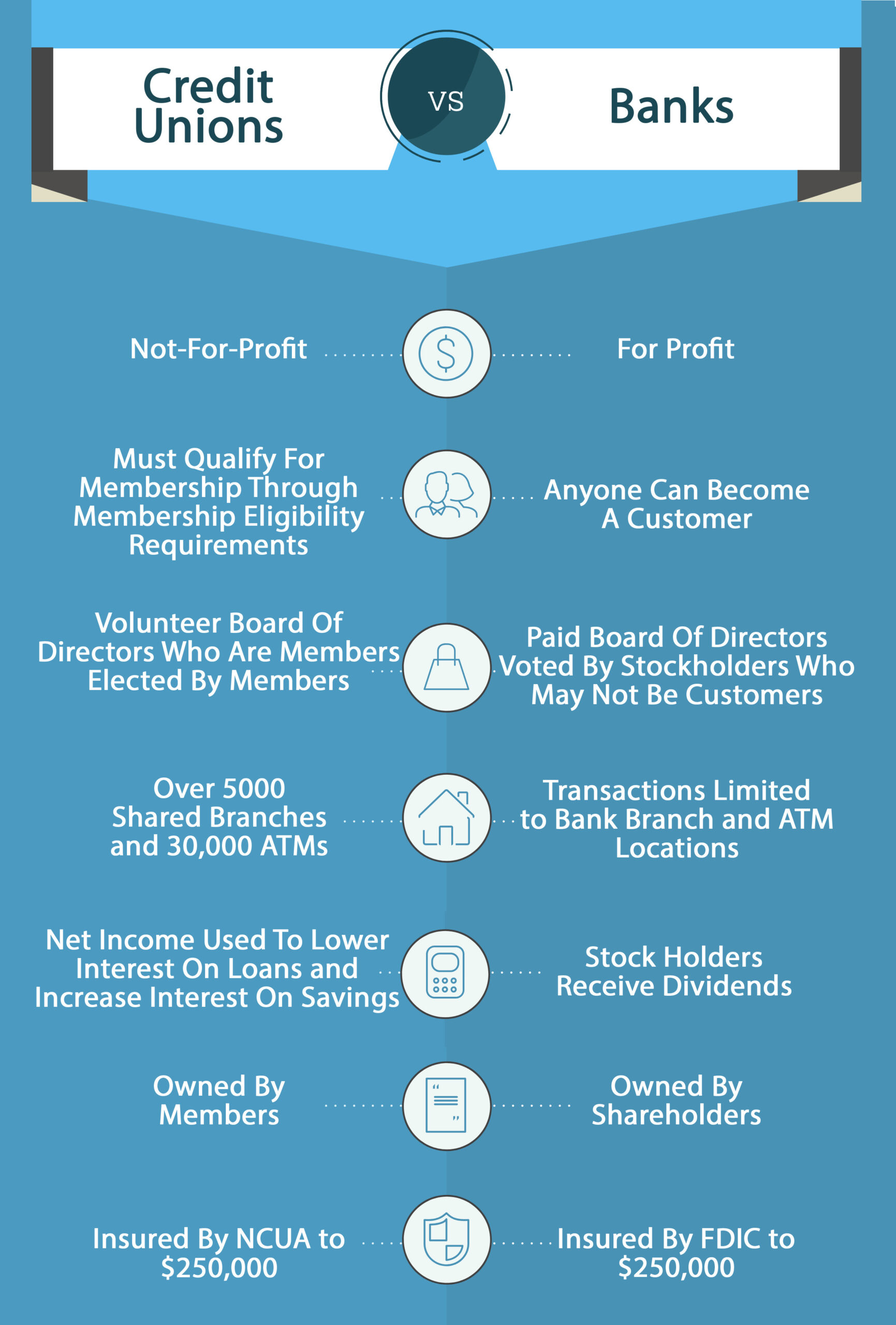
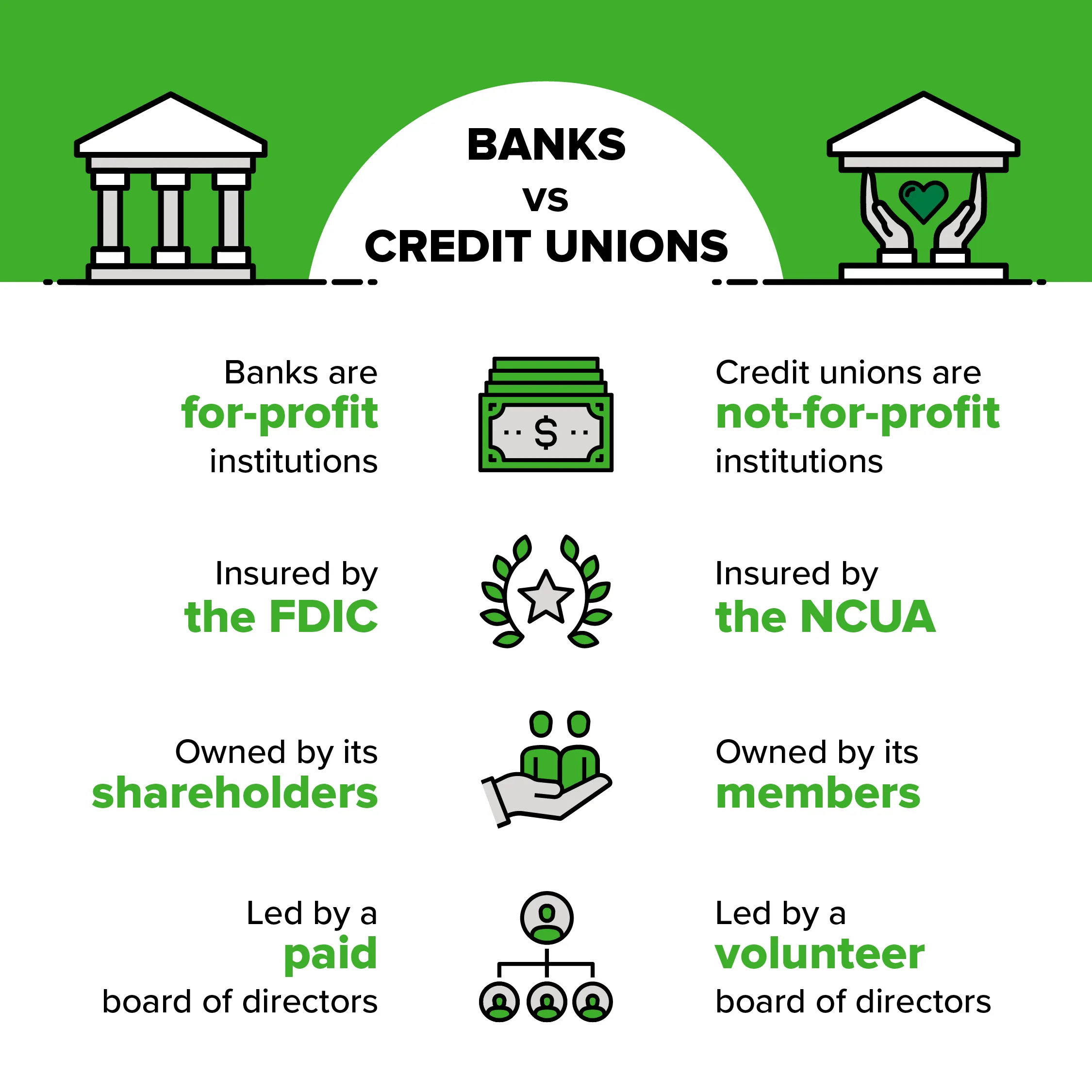
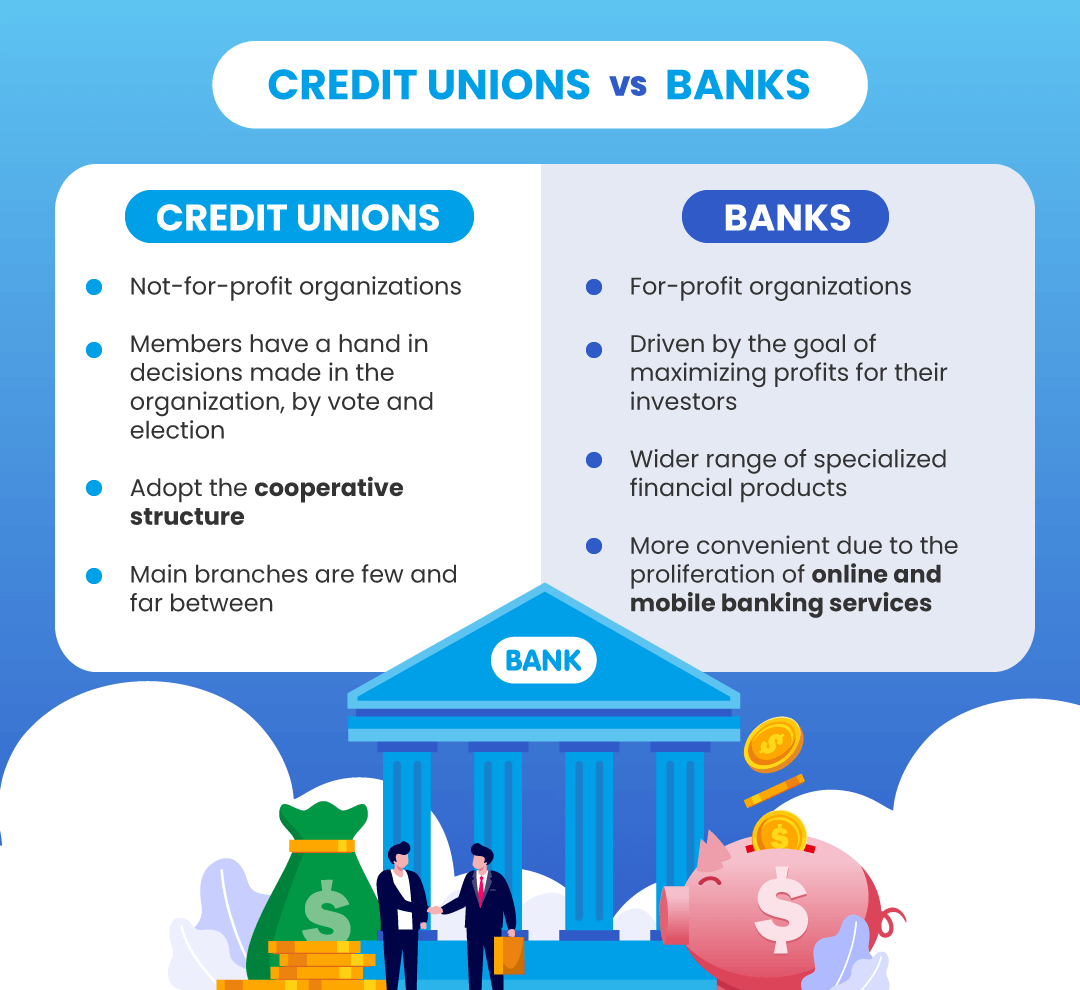
The most significant divergence between banks and credit unions is their organizational structure. Banks are typically for-profit corporations. This means they are owned by shareholders and their primary objective is to generate profits for those shareholders. Every decision, from setting interest rates on loans to charging fees for services, is ultimately aimed at maximizing shareholder returns. Publicly traded banks, in particular, are under constant pressure from the stock market to demonstrate profitability and growth. This doesn’t inherently make them “bad,” but it shapes their operational priorities.
Credit unions, conversely, are not-for-profit financial cooperatives. They are owned and controlled by their members—the very people who deposit money, take out loans, and utilize their services. Because there are no external shareholders to satisfy, credit unions’ primary objective is to serve the financial needs of their members. Any “profits” (or surplus earnings) are typically reinvested into the credit union to provide better rates, lower fees, enhanced services, or returned to members in the form of dividends. This fundamental difference in profit motive creates a vastly different operational ethos.
Member-Centric vs. Shareholder-Driven Focus
This structural difference naturally leads to distinct operational focuses. For credit unions, the “member-centric” approach is paramount. Decisions are often made with the collective benefit of the membership in mind. This translates to a focus on providing competitive interest rates on savings, lower interest rates on loans, and often fewer or lower fees compared to traditional banks. The philosophy is often summarized as “people helping people,” emphasizing community and mutual support over pure financial gain. Members typically have a say in the credit union’s governance through elected boards of directors.
Banks, being “shareholder-driven,” prioritize the financial health and growth of the institution for its investors. While they certainly aim to provide excellent service to attract and retain customers, their ultimate obligation is to their shareholders. This can manifest in more aggressive fee structures, higher interest rates on loans, and potentially less flexibility in certain financial products, all designed to bolster the bottom line. Their customer service model is often excellent, but it operates within the framework of maximizing shareholder value.
Who Owns What?
To reiterate, banks are owned by a combination of public shareholders (if publicly traded) and private investors. These owners appoint a board of directors who oversee management and ensure the bank operates profitably. The average customer is merely a client, with no ownership stake.
Credit unions are democratically owned by their members. When you open an account at a credit union, you typically become a part-owner, usually by purchasing a small, nominal share (e.g., $5 or $25). This share grants you voting rights in the credit union’s annual meetings and the ability to elect the volunteer board of directors from among the membership. This direct ownership provides members with a voice in how the institution is run, fostering a strong sense of community and shared purpose.
Understanding Banks: A Deeper Dive
Banks represent the more traditional and generally larger segment of the financial services industry. They play an indispensable role in the global economy, providing a wide array of services to individuals, businesses, and governments alike.
Types of Banks: Commercial, Investment, and Retail
The term “bank” encompasses a broad spectrum of institutions, each specializing in different aspects of finance:
-
Retail Banks: These are the most common type, serving individual consumers with services like checking and savings accounts, personal loans, mortgages, and credit cards. They often have extensive branch networks and ATMs.
-
Commercial Banks: While retail banks often serve small businesses, commercial banks primarily focus on corporations and larger enterprises. They offer business loans, lines of credit, treasury management, and other specialized services designed to meet corporate financial needs. Many large banks operate both retail and commercial divisions.
-
Investment Banks: These institutions specialize in complex financial transactions for corporations and governments, such as underwriting new stock and bond issues, facilitating mergers and acquisitions, and providing financial advisory services. They typically do not serve individual consumers directly in the same way retail banks do.
-
Central Banks: Independent governmental institutions (like the Federal Reserve in the U.S.) that manage a nation’s currency, money supply, and interest rates. They regulate commercial banks and ensure the stability of the financial system.
How Banks Generate Revenue and Their Offerings
Banks generate revenue primarily through several key avenues:
-
Net Interest Margin (NIM): This is the difference between the interest they earn on loans and investments (e.g., mortgages, business loans) and the interest they pay on deposits (e.g., savings accounts, CDs). This is usually their largest source of income.
-
Fees: Banks charge various fees for services, including ATM fees, overdraft fees, monthly maintenance fees, wire transfer fees, and late payment fees on loans or credit cards.
-
Investment Income: Profits from their own investments in securities and other financial instruments.
-
Service Charges: Fees for specialized services like wealth management, trust services, and international transactions.
Their offerings are comprehensive, typically including:
-
Checking and savings accounts
-
Certificates of Deposit (CDs)
-
Personal and business loans
-
Mortgages and home equity lines of credit
-
Credit cards
-
Investment products (through affiliated brokerages)
-
Online and mobile banking platforms
-
Wire transfers and bill pay services
Regulatory Oversight and Consumer Protection
Banks operate under stringent regulatory oversight, primarily to ensure financial stability, protect consumers, and prevent illicit activities. In the United States, federal agencies like the Federal Reserve (the Fed), the Office of the Comptroller of the Currency (OCC), and the Federal Deposit Insurance Corporation (FDIC) supervise banks. The FDIC insures deposits up to $250,000 per depositor, per institution, in each ownership category, providing a critical layer of security for bank customers. State banking departments also regulate state-chartered banks. This robust regulatory framework is designed to build and maintain public trust in the banking system.
Understanding Credit Unions: A Deeper Dive
Credit unions emerged as a response to the need for accessible, affordable financial services for communities and groups underserved by traditional banks. Their cooperative nature sets them apart, fostering a unique relationship with their members.
The Cooperative Model and Membership Eligibility
Credit unions operate on a cooperative model, where members pool their money to provide loans and other financial services to each other. This model is rooted in the principle of mutual self-help. Unlike banks, membership in a credit union is not open to just anyone. Instead, credit unions define a “field of membership” based on common bonds. This bond can be:
-
Geographic: Living, working, or worshipping in a specific town, county, or region.
-
Employer-based: Being an employee or retiree of a particular company or organization.
-
Association-based: Belonging to a specific association, church, school, or labor union.
-
Family-based: Being related to an existing member.
Once you meet the eligibility criteria and open an account (often with a small, symbolic deposit to establish your share), you become a member and an owner. This membership typically grants you access to all the credit union’s services and the right to vote in its governance.
Services and Financial Products Offered
Credit unions offer a similar range of products and services to banks, often with more favorable terms due to their not-for-profit status:
-
Savings Accounts: Often referred to as “share accounts,” these are the foundational accounts.
-
Checking Accounts: Known as “share draft accounts.”
-
Loans: Personal loans, auto loans, mortgages, student loans, and small business loans, frequently with lower interest rates than banks.
-
Credit Cards: Often with lower interest rates and fewer fees.
-
Certificates of Deposit (CDs): Known as “share certificates,” often with competitive rates.
-
Online and Mobile Banking: Most credit unions offer robust digital platforms, although their technological offerings might vary more widely than large national banks.
-
Financial Counseling: Many credit unions emphasize financial education and often offer free or low-cost counseling services to members.
Because their goal is to serve members, credit unions are often more willing to work with individuals who might have less-than-perfect credit scores or unique financial situations, striving to find solutions rather than turning them away.
The Credit Union Philosophy: “People Helping People”
The ethos of “people helping people” is central to the credit union movement. This philosophy permeates their operations in several ways:
-
Better Rates and Lower Fees: Without the pressure to generate profits for shareholders, credit unions can pass on their earnings to members in the form of higher interest rates on savings, lower interest rates on loans, and fewer or reduced fees.
-
Personalized Service: Often operating in smaller, community-focused settings, credit unions are known for their personalized customer service. Staff frequently know members by name and can offer more tailored advice.
-
Community Investment: Credit unions often invest directly back into their local communities through financial literacy programs, sponsorships, and support for local charities, aligning with their cooperative mission.
Just like banks, credit unions are federally insured. The National Credit Union Administration (NCUA) is the independent federal agency that charters and supervises federal credit unions and insures deposits up to $250,000 per depositor, per institution, in each ownership category, providing the same level of safety and soundness as the FDIC does for banks.
Key Differences in Practice: What It Means for You
Understanding the theoretical differences between banks and credit unions is important, but what do these distinctions mean for you in your day-to-day financial life? The practical implications can significantly influence your banking experience and financial well-being.
Fees, Interest Rates, and Loan Terms
This is often the most tangible difference for consumers.
-
Fees: Credit unions generally have fewer fees and lower charges than banks. Overdraft fees, monthly maintenance fees, and ATM fees are typically lower or waived for members who meet certain criteria. Banks, needing to generate profit, often rely more heavily on fees as a revenue stream.
-
Interest Rates: Credit unions tend to offer higher interest rates on savings accounts, money market accounts, and certificates of deposit. Conversely, they typically offer lower interest rates on loans, including auto loans, personal loans, and mortgages. Banks’ rates on savings are often lower, and their loan rates can be higher, reflecting their need for profitability.
-
Loan Terms: While both offer flexible terms, credit unions are often perceived as more flexible and understanding, particularly for members with unique financial histories, due to their member-centric approach. They may be more willing to work with members to structure loans that fit individual circumstances.
Accessibility, Branch Networks, and Technology
The landscape of access has evolved dramatically, but some differences persist.
-
Branch Networks: Large national and international banks often boast extensive branch networks and a vast number of proprietary ATMs, making physical access convenient in many locations. Credit unions, especially smaller ones, may have a more limited number of physical branches. However, credit unions have combatted this through shared branching networks, allowing members to conduct transactions at participating credit unions across the country, and through participation in large surcharge-free ATM networks.
-
Technology: Historically, large banks were at the forefront of digital innovation, offering sophisticated online banking, mobile apps, and advanced digital tools. Many credit unions, particularly smaller ones, have caught up significantly, offering competitive digital platforms, but there can still be a disparity in the breadth and sophistication of tech offerings between the largest banks and smaller credit unions. Nevertheless, almost all reputable credit unions now offer essential digital services.
-
Personalization: Credit unions often shine in personalized service. Their staff tend to build closer relationships with members, offering a more bespoke banking experience. While large banks strive for good customer service, the sheer volume of their clientele can sometimes make it feel less personal.
Community Involvement and Local Impact
This is where the philosophical difference truly manifests.
-
Credit Unions: Being rooted in their communities and owned by local members, credit unions often have a deeper commitment to local economic development and social responsibility. They frequently sponsor local events, offer financial literacy workshops, and provide loans to small businesses that might be overlooked by larger institutions. Their profits are reinvested locally or returned to members.
-
Banks: While many large banks have corporate social responsibility programs and philanthropic initiatives, their decisions are ultimately guided by national or international profit motives. Their community involvement, while often substantial, may be less organically tied to the immediate needs of a specific local community compared to a credit union.
Making the Right Choice: Banks vs. Credit Unions
Deciding between a bank and a credit union is not about declaring one inherently superior to the other. Both serve essential financial functions and excel in different areas. The “right” choice depends entirely on your individual financial needs, priorities, and values.
Assessing Your Financial Needs and Priorities
Before choosing, consider what truly matters most to you:
-
Are you looking for the absolute lowest fees and best rates? Credit unions often have an advantage here due to their non-profit structure.
-
Do you value extensive branch networks and a wide array of sophisticated digital tools? Large banks might offer more convenience in these areas, especially if you travel frequently or prefer cutting-edge technology.
-
Is personalized service and a community-oriented approach important to you? Credit unions typically excel in this regard, offering a more intimate banking experience.
-
Do you need specialized financial services, such as complex investment banking or highly specific corporate lending? Large banks are generally better equipped for these specialized needs.
-
How important is your direct voice in the institution’s governance? If having a vote and a sense of ownership appeals to you, a credit union is the clear choice.
Beyond the Basics: Hidden Advantages and Disadvantages
Consider aspects beyond just rates and fees:
-
Credit Union Advantages:
-
Financial Education: Many offer free financial counseling and literacy programs.
-
Flexibility: Potentially more lenient with loan approvals or willing to work with members facing financial hardship.
-
Sense of Community: A stronger feeling of belonging and mutual support.
-
-
Credit Union Disadvantages:
-
Membership Eligibility: You must meet specific criteria.
-
Branch/ATM Access: May be more limited, though shared networks mitigate this.
-
Technology: While vastly improved, some smaller credit unions might lag behind the very largest banks in advanced digital features.
-
-
Bank Advantages:
-
Wider Branch/ATM Networks: Greater physical convenience for some.
-
Advanced Technology: Often pioneers in cutting-edge digital banking.
-
Breadth of Services: A “one-stop shop” for highly complex financial needs.
-
-
Bank Disadvantages:
-
Higher Fees/Lower Rates: Driven by profit motives.
-
Less Personalized Service: Can feel more transactional.
-
Less Direct Control: As a customer, you have no ownership or vote.
-
A Hybrid Approach: Leveraging Both Institutions
It’s also entirely possible, and often beneficial, to utilize both types of institutions. You might, for example:
-
Keep your primary checking and savings accounts at a credit union to benefit from lower fees and better rates, while also enjoying their personalized service.
-
Maintain a secondary account at a large national bank for travel convenience, specialized international services, or access to a particular investment product not offered by your credit union.
-
Obtain a mortgage or auto loan from a credit union due to competitive rates, while managing your investment portfolio with a full-service brokerage affiliated with a bank.
Ultimately, “what banks are credit unions” isn’t a question of identity, but of distinction. They are not the same, but rather two complementary pillars of the financial industry, each offering unique benefits. By understanding their fundamental differences in ownership, mission, and operational practice, you can confidently choose the institution—or combination of institutions—that best aligns with your financial goals and personal values.
aViewFromTheCave is a participant in the Amazon Services LLC Associates Program, an affiliate advertising program designed to provide a means for sites to earn advertising fees by advertising and linking to Amazon.com. Amazon, the Amazon logo, AmazonSupply, and the AmazonSupply logo are trademarks of Amazon.com, Inc. or its affiliates. As an Amazon Associate we earn affiliate commissions from qualifying purchases.