
Understanding when your bank is open is more complex than it once was, transforming from a simple schedule query into a strategic consideration for effective personal and business finance. In today’s dynamic financial landscape, the concept of “bank open” extends far beyond traditional branch operating hours, encompassing a sophisticated ecosystem of digital platforms, automated services, and diverse access points designed to cater to a 24/7 economy. For individuals and businesses alike, mastering this multi-faceted accessibility is crucial for efficient financial management, timely transactions, and leveraging the full spectrum of available banking services.
The Evolving Landscape of Bank Operating Hours
The traditional image of banking involved a trip to a physical branch during a set window of weekday hours. While branch visits remain vital for certain transactions, the operational norms have significantly shifted, influenced by technological advancements, changing consumer behavior, and even global events.
Traditional Branch Banking: A Foundation Undergoing Transformation
Historically, banks operated on a fairly uniform schedule: typically 9:00 AM to 5:00 PM on weekdays, with many offering limited Saturday morning hours, perhaps until 1:00 PM. Sundays and public holidays invariably meant closures. These hours were dictated by a combination of staffing logistics, transaction processing cut-off times, and the prevailing workweek culture. While this core schedule still forms the backbone for many institutions, it’s no longer the sole, or even primary, point of access for most financial tasks.
Factors Influencing Branch Hours in the Modern Era
Several factors now play a role in shaping specific branch hours. Local demand is a significant driver; branches in busy commercial districts might maintain longer hours than those in quieter residential areas. Regional holidays or specific state observances can also lead to variations, impacting transaction processing and customer service availability. Furthermore, individual bank policies can differ significantly. Some institutions might offer extended drive-thru hours, allowing for basic transactions outside standard lobby times, catering to commuters or those with limited mobility. The need for financial institutions to adapt to diverse community needs often results in a patchwork of schedules even within the same bank network.
Post-Pandemic Adjustments: A Catalyst for Change
The global pandemic acted as a powerful accelerant for changes already underway, forcing banks to re-evaluate physical branch operations. Many branches initially reduced hours, shifted to appointment-only services for certain transactions, or even temporarily closed, funnelling customers towards digital channels. While many have returned to more regular schedules, the experience highlighted the resilience and utility of online banking, leading to a sustained increase in digital engagement. This period solidified the trend towards leaner branch operations, with an emphasis on efficiency and strategic resource allocation, often meaning more reliance on self-service options even within the branch environment.
Beyond the Branch: Expanding Access to Financial Services
The question “what time is bank open?” increasingly refers to the availability of services, not just the opening of a physical door. Modern financial management necessitates an understanding of the various channels through which one can access banking facilities, many of which operate outside conventional hours.
Digital Banking: The 24/7 Solution
The cornerstone of modern financial accessibility is digital banking. Online banking portals and mobile applications have fundamentally redefined banking hours, making most routine financial tasks available 24 hours a day, 7 days a week, from virtually anywhere with an internet connection.
-
Online Banking Portals: These web-based platforms allow users to check balances, view transaction history, transfer funds between accounts, pay bills, set up recurring payments, apply for loans, and manage investments. The “open” concept is irrelevant here; these services are continuously available.
-
Mobile Apps: Offering enhanced convenience, mobile banking apps bring the functionality of online banking directly to smartphones and tablets. Features often include mobile check deposit (snapping a photo of a check), peer-to-peer payments, branch/ATM locators, and personalized financial insights, all accessible around the clock.
While transactions initiated digitally can be performed at any time, it’s important to note that processing times for certain transactions (e.g., large transfers, wire transfers, or check deposits) may still adhere to bank business days and cut-off times, impacting when funds become available.
ATMs: Your Always-On Teller
Automated Teller Machines (ATMs) have been a ubiquitous presence for decades, providing essential banking services outside branch hours. They are typically available 24/7, allowing for cash withdrawals, deposits (cash and checks), balance inquiries, and sometimes even fund transfers between linked accounts. Their widespread availability in various locations—bank branches, retail stores, airports—ensures that basic cash management is almost always within reach, offering a vital lifeline when branches are closed.
Customer Service Hotlines: Extending Support Beyond the Lobby
Most major financial institutions operate customer service hotlines with extended hours, and many offer 24/7 support. While complex financial advice or in-person verification might still require a branch visit, these hotlines are invaluable for a wide range of inquiries: reporting lost or stolen cards, resolving transaction disputes, assisting with online banking issues, or providing general account information. This ensures that even when physical locations are closed, urgent issues can often be addressed.
Third-Party Financial Kiosks and Partnerships: Expanding the Perimeter
Beyond the direct channels, some financial services are accessible through third-party partnerships. For instance, some credit unions or smaller banks participate in shared ATM networks, expanding their members’ fee-free access. While less directly related to “bank open” hours, services like cashing checks at certain retailers or utilizing specific payment kiosks can bridge gaps for immediate financial needs, albeit often with associated fees.
Maximizing Your Banking Efficiency: A Strategic Approach
Given the multitude of access points, optimizing your interaction with financial services requires a strategic approach. It’s about matching your financial task with the most appropriate and efficient channel.
Planning Your Branch Visits: When In-Person Is Necessary
Despite the rise of digital banking, certain transactions or discussions necessitate a physical presence. These might include opening complex accounts (e.g., trust accounts), applying for large loans, notarizing documents, setting up business services, or seeking in-depth financial advisory. For such visits, planning is key.
-
Best Times to Visit: Early mornings (shortly after opening) or late afternoons (an hour or two before closing) are often less busy than lunchtime or peak afternoon hours. Mid-week (Tuesday, Wednesday, Thursday) can also be calmer than Mondays or Fridays.
-
Appointments: For significant matters, scheduling an appointment with a specific banker can save considerable time and ensure you receive dedicated attention.
Leveraging Digital Tools for Routine Tasks
For the vast majority of daily financial activities, digital channels are the most efficient. Embrace them for:
-
Payments and Transfers: Bill pay, recurring transfers, and peer-to-peer payments are typically instantaneous or process within one business day via online banking or mobile apps.
-
Balance Checks and Transaction History: Real-time information is always available, aiding in budgeting and expense tracking.
-
Alerts and Notifications: Set up alerts for low balances, large transactions, or incoming deposits to stay informed without constant manual checks.
Verifying Specific Bank Hours: Always Confirm
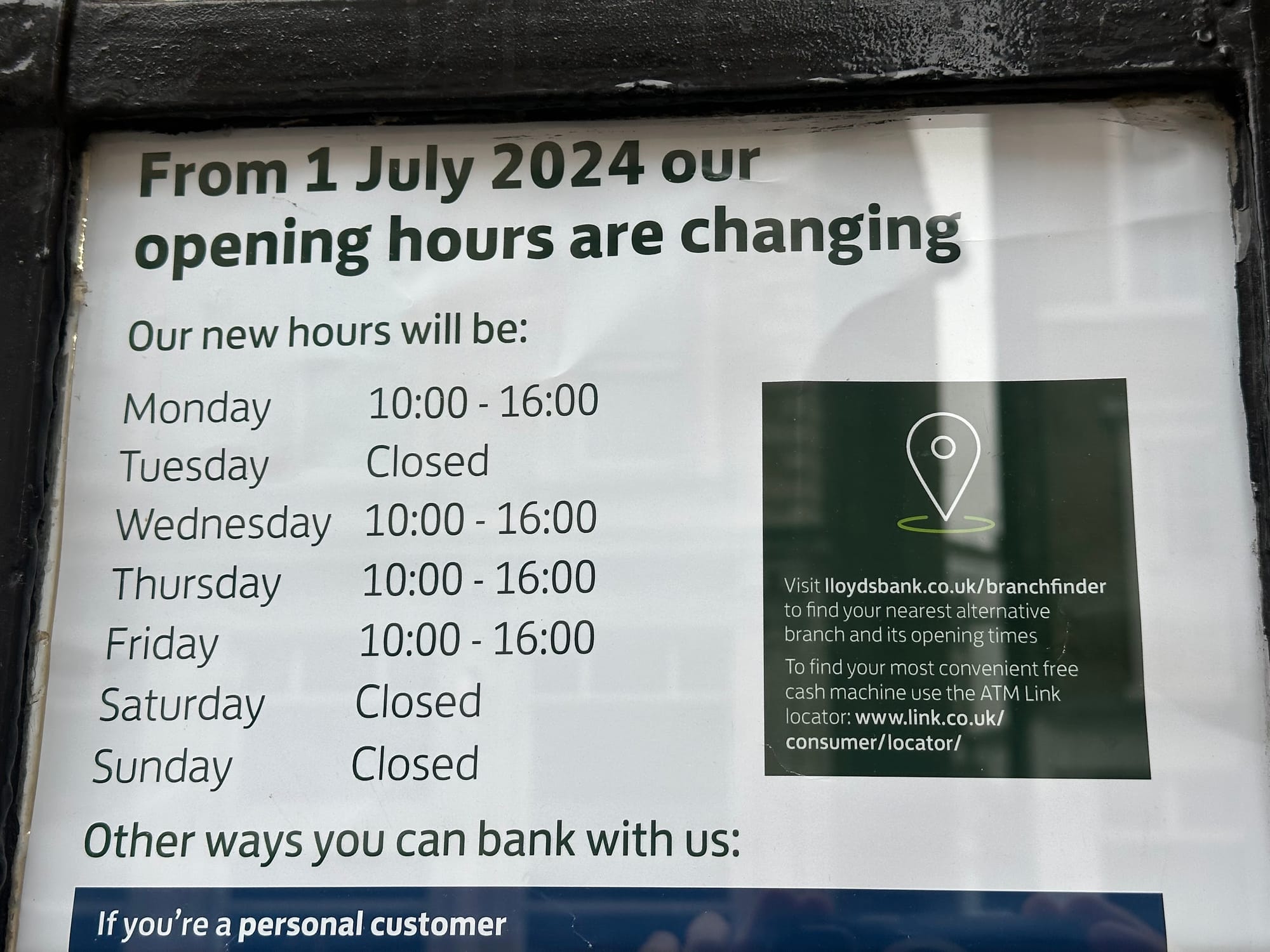
Bank hours, especially for physical branches, can vary by location and time of year (e.g., holiday hours). Before making a trip, always confirm the specific branch hours through official channels:
-
Bank Website: The most reliable source, usually with a branch locator tool.
-
Mobile App: Many apps include a branch and ATM locator with current hours.
-
Phone Call: A direct call to the branch or the bank’s general customer service line can provide up-to-the-minute information.
Impact on Personal and Business Finance
The availability and accessibility of banking services have profound implications for both individual financial well-being and business operational efficiency.
For Individuals: Convenience and Control
Flexible banking hours, whether through extended branch times or 24/7 digital access, empower individuals to manage their finances on their own schedule. This translates to less time lost to bank errands, faster reaction times for urgent transactions (like addressing unexpected bills), and greater control over budgeting and financial planning. The ability to deposit a check via a mobile app at midnight or transfer funds to cover an online purchase avoids overdraft fees and provides peace of mind.
For Small Businesses: Operational Agility and Cash Flow
For small businesses, timely access to banking services is critical for cash flow management, payroll, and daily operations.
-
Deposit Schedules: Businesses with cash-heavy operations benefit from extended deposit options, minimizing the risk of holding large sums overnight. Night drop boxes at branches or ATMs allow for secure deposits outside business hours.
-
Payroll Management: Digital banking facilitates efficient payroll processing, ensuring employees are paid on time, even if an account manager is working remotely or outside traditional hours.
-
Access to Business Services: While loan applications and complex business advice often require in-person consultations, the ability to manage accounts, make payments to suppliers, and monitor transactions digitally provides unparalleled operational agility.
Security and Fraud Prevention: A Constant Vigilance
While extended access is convenient, it also underscores the importance of security. Understanding when secure services are available (e.g., when a fraud department hotline is active) is crucial for rapid response in case of suspicious activity. Leveraging digital tools also means maintaining strong passwords, using two-factor authentication, and being vigilant against phishing scams, as 24/7 access can also mean 24/7 potential exposure if security practices are lax.
The Future of Banking Accessibility
The evolution of “bank open” is far from over. The trend points towards a more integrated, personalized, and technology-driven banking experience.
Hybrid Models: Blending Physical and Digital
The future likely involves an intelligent blend of physical and digital services. Branches may transform into financial advisory centers, focusing on complex needs and relationship building, while routine transactions are almost exclusively digital. Some banks are experimenting with “micro-branches” or pop-up locations that cater to specific community needs with targeted hours and services.
AI and Automation in Customer Service
Artificial intelligence and automation will continue to enhance 24/7 support. AI-powered chatbots and virtual assistants can handle an increasing array of inquiries, providing instant answers and guiding users through complex processes, thereby extending the “open” window for customer support well beyond human-staffed hours.

Personalized Banking Experiences
As data analytics improve, banks will likely offer increasingly personalized experiences. This could extend to tailored hours for specific services based on a customer’s usage patterns, or proactive outreach for financial advice at times most convenient for the individual. The goal is to make banking not just accessible, but intuitively available exactly when and how the customer needs it.
In conclusion, understanding “what time is bank open” today means appreciating a comprehensive financial ecosystem designed for maximum accessibility. By strategically utilizing digital tools, ATMs, customer service channels, and planning physical visits judiciously, individuals and businesses can optimize their financial management, ensuring their money is always working for them, no matter the clock.
aViewFromTheCave is a participant in the Amazon Services LLC Associates Program, an affiliate advertising program designed to provide a means for sites to earn advertising fees by advertising and linking to Amazon.com. Amazon, the Amazon logo, AmazonSupply, and the AmazonSupply logo are trademarks of Amazon.com, Inc. or its affiliates. As an Amazon Associate we earn affiliate commissions from qualifying purchases.