
In the world of corporate storytelling and brand architecture, few figures command as much psychological real estate as the antagonist of Disney’s 1937 masterpiece, Snow White and the Seven Dwarfs. While casual viewers often simply refer to her as the “Evil Queen,” historians and brand strategists recognize her by a name that has permeated the periphery of pop culture: Queen Grimhilde. However, the true significance of the Evil Queen lies not merely in her name, but in the masterclass of brand strategy and archetypal marketing her character represents.
For a brand to achieve longevity, it must be anchored in universal human experiences. The Evil Queen serves as a foundational pillar for the Walt Disney Company’s “Villains” sub-brand—a multi-billion-dollar franchise that capitalizes on the darker side of the human psyche. By examining the Queen through the lens of brand strategy, we can uncover how her identity was crafted, maintained, and monetized over nearly a century.
The Evolution of Grimhilde: Crafting a Brand for the Ages
The naming and visual identity of a character are equivalent to the naming and logo design of a high-end luxury brand. In the original 1812 fairy tale by the Brothers Grimm, the character was nameless, defined only by her relationship to the protagonist and her insatiable vanity. It was the strategic intervention of the Disney studio in the 1930s that gave her a definitive form, elevating her from a generic fairy-tale trope to a global icon.
From Folklore to Franchise: The Naming of a Villain
The name “Queen Grimhilde” appeared in various publicity materials, comic strips, and internal studio documents during the production and early promotion of the film. While the film itself leaves her unnamed—standardizing her as “The Queen”—the name Grimhilde served an essential branding purpose. It provided a sense of Germanic gravitas and historical weight, grounding the character in a specific cultural heritage while ensuring she felt ancient and immovable.
In modern marketing, this is known as “Heritage Branding.” By giving the Queen a name that feels rooted in legend, Disney created a character that didn’t just exist within a 90-minute film but felt like a permanent fixture of history. This depth of backstory allows for a more robust intellectual property (IP) framework, enabling spin-offs, books, and merchandise that flesh out the “Grimhilde” lore.
Visual Semiotics: The Branding Elements of the Queen
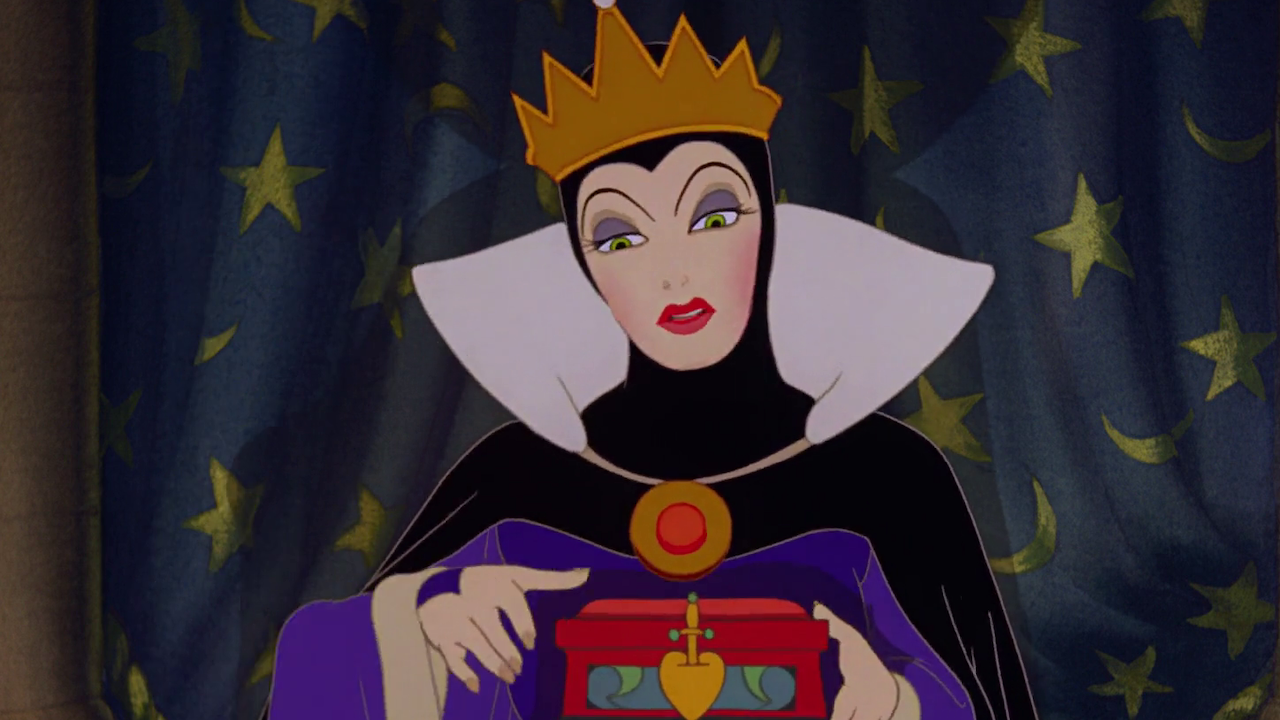
A brand’s visual identity is its most immediate touchpoint with the consumer. The Evil Queen’s design is a triumph of color theory and silhouette. Her palette—deep purple, stark black, and cold gold—is the universal language of royalty, power, and mystery. Unlike the soft, rounded lines of Snow White, the Queen is defined by sharp angles: a high, pointed crown; a stiff, upright collar; and a sweeping cape.
These design choices were intentional. They signal “Authority” and “Intimidation”—key attributes for a character meant to represent the “Ruler” archetype. From a branding perspective, the Queen’s visual identity is so consistent that she remains recognizable even in silhouette. This is the ultimate goal of any corporate identity: to be so distinctive that the brand’s essence is communicated without a single word.
The Shadow Archetype: Why Brands Need an Antagonist
In brand strategy, we often focus on the “Hero’s Journey.” We position our products as the magical tools that help the consumer (the hero) overcome an obstacle. However, a hero is only as compelling as the shadow they must confront. The Evil Queen represents the “Shadow Ruler,” a corrupted version of authority that provides the necessary friction for the Snow White brand to thrive.
The Psychology of Attraction to the “Evil” Brand
There is a growing trend in marketing known as “Villain Branding.” As consumers become more sophisticated, they often find themselves drawn to the complexity and aesthetic of the antagonist. The Evil Queen is not just a villain; she is a representation of ambition, perfectionism, and the pursuit of status—traits that are deeply embedded in modern consumer culture.
Brands that lean into these darker shades of the human experience often find high levels of engagement. By positioning the Queen as a primary figure in their portfolio, Disney allows consumers to “flirt” with their own shadow side. This is why “Disney Villains” as a brand category often outperforms the more traditional “Princess” category among adult demographics. It offers a sophisticated, edgy alternative to the wholesome brand image, expanding the company’s market share across different age groups.
Using the Queen to Define the Hero’s Value Proposition
Without the threat of the Queen’s vanity and her poisoned apple, Snow White’s virtues of kindness and resilience would have no platform. In marketing terms, the Queen defines the “pain point” that the hero must solve. She is the personification of the problem.
For a brand strategist, this highlights the importance of clearly defining the “enemy.” Whether it is a literal competitor or a metaphorical problem (like inefficiency, boredom, or insecurity), a brand must identify what it is fighting against. The Evil Queen is the perfect “brand antagonist” because her motivations are clear: she wants to be the “fairest of them all.” This clarity allows the brand to build a narrative of redemption and triumph that resonates emotionally with the audience.
Monetizing Malevolence: The Rise of the Disney Villains Brand

Disney has successfully transitioned the Evil Queen from a single film antagonist into a cornerstone of a massive lifestyle brand. The “Disney Villains” franchise is a case study in how to leverage “Legacy IP” to create new revenue streams without diluting the core brand.
Segmenting the Market: Why Adults Choose the Queen
The “Disney Princess” brand is primarily targeted at children, focusing on themes of wonder and innocence. However, the company recognized a significant “white space” in the market for products that appealed to teenagers and adults who grew up with these stories. The Evil Queen, with her high-fashion aesthetic and complex motivations, became the face of this adult-oriented pivot.
From high-end makeup collaborations with MAC Cosmetics to designer apparel and luxury home decor, the Queen’s brand has been elevated to a “prestige” level. This is a strategic move to capture the “Kidult” market—adults who maintain a nostalgic connection to childhood brands but demand a more mature, sophisticated expression of that connection.
Diversification Through Darker Narratives
In recent years, we have seen a shift toward “Antagonist-Led Narratives” (such as Maleficent and Cruella). While the Evil Queen has yet to receive a solo live-action origin film on the same scale, her presence in shows like Once Upon a Time and the Descendants franchise demonstrates the brand’s versatility.
By recontextualizing the Queen—sometimes as a misunderstood figure, other times as a campy icon—Disney keeps the brand relevant for new generations. This strategy of “Brand Iteration” ensures that the IP doesn’t become a museum piece, but remains a living, breathing part of the cultural conversation.
Lessons in Vanity: How the “Mirror on the Wall” Predicted Modern Branding
One of the most fascinating aspects of the Evil Queen’s brand identity is her reliance on the “Magic Mirror.” From a brand strategy perspective, the mirror is perhaps the earliest metaphor for social media metrics and brand perception.
The Narcissism of the Personal Brand
The Queen’s obsession with being the “fairest of them all” is a direct parallel to the modern obsession with personal branding and digital status. The mirror acts as an algorithm, providing constant feedback on her standing in the global “market” of beauty. When the mirror informs her that Snow White has surpassed her, it represents a “brand disruption”—a new competitor has entered the space with a superior value proposition (youth and innocence).
Modern brands can learn from the Queen’s failure to adapt. Instead of innovating or evolving her own brand, she chose to eliminate the competition. In the business world, this is a “Red Ocean” strategy—a desperate attempt to maintain dominance through aggression rather than value creation. The Queen’s downfall serves as a cautionary tale for brands that focus too much on their competitors’ metrics rather than their own internal growth.
Feedback Loops and Consumer Validation
The Magic Mirror also represents the “Voice of the Customer.” It provides an objective, albeit harsh, assessment of reality. Successful brands are those that listen to their “mirror” (data, market research, and consumer feedback) and pivot accordingly. The Queen’s tragic flaw was her inability to accept the data provided by the mirror, leading to a series of strategic errors that ultimately resulted in the destruction of her brand legacy.
Maintaining the Crown: Strategic Brand Governance and Longevity
How does a character created in 1937 remain a powerhouse in the 2020s? The answer lies in strict brand governance and a commitment to quality. The Evil Queen’s “brand guidelines” are incredibly rigid. Her voice, her movements, and her iconic lines (such as “Magic Mirror on the wall, who is the fairest one of all?”) are preserved with meticulous care across all touchpoints.
Intellectual Property as a Moat
Disney’s legal and strategic protection of the Evil Queen is a prime example of building a “brand moat.” By securing trademarks not just on the name, but on the specific visual likeness and catchphrases, they prevent “brand dilution.” This control allows them to license the character selectively, ensuring that every appearance of the Queen adds to her brand equity rather than subtracting from it.

The Future of the Queen in the Age of Rebranding
As we move into an era of “Revisionist Branding,” where old stories are retold for modern sensibilities, the Evil Queen faces her greatest challenge. The upcoming live-action Snow White remake, featuring Gal Gadot as the Queen, represents a major “Brand Refresh.”
This move is designed to modernize the character’s appeal, potentially leaning into her role as a powerful, albeit flawed, female leader. By casting a global superstar known for “Wonder Woman,” Disney is strategically shifting the Queen’s brand from “Pure Evil” to “Formidable Icon.” This type of rebranding is essential for maintaining relevance in a changing cultural landscape, ensuring that the name “Grimhilde”—or simply “The Queen”—continues to resonate for another eighty years.
In conclusion, the Evil Queen is far more than a name in a fairy tale. She is a masterfully constructed brand asset that demonstrates the power of archetypes, visual semiotics, and strategic market segmentation. By understanding the mechanics of her enduring appeal, modern brand strategists can learn how to build identities that are not only “fair,” but timeless.
aViewFromTheCave is a participant in the Amazon Services LLC Associates Program, an affiliate advertising program designed to provide a means for sites to earn advertising fees by advertising and linking to Amazon.com. Amazon, the Amazon logo, AmazonSupply, and the AmazonSupply logo are trademarks of Amazon.com, Inc. or its affiliates. As an Amazon Associate we earn affiliate commissions from qualifying purchases.