
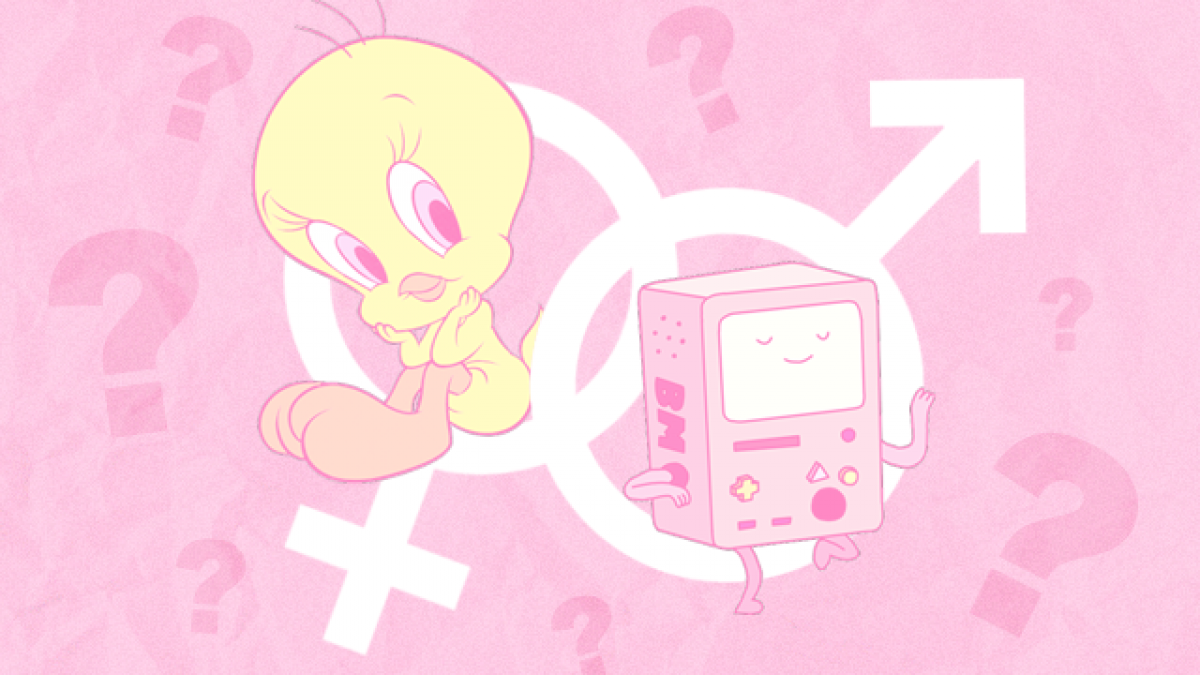
In the landscape of global intellectual properties, few characters possess the enduring recognition and commercial staying power of Tweety Bird. Since first appearing in the 1942 short A Tale of Two Kitties, this yellow canary has evolved from a mere cartoon character into a multi-billion-dollar brand asset for Warner Bros. Discovery. However, one question has persistently circled the character’s legacy, sparking debates across generations of consumers: what is the gender of Tweety Bird?
From a brand strategy perspective, the answer is less about biology and more about the calculated nuance of character design, marketability, and demographic reach. While official records and historical context confirm that Tweety is male, the brand’s intentional use of androgynous traits has served as a masterclass in building a cross-demographic icon. By exploring the intersection of identity and corporate strategy, we can understand how Tweety’s “gender ambiguity” became a cornerstone of one of the most successful licensing programs in history.

The Strategic Fluidity of Character Identity in Branding
The question of Tweety’s gender is not an accident of history; it is a byproduct of specific design choices intended to evoke a particular emotional response. In professional branding, the “personality” of a character is often more important than their demographic data. Tweety was designed to be the ultimate underdog—a character who appears defenseless but possesses a sharp, subversive wit.
Breaking Down the Design Language
Tweety Bird’s visual identity relies heavily on the “baby schema” (Kindchenschema), a set of physical features such as a large head, high forehead, and oversized eyes that trigger an innate caregiving response in humans. This design language is inherently soft. In the mid-20th century, these traits were often culturally coded as feminine or at least non-masculine.
The long eyelashes, high-pitched voice (famously provided by Mel Blanc), and delicate frame led many viewers to assume Tweety was female. From a brand strategy standpoint, this confusion was never corrected with aggressive “masculine” coding. Warner Bros. realized early on that Tweety’s appeal lay in this delicate balance. If Tweety were portrayed as a hyper-masculine bird, the “predator vs. prey” dynamic with Sylvester the Cat would lose its comedic tension. The brand thrives on the contrast between Tweety’s perceived fragility and his actual cunning.
The Evolution from Pink to Yellow
The history of Tweety’s design further illustrates how brand identity is refined over time. In his debut, Tweety was not yellow; he was a pink, featherless nestling. This original design by Bob Clampett was even more ambiguous and somewhat more aggressive. When Friz Freleng took over the character’s direction, the “pink” was replaced with yellow feathers to satisfy censors who thought the bird looked naked.
This shift was a pivotal moment in the character’s corporate identity. Yellow is a gender-neutral primary color that pops against almost any background. By moving away from pink and refining the features into the rounded, yellow icon we know today, Warner Bros. solidified Tweety as a “universal” brand. The character became a blank slate onto which different audiences could project their own meanings, significantly expanding the potential for global merchandising.
Cross-Demographic Appeal and the Psychology of Cuteness
The ambiguity surrounding Tweety’s gender has allowed the brand to penetrate markets that more strictly “gendered” characters could not. In the world of brand strategy, the goal is often to maximize the “Total Addressable Market” (TAM). Tweety Bird is a rare example of a character that successfully bridges the gap between male and female consumers, as well as children and adults.
Marketing Beyond Gender Binaries
In the 1990s and early 2000s, Tweety Bird experienced a massive resurgence in the fashion and lifestyle sectors. During this era, Tweety was marketed heavily to young women and teenage girls. The “cute but feisty” persona resonated with a demographic looking for symbols of “girl power” that weren’t overly sugary. Despite Tweety being canonically male, the brand strategy leveraged the character’s aesthetic to dominate the female-centric apparel market.
Simultaneously, Tweety remained a staple of the broader Looney Tunes ensemble, appearing on merchandise alongside Bugs Bunny and Daffy Duck, which targeted a more traditionally male or general-audience demographic. This dual-track marketing is only possible when a brand’s core identity is flexible enough to inhabit different spaces. Warner Bros. did not need to change Tweety’s gender to sell Tweety-branded products to women; they simply needed to lean into the character’s inherent design traits.
The Duality of Vulnerability and Wit
Successful branding often relies on a “hook”—a contradiction that makes the brand memorable. For Tweety, that hook is the duality of being “vulnerable” yet “victorious.” This narrative arc appeals to anyone who has ever felt like an underdog.
By keeping Tweety’s gender secondary to his personality, the brand managers ensured that his struggles and triumphs were universal. Whether Tweety is escaping Sylvester’s clutches or outsmarting a larger foe, the audience focuses on the intelligence and resilience of the character. This focus on “archetype” over “demographic” is a sophisticated branding move that ensures longevity.
The Commercial Impact: Licensing and Global Revenue
Tweety Bird is not just a character; he is a powerhouse of licensing. The brand’s ability to transcend gender and age has led to some of the most lucrative partnerships in the entertainment industry. When a brand can be sold as “edgy” in one context and “adorable” in another, its revenue potential multiplies.
Fashion and High-End Brand Collaborations
In recent years, Tweety has moved beyond mass-market retail and into high-end fashion. Collaborations with designers and luxury brands have reimagined Tweety in various stylistic contexts. In these spaces, Tweety’s gender is completely irrelevant; the bird is treated as a cultural icon, a piece of Pop Art.
These collaborations are a testament to the strength of Tweety’s “Corporate Identity.” A weak brand would be diluted by such diverse applications. However, because Tweety’s visual markers (the yellow color, the large eyes, the silhouette) are so distinct, the brand remains recognizable whether it’s on a high-fashion runway or a child’s lunchbox. This flexibility is a direct result of the character’s historically ambiguous and non-restrictive identity.
Tweety as a Lifestyle Brand Component
Beyond apparel, Tweety has been a central figure in home decor, stationery, and even automotive accessories. The “Tweety brand” has often been associated with a sense of “attitude.” In the late 90s, the “Tweety with an attitude” aesthetic became a sub-brand of its own, featuring the bird with a smirk or a sarcastic pose.
This pivot allowed the brand to age up with its audience. The children who watched the cartoons in the 70s and 80s could buy “attitude” Tweety merchandise as teenagers and young adults. This lifecycle management is the holy grail of brand strategy, and Tweety’s fluid identity played a major role in making those transitions seamless.
Maintaining Brand Consistency Across Generations
How does a brand keep a 80-year-old character relevant? For Warner Bros., the key has been maintaining a strict consistency in Tweety’s “brand voice” while allowing the visual application to modernize.
The Role of Voice and Personality
Tweety’s voice is one of the most recognizable brand assets in the world. The “baby talk” lisp—”I tawt I taw a puddy tat!”—is a trademarked auditory cue that instantly triggers brand recognition. Interestingly, this voice also contributes to the gender discussion. It is a voice that sounds youthful and innocent, further leaning into the “baby schema” that makes Tweety so approachable.
Consistency in this auditory branding ensures that no matter how much the animation style changes—from classic hand-drawn cells to modern 3D CGI—the character’s essence remains untouched. This stability allows the brand to experiment with different marketing angles without losing its core identity.
Adapting to Modern Social Narratives
In today’s market, consumers are increasingly interested in brands that reflect diversity and fluid identities. Tweety Bird is uniquely positioned for this cultural moment. While he remains a male character in official canon, his history of gender-non-conforming traits makes him a naturally inclusive icon.
Warner Bros. has the opportunity to leverage this history to keep Tweety relevant in a social landscape that values the breaking of traditional binaries. By not “fixing” Tweety into a hyper-masculine mold, the brand remains open to new interpretations and continues to resonate with a modern, progressive audience.

Conclusion: The Brand is the Answer
So, what is the gender of Tweety Bird? While the canonical answer is male, the strategic answer is that Tweety is a “Universal Icon.” The brilliance of the Tweety brand lies in its refusal to be confined by a single demographic box. By blending masculine and feminine traits, vulnerability and strength, and innocence and wit, Warner Bros. created a character that is infinitely adaptable.
For brand strategists and marketers, Tweety Bird serves as a reminder that the most powerful identities are those that can be embraced by everyone. Tweety’s gender—or the perceived lack thereof—is not a point of confusion, but a point of connection. It is the very thing that has allowed a small yellow canary to fly above the constraints of time, gender, and culture to become a permanent fixture of the global brand landscape.
aViewFromTheCave is a participant in the Amazon Services LLC Associates Program, an affiliate advertising program designed to provide a means for sites to earn advertising fees by advertising and linking to Amazon.com. Amazon, the Amazon logo, AmazonSupply, and the AmazonSupply logo are trademarks of Amazon.com, Inc. or its affiliates. As an Amazon Associate we earn affiliate commissions from qualifying purchases.