
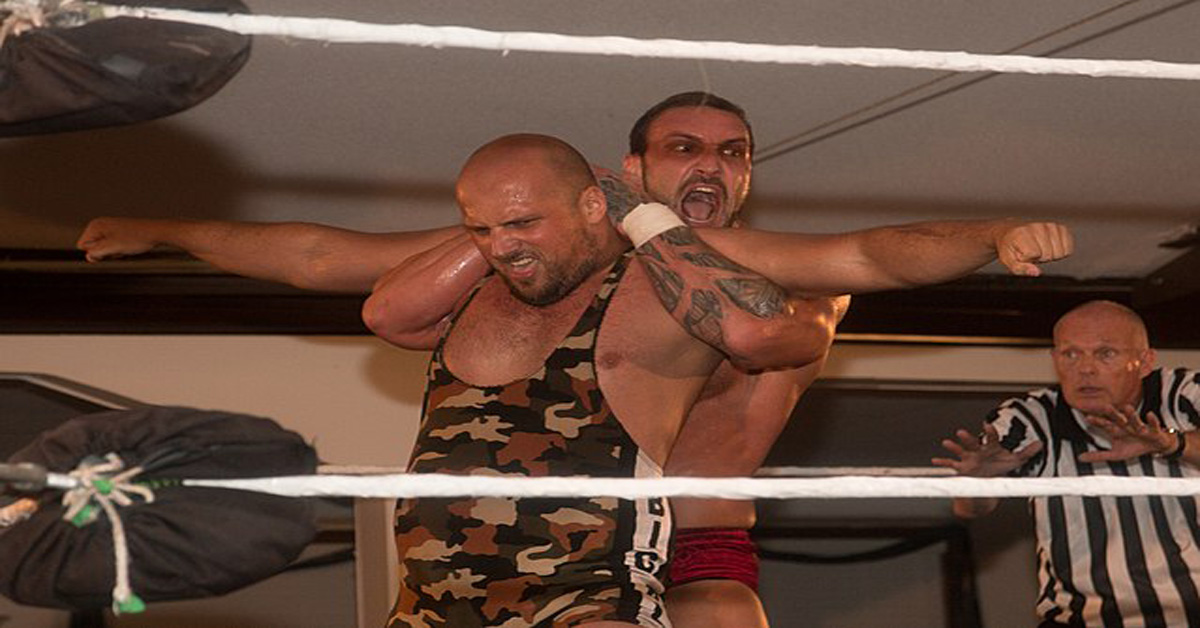
In the world of professional wrestling, the “Full Nelson” is a grappling hold that provides the practitioner with complete control over their opponent. By threading their arms under the opponent’s armpits and locking their hands behind the neck, the wrestler renders the other person nearly immobile. In the high-stakes arena of modern business and brand strategy, the “Full Nelson” has been reimagined as a metaphor for total brand immersion. It represents a strategic state where a brand achieves such a profound level of integration into a consumer’s life, ecosystem, and identity that the competition is effectively locked out.

To execute a Full Nelson brand strategy is to go beyond mere market share. It is about creating a proprietary environment—a “walled garden”—where every customer touchpoint, from the initial digital interaction to the post-purchase service, reinforces the brand’s indispensability. This article explores the mechanics of this high-density branding strategy, the psychological levers it pulls, and how the world’s most successful corporate identities use it to maintain long-term market dominance.
The Anatomy of the Brand Full Nelson: Defining the Strategy
The Full Nelson in branding is not an aggressive or hostile maneuver; rather, it is a sophisticated, multi-layered approach to customer retention and ecosystem development. It is characterized by three distinct dimensions: physical integration, emotional resonance, and operational friction for competitors.
The Power of Ecosystem Integration
At its core, a Full Nelson strategy relies on an ecosystem. This occurs when a brand offers a suite of products or services that work better together than they do in isolation. When a consumer buys a single product, they are merely a customer. When they buy into an ecosystem, they become a resident of the brand’s world. The integration creates a “seamless” experience that solves problems before the consumer even realizes they have them.
The strategy focuses on reducing the “mental load” of the consumer. By providing a unified interface, a single login, or a synchronized aesthetic across multiple categories, the brand becomes the default choice. The Full Nelson is applied when the cost—not just financial, but cognitive—of leaving the ecosystem becomes too high for the consumer to consider.
Visual and Sensory Enclosure
Brand strategy isn’t just about utility; it’s about the constant reinforcement of identity. A brand applying a Full Nelson hold ensures that their visual language is omnipresent. From the typography on a mobile app to the interior design of a physical retail space, the sensory experience must be cohesive. This consistency builds a sense of “home” and safety for the consumer. When a brand’s identity is this pervasive, any interaction with a competitor feels jarring, alien, or inferior. This sensory dominance is the “arm lock” that keeps the consumer within the brand’s sphere of influence.
The Psychology of “Lock-In”
The psychological component of the Full Nelson involves the concept of “identity-based consumption.” When a brand successfully positions itself as a reflection of the consumer’s values or social status, it creates an emotional hold. Breaking away from the brand then feels like a betrayal of one’s own identity. Strategic branding at this level focuses on community building and shared narratives, ensuring that the consumer feels they belong to an exclusive club rather than just being a transaction in a ledger.
The Pillars of Total Market Dominance
To successfully implement a Full Nelson strategy, a brand must build its foundation on several key pillars. These are the structural elements that allow a company to wrap its metaphorical arms around a market segment and hold tight.
Omni-Channel Consistency and Hyper-Personalization
In the digital age, a brand cannot afford to have “blind spots.” A Full Nelson strategy requires a presence across all relevant channels—social media, email, physical storefronts, and third-party platforms—but with a twist: hyper-personalization. By leveraging data, a brand can tailor its messaging so specifically that it feels like a private conversation with the consumer. This level of attention makes the consumer feel “seen,” reinforcing the hold. If a brand knows your preferences, your history, and your future needs, the effort required to “train” a new brand on those same details acts as a powerful deterrent to switching.
High Switching Costs (The Strategic Friction)
The Full Nelson is maintained by creating friction at the exits. In brand strategy, this doesn’t necessarily mean contract penalties or fees. Instead, it refers to the loss of data, the loss of integrated functionality, or the loss of social capital. For example, if a consumer has invested years in building a profile, a library, or a reputation within a specific brand’s platform, the “cost” of moving to a competitor is the loss of that accumulated value. Strategic brands deliberately build these features to ensure that while the door is technically open, the path through it is too painful to traverse.
Vertical and Horizontal Expansion
A brand achieves a Full Nelson when it expands both vertically (controlling its supply chain and distribution) and horizontally (entering complementary markets). When a single brand controls the hardware, the software, the content, and the delivery mechanism, the “hold” is complete. This 360-degree coverage ensures that at no point in the customer journey does the consumer have to interact with a third party. By capturing the entire value chain, the brand maximizes its margin while simultaneously minimizing the opportunities for a competitor to interject.
Case Studies: Brands That Mastered the Hold
The most effective way to understand the Full Nelson is to observe it in action. Several global giants have perfected this maneuver, turning their corporate identities into inescapable ecosystems.
Apple: The Gold Standard of Ecosystem Enclosure
Apple is perhaps the most famous practitioner of the Full Nelson. Their strategy is built on the seamless interplay between hardware (iPhone, Mac, Watch) and software (iOS, iCloud, iMessage). The “hold” is tightened by services like the App Store and Apple Pay. Once a user is deeply embedded in this ecosystem, switching to an Android or Windows environment becomes a logistical nightmare. The synchronization of photos, messages, and files creates a level of convenience that acts as a powerful stabilizer. Apple doesn’t just sell phones; they sell a lifestyle and a closed-loop system that rewards loyalty and penalizes departure.
Disney: The Storytelling Loop
Disney applies a Full Nelson through the “Synergy Map,” a concept popularized by Walt Disney himself. A single piece of intellectual property—say, a movie—is supported by theme park attractions, consumer products, television shows, and digital experiences. The consumer is surrounded. You watch the movie, you buy the toy, you visit the park, and you subscribe to the streaming service. Disney’s brand strategy ensures that every interaction with their IP feeds into another, creating a self-sustaining loop of consumption and emotional attachment that spans generations.
Amazon: The Infrastructure Monopoly
Amazon’s Full Nelson is built on utility and infrastructure. Through Amazon Prime, the company has created a loyalty program that encompasses shipping, entertainment, grocery, and cloud storage. The brand has moved from being a “store” to being the “infrastructure of daily life.” When a consumer can order a household essential, watch a movie, and store their business data all under one brand umbrella, the convenience factor creates a gravity well that is nearly impossible to escape. Amazon’s hold is not just on the wallet, but on the very logistics of the consumer’s day-to-day existence.
Implementing the Full Nelson: A Framework for Growing Brands
While the examples above involve multibillion-dollar corporations, the principles of the Full Nelson can be applied to small and mid-sized brands looking to solidify their market position.
Step 1: Audit the Customer Journey for Friction
The first step is to identify where customers are “leaking” out of your brand’s influence. Map every touchpoint. Is there a gap between the sales process and the onboarding process? Is your social media voice different from your customer support voice? To apply the hold, you must first eliminate the inconsistencies that allow competitors to wedge themselves into the relationship.
Step 2: Develop a Proprietary Value Layer
What can you offer that cannot be easily replicated or exported? This might be a unique community forum, a proprietary data insight, or a specialized loyalty program. The goal is to create a layer of value that is unique to your brand identity. This layer should be designed to grow more valuable the more the customer uses it, increasing the “sunk cost” and making the brand indispensable.
Step 3: Cultivate Emotional and Social Anchors
A brand is only as strong as the community it fosters. By creating spaces—either digital or physical—where your customers can interact with each other, you outsource part of the “hold” to the community itself. When a brand becomes a social hub, leaving the brand means leaving a network of peers. This social anchor is one of the most resilient forms of the Full Nelson, as it leverages human psychology’s inherent need for belonging.
The Risks and Ethics of High-Density Branding
While the Full Nelson is a powerful growth and retention tool, it is not without its risks. Over-tightening the hold can lead to “brand fatigue” or consumer resentment.
Avoiding the “Walled Garden” Backlash
If a brand becomes too restrictive, consumers may begin to feel trapped rather than served. This can lead to a search for “open-source” or “anti-brand” alternatives. To maintain a healthy Full Nelson, the brand must ensure that the benefits of staying within the ecosystem far outweigh the feeling of being locked in. The “hold” should feel like an embrace, not a cage.
The Innovation Imperative
When a brand has a captive audience, there is a temptation to slow down innovation. However, a stagnant ecosystem is vulnerable to disruption. A successful Full Nelson strategy requires constant reinvestment into the customer experience. The brand must continue to prove its value every day, ensuring that the ecosystem remains the best possible place for the consumer to be.
Regulatory and Antitrust Considerations
In the corporate world, a brand that achieves a perfect Full Nelson often attracts the attention of regulators. In an era of increasing scrutiny regarding data privacy and market competition, brand strategists must balance their desire for dominance with the need for ethical transparency. The goal should be to win the market through superior value and identity, rather than through predatory exclusion.

Conclusion: The Future of Brand Immersion
The “Full Nelson” strategy represents the pinnacle of modern brand management. It is a shift away from the era of transactional marketing and toward an era of total integration. In a marketplace defined by infinite choice and noise, the brands that survive and thrive are those that can successfully “lock in” their audience through a combination of seamless utility, emotional resonance, and strategic infrastructure.
By understanding the mechanics of this hold—from ecosystem development to sensory consistency—brand leaders can move beyond competing on price and start competing on world-building. To master the Full Nelson is to create a brand that is not just a choice, but a lifestyle, an identity, and a primary environment for the consumer. In the end, the most powerful brand is the one that the consumer never feels the need to leave.
aViewFromTheCave is a participant in the Amazon Services LLC Associates Program, an affiliate advertising program designed to provide a means for sites to earn advertising fees by advertising and linking to Amazon.com. Amazon, the Amazon logo, AmazonSupply, and the AmazonSupply logo are trademarks of Amazon.com, Inc. or its affiliates. As an Amazon Associate we earn affiliate commissions from qualifying purchases.