
In the landscape of modern digital communication, few symbols have sparked as much technical and cultural debate as the eggplant emoji ( ). Formally known in the Unicode Standard as “Aubergine,” this seemingly innocuous botanical icon represents a fascinating case study in how technology, software moderation, and human behavior intersect. While its primary function within a mobile operating system’s keyboard is to represent a vegetable, its actual usage has evolved into a complex linguistic tool that challenges software developers, social media algorithms, and digital security experts.

To understand what the eggplant emoji is used for in a professional tech context, one must look beyond its surface-level connotations. It serves as a benchmark for how non-verbal data is processed, how artificial intelligence interprets intent, and how cross-platform compatibility influences the way we express ourselves in a mobile-first world.
The Technical Genesis of the Eggplant Emoji
The journey of the eggplant emoji from a simple line of code to a global cultural phenomenon is rooted in the technical standards set by the Unicode Consortium. Understanding its usage requires an analysis of how software translates binary data into visual icons that carry heavy semantic weight.
Unicode Standards and Cross-Platform Rendering
The eggplant emoji was added to Unicode 6.0 in 2010. Technically labeled as U+1F346, it is essentially a specific point of data that every major operating system—be it iOS, Android, or Windows—must interpret. However, the “usage” of the emoji is often dictated by its aesthetic rendering. In the early 2010s, different software vendors designed the icon with varying degrees of realism.
Apple’s glossy, three-dimensional rendering contrasted sharply with Google’s flatter, more cartoonish Android versions. These design choices, made by software UI/UX designers, significantly influenced how users interacted with the symbol. In the tech world, this is a prime example of how interface design can drive user behavior, turning a botanical symbol into a tool for suggestive communication based almost entirely on its visual representation within a specific OS.
From Botanical Symbol to Digital Shorthand
In its original technical documentation, the eggplant was intended for use in grocery lists, culinary blogs, and gardening apps. However, the evolution of mobile messaging software facilitated a phenomenon known as “semantic drift.” As mobile keyboards integrated predictive text and emoji suggestions, the software itself began to learn from user behavior. If a user frequently replaced specific words with the eggplant icon, the underlying machine learning models within the keyboard software (like Gboard or the iOS QuickType keyboard) began to associate the symbol with those specific contexts, effectively codifying its secondary meanings through algorithmic reinforcement.
Semantic Shifts in Digital Messaging Trends
Beyond its graphical representation, the eggplant emoji is a pivotal element in the study of digital linguistics. Tech companies and data scientists analyze the usage of such symbols to better understand how humans bridge the gap between text and emotion.
The Role of Emojis in Non-Verbal Digital Communication
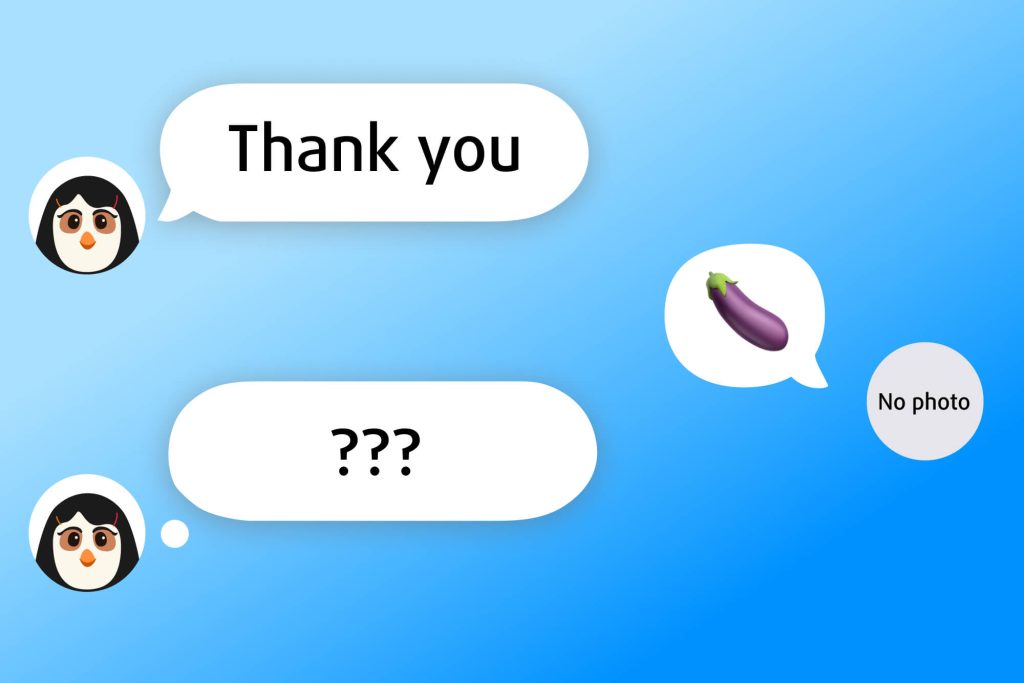
In the absence of facial expressions and tone of voice, digital communication relies on visual modifiers. The eggplant emoji is used primarily as a “phallic surrogate” in modern digital parlance. From a technical perspective, this represents a shift toward high-context communication. When a user sends this emoji, the software is delivering a packet of data that requires the recipient’s software—and their social understanding—to decode a layer of subtext that isn’t present in the ASCII characters themselves.
Tech platforms monitor these trends to improve their Natural Language Processing (NLP). For instance, when an AI analyzes a string of emojis, it must determine if the eggplant is being used in a culinary context or a suggestive one. This requires the software to analyze surrounding tokens (words and other emojis) to determine the “sentiment” of the message.
Contextual Intelligence and User Behavior
Modern messaging apps use contextual intelligence to suggest emojis. If you type “dinner,” your phone might suggest a pizza or a taco. If the software notices a pattern of the eggplant emoji being used in late-night threads or dating apps, the predictive text engine adjusts its weight accordingly. This illustrates a feedback loop between human usage and software adaptation. The emoji is used not just for what it represents, but for the efficiency it offers in bypassing traditional text, allowing for a faster, albeit more ambiguous, exchange of ideas.

Content Moderation, Algorithms, and Digital Security
Perhaps the most significant technical “use” of the eggplant emoji today is as a test case for content moderation software and digital safety protocols. Major tech conglomerates like Meta, ByteDance, and X (formerly Twitter) have had to develop sophisticated algorithms specifically to handle the usage of this symbol.
Shadowbanning and Keyword/Symbol Monitoring
In 2015, Instagram famously made the eggplant emoji unsearchable under its hashtag system. This was a technical intervention designed to curb the proliferation of “not safe for work” (NSFW) content. By programmatically flagging the symbol, the platform’s engineers demonstrated how a single character in the Unicode set could be treated as a security risk or a violation of terms of service.
The emoji is used today as a “canary in the coal mine” for automated moderation. When a user includes an eggplant emoji in a caption or a comment, it often triggers a higher level of scrutiny from the platform’s AI. The software looks for patterns: Is it paired with a peach? Is it being sent to a minor? Is it part of a bot-driven spam campaign? In this sense, the emoji is used by tech companies as a trigger for digital safety protocols.
Challenges for AI Content Filters
Computer vision and NLP have a difficult time with the eggplant emoji because its meaning is entirely contextual. For a developer building a safe-search filter, the challenge is distinguishing between a recipe for eggplant parmesan and a violation of harassment policies. This has led to the development of “multimodal” AI models that look at the text, the emoji, and the user’s history simultaneously. The eggplant emoji, therefore, is a primary driver in the advancement of more nuanced, context-aware artificial intelligence.
The Future of Visual Language in Software Development
As we move toward more immersive digital environments, such as augmented reality (AR) and the metaverse, the usage of the eggplant emoji continues to influence software development and user experience (UX) design.
Interactive Emojis and UX Design
We are seeing a move from static icons to animated, interactive “stickers” or 3D assets. In apps like Telegram or WhatsApp, emojis often trigger full-screen animations. Developers must decide how to handle the eggplant emoji in these contexts. Should it have a playful animation, or should it be restricted to prevent “haptic harassment” or unwanted visual intrusions? The usage of the emoji dictates the boundaries of what is considered “standard” versus “explicit” in a software’s design language.
The Intersection of Privacy and Expression
From a digital security standpoint, the use of coded emojis—including the eggplant—presents a challenge for end-to-end encryption (E2EE). While the service provider cannot see the content of the message, metadata and user reporting tools often flag specific patterns. If a specific emoji is consistently reported in a certain context, security teams use that data to refine their threat models.
Furthermore, as digital privacy becomes a more prominent concern, users are increasingly using “emoji codes” to communicate sensitive information or to bypass automated filters. The eggplant emoji remains a staple in this “leetspeak” evolution, serving as a placeholder for concepts that users might want to keep hidden from rudimentary text-scanning software.
Conclusion: A Symbol of Digital Complexity
In summary, the eggplant emoji is used for far more than its botanical origins suggest. In the tech industry, it is a tool for:
- Testing Unicode Robustness: Ensuring that a single character renders correctly across thousands of device types.
- Training AI and NLP: Helping machines understand human nuance, sarcasm, and double entendre.
- Refining Content Moderation: Serving as a primary target for algorithms designed to maintain platform safety and adhere to advertising standards.
- Enhancing UX Design: Driving the evolution of predictive text and interactive messaging features.
While the average user may see it as a simple joke or a suggestive shorthand, to the software engineer and the data scientist, the eggplant emoji is a sophisticated data point that highlights the ongoing tension between human expression and algorithmic control. Its continued prevalence ensures that it will remain a focal point in the study of how technology shapes—and is shaped by—the complexities of human communication.
aViewFromTheCave is a participant in the Amazon Services LLC Associates Program, an affiliate advertising program designed to provide a means for sites to earn advertising fees by advertising and linking to Amazon.com. Amazon, the Amazon logo, AmazonSupply, and the AmazonSupply logo are trademarks of Amazon.com, Inc. or its affiliates. As an Amazon Associate we earn affiliate commissions from qualifying purchases.