
In the realms of software engineering, digital signal processing, and artificial intelligence, the cosine function serves as a fundamental building block. While many encounter this trigonometric identity for the first time in a high school geometry class, its technical applications far transcend the confines of a chalkboard. Understanding the domain of a cosine function is not merely an academic exercise; it is a prerequisite for anyone working with wave-based data, 3D rendering engines, or complex algorithmic modeling.
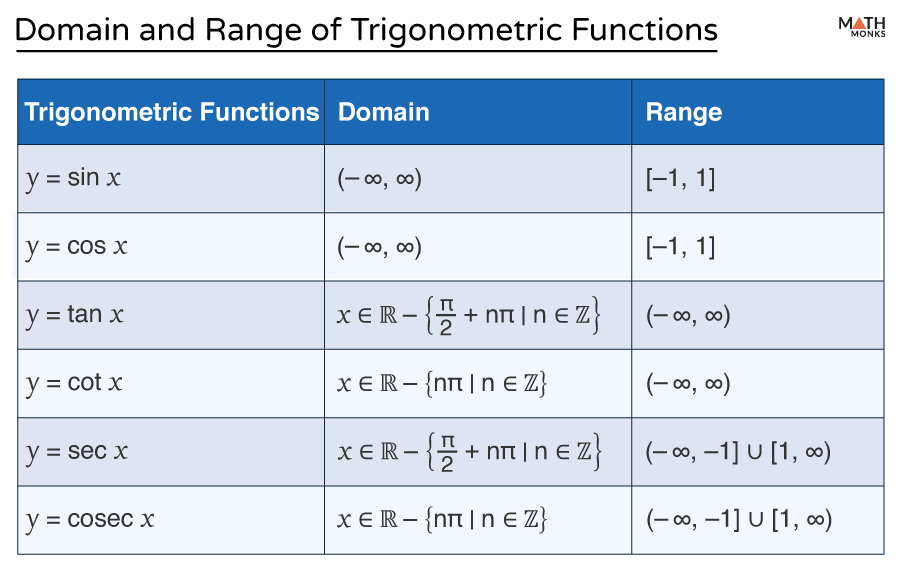
The domain of a function refers to the complete set of possible values for the independent variable—usually denoted as (x)—for which the function is defined and produces a real number as an output. In the context of a cosine function, denoted as (f(x) = cos(x)), the domain represents all the possible angles or values you can input into the function to obtain a corresponding ratio. To understand the domain, we must look at both its mathematical definition and its practical implementation in modern technology.
The Mathematical Foundation of the Cosine Domain
To grasp why the domain of the cosine function is defined the way it is, one must first look at the unit circle. In trigonometry, the unit circle is a circle with a radius of one, centered at the origin of a Cartesian coordinate system. For any point on this circle, the coordinates are represented as ((cos theta, sin theta)), where (theta) is the angle of rotation from the positive x-axis.
The Infinite Nature of Rotation
The most critical aspect of the cosine function’s domain is its lack of boundaries. You can rotate around the unit circle indefinitely in either a clockwise or counter-clockwise direction. Because the circle is a continuous loop, an angle of 360 degrees (or (2pi) radians) brings you back to the same point as 0 degrees. An angle of 720 degrees brings you back to the same point yet again.
Mathematically, this means that the function (f(x) = cos(x)) is defined for every possible real number. Whether the input is a positive integer, a negative fraction, an irrational number like (pi), or zero, the function will always yield a valid output between -1 and 1. Therefore, in interval notation, the domain of the cosine function is expressed as ((-infty, infty)).
Periodic Behavior and Input Continuity
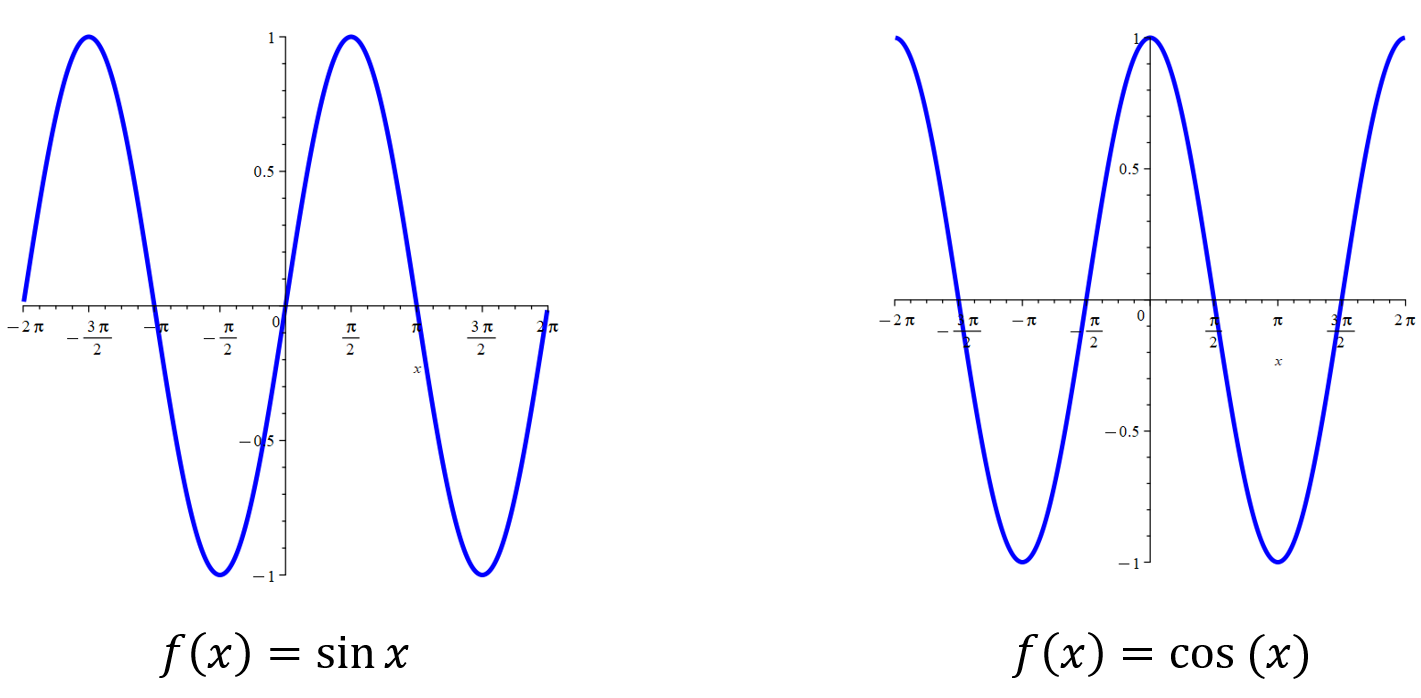
The cosine function is a periodic function, meaning it repeats its values in a regular cycle. The period of a standard cosine function is (2pi). While the output (the range) is strictly limited to the interval ([-1, 1]), the input (the domain) remains infinite. This continuity is vital in tech fields like software development, where algorithms often rely on functions that do not “break” or become undefined regardless of the size of the input data. Unlike the tangent function, which has vertical asymptotes where the function is undefined (such as at (pi/2)), the cosine function is “well-behaved” across its entire infinite domain.
Implementation in Software and Programming Languages
For a software developer, understanding the mathematical domain is the first step, but the practical domain within a computing environment introduces new nuances. Most modern programming languages—including Python, C++, Java, and JavaScript—provide built-in libraries to handle trigonometric calculations.
Floating-Point Precision and Large Inputs
In a theoretical sense, the domain is infinite. However, computers operate within the constraints of memory and hardware. Most programming languages use the IEEE 754 standard for floating-point arithmetic. When you call a function like math.cos(x) in Python, the variable x is typically a 64-bit float.
While the mathematical domain is ((-infty, infty)), the computational domain is limited by the maximum and minimum values a float can represent. Furthermore, as the input value x becomes extremely large, precision begins to degrade. Because the cosine function is periodic, libraries often use a technique called “argument reduction.” This involves taking the input modulo (2pi) to bring it within a manageable range (0 to (2pi)) before calculating the result. If the input is too large, the loss of precision during this reduction phase can lead to inaccurate results, a factor that developers must account for in high-precision simulations.
Degrees vs. Radians in API Design
A common hurdle in software implementation is the unit of the domain. In pure mathematics, the domain is often discussed in terms of radians. In technical applications like game development or CAD (Computer-Aided Design) software, users might prefer degrees.
Most standard libraries (e.g., <cmath> in C++ or Math in JavaScript) define the domain in radians. Entering a value in degrees without conversion is a frequent source of logic errors. The domain remains “all real numbers,” but the interpretation of those numbers changes. A developer must ensure that the input mapping correctly reflects the circular motion intended by the software’s logic, typically through the conversion formula: radians = degrees * (pi / 180).
Applications in Graphics and 3D Rendering

The infinite domain of the cosine function is a cornerstone of computer graphics. From the way light reflects off a surface to the way characters move in a 3D space, trigonometry is the engine behind the visuals.
Rotation Matrices and Coordinate Transformations
In 3D engines like Unreal Engine or Unity, objects are moved and rotated using matrices. A rotation matrix for a 2D plane uses the cosine of an angle (theta) to determine new coordinates. Because the domain of cosine is infinite, these engines can handle continuous rotations. Whether a game character spins 90 degrees or 9,000 degrees, the cosine function processes the input seamlessly, allowing for smooth, infinite circular motion without the risk of an “out of domain” error.
Procedural Shaders and Texture Generation
In technical art and shader programming (using languages like HLSL or GLSL), cosine functions are used to create periodic patterns. Since the domain is infinite, developers can use time as the input variable. By plugging cos(time) into a color parameter, a developer can create a pulsing light effect that oscillates forever. The infinite domain ensures that as the “time” variable grows larger the longer a game runs, the function will continue to output valid wave data, preventing the shader from crashing or glitching over long play sessions.
Digital Signal Processing and Modern Communication
Beyond the screen, the domain of the cosine function is essential for how we transmit and process data. Digital Signal Processing (DSP) relies on the fact that any complex signal can be broken down into a series of sine and cosine waves.
The Fourier Transform and Frequency Domains
The Fourier Transform is perhaps the most important algorithm in modern tech, enabling everything from JPEG compression to noise-canceling headphones. It works by converting a signal from the time domain to the frequency domain. In this context, the domain of the cosine functions used represents either time or spatial frequency. Because the domain is continuous and infinite, we can model signals over any duration.
Data Compression and Oscillations
In audio engineering, cosine waves are used in Pulse Code Modulation and various compression codecs like MP3 or AAC. The domain allows for the representation of sound waves as a function of time. By understanding that the cosine function will always produce a predictable output for any time-point in its domain, engineers can create algorithms that efficiently store and reconstruct audio data with minimal loss of fidelity.
The Role of the Cosine Domain in Artificial Intelligence
As we move into the era of advanced Machine Learning (ML), the cosine function is finding new life in neural network architectures. While traditional networks often rely on ReLU or Sigmoid functions, periodic functions are becoming increasingly relevant.
Sinusoidal Representation Networks (SIRENs)
A recent breakthrough in AI is the development of SIRENs, which use sinusoidal activation functions (including cosine) instead of traditional linear ones. In these networks, the infinite domain of the cosine function allows the model to represent complex, high-frequency data, such as high-resolution images or 3D shapes, more effectively than standard models. The ability of the cosine function to handle any input value across its domain enables these networks to learn fine details and gradients that were previously difficult to capture.
Positional Encoding in Transformers
The Transformer architecture, which powers Large Language Models like GPT-4, utilizes the domain of sine and cosine functions for “positional encoding.” Since transformers process data in parallel rather than sequentially, they need a way to understand the order of words in a sentence.
By using cosine functions with different frequencies, the model creates a unique signature for each position in the sequence. The infinite domain ensures that even in extremely long documents, the model can assign a valid, unique positional value to every token. This application demonstrates how a concept from basic trigonometry serves as the backbone for the most sophisticated AI systems in existence today.
Conclusion: A Universal Input for Digital Innovation
The domain of a cosine function—all real numbers—is a simple mathematical truth with profound technological implications. Its lack of restrictions allows for the continuous rotation of virtual cameras, the infinite oscillation of digital signals, and the complex encoding of linguistic data in AI.
For the modern tech professional, recognizing that the cosine function can accept any real number as an input is only the starting point. The real value lies in understanding how this infinite domain interacts with hardware limitations, floating-point precision, and algorithmic design. Whether you are coding a physics engine, optimizing a data stream, or training a neural network, the reliable, periodic nature of the cosine function remains one of the most versatile tools in your technical arsenal. By mastering the domain, you ensure that your digital systems remain stable, predictable, and infinitely scalable.
aViewFromTheCave is a participant in the Amazon Services LLC Associates Program, an affiliate advertising program designed to provide a means for sites to earn advertising fees by advertising and linking to Amazon.com. Amazon, the Amazon logo, AmazonSupply, and the AmazonSupply logo are trademarks of Amazon.com, Inc. or its affiliates. As an Amazon Associate we earn affiliate commissions from qualifying purchases.