
In the digital era, the question “what is the date in 21 days” is rarely a matter of manual calculation. While a human might glance at a desk calendar and count forward three weeks, modern software ecosystems treat this query as a foundational logic puzzle. Calculating future dates is a critical component of everything from agile project management and subscription billing cycles to automated security protocols and artificial intelligence scheduling.
To understand why this simple calculation matters in the realm of technology, one must look past the arithmetic and into the architecture of time-based logic. Whether you are a developer building a recurring payment system, a project manager setting milestones in Jira, or a security specialist managing SSL certificate renewals, the precision of “21 days from now” is a cornerstone of digital reliability.
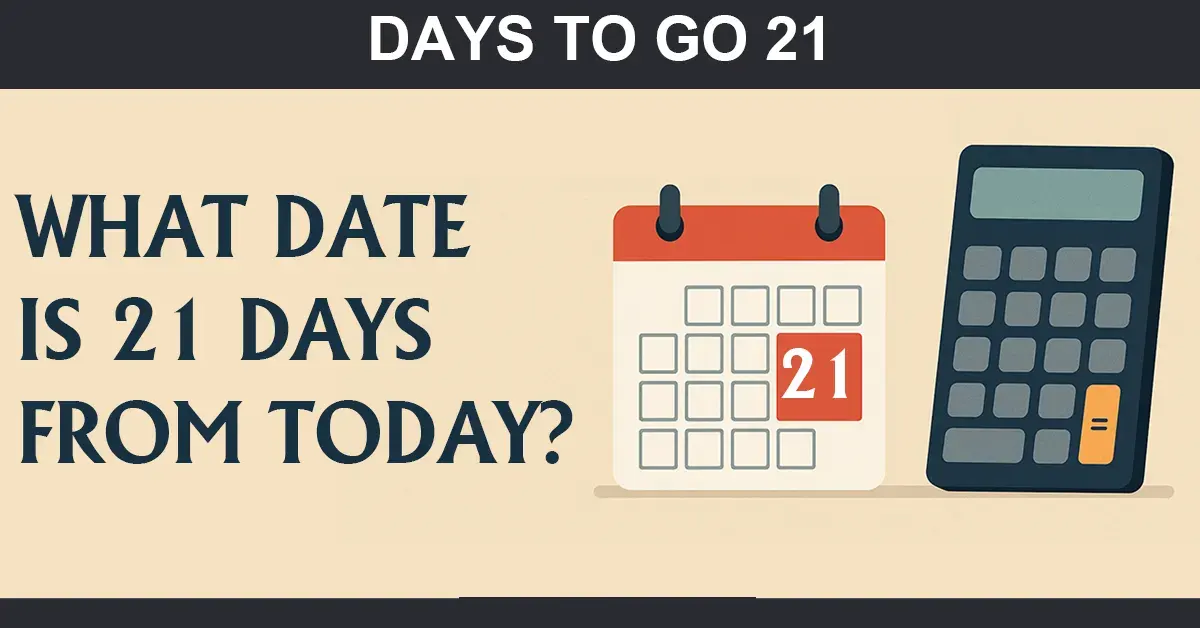
The Mechanics of Date Calculation in Modern Software
At the heart of every operating system is a clock that does not think in terms of months or years, but in increments of seconds. To answer what the date will be in 21 days, software must translate human-readable time into machine-readable data.
Epoch Time and Unix Timestamps
Most modern computing systems, particularly those based on Unix or Linux, measure time as the number of seconds that have elapsed since January 1, 1970 (the Unix Epoch). To find a date 21 days in the future, a system takes the current timestamp—a long integer—and adds the product of 21 days, 24 hours, 60 minutes, and 60 seconds (1,814,400 seconds).
This mathematical approach ensures consistency across different hardware platforms. However, the conversion back to a human-readable format is where the complexity begins. Software must account for the specificities of the Gregorian calendar, including varying month lengths and the occasional leap year, ensuring that an addition of 21 days doesn’t result in a non-existent date like February 30th.
Handling Time Zones and Daylight Savings via Code
One of the greatest challenges in time-based tech is the “Daylight Savings Shift.” If you calculate 21 days from a date in early March or late October, the result might be off by an hour depending on the user’s geographic location. Professional-grade software handles this by using standardized databases like the IANA Time Zone Database.
When a developer writes a function to determine the date three weeks out, they rely on libraries that automatically adjust for these shifts. This ensures that a “21-day trial” expires at the exact second intended, regardless of whether the clocks moved forward or backward during that period.
The Role of Programming Libraries
In languages like Python, JavaScript, or Ruby, calculating a future date is simplified through dedicated modules. In Python, the datetime module allows a developer to use timedelta(days=21). This abstraction layer is what allows modern apps to feel intuitive. When you ask a voice assistant for a date three weeks away, it isn’t “counting”; it is executing a standardized library function that cross-references the system’s UTC (Coordinated Universal Time) clock with your local offset.
Productivity Tools and Predictive Scheduling
The significance of a 21-day window is particularly prominent in the productivity and Project Management (PM) software niche. Many high-level workflows are structured around three-week cycles, making the “21-day” calculation a frequent trigger for automated actions.
Smart Calendars and AI Schedulers
Modern calendar applications like Google Calendar or Outlook utilize predictive logic to help users manage their long-term availability. When an AI scheduler looks 21 days into the future, it isn’t just looking for a date; it is analyzing “temporal density.” It calculates the likelihood of meeting conflicts based on historical data and recurring patterns.
For instance, if you set a deadline for 21 days from today, integrated AI tools can suggest sub-tasks at the 7-day and 14-day marks, effectively breaking a three-week sprint into digestible segments. This is the difference between a static digital calendar and a proactive productivity suite.
Project Management Milestones and Gantt Charts
In the world of DevOps and software development, the “Sprint” is a common unit of time. While many teams use two-week sprints, three-week (21-day) cycles are often preferred for complex feature deployments. Software like Monday.com or Asana uses dynamic date calculations to adjust entire project timelines. If one task is delayed by 48 hours, the system recalculates the “21-day” milestone instantly across the entire team’s dashboard. This ripple effect relies on complex dependency logic, ensuring that the final delivery date remains accurate even when variables change.
Automation Triggers: “X Days from Now”
Automation platforms like Zapier and Make (formerly Integromat) have revolutionized how businesses handle time-sensitive data. A common “Zap” might involve triggering a follow-up email exactly 21 days after a lead is entered into a CRM. This requires the software to constantly poll the current date and compare it against the “Created Date + 21.” This type of “set and forget” technology relies on the absolute reliability of digital timekeeping to maintain customer relationships without manual intervention.
Building Your Own Date-Calculation Tools
For tech-savvy users and developers, the ability to manipulate date logic is a powerful skill. You don’t need to be a senior engineer to create tools that answer “what is the date in 21 days” for specific business needs.
Low-Code and No-Code Solutions
Low-code platforms allow users to build custom internal tools. For example, using Airtable, a user can create a “Formula Field” that automatically calculates an expiration date 21 days after a record is created. The formula DATEADD({Created Date}, 21, 'days') transforms a simple spreadsheet into a dynamic tracking tool. This democratization of date logic allows small businesses to automate their workflows with the same precision as enterprise-level software.
Writing a Simple Script for Future Date Retrieval
For those interested in the underlying mechanics, writing a script to calculate future dates is a classic “Hello World” equivalent for time-based logic.
- JavaScript:
let futureDate = new Date(); futureDate.setDate(futureDate.getDate() + 21); - Python:
from datetime import datetime, timedelta; print(datetime.now() + timedelta(days=21))
These snippets demonstrate how accessible time manipulation has become. By integrating these small pieces of code into larger applications, developers can create custom notification systems, trial period trackers, or countdown timers.
Integrating Date APIs for Global Accuracy
For applications that require extreme precision—such as financial trading platforms or international shipping logistics—relying on the local server clock isn’t enough. Tech professionals use Time APIs (like the WorldTimeAPI) to fetch the exact current time from atomic clocks. This ensures that when the system calculates “21 days from now,” it is doing so based on a globally synchronized standard, eliminating the risk of local clock drift or hardware inaccuracies.
The Future of Time-Aware AI and Digital Security
As we look toward the future of technology, the way machines handle time is becoming increasingly sophisticated. The calculation of future dates is moving from reactive logic to predictive intelligence.
Predictive Maintenance and Hardware Lifecycles
In the realm of the Internet of Things (IoT) and industrial tech, “21 days” might represent the calculated remaining life of a mechanical part based on current wear-and-tear data. AI-driven systems monitor server health or hardware performance and can predict, with high accuracy, that a failure will occur in approximately three weeks. This allows IT departments to schedule maintenance before a “date of failure” is ever reached, transitioning from reactive repairs to proactive uptime management.
Time-Based One-Time Passwords (TOTP) and Security
Security is perhaps the most time-sensitive sector of technology. While “21 days” is a long window for a password, it is a common timeframe for session token expirations or mandatory password rotation policies in high-security environments.
Furthermore, digital certificates (SSL/TLS) that secure the internet have specific expiration dates. Modern security tech uses “automated renewal” logic that starts looking for a new certificate exactly 21 or 30 days before the current one expires. This ensures that there is a sufficient buffer to handle any validation errors, preventing websites from going dark due to an expired security credential.
Quantum Computing and Chronological Data
As we approach the era of quantum computing, the way we store and process time-based data may shift. Current systems are bracing for the “Year 2038 problem”—a digital epoch overflow similar to Y2K. Tech innovators are already working on 64-bit time storage solutions that will allow computers to calculate dates billions of years into the future. While “21 days from now” is a simple query, the infrastructure required to ensure that query remains answerable for the next century is a massive undertaking in data architecture and legacy system migration.
In conclusion, the question “what is the date in 21 days” serves as a microcosm of the broader technological landscape. It touches upon the elegance of clean code, the efficiency of automated workflows, and the rigorous demands of digital security. By mastering the logic of time, technology doesn’t just tell us the date; it allows us to build a more predictable, automated, and secure future.
aViewFromTheCave is a participant in the Amazon Services LLC Associates Program, an affiliate advertising program designed to provide a means for sites to earn advertising fees by advertising and linking to Amazon.com. Amazon, the Amazon logo, AmazonSupply, and the AmazonSupply logo are trademarks of Amazon.com, Inc. or its affiliates. As an Amazon Associate we earn affiliate commissions from qualifying purchases.