
In the realm of advanced technology and industrial engineering, the “color” of an element is rarely a simple aesthetic choice; it is a manifestation of atomic energy, a signature of efficiency, and a cornerstone of modern hardware functionality. When we ask about the color of krypton, we are diving into the physics of noble gases and their indispensable role in high-tech lighting, semiconductor manufacturing, and precision laser systems.
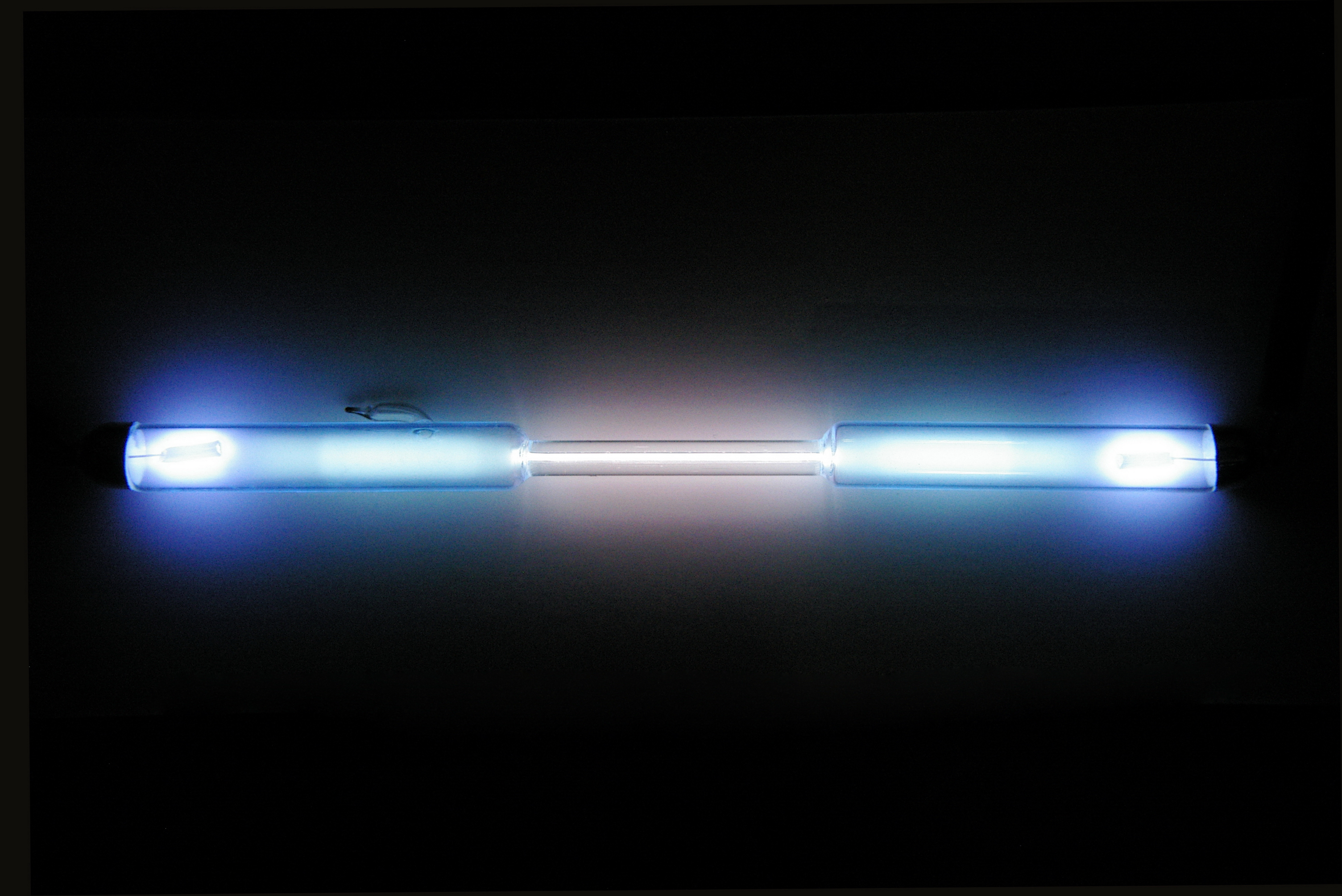
While krypton is a colorless, odorless, and tasteless gas in its natural state, its “color” becomes one of its most defining characteristics when it is subjected to an electrical discharge. In a tech context, krypton is synonymous with a brilliant, silvery-white luminescence that occasionally shifts into the yellow and green spectrums depending on pressure and the specific application. This unique spectral output has made it a vital component in the evolution of everything from high-speed photography to the lithography processes that create the processors in our smartphones.
The Luminous Spectrum: Understanding Krypton’s Role in Display and Lighting Technology
To understand the color of krypton, one must first understand the physics of gas discharge. When krypton gas is confined in a vacuum tube and energized by an electric current, its electrons become excited. As these electrons return to their ground state, they release energy in the form of photons. This process produces a spectrum of light that is remarkably complex.
The Physics of Atomic Emission
In low-pressure environments, krypton emits a distinct whitish light with significant spectral lines in the green and yellow regions. This differentiates it from neon, which glows a fiery red-orange, or argon, which leans toward a pale violet. In the world of display technology and specialized lighting, this “cool” white glow is highly valued. Unlike standard incandescent bulbs that rely on heating a filament until it glows, krypton-filled lamps utilize this atomic emission to produce light with significantly less heat waste.
For hardware engineers, the specific wavelengths emitted by krypton are a tool for precision. Because its spectral lines are so sharp and stable, krypton was historically used to define the international standard for the meter. While that standard has since transitioned to the speed of light, the stability of krypton’s “color” remains a benchmark for optical tech.
From Discharge Tubes to High-End Displays
In high-performance lighting systems, krypton is often used as a filler gas to enhance the longevity and brightness of bulbs. When mixed with other gases, it can shift the color temperature of a light source to mimic natural daylight more effectively than argon-based alternatives. In the tech industry, this is crucial for color-critical work, such as professional video editing monitors or studio lighting setups where “true-to-life” color reproduction is mandatory.
Furthermore, krypton is utilized in high-intensity discharge (HID) lamps. These are the powerful lights found in high-end automotive headlights and stadium lighting. The “color” here is a piercing, blue-white light that provides superior visibility and contrast compared to older halogen technologies.
High-Performance Hardware: The Industrial Utility of Krypton Lasers
Beyond simple illumination, the color of krypton takes on a more concentrated form in laser technology. In the tech and manufacturing sectors, the krypton-ion laser is a workhorse for applications requiring specific, high-power wavelengths.
Precision Lithography in Semiconductor Manufacturing
One of the most critical uses of krypton in the tech world is in the production of microchips. Excimer lasers, specifically Krypton Fluoride (KrF) lasers, emit light at a wavelength of 248 nanometers. This is in the deep ultraviolet (DUV) spectrum—a “color” invisible to the human eye but essential for the electronics industry.
The 248 nm wavelength allows engineers to “print” incredibly small circuits onto silicon wafers. Before the advent of more advanced extreme ultraviolet (EUV) lithography, KrF lasers were the gold standard for producing the high-density transistors found in modern CPUs and memory modules. Even today, they remain vital for the production of “legacy” chips used in the automotive, medical, and appliance industries. Without the specific spectral output of krypton-based lasers, the global supply of semiconductors would vanish.
Medical and Surgical Tech Applications
In the medical technology sector, the specific red and green lines of the krypton-ion laser are used for specialized surgeries. The red light emitted by these lasers (at 647.1 nm) is particularly effective for ophthalmic procedures, such as treating retinal conditions. Because this specific “color” of light is absorbed differently by various tissues, it allows surgeons to operate with a level of precision that minimizes collateral damage to surrounding areas.
This is a prime example of how the color of an element is repurposed as a surgical tool, proving that krypton’s value lies in its specific interaction with the electromagnetic spectrum.

Krypton in Photography and Cinematography: Capturing the Perfect Frame
The tech involved in modern photography relies heavily on the behavior of noble gases. When you see a professional photographer’s strobe light fire, or a high-speed camera capturing a bullet in mid-air, you are likely seeing the result of krypton and xenon working in tandem.
Xenon vs. Krypton: The Battle for White Light Balance
While xenon is the primary gas used in camera flashes due to its sunlight-like spectrum, krypton is often added to the mix to improve efficiency and color stability. In high-speed cinematography, where cameras may capture thousands of frames per second, the light source must be incredibly consistent. Any fluctuation in the “color” or intensity of the light between frames would ruin the footage.
Krypton’s contribution to these flash tubes ensures a faster recovery time and a more stable discharge. This allows high-speed digital sensors to capture images with perfect color fidelity, even at shutter speeds that are faster than the human eye can process.
Speed and Efficiency in High-Speed Strobe Systems
In the niche of scientific imaging—used for testing hardware durability, aerodynamic flow, and explosive dynamics—krypton-filled lamps are preferred for their ability to produce intense bursts of light with very short pulse durations. The “brilliant white” color of these strobes ensures that digital sensors can “see” the object with maximum contrast, reducing the noise in the high-ISO settings often required for high-speed captures.
The Digital Identity of Krypton: Why Tech Innovators Choose the “Krypton” Aesthetic
Beyond the physical gas, the word “Krypton” and its associated color palette—often envisioned as a glowing, neon green or a sleek, electric blue—have become iconic in tech branding and digital security.
In the software and digital security world, the name “Krypton” is frequently used for encryption protocols, authentication apps, and decentralized platforms. This choice isn’t accidental. The association with a “noble” gas implies stability, rarity, and a level of futuristic sophistication. When designers choose a color scheme for these tools, they often gravitate toward the “atomic glow” aesthetic—high-contrast cyans and neon greens that mimic the energized state of the gas.
This digital color theory reinforces the idea of “tech-modernism.” It suggests a product that is fast, secure, and operating on the cutting edge of science. Whether it is the glow of a custom-built liquid-cooled PC or the UI of a high-end cybersecurity dashboard, the “color of krypton” has transitioned from a laboratory observation to a visual shorthand for high-performance technology.
The Future of Noble Gases in Sustainable Tech Infrastructure
As the tech industry moves toward more sustainable and efficient infrastructure, the role of krypton is evolving. In the world of Green Tech, krypton gas is an exceptional insulator.
Energy-Efficient Data Centers
One of the largest challenges in modern tech is the energy consumption of data centers. To combat this, high-performance thermal insulation is required. Krypton is increasingly used as a filler gas in high-efficiency double- and triple-paned windows within these facilities.
Because krypton is denser than argon, it provides superior thermal resistance. By filling the gaps between glass panes with krypton, data centers can maintain a stable internal temperature with significantly less reliance on energy-intensive HVAC systems. In this context, the “color” of krypton is its transparency—a silent, invisible barrier that helps the tech industry reduce its carbon footprint.

Next-Gen Satellite Propulsion
Perhaps the most exciting tech frontier for krypton is in space. Companies like SpaceX have utilized krypton as a propellant for the Hall-effect thrusters on their Starlink satellites. While xenon was the traditional choice, krypton is more abundant and cost-effective for large-scale constellations.
When these thrusters are active, they produce a faint, ethereal blue-violet glow—another “color” of krypton in action. This use case represents the ultimate merger of tech and noble gas physics: using an energized gas to maneuver a global internet network through the vacuum of space.
In conclusion, the color of krypton is far more than a simple visual descriptor. It is a silvery-white glow in a laboratory, a deep ultraviolet beam in a chip factory, a piercing blue-white light on a dark highway, and a subtle violet flame on a satellite in orbit. For the tech professional, krypton represents a bridge between the fundamental laws of physics and the high-performance hardware of the future. Understanding its color is the first step in understanding how this versatile element powers the modern world.
aViewFromTheCave is a participant in the Amazon Services LLC Associates Program, an affiliate advertising program designed to provide a means for sites to earn advertising fees by advertising and linking to Amazon.com. Amazon, the Amazon logo, AmazonSupply, and the AmazonSupply logo are trademarks of Amazon.com, Inc. or its affiliates. As an Amazon Associate we earn affiliate commissions from qualifying purchases.