
In the evolution of visual technology, the photo negative stands as one of the most significant breakthroughs in how humans capture, store, and reproduce reality. While modern smartphone users are accustomed to instant, high-definition digital previews, the concept of the “negative” remains a fundamental pillar of imaging science. Whether it is the physical strip of celluloid from a 35mm camera or the algorithmic inversion used in modern software, understanding photo negatives is essential for anyone interested in the intersection of chemistry, physics, and digital processing.
At its core, a photo negative is an image in which the lightest areas of the original subject appear darkest and the darkest areas appear lightest. In color photography, colors are also inverted into their respective complements. This “inverse” state is not the final product but a crucial intermediary step—a data storage medium that allows for the creation of infinite positive prints.

The Mechanics of the Photographic Negative: Analog Foundations
To understand the digital state of photography today, one must first grasp the analog technology that birthed it. The creation of a photo negative is a masterclass in chemical engineering. Traditional film consists of a plastic base (usually acetate or polyester) coated with a light-sensitive emulsion. This emulsion contains microscopic silver halide crystals.
Chemical Composition and Light Sensitivity
When you press the shutter button on an analog camera, light hits the film. The silver halide crystals undergo a chemical change proportional to the amount of light they receive. Areas of the film exposed to intense light (the highlights of a scene, like the sun or a white shirt) experience a significant chemical reaction, while areas in shadow remain relatively unchanged.
This creates what is known as a “latent image”—an invisible record of the scene. It is only through the process of chemical development that this image becomes visible. During development, the exposed silver halide grains are converted into metallic silver, which is opaque and dark. Consequently, the brightest parts of the original scene become the densest, darkest parts of the negative.
The Concept of Color Reversal and the Orange Mask
In color negative film, the process is layered. The film contains three distinct layers of emulsion, each sensitive to one of the primary colors of light: blue, green, and red. During development, dye-forming couplers create colors that are the complements of the light captured. Blue light creates a yellow image, green light creates magenta, and red light creates cyan.
If you look at a strip of developed 35mm color film, you will notice a distinct orange or amber tint. This is known as the “orange mask.” From a technical standpoint, this mask is a built-in color correction tool designed to compensate for the imperfections in magenta and cyan dyes. In the world of modern digital scanning, this orange mask presents a unique challenge for software algorithms, which must “subtract” the orange light to accurately render the intended colors of the final positive image.
The Digital Revolution: Reimagining Negatives in the Age of Pixels
As the world shifted from film to silicon, the term “negative” evolved. In the digital realm, we no longer deal with silver halide, but with photosites on a CMOS or CCD sensor. However, the logic of the negative persists in how we handle raw data and image inversion.
RAW Files: The Modern Digital Negative
In professional photography and high-end mobile tech, the “RAW” file format is often referred to as the “digital negative.” Much like a film negative, a RAW file is not a finished image. It is a collection of unprocessed data captured by the camera’s sensor.
A RAW file contains the full dynamic range and color depth of the sensor’s output, without the permanent “baking in” of white balance, contrast, or saturation that occurs in a JPEG. Just as a photographer in a darkroom would use a film negative to “dodge and burn” an image to perfection, a digital editor uses a RAW file to recover shadows and highlights that would otherwise be lost. The technology behind RAW processing is what allows modern smartphone cameras to perform “computational photography,” blending multiple exposures to simulate the latitude once held exclusively by large-format film negatives.
The Logic of Digital Inversion
On a purely mathematical level, creating a digital negative is a simple but fascinating process. Digital images are composed of pixels, usually with values ranging from 0 (pure black) to 255 (pure white) in an 8-bit system. To create a negative effect in software, an algorithm performs a “subtraction” operation.
The formula is essentially: New Pixel Value = 255 – Original Pixel Value.
If a pixel has a value of 200 (light gray), its negative counterpart will be 55 (dark gray). For color images, this operation is performed across the Red, Green, and Blue (RGB) channels independently. This mathematical inversion is the foundation for “Invert” filters in apps and the specialized software used to digitize old family archives.
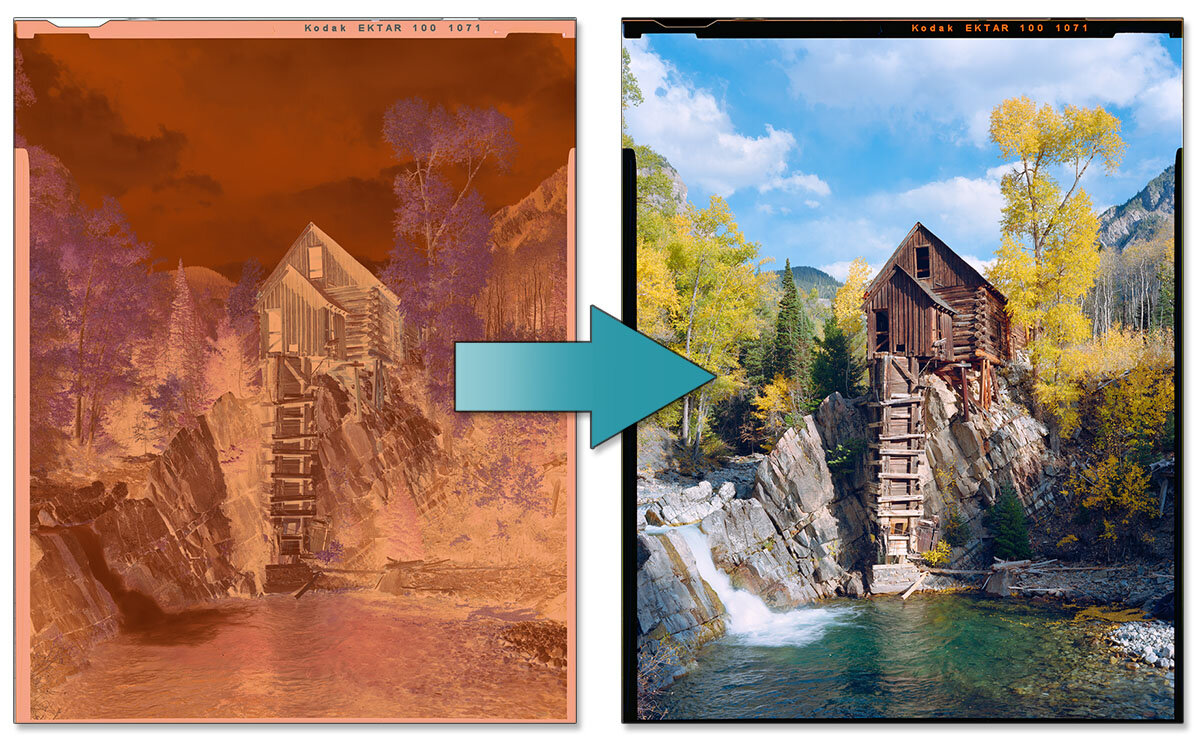
AI and Advanced Software for Negative Processing
While simple inversion is easy, high-quality “negative-to-positive” conversion is a complex technological task. This is where AI tools and sophisticated software suites have revolutionized the field.
AI-Driven Color Science
The biggest hurdle in digitizing film negatives is the aforementioned orange mask and the non-linear way film reacts to light. Standard inversion often results in “muddy” shadows or unnatural skin tones. To solve this, developers have turned to Machine Learning (ML).
AI models are now trained on thousands of professional film scans to understand the specific “signature” of different film stocks, such as Kodak Portra or Fujifilm Pro 400H. When you use an AI-powered scanning app, the software identifies the film base, calculates the necessary color offsets to neutralize the orange mask, and applies a gamma curve that mimics the way light would naturally pass through an enlarger in a traditional darkroom.
Professional Conversion Suites
Tools like Negative Lab Pro (a plugin for Adobe Lightroom) and SilverFast use advanced algorithms to handle the “inversion” at a professional level. These programs do more than just flip colors; they manage the histogram of the image to ensure that the black point and white point are correctly set. This technology has allowed for the preservation of historical archives, enabling historians to recover details from century-old negatives that were previously unprintable due to chemical degradation.
The Aesthetic and Technical Value of Negative Imagery Today
In an era of perfect digital clarity, the “negative” aesthetic has seen a massive resurgence. This isn’t just nostalgia; it is a tech trend driven by a desire for the unique textures and color palettes that analog negatives provide.
Why Tech Enthusiasts are Returning to Analog
The “Analog Renaissance” has seen a surge in the use of film cameras among Gen Z and tech-savvy hobbyists. From a technical perspective, film negatives offer a different “look” because of their grain structure. Unlike digital noise, which is a mathematical error in a sensor’s pixel grid, film grain is a physical, organic byproduct of silver crystals.
Furthermore, the “latitudinal” technology of negatives—their ability to hold onto detail in extremely bright highlights—is something that even high-end digital sensors struggle to replicate perfectly. Tech enthusiasts often use “hybrid workflows,” where they shoot on physical film negatives and then use high-resolution DSLR cameras to “scan” the negatives, combining the best of 20th-century chemistry with 21st-century digital resolution.
The Role of Negative Imaging in Specialized Technology
Beyond art, the “photo negative” concept is vital in medical and security technology. X-ray imaging, for instance, is inherently a negative process. Denser materials like bone block X-rays and appear white on the negative, while softer tissues appear darker. In modern digital radiography, software allows doctors to toggle between positive and negative views to better identify fractures or tumors, proving that the ability to “invert” our perspective remains a critical tool in diagnostic tech.
How to Digitally Convert Photo Negatives: A Step-by-Step Tutorial
If you have a box of old negatives, modern technology makes it easier than ever to bring them into the digital age. The process involves two main components: high-quality light capture and algorithmic inversion.
Step 1: The Light Source
The most critical requirement for digitizing a negative is a “backlight.” You cannot simply take a photo of a negative on a table; light must pass through the film. Tech-savvy DIYers often use a high-CRI (Color Rendering Index) LED light pad. A high CRI ensures that the light contains a full spectrum of colors, which is essential for accurate color reproduction during the conversion phase.
Step 2: The Capture Gadget
You have three main options:
- Dedicated Film Scanners: These are gadgets designed specifically to feed film strips through a sensor.
- Flatbed Scanners with Transparency Units: High-end scanners (like the Epson Perfection series) have a secondary light in the lid to scan negatives.
- Camera Scanning: Using a digital camera with a macro lens to take a high-resolution photo of the negative. This is currently the preferred method for tech enthusiasts because it offers higher bit-depth and faster speeds than traditional scanners.
Step 3: Software Inversion and Color Correction
Once you have a digital “photo of the negative,” you must process it.
- Inversion: Use an “Invert” command in Photoshop or GIMP.
- Neutralizing the Base: Use the “White Balance” eyedropper tool on the unexposed border of the film strip to remove the orange tint.
- Levels Adjustment: Adjust the black and white sliders in the histogram to bring back contrast.
For those who want a one-click solution, mobile apps like “FilmBox” or “PhotoMyne” use the smartphone’s camera and AI to detect the negative, invert it, and crop it automatically in real-time. While these apps are convenient, they often lack the dynamic range of a professional RAW-based workflow.

The Future of the Negative
The photo negative is far more than a relic of the past; it is a concept that continues to define the boundaries of how we process visual data. From the silver halide reactions of the 1800s to the AI algorithms of the 2020s, the “negative” represents the raw, unpolished truth of a captured moment. As we move further into the age of AI-generated imagery and synthetic media, the physical and digital “negative” serves as an essential benchmark for authenticity and a reminder of the complex science required to turn light into a lasting memory.
aViewFromTheCave is a participant in the Amazon Services LLC Associates Program, an affiliate advertising program designed to provide a means for sites to earn advertising fees by advertising and linking to Amazon.com. Amazon, the Amazon logo, AmazonSupply, and the AmazonSupply logo are trademarks of Amazon.com, Inc. or its affiliates. As an Amazon Associate we earn affiliate commissions from qualifying purchases.