
In the world of personal finance, investing, and corporate operations, the term “management fee” is ubiquitous. Whether you are reviewing your 401(k) statement, looking into a new real estate investment, or hiring a firm to oversee your business operations, management fees represent a critical factor that can significantly influence your net returns and overall financial health. At its core, a management fee is a charge levied by investment managers or professionals for the service of managing assets, funds, or business portfolios.
While the concept may seem straightforward, the structures, implications, and long-term effects of these fees are complex. For an investor, understanding what a management fee covers—and what it doesn’t—is the difference between achieving financial independence and seeing your wealth eroded by silent costs. This guide delves into the mechanics of management fees across various financial sectors, their impact on long-term wealth, and how to evaluate whether the price you are paying aligns with the value you are receiving.
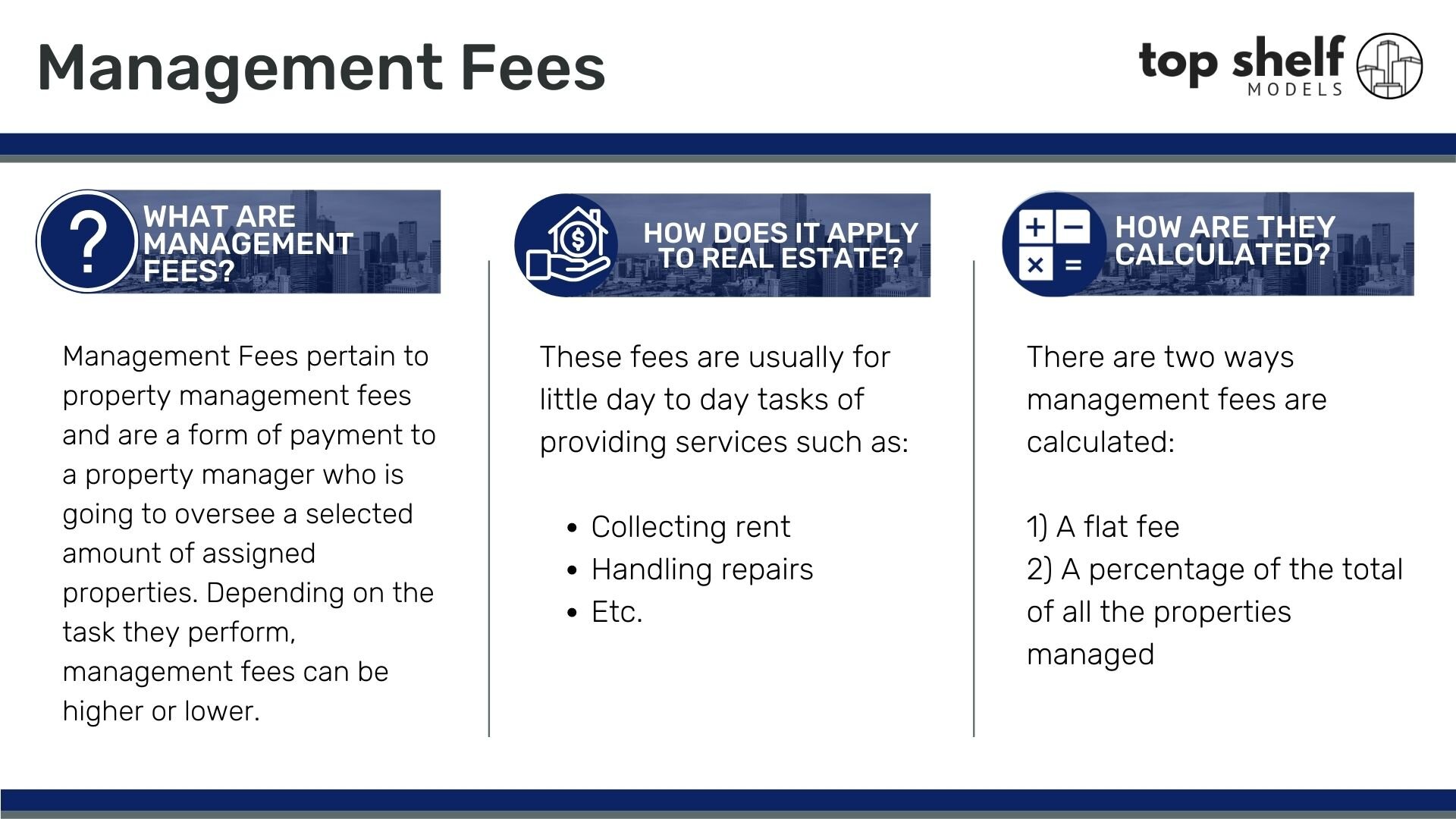
Understanding Management Fees in Investment Portfolios
Management fees are most commonly associated with the investment industry. When you pool your money with other investors in a mutual fund, exchange-traded fund (ETF), or hedge fund, you are essentially hiring a team of professionals to make decisions on your behalf. These professionals conduct research, execute trades, monitor market trends, and manage risk. The management fee is the compensation they receive for this expertise and the operational infrastructure required to run the fund.
Mutual Funds and Exchange-Traded Funds (ETFs)
For the average retail investor, management fees are typically bundled into what is known as the “Expense Ratio.” This is an annual percentage of your total investment deducted by the fund company. For example, if you have $10,000 in a mutual fund with a 1% expense ratio, you will pay $100 annually in fees.
There is a significant divide in the industry between active and passive management fees. Active managers aim to outperform the market by selecting specific stocks or timing market movements; they typically charge higher fees (ranging from 0.5% to 2.0%) to cover the costs of high-level research and frequent trading. Passive managers, on the other hand, simply track an index like the S&P 500. Because this requires less human intervention, fees for passive ETFs can be as low as 0.03%.
Hedge Funds and Private Equity: The “Two and Twenty” Model
In the realm of high-net-worth investing, fee structures become more aggressive. The traditional model for hedge funds and private equity firms is known as “2 and 20.” This consists of a 2% annual management fee based on the total assets under management (AUM) and a 20% performance fee (or incentive fee) on any profits earned above a certain benchmark.
The 2% management fee is intended to cover the firm’s operating expenses—salaries, office space, and technology—regardless of how the fund performs. The 20% performance fee is designed to align the manager’s interests with the investors, rewarding them only when they generate positive returns. However, this structure has faced increasing scrutiny in recent years as many high-fee funds have struggled to outperform low-cost index funds.
Robo-Advisors vs. Human Financial Advisors
The rise of fintech has introduced a new tier of management fees. Traditional human financial advisors often charge an AUM fee of approximately 1% to provide comprehensive financial planning, tax strategy, and portfolio management. In contrast, robo-advisors—automated platforms that use algorithms to manage your portfolio—typically charge between 0.25% and 0.50%. While robo-advisors are more cost-effective, they lack the nuanced, personalized touch of a human professional, creating a trade-off between cost and service depth.
The Mathematical Impact: How Fees Errode Long-Term Wealth
One of the most dangerous aspects of management fees is that they often appear small in isolation. A 1% fee sounds negligible compared to an 8% annual return. However, because of the power of compounding, these fees have a disproportionate impact over decades. When a fee is deducted, that money is no longer in your account to earn interest, and the “lost” interest on that fee also fails to earn interest in subsequent years.
The Compounding Effect in Reverse
Consider an investor who places $100,000 into a portfolio with a 7% average annual return over 30 years. If that investor pays 0.25% in annual fees, their portfolio will grow to approximately $710,000. If that same investor pays a 1.25% fee, their portfolio will only grow to about $515,000.
In this scenario, a seemingly small 1% difference in fees results in nearly $200,000 of lost wealth. This “leakage” is one of the primary reasons why modern financial experts emphasize “fee awareness.” Every dollar saved in management fees is a dollar that stays in your portfolio to compound over time.
Assessing the Value of “Alpha”
The justification for higher management fees is the pursuit of “alpha”—returns that exceed a market benchmark. If a manager charges a 2% fee but consistently delivers returns 5% higher than the market, the fee is well worth the cost. However, empirical data from sources like the SPIVA (Standard & Poor’s Indices Versus Active) scorecards consistently shows that the vast majority of active managers fail to outperform their benchmarks over 10- and 15-year periods. When active managers underperform, the management fee acts as a double penalty: you receive lower returns and pay a higher price for the privilege.

Management Fees in Real Estate and Business Operations
While the term is synonymous with the stock market, management fees are equally prevalent in tangible asset management and corporate environments. In these contexts, the fee is usually a service fee for the physical and administrative oversight of an asset.
Property Management Fees
For real estate investors, management fees are a standard operating expense. A property management company typically charges between 8% and 12% of the monthly gross rental income. In exchange, the manager handles tenant screening, rent collection, emergency repairs, and legal compliance.
In real estate, the management fee is often viewed as “buying back your time.” For a passive investor, paying a 10% fee to avoid the headaches of being a landlord is a logical business decision. However, investors must also account for additional “hidden” management costs, such as lease-up fees (charged when a new tenant is found) and maintenance markups.
Corporate and Investment Partnership Fees
In business-to-business (B2B) environments, management fees often appear in the context of parent companies overseeing subsidiaries or private equity firms managing portfolio companies. These fees cover centralized services such as HR, legal counsel, and strategic consulting provided by the parent organization.
From a business finance perspective, these fees must be carefully structured to ensure they are “at arm’s length”—meaning they reflect fair market value. If a management fee is set too high, it can be flagged by tax authorities as an attempt to shift profits between entities to avoid taxation.
How to Evaluate and Negotiate Management Fees
Because management fees are a direct hit to your bottom line, it is essential to approach them with a critical eye. You should never accept a fee structure without understanding exactly what services are included and how the costs compare to industry averages.
1. Demand Transparency
The first step in evaluating a fee is identifying it. In many brokerage accounts, management fees are not explicitly billed to you; they are quietly deducted from the fund’s assets. Review the “Prospectus” of any fund you own and look for the “Total Annual Operating Expenses.” If you are working with a private wealth manager, ask for a “Fee Disclosure Statement” that outlines AUM fees, commissions, and any third-party payments they receive.
2. Compare the “Value-Add”
Not all fees are bad. A management fee is an investment in professional expertise. When evaluating a fee, ask:
- Does this manager provide tax-loss harvesting that offsets the fee?
- Does the property manager have a lower vacancy rate than I could achieve on my own?
- Does the financial advisor provide estate planning and insurance analysis that saves me money elsewhere?
If the only service being provided is asset allocation, and that allocation isn’t beating a low-cost index, the fee is likely too high.
3. Negotiate for Lower Rates
Many people don’t realize that management fees—especially in private wealth management and real estate—are often negotiable. If you have a significant amount of capital, you have leverage. Most advisory firms have tiered fee schedules (e.g., 1% for the first million, 0.75% for the next two million). If you are on the cusp of a tier, or if you are bringing multiple accounts to a firm, don’t hesitate to ask for a “fee break.”
4. Consider Fee-Only Advisors
To avoid the conflicts of interest often inherent in management fee structures, many investors are moving toward “fee-only” financial planners. These professionals charge a flat hourly rate or a project-based fee rather than a percentage of assets. This ensures that the advisor’s compensation is not tied to the size of your portfolio or the specific products they recommend, providing a more objective level of management.

Conclusion: The Bottom Line on Management Fees
Management fees are an inevitable part of the financial landscape. They represent the cost of delegating complex tasks to experts, whether that involves navigating volatile stock markets or managing a multi-unit apartment complex. However, because these fees are often calculated as percentages, their impact is magnified by time and scale.
The key to successful wealth management is not necessarily finding the lowest fee possible, but finding the best value. A 0.05% fee for a poorly constructed index might be worse than a 0.75% fee for a comprehensive financial strategy that protects your estate and minimizes your tax burden. By remaining vigilant, demanding transparency, and understanding the long-term math of compounding costs, you can ensure that your management fees are an investment in your future rather than a drain on your legacy. Always remember: in the world of finance, you don’t just get what you pay for—you get what you keep.
aViewFromTheCave is a participant in the Amazon Services LLC Associates Program, an affiliate advertising program designed to provide a means for sites to earn advertising fees by advertising and linking to Amazon.com. Amazon, the Amazon logo, AmazonSupply, and the AmazonSupply logo are trademarks of Amazon.com, Inc. or its affiliates. As an Amazon Associate we earn affiliate commissions from qualifying purchases.