
The video game industry is often defined by its massive intellectual properties, but occasionally, the individuals behind the software become as influential as the games themselves. Jeff Kaplan, the former Vice President of Blizzard Entertainment and the face of the Overwatch franchise, is one such figure. Known affectionately by millions of players as “Papa Jeff,” Kaplan’s departure from Blizzard in April 2021 sent shockwaves through the technology and gaming sectors. Since then, the question of what he is doing now has become a central point of speculation for industry analysts, software engineers, and fans alike.
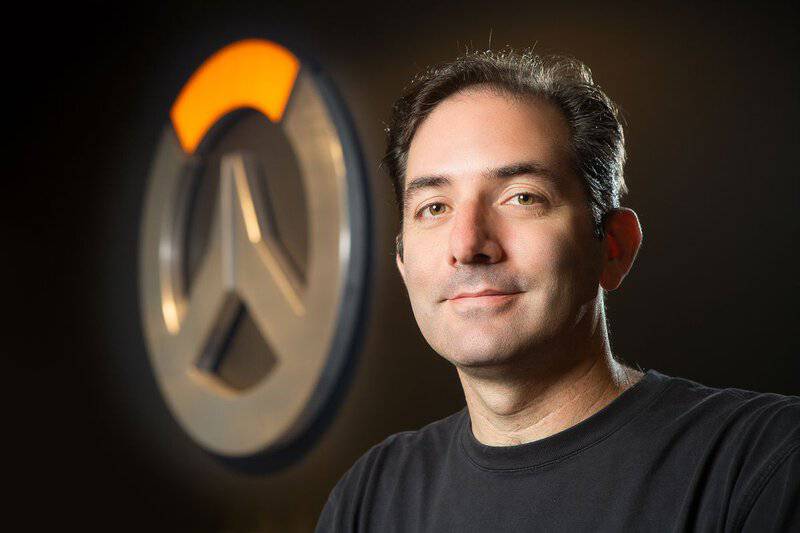
Kaplan’s career represents a bridge between the old guard of hardcore MMO development and the modern era of high-fidelity, live-service hero shooters. To understand his current hiatus and potential future, one must look at the technical and cultural shift occurring within the broader software development landscape.
The Legacy of “Papa Jeff”: From EverQuest to Overwatch
Before analyzing Kaplan’s current status, it is essential to recognize the technical trajectory that made him a titan in the tech space. Kaplan did not start as a traditional computer scientist; he was a prolific player of EverQuest whose deep understanding of game systems and community dynamics caught the eye of Blizzard developers. His journey from a “Tigole” (his online handle) to a Lead Designer on World of Warcraft (WoW) highlights a pivotal era in software history: the transition of online gaming from niche hobby to global infrastructure.
Redefining Massive Scale Software
During his tenure on World of Warcraft, Kaplan was instrumental in designing the quest systems and world flow that would define the MMORPG genre for decades. From a technical standpoint, this involved managing massive databases, server sharding, and the delicate balance of client-side performance versus server-side verification. The success of WoW was not just in its art direction, but in its accessibility—the software ran on a wide variety of hardware, a “tech-for-all” philosophy that Kaplan would carry into his next major project.
The Technical Triumph of Overwatch
When the ambitious project “Titan” was canceled, Kaplan led the team that salvaged its remains to create Overwatch. This shift was a masterclass in technical pivoting. The team moved from a complex, over-engineered MMO framework to a highly optimized, proprietary engine designed specifically for fast-paced, 6v6 combat. Under Kaplan’s leadership, the Overwatch engine achieved a “favor the shooter” netcode philosophy, which utilized sophisticated interpolation and extrapolation algorithms to ensure that the game felt responsive despite varying latencies. This technical feat was a major factor in the game’s rapid ascent in the competitive e-sports scene.
The Quiet Departure: Analyzing the 2021 Exit
In April 2021, after nearly two decades at Blizzard, Kaplan announced his departure. Unlike many high-profile tech exits, there was no immediate announcement of a new “dream studio” or a venture capital-backed startup. His exit occurred during a tumultuous period for Activision Blizzard, marked by shifting corporate priorities and the transition toward the long-delayed Overwatch 2.
Speculation and the Non-Compete Period
In the high-stakes world of software development and executive leadership, non-compete agreements are standard. It is highly probable that Kaplan’s contract included a lengthy “gardening leave” or a non-compete clause that restricted him from joining a rival developer or starting a new studio for a period of two to three years. Given that we are now several years past his departure, the tech community is watching closely for the expiration of these legal barriers.
The Impact on Overwatch 2’s Development Cycle
Kaplan’s departure was more than a loss of a spokesperson; it was a loss of a specific product vision. Since his exit, Overwatch 2 has undergone significant technical and structural changes, including the controversial cancellation of the ambitious PvE (Player vs. Environment) Hero Mode that Kaplan had championed. From a software architecture perspective, Kaplan’s vision relied on a complex skill-tree system and AI behavior sets that proved difficult to scale alongside the live-service demands of the PvP game. His absence arguably shifted the development focus toward a more streamlined, monetization-heavy framework, moving away from the “feature-complete” philosophy he often advocated for.
Current Status: The Silence of a Tech Visionary

As of 2024, Jeff Kaplan has maintained a near-total blackout on social media and professional networking platforms. He has not appeared on podcasts, nor has he been listed as a founder of any new entities in public business registries. While this silence may seem unusual in an era of “personal branding,” it aligns with the behavior of several other Blizzard veterans who took extended sabbaticals before returning to the industry.
The Trend of the “Boutique Studio”
We are currently seeing a massive exodus of veteran talent from legacy AAA studios to smaller, agile tech startups. Figures like Mike Morhaime (Dreamhaven), Ben Brode (Second Dinner), and Chris Metzen (before his return to Blizzard) all took time away from the spotlight before re-emerging. If Kaplan is following this pattern, he is likely in a “stealth phase,” potentially consulting on game design or quietly assembling a team of senior engineers to build a new platform from the ground up.
Personal Life and Private Ventures
There is also the very real possibility that Kaplan has chosen to step away from the grueling “crunch” culture that often plagues high-level game development. Managing a team of hundreds of developers, artists, and engineers while being the public face of a multi-billion dollar franchise is a recipe for burnout. Kaplan’s current status may simply be one of well-earned retirement or a pivot toward private investments in the broader tech and software ecosystem.
The Future of Game Design: Where Kaplan Fits in the Modern Tech Stack
Should Kaplan choose to return to the industry, the landscape he enters will be vastly different from the one he left in 2021. The integration of AI, the dominance of the Unreal Engine 5 ecosystem, and the shift toward cloud-based gaming present new opportunities for a visionary developer.
The Shift Toward Modular and Live-Service Architectures
Modern game development is moving away from proprietary engines in favor of modular frameworks like Unreal Engine 5 (UE5). Kaplan, who spent his career working with bespoke Blizzard engines, would now have access to Nanite and Lumen technologies that simplify the pipeline for high-fidelity asset management. A new “Kaplan project” would likely leverage these tools to focus on what he does best: systems design and player experience, rather than the underlying hardware abstraction layers.
AI Integration and Adaptive Systems
One of the most significant shifts in tech since 2021 is the rise of Generative AI. For a designer who prioritized “game feel” and community interaction, AI offers the potential for more dynamic NPC behaviors and sophisticated anti-toxic community management tools. Kaplan’s history of advocating for a positive player environment suggests that any future software he develops would likely incorporate advanced automated moderation and social systems—areas where modern LLMs (Large Language Models) are beginning to show promise.
Why Kaplan’s Next Move Matters for the Industry
The technology sector often looks to “auteur” developers to set the next trend. Just as Hideo Kojima redefined the action-stealth genre after his split from Konami, a new venture from Jeff Kaplan could redefine the multiplayer landscape.
Lessons in Community Management and Tech Transparency
One of Kaplan’s greatest contributions to the tech world was his approach to community engagement. The “Developer Update” video format he popularized set a new standard for transparency in software development. He didn’t just announce features; he explained the technical why behind balance changes and engine updates. In an era where many tech companies feel increasingly disconnected from their user bases, Kaplan’s return would likely signal a return to “community-first” development.

The Rise of Veteran-Led Studios
The industry is currently experiencing a “Great Fragmentation.” Large corporations like Activision Blizzard and Ubisoft are seeing their top-tier talent leave to form smaller, specialized studios. If Kaplan eventually announces a new project, it will likely be part of this trend—a studio that prioritizes software quality and innovative design over quarterly earnings reports.
While Jeff Kaplan remains “off the grid,” his influence continues to be felt in every patch note and hero update in the world of competitive gaming. Whether he is enjoying a quiet life outside the tech bubble or silently architecting the next revolution in multiplayer software, his legacy as a bridge between the player and the programmer remains intact. The tech world is waiting, and when the “Papa Jeff” avatar finally reappears, it will likely be with a project that once again challenges our understanding of what interactive software can achieve.
aViewFromTheCave is a participant in the Amazon Services LLC Associates Program, an affiliate advertising program designed to provide a means for sites to earn advertising fees by advertising and linking to Amazon.com. Amazon, the Amazon logo, AmazonSupply, and the AmazonSupply logo are trademarks of Amazon.com, Inc. or its affiliates. As an Amazon Associate we earn affiliate commissions from qualifying purchases.