
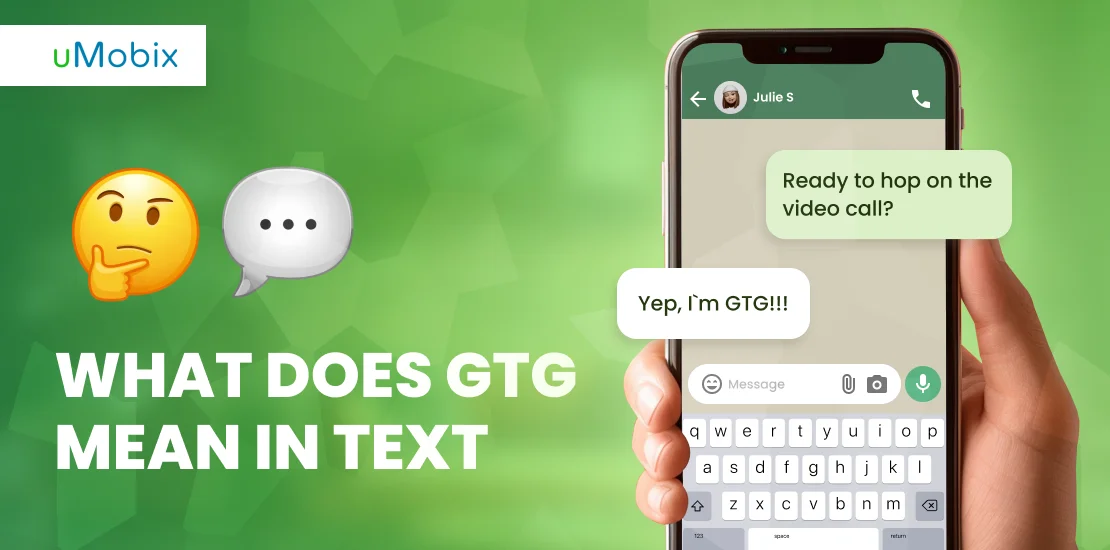
In the rapidly shifting landscape of digital communication, brevity is more than a convenience—it is a functional necessity. Among the vast lexicon of internet acronyms that have surfaced over the last three decades, “GTG” remains one of the most resilient and widely used. Standing for “Got To Go,” this three-letter shorthand serves as a critical signaling tool in the synchronous and asynchronous environments of modern messaging. However, to understand GTG simply as a linguistic shortcut is to overlook the profound technological shifts that necessitated its creation and continue to sustain its relevance in the era of artificial intelligence and high-speed mobile data.

The Technical Origins: From Character Limits to Digital Efficiency
The emergence of GTG and similar acronyms like BRB (Be Right Back) or TTYL (Talk To You Later) can be traced back to the early constraints of hardware and network protocols. In the late 1990s and early 2000s, the digital world was defined by the Short Message Service (SMS) and Internet Relay Chat (IRC).
During the SMS era, mobile networks operated on a strict 160-character limit per message. This constraint was not arbitrary; it was based on the space available in the signaling protocols used by the Global System for Mobile Communications (GSM). Because users were often charged per message, every character carried a literal financial cost. “Got to go” uses nine characters, including spaces, while “GTG” uses only three. This 66% reduction in data footprint was a logical optimization for users operating within the confines of early cellular technology.
Simultaneously, the rise of IRC and early instant messengers like ICQ and AOL Instant Messenger (AIM) introduced the concept of “real-time presence.” Unlike email, which was designed as a digital equivalent of the post, these platforms were designed for live interaction. In a live chat environment, leaving a conversation without notice—known today as “ghosting”—was often viewed as a breach of social protocol or a technical failure. GTG became a crucial piece of status data, informing the interlocutor that the session was ending. This facilitated a graceful “teardown” of the communication socket, much like a TCP/IP handshake concludes a data transmission.
The Impact of T9 and Hardware Constraints
Before the advent of the capacitive touchscreen, users relied on physical keypads and T9 (Text on 9 keys) predictive technology. Typing a full sentence was a laborious process involving multiple rhythmic presses of the same button. Acronyms like GTG were highly compatible with T9’s algorithmic suggestions, allowing users to signal their departure with just a few rapid thumb movements. While hardware has evolved toward full QWERTY digital keyboards, the cognitive habit of using optimized shorthand has remained hard-coded into the digital psyche.
GTG in the Professional Ecosystem: The Rise of Asynchronous Tech Tools
As digital communication migrated from personal SMS to professional platforms like Slack, Microsoft Teams, and Discord, the functional role of GTG evolved. In a modern corporate environment, “presence” is a complex technical state. Team members are often “active,” “away,” or “do not disturb” based on automated triggers from their operating systems or calendar integrations.
However, automated presence indicators are often imprecise. A user might be at their desk but “away” from a specific project or thread. In this context, GTG serves as a manual override to the automated system. It provides a definitive end-point to a synchronous “huddle” or a fast-paced Slack thread.
Asynchronous Communication and Deep Work
The modern tech industry heavily emphasizes “deep work”—periods of distraction-free cognitive focus. GTG has become a tool for managing digital boundaries. By stating “GTG, jumping into a meeting” or simply “GTG,” a developer or manager signals that they are closing their communication ports to focus on high-priority tasks.
In the framework of asynchronous communication, GTG functions as an acknowledgment of receipt and a suspension of the feedback loop. It informs the sender that further messages will not be processed in real-time, preventing the “notification fatigue” that occurs when a sender expects an immediate reply that never comes. This clarity is essential for maintaining the velocity of remote and distributed teams.
The Etiquette of the Modern “Logout”
In professional tech circles, the use of GTG is often followed by a brief contextual tag. For example, “GTG—standup starting” or “GTG—build is finishing.” This provides the “why” behind the disconnection, which is vital for maintaining transparency in environments where physical visibility is absent. This transition from “always-on” to “temporarily offline” is a key component of digital hygiene in the remote work era.
The UX of Brevity: How Input Hardware Shapes Our Language

The persistence of GTG in the age of unlimited data and high-speed processors is a fascinating study in User Experience (UX). Despite having the technical capacity to type out “I have to leave the conversation now,” users continue to choose GTG. This is largely due to the “path of least resistance” in UI design.
Haptic Feedback and Mobile UX
Modern mobile operating systems are designed to minimize the number of interactions required to complete an action. This is why “Smart Replies” on platforms like Gmail and LinkedIn often suggest short, punchy phrases. GTG fits perfectly into the thumb-centric UX of mobile devices. When a user is on the move—perhaps literally “going” somewhere—their ability to interact with a screen is compromised. GTG represents the minimum viable communication (MVC) required to maintain social or professional standing.
The Role of Desktop Shortcuts
On the desktop side, many power users utilize “text expansion” tools (like TextExpander or built-in OS shortcuts). A user might type “gtg” and have the system automatically expand it to “Got to go, I’ll be back online in an hour.” This demonstrates how tech-savvy users leverage shorthand as a “trigger” for more complex automated responses, blending the efficiency of the acronym with the clarity of full-sentence communication.
AI, Predictive Text, and the Automated Future of Shorthand
We are currently witnessing a shift from manual shorthand to AI-assisted communication. Large Language Models (LLMs) and N-gram predictive algorithms are now standard features in every major messaging app. When you type “G,” your keyboard likely already suggests “GTG” or “Got to go.”
From Shorthand to Suggestion
The irony of modern tech is that while we still use GTG for its brevity, we often don’t even type all three letters. The predictive engine anticipates the intent based on the time of day, the user’s location (detected via GPS), or the context of the previous message. If a user receives a message asking, “Can you hop on a quick call?” and their calendar shows a meeting starting in one minute, the AI might suggest “GTG” or “In a meeting” as a one-tap response.
This represents the “commoditization of intent.” The acronym GTG has moved from being a creative linguistic hack to a standardized data point that AI uses to facilitate faster human-to-human interaction. As we move toward more integrated “Ambient Computing,” where we interact with devices via voice or gesture, the literal typing of GTG may fade, but the concept of a quick, standardized “exit signal” will remain.
The Future of Presence Protocols
Looking forward, we may see the integration of “Smart Statuses” that eliminate the need for GTG entirely. Imagine a system where your messaging app detects you have stood up and are moving at a walking pace away from your workstation; it could automatically send a GTG notification to your active threads. While this raises significant privacy concerns, it is the logical conclusion of the quest for communicative efficiency that started with GTG in the 1990s.
Security, Privacy, and the Social Protocols of Digital Presence
While GTG is generally harmless, its use in specific tech contexts involves considerations of digital security and privacy. In the world of social engineering and phishing, the mimicry of “informal shorthand” is a common tactic. Attackers often use acronyms like GTG to create a sense of urgency or to make a fraudulent message appear as though it came from a known contact.
The Urgency Trap
An email that says, “I’m GTG but I need you to wire this payment quickly,” uses the brevity of the acronym to discourage the recipient from asking clarifying questions. Understanding the “vibe” of digital shorthand is therefore a part of modern digital literacy and cybersecurity awareness. Professional users are trained to recognize when the tone of an acronym-heavy message doesn’t match the established communication style of a colleague.
Data Footprints and Logs
Furthermore, in regulated industries (such as Fintech or Medtech), every “GTG” sent over a corporate channel is logged and archived for compliance. This serves as a reminder that even the most casual digital shorthand becomes part of a permanent, searchable data record. The transition from the ephemeral chats of the early web to the permanent archives of modern enterprise software has changed the stakes of every message we send.
Conclusion: The Endurance of Efficiency
What is GTG? In its simplest form, it is an acronym for “Got To Go.” But in the context of technology, it is a monument to our ongoing effort to synchronize human interaction with the speed of our machines. It is a relic of the SMS era that has successfully adapted to the world of Slack, AI, and remote work.
As long as humans interact through digital interfaces, we will continue to seek ways to minimize the friction between thought and expression. GTG remains a cornerstone of that effort—a tiny, three-letter bridge between the need for human connection and the relentless pace of the digital world. Whether it is typed on a T9 keypad, tapped on a glass screen, or suggested by a sophisticated neural network, GTG fulfills a fundamental tech requirement: the efficient transmission of intent.
aViewFromTheCave is a participant in the Amazon Services LLC Associates Program, an affiliate advertising program designed to provide a means for sites to earn advertising fees by advertising and linking to Amazon.com. Amazon, the Amazon logo, AmazonSupply, and the AmazonSupply logo are trademarks of Amazon.com, Inc. or its affiliates. As an Amazon Associate we earn affiliate commissions from qualifying purchases.