
In the modern era, the question “What is Earth’s climate?” has evolved from a purely meteorological inquiry into a complex technological challenge. While traditionally defined as the long-term average of weather patterns over decades, climate is increasingly being redefined through the lens of big data, high-performance computing, and sophisticated sensor networks. To understand Earth’s climate today is to understand the “Digital Twin” of our planet—a massive, interconnected web of data points that allows scientists and tech innovators to model, simulate, and predict the future of our environment with unprecedented precision.
The shift from manual observation to automated, real-time data ingestion has transformed climate science into a pillar of the global technology sector. By leveraging cutting-edge hardware and software, we are no longer just observing the climate; we are digitizing it to find solutions for sustainability and resilience.
Defining Climate through the Lens of Big Data and Modeling
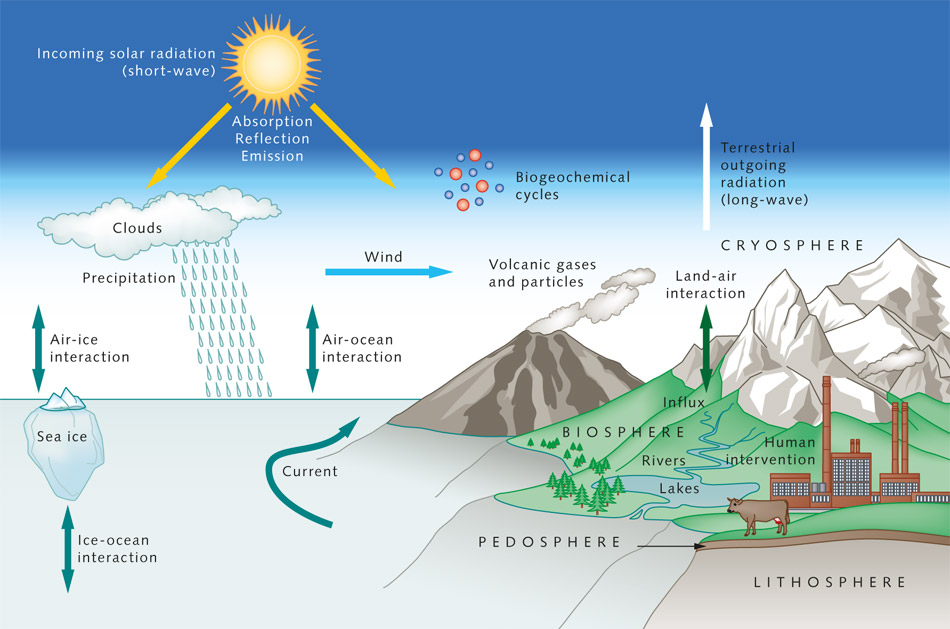
To a technologist, Earth’s climate is the ultimate data set. It is an intricate system of feedback loops involving the atmosphere, hydrosphere, cryosphere, biosphere, and geosphere. Traditionally, understanding these systems required centuries of painstaking record-keeping. Today, the process is driven by exabytes of data processed through advanced computational models.
From Direct Observation to Digital Twins
One of the most significant leaps in climate technology is the development of “Digital Twins.” A Digital Twin is a virtual representation of a physical object or system—in this case, the entire Earth. Companies like NVIDIA and organizations like the European Space Agency (ESA) are building high-fidelity digital replicas of the planet to simulate various climate scenarios. These models use historical data to predict how a 1-degree Celsius rise in temperature might affect specific regions, from crop yields in the Midwest to sea levels in Southeast Asia. This level of granularity is only possible because we now treat the climate as a programmable environment.
The Role of High-Performance Computing (HPC)
The sheer volume of variables involved in climate modeling—pressure, humidity, ocean currents, solar radiation, and human activity—requires immense processing power. High-Performance Computing (HPC) clusters and supercomputers are the engines behind these simulations. Modern climate models, such as the General Circulation Models (GCMs), break the Earth down into a three-dimensional grid. Each cell in that grid undergoes millions of calculations per second to simulate fluid dynamics and heat transfer. As quantum computing matures, we expect a radical shift in this field, enabling simulations that can account for molecular-level interactions in the atmosphere that current binary systems struggle to process.
The Tech Stack Behind Climate Monitoring
Understanding what Earth’s climate is requires a robust “tech stack” that spans from the depths of the ocean to the edge of space. This infrastructure provides the raw input necessary for every climate forecast and policy decision made globally.
Satellite Remote Sensing and Earth Observation
The primary layer of the climate tech stack is the satellite constellation. Modern satellites equipped with hyperspectral imagers, Lidar, and synthetic aperture radar (SAR) provide a constant stream of data regarding ice sheet thickness, deforestation rates, and greenhouse gas concentrations. Tech startups in the “New Space” sector are now launching “CubeSats”—miniature satellites that can be deployed in large swarms to provide high-frequency revisits of the same location. This allows for real-time monitoring of methane leaks or illegal logging, turning the climate into a transparent, audit-able system.
IoT and Ground-Based Sensor Networks
While satellites provide the macro view, the Internet of Things (IoT) provides the micro view. Smart sensors deployed in oceans (Argo floats), forests, and urban centers collect localized data on pH levels, soil moisture, and air quality. These devices often utilize “edge computing,” where data is processed locally on the device to save bandwidth and power before being sent to the cloud. This mesh of sensors acts as the planet’s nervous system, allowing us to feel the minute changes in the climate that satellites might miss.
Artificial Intelligence: Predicting the Unpredictable

The most transformative tool in defining and understanding Earth’s climate is Artificial Intelligence (AI). AI and Machine Learning (ML) are being used to fill the gaps in our knowledge, identifying patterns in climate data that are too complex for human analysts to discern.
Machine Learning in Weather vs. Climate Forecasting
There is a critical distinction between weather (short-term) and climate (long-term). Machine learning excels at both but in different ways. In climate tech, ML algorithms are used to “downscale” global models. While a global model might predict a general warming trend, an ML algorithm can ingest local topographical data and historical patterns to predict how that warming will manifest as a specific microclimate shift in a mountainous valley or a coastal city. This predictive power is essential for the tech-driven “Climate Adaptation” industry, which helps cities build resilient infrastructure.
Pattern Recognition in Extreme Weather Events
AI is particularly adept at identifying the precursors to extreme weather events, which are the most visible manifestations of climate change. By training on decades of satellite imagery and atmospheric data, neural networks can now predict the formation of atmospheric rivers or the intensification of hurricanes with much higher accuracy than traditional linear models. This proactive approach turns “climate” from a historical record into an actionable forecast, saving billions in potential damages and protecting digital and physical assets.
Climate Tech Solutions: Decoding the Future
Understanding what Earth’s climate is leads naturally to the development of technologies designed to manage or mitigate its changes. The “Climate Tech” vertical is currently one of the fastest-growing sectors in the technology industry, encompassing everything from energy production to carbon management.
Carbon Capture and Storage (CCS) Technologies
If the climate is a system out of balance due to excess carbon, then Direct Air Capture (DAC) and Carbon Capture and Storage (CCS) are the “system restores” of the tech world. These facilities use advanced chemical engineering and automated control systems to pull CO2 directly from the atmosphere or at the source of emission. The captured carbon is then compressed and pumped underground or converted into solid materials like basalt rock. The software controlling these plants optimizes energy consumption, ensuring that the process of capturing carbon doesn’t emit more than it recovers.
Smart Grids and Renewable Integration
The transition to a cleaner climate is fundamentally a software problem. Renewable energy sources like solar and wind are intermittent. To maintain a stable “climate-friendly” power supply, we use Smart Grids powered by AI. These grids use predictive analytics to balance supply and demand in real-time, shifting energy loads to batteries or electric vehicle fleets during peak production. This integration of software and hardware is what allows us to retool our civilization to fit within the constraints of Earth’s natural climate cycles.
Digital Security and the Integrity of Climate Data
As climate data becomes more central to global economics and geopolitics, the security of that data becomes paramount. If we define Earth’s climate through data, we must ensure that data is accurate, immutable, and protected from interference.
Protecting Scientific Assets from Cyber Threats
Climate modeling centers and satellite control stations are critical infrastructure. Cyberattacks on these systems could lead to the manipulation of climate data, resulting in false forecasts or the masking of environmental crimes. Digital security protocols, including multi-factor authentication, end-to-end encryption for satellite telemetry, and air-gapped backups for historical archives, are essential components of modern climate science.

Blockchain for Transparent Carbon Credits
One of the most innovative applications of technology in the climate space is the use of blockchain for carbon markets. To ensure that a “carbon credit” actually represents a ton of CO2 removed from the atmosphere, developers are building decentralized ledgers. These blockchains link satellite verification data directly to the credit, creating a “Proof of Carbon Sequestration.” This prevents double-counting and fraud, using the same principles of transparency and decentralization that power cryptocurrencies to protect the integrity of the Earth’s climate recovery efforts.
In summary, Earth’s climate is no longer a mystery of the natural world alone; it is a frontier of digital exploration. Through the integration of AI, satellite technology, high-performance computing, and secure data networks, we are gaining a granular understanding of the planet’s systems. This technological approach does more than just define the climate; it provides the toolkit necessary to navigate a changing world, turning data into a roadmap for global sustainability.
aViewFromTheCave is a participant in the Amazon Services LLC Associates Program, an affiliate advertising program designed to provide a means for sites to earn advertising fees by advertising and linking to Amazon.com. Amazon, the Amazon logo, AmazonSupply, and the AmazonSupply logo are trademarks of Amazon.com, Inc. or its affiliates. As an Amazon Associate we earn affiliate commissions from qualifying purchases.