
In the fast-evolving world of hardware engineering, aerospace technology, and consumer electronics, the term “CG Measurement” refers to the precise identification and calculation of the Center of Gravity. While the concept originates in classical physics, its application in the modern tech landscape is a critical determinant of product viability, safety, and performance. Whether engineers are designing a sub-250g drone, a flagship smartphone, or an autonomous delivery vehicle, CG measurement acts as the invisible tether that dictates how a device interacts with its physical environment.
To understand CG measurement in a technical context, one must view it as the process of finding the unique point in an object where the weighted relative position of the distributed mass sums to zero. In simpler terms, it is the balance point. In high-stakes technology sectors, even a millimeter of deviation in CG can lead to catastrophic hardware failure, inefficient power consumption, or a poor user experience.

Understanding the Fundamentals of Center of Gravity in Modern Tech
The technical definition of CG measurement involves calculating the point at which the force of gravity can be considered to act. In a three-dimensional tech component, this involves finding the X, Y, and Z coordinates of the mass center. For tech professionals, this isn’t merely an academic exercise; it is the foundation of structural integrity and kinetic efficiency.
The Physics of Mass Distribution
In hardware design, mass distribution is rarely uniform. A modern laptop, for instance, has a dense concentration of mass where the battery and copper cooling pipes are located, while the screen assembly is relatively light. CG measurement allows designers to ensure that the device remains stable when opened on a lap or a desk. If the CG is too high or shifted too far toward the rear, the device becomes “back-heavy,” leading to poor ergonomics.
From a mathematical perspective, measuring CG involves the Principle of Moments. By calculating the mass of individual components (sensors, PCBs, chassis, power cells) and their distance from a reference datum, engineers can use software or physical testing to pinpoint the exact equilibrium.
Precision as a Performance Metric
In the realm of high-performance gadgets, CG is a key performance indicator. Consider the gaming mouse industry. Pro-level peripheral manufacturers often advertise “tunable weight” systems. This is essentially a manual CG measurement and adjustment tool for the end-user. By shifting the center of gravity closer to the sensor or further back toward the palm, the user changes the rotational inertia of the device, directly affecting “flick” accuracy in digital environments. This intersection of physical CG and digital performance highlights why measurement precision is paramount.
Methods of CG Measurement in Hardware Engineering
Identifying the center of gravity can be achieved through various methodologies, ranging from digital simulations in the CAD (Computer-Aided Design) phase to physical post-production testing using high-precision sensors.
Static Balancing vs. Dynamic Measurement
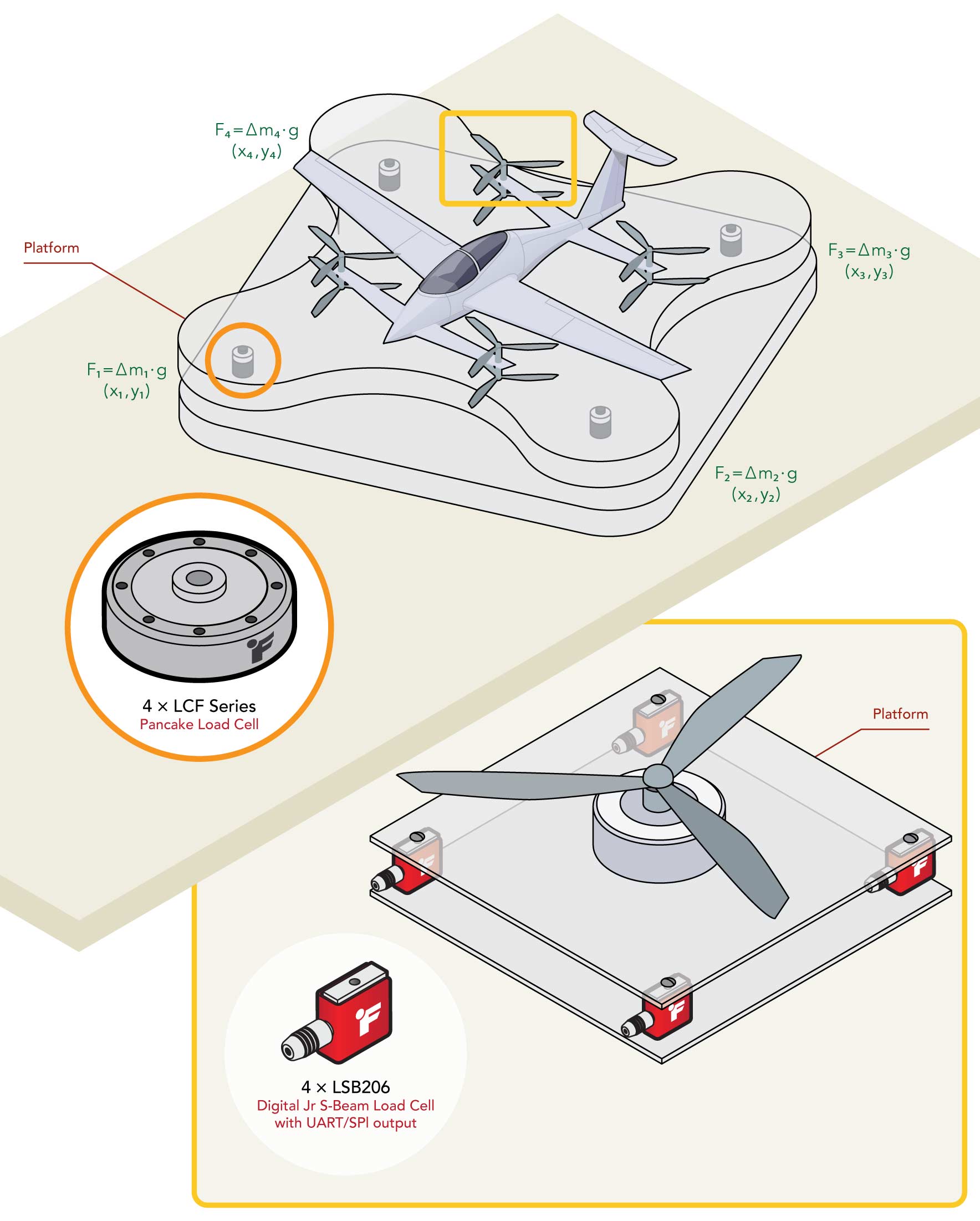
Static measurement is the most common approach for consumer electronics. It involves placing the object on a specialized CG scale—a platform equipped with three or more high-precision load cells. By measuring the force exerted on each cell, a connected microprocessor calculates the exact X and Y coordinates of the CG relative to the geometry of the platform.
Dynamic measurement, however, is required for tech that moves. For robotics and automotive tech, engineers must understand how the CG shifts during motion—a concept often referred to as the Center of Mass (CoM) in motion. This requires complex telemetry and accelerometers to track how weight transfers during acceleration, braking, or cornering.
Utilizing Electronic Scales and Laser Calibration
The most advanced tech labs utilize laser-guided CG measurement systems. In these setups, the hardware (such as a satellite component or a high-end gimbal) is placed on a leveling plate. Lasers scan the external volume of the object to create a digital twin, while internal load cells provide mass data. The software then overlays the mass data onto the 3D scan to provide a sub-millimeter accurate CG report. This level of precision is non-negotiable in aerospace tech, where an off-center component could cause a craft to tumble in a vacuum.
Software Simulation: Moving from Theory to Prototype
Before a single physical part is manufactured, CG measurement happens in the digital realm. Tools like SolidWorks, Autodesk Fusion 360, and CATIA allow engineers to assign material densities to every part of a 3D model. The software automatically calculates the CG of the entire assembly. This “predictive CG measurement” allows tech companies to iterate rapidly, moving batteries or rearranging internal components to achieve the desired balance before committing to expensive tooling and molds.
The Critical Role of CG in Consumer Electronics and Robotics
The application of CG measurement is perhaps most visible in the explosive growth of the drone and robotics industries. In these sectors, CG is not just about feel—it is about the physics of flight and locomotion.
Drones and UAV Stability
For a quadcopter or an FPV (First Person View) drone, the CG must be as close to the geometric center of the four motors as possible. If the CG is offset—perhaps due to a heavy camera mounted on the front—the front motors must spin faster than the rear motors just to maintain a level hover. This leads to several technical issues:
- Reduced Flight Time: Motors working harder consume more milliamps, draining the battery faster.
- Motor Overheating: The “heavy” motors may exceed their thermal limits.
- PID Instability: The flight controller’s Proportional-Integral-Derivative (PID) loops must work overtime to compensate for the imbalance, often leading to “washout” or oscillations during aggressive maneuvers.
Professional drone pilots and cinema riggers use specialized CG measurement jigs to ensure their payload is perfectly balanced, ensuring the smoothest possible footage.
Mobile Devices and Ergonomic Distribution
In the smartphone industry, the “hand-feel” is a major selling point. As screens get larger and camera modules become heavier with periscope lenses and large sensors, the CG of the phone naturally shifts toward the top. This can make a phone feel “top-heavy” and prone to slipping out of the hand. Tech giants invest heavily in CG measurement to ensure that the internal battery is positioned to act as a counterweight, lowering the CG and making the device feel more secure in the user’s palm.
Wearable Tech: Balancing Comfort and Component Density
Wearables like VR (Virtual Reality) headsets face the ultimate CG challenge. A headset like the Meta Quest or Apple Vision Pro places significant weight on the front of the face. CG measurement is used here to determine the optimal placement of the “counter-mass”—often the battery pack or the headband tensioners. By moving the CG closer to the center of the user’s head, engineers reduce neck strain and increase the duration for which a user can comfortably stay in a digital environment.
How to Perform a CG Measurement: A Technical Walkthrough
For developers and hobbyists working on hardware prototypes, performing a manual CG measurement is a vital skill. While industrial labs use million-dollar equipment, the core principles remain accessible.
Step-by-Step Calculation for Small Scale Projects
- Establish a Datum: Choose a fixed reference point on your device (usually the front-left corner or the exact center of a PCB).
- Weight Individual Components: Record the mass of every part—the battery, the frame, the sensors, and the fasteners.
- Measure Distance: Measure the distance from your datum to the center of each individual component.
- Calculate the Moment: Multiply the mass of each part by its distance from the datum (Mass x Arm = Moment).
- Sum and Divide: Add all the moments together and divide by the total mass of the device. The resulting number is the distance of the CG from your datum.
This process, while tedious, is the same logic used by flight computers in commercial airliners and autonomous robots to ensure they remain within “the envelope”—the safe zone of operation.
Troubleshooting Inconsistencies in Mass Distribution
During the measurement process, engineers often find that the “as-built” CG differs from the “as-designed” CG. This is usually due to “mass creep”—small additions like wiring, solder, adhesives, or manufacturing tolerances in plastic density. Professional tech development requires a “CG budget,” where every gram is accounted for to prevent the final product from becoming unbalanced. If the measurement reveals an imbalance, engineers may use “ballast” (adding weight) or “lightening holes” (removing material) to bring the CG back to the optimal coordinate.
The Future of CG Measurement: AI and Automated Balancing
As we look toward the future of technology, CG measurement is moving from a static design phase to an active, real-time system.
Real-time CG Adjustment in Autonomous Vehicles
Future autonomous delivery robots and self-driving cars will utilize real-time CG measurement. As a delivery robot drops off a heavy package, its CG shifts instantly. Onboard sensors will detect this change and provide data to active suspension systems or movable internal weights to compensate. This ensures the robot doesn’t tip over when navigating a curb or an incline.

Nano-tech and the Challenges of Micro-CG
As technology shrinks, the challenges of CG measurement enter the micro-scale. In MEMS (Micro-Electro-Mechanical Systems) and nano-robotics, the center of gravity can be affected by atomic-level variations. Researchers are developing new optical sensing methods to measure the CG of microscopic components, where traditional scales are useless. These breakthroughs will pave the way for a new generation of medical micro-bots and ultra-miniaturized sensors.
In conclusion, CG measurement is the silent architect of the tech world. It governs the stability of our drones, the comfort of our phones, and the safety of our vehicles. As hardware continues to push the boundaries of power and size, the science of measuring the center of gravity will remain a fundamental pillar of technological innovation. By mastering this measurement, tech creators ensure that their products are not just powerful, but perfectly poised for the physical world.
aViewFromTheCave is a participant in the Amazon Services LLC Associates Program, an affiliate advertising program designed to provide a means for sites to earn advertising fees by advertising and linking to Amazon.com. Amazon, the Amazon logo, AmazonSupply, and the AmazonSupply logo are trademarks of Amazon.com, Inc. or its affiliates. As an Amazon Associate we earn affiliate commissions from qualifying purchases.