
In the rapidly evolving landscape of digital entertainment and software monetization, “BlackCell” represents a significant shift in how developers approach the concept of the “Battle Pass.” Originally introduced by Activision for the Call of Duty franchise, BlackCell is not merely a seasonal update; it is a high-tier premium software offering designed to provide a curated, elite layer of content on top of existing live-service structures. It serves as a case study in how modern tech companies utilize digital scarcity, aesthetic uniformity, and value-stacking to retain a dedicated user base.
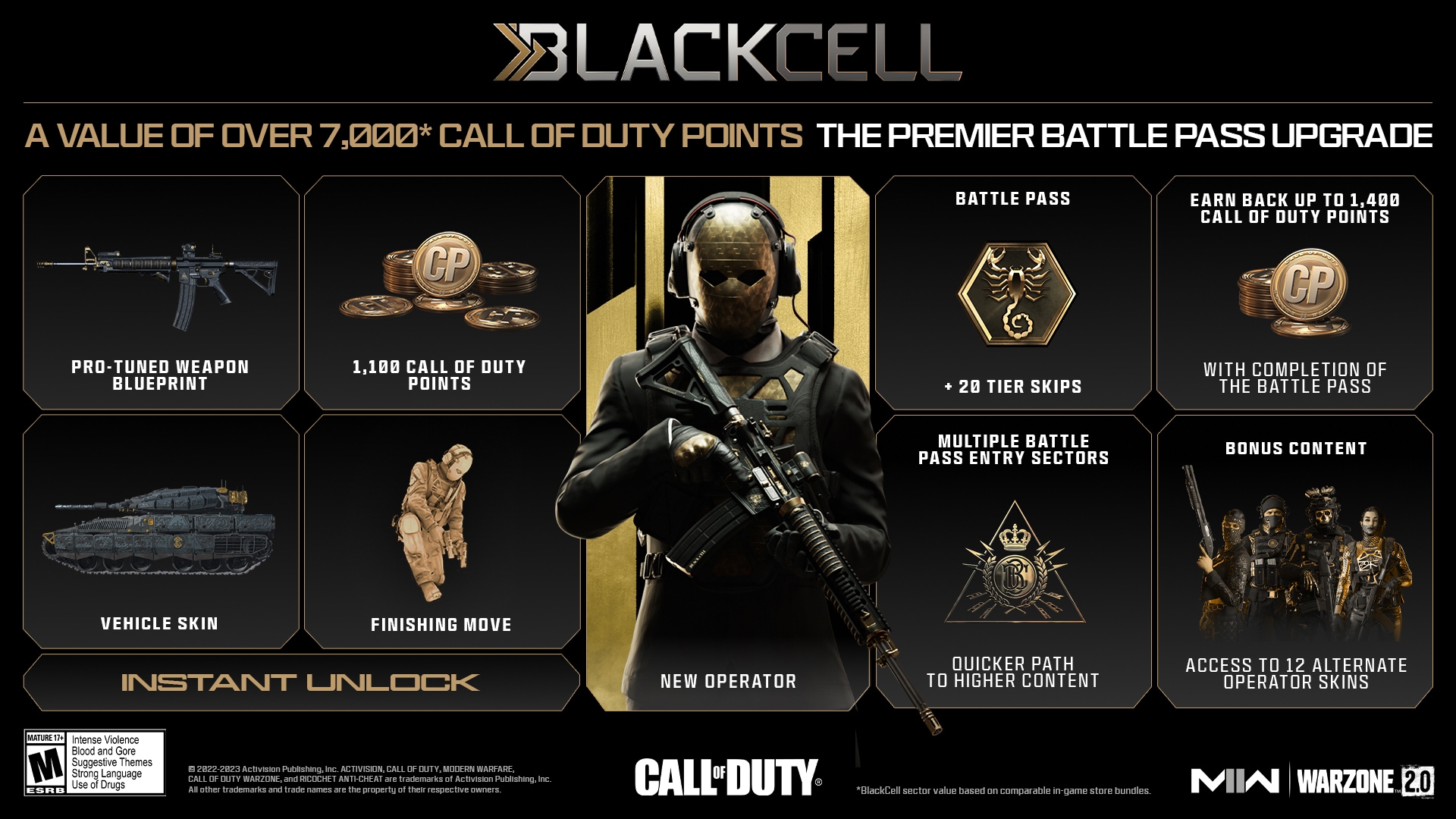
To understand BlackCell, one must look beyond the surface level of “in-game items.” It is a sophisticated integration of digital asset management, cross-platform software synchronization, and a psychological approach to user engagement that has set a new benchmark for the gaming industry’s “Live Service” model.
The Structural Mechanics of BlackCell within Modern Gaming Software
At its core, BlackCell is a premium upgrade to the standard Battle Pass system found in titles like Modern Warfare III and Warzone. While a standard Battle Pass typically offers a linear or branching path of rewards that players unlock through gameplay, BlackCell functions as an “accelerant and enhancer” layer.
The Architecture of the BlackCell Sector
The software architecture of the modern Call of Duty Battle Pass uses an “Area of Operations” (AO) map, a non-linear grid where players use “tokens” to claim sectors. BlackCell introduces a dedicated “BlackCell Sector” within this map. This sector acts as an exclusive entry point, often bypassing the traditional starting requirements. Technically, this allows for a “jump-start” in the progression algorithm, providing players with immediate access to high-value digital assets that would otherwise require dozens of hours of interaction with the software.
Immediate Asset Unlocks and Currency Injection
When a user purchases the BlackCell software package, several server-side flags are triggered. The user is immediately granted a significant amount of “COD Points” (the platform’s digital currency), which usually offsets a large portion of the purchase price. From a technical standpoint, this is a sophisticated method of “value-looping,” where the initial transaction feeds back into the ecosystem’s internal economy, encouraging further digital commerce within the application.
Technical Innovation in Digital Cosmetic Engineering
One of the most striking aspects of BlackCell is the technical craftsmanship involved in its visual assets. The “BlackCell aesthetic” is characterized by a high-contrast black-and-gold color palette, often featuring reactive elements that change based on player performance or environmental lighting.
Shader Complexity and Animated Textures
The developers utilize advanced shader programming to differentiate BlackCell assets from standard digital items. Many BlackCell “Operators” (player avatars) and weapon blueprints feature “reactive” skins. These are not static textures; they are dynamic shaders that interact with the game engine’s lighting system in real-time. For instance, a BlackCell skin might emit a golden “vapor” or pulse with light as the player achieves specific milestones within a match. This requires rigorous optimization to ensure that these high-fidelity visual effects do not negatively impact the frame rate or performance for other users in a multi-user environment.
Uniformity Across Digital Assets
BlackCell represents a move toward “brand uniformity” within a digital inventory. By providing a suite of items—operators, weapon blueprints, vehicle skins, and finishing moves—that all share a singular visual language, the software encourages a “collection” mindset. This is a common trend in digital product design, where the value of the individual item is enhanced by its membership in a larger, cohesive set of assets.
The Strategic Shift in Live-Service Monetization Models
The introduction of BlackCell highlights a transition in the tech industry from “micro-transactions” to “macro-transactions.” Instead of asking users to make dozens of small $1.00 or $5.00 purchases, the BlackCell model consolidates high-value content into a single $29.99 seasonal offering.

Subscription-Lite Functionality
While not a recurring subscription in the traditional sense (like Netflix or Spotify), BlackCell functions as a “seasonal subscription.” Because the content is refreshed every 60 to 90 days, it creates a predictable revenue stream for the developer while providing the user with a recurring sense of “newness.” This model is highly effective for maintaining server infrastructure and funding the continuous development of software updates, as it provides a stable financial foundation compared to sporadic, one-off purchases.
Data-Driven Content Curation
The contents of each BlackCell season are not chosen at random. Development teams analyze vast amounts of telemetry data to determine which “types” of weapons are being used most frequently, which operator silhouettes have the highest engagement, and which aesthetic trends are performing best in the broader digital marketplace. BlackCell is the result of this data-driven approach, offering a “best-of” selection of assets that are mathematically likely to appeal to the most active segment of the user base.
Assessing the Digital Value and User Experience
For the end-user, the BlackCell experience is designed to be one of “prestige” and efficiency. In an era where time is a finite resource, the ability to skip portions of a “grind” (the repetitive process of unlocking content) is a valuable feature of the software.
The “Time-to-Value” Proposition
BlackCell includes “Battle Token Tier Skips,” which are essentially bypasses in the software’s progression logic. For a professional or a time-constrained user, the value of BlackCell lies in the reduction of “Time-to-Value.” By purchasing the pass, the user immediately accesses the content they desire, rather than waiting weeks to unlock it through standard play. This reflects a broader trend in software tools where premium tiers are defined by their ability to save the user time.
Exclusive “BlackCell Alt” Skins
A unique software feature of BlackCell is the “Alt” skin system. When a player unlocks a standard skin in the regular Battle Pass, if they own BlackCell, they often receive an exclusive “BlackCell version” of that same skin. This is an ingenious bit of digital asset layering; the software effectively doubles the reward for the same amount of gameplay effort, creating a constant “bonus” feeling throughout the user’s interaction with the product.
The Broader Impact on the Software and Entertainment Industry
The success of the BlackCell model has not gone unnoticed by other players in the tech and gaming sectors. It represents a maturation of the “Battle Pass” concept that originated in the mid-2010s.
Influence on Competitive Platforms
We are beginning to see similar “Premium Plus” tiers appearing in other major software ecosystems. From social media platforms offering “Pro” badges and enhanced visibility for a monthly fee, to other competitive games introducing “Elite” seasonal tiers, the BlackCell influence is pervasive. It proves that there is a significant market segment willing to pay a premium for a “curated” and “accelerated” experience within a free-to-play or buy-to-play ecosystem.
Ethical and Technical Balance
As these models become more prevalent, developers face the technical challenge of balancing “prestige” with “fairness.” The BlackCell software is carefully designed to ensure that while the visual assets are superior, they do not provide a “Pay-to-Win” advantage—meaning they do not alter the underlying game physics or competitive balance. Maintaining this separation is a complex task involving constant tuning of weapon stats and hitbox data to ensure that a “BlackCell Blueprint” performs identically to its standard counterpart, albeit with more visual flair.

Conclusion: The Future of Digital Premiumization
BlackCell is more than a pack of digital cosmetics; it is a sophisticated software product that sits at the intersection of high-end digital art, data analytics, and modern monetization strategy. It caters to a specific demographic of users who value both time and aesthetic distinction, providing a streamlined way to engage with a complex, ever-changing digital world.
As we look toward the future of software and apps, the BlackCell model suggests that the next phase of digital products will be defined by “layered experiences.” Users will no longer just choose between “free” and “paid,” but will navigate multiple tiers of engagement, each offering varying levels of speed, exclusivity, and visual sophistication. BlackCell has effectively turned the seasonal update into a premium event, proving that in the digital age, how you present and package content is just as important as the content itself.
aViewFromTheCave is a participant in the Amazon Services LLC Associates Program, an affiliate advertising program designed to provide a means for sites to earn advertising fees by advertising and linking to Amazon.com. Amazon, the Amazon logo, AmazonSupply, and the AmazonSupply logo are trademarks of Amazon.com, Inc. or its affiliates. As an Amazon Associate we earn affiliate commissions from qualifying purchases.