
In the landscape of global marketing and corporate strategy, few shifts are as profound or complex as the rebranding of a nation-state. When the world began to see the increasing use of the name “Bharat” in official international contexts—most notably during high-level summits and diplomatic communications—it signaled more than a mere linguistic preference. It represented a strategic pivot in national brand identity. To understand what Bharat is from a branding perspective, one must look beyond the historical roots and delve into the mechanics of corporate identity, soft power, and the strategic repositioning of an emerging global superpower.
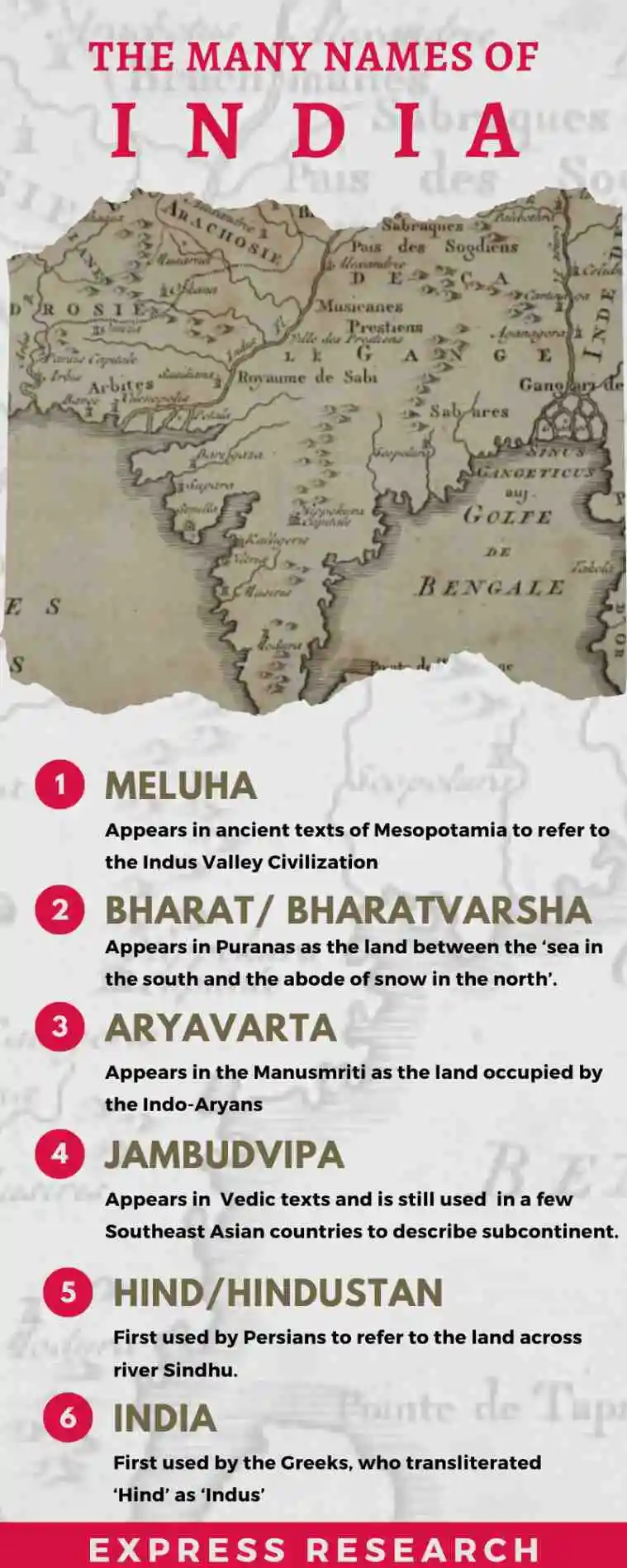
Rebranding on this scale is not just about changing a label; it is about reclaiming a narrative. Just as a legacy corporation might undergo a transformation to align its internal values with its external market positioning, the shift toward Bharat reflects a desire to harmonize a modern economic powerhouse with its indigenous heritage. This is the ultimate exercise in brand strategy: defining a unique value proposition that resonates locally while commanding respect globally.
The Strategic Shift: From India to Bharat
The transition from “India” to “Bharat” serves as a masterclass in brand evolution. In marketing terms, “India” is a brand name with significant global equity, often associated with the colonial era, the English language, and a specific trajectory of post-1947 development. However, “Bharat” is an identity rooted in deep-time authenticity.
Reclaiming the Narrative
In brand strategy, authenticity is the highest currency. For decades, the “India” brand was viewed through a Western lens—a land of outsourcing, IT hubs, and ancient spirituality. While successful, this brand identity was often perceived as a “derivative” of global standards. By emphasizing “Bharat,” the nation is engaging in a process of decolonizing its brand. It is moving away from a name perceived as given by “others” toward a name that is self-defined. This mirrors the way luxury brands like Hermès or LVMH lean into their historical provenance to justify their current prestige. Bharat is the “Original Brand,” signaling a return to roots that predates modern geopolitical constructs.
The Duality of National Identity
From a strategic standpoint, “India” and “Bharat” often represent two different market segments. Traditionally, marketers have viewed “India” as the urban, English-speaking, tech-savvy elite, while “Bharat” represented the rural, vernacular-speaking, heartland population. However, the current branding strategy seeks to merge these two. The goal is to elevate “Bharat” from a demographic subset to the primary identity of the entire nation. This unification reduces brand fragmentation, creating a cohesive national identity that appeals to both the Silicon Valley investor and the agricultural entrepreneur in a tier-three city.
The Anatomy of a National Brand Identity
A brand is a promise kept. When a nation rebrands, it must align its visual identity, its messaging, and its “product” (the economy and culture) with the new name. The shift to Bharat is characterized by several key branding pillars that define its modern corporate identity.
Cultural Resonance as a Competitive Advantage
In a globalized world where products and services are increasingly commoditized, cultural uniqueness becomes a primary differentiator. Bharat leverages its civilizational depth as a brand asset. This is not dissimilar to how “Made in Italy” or “German Engineering” function as trust markers. By positioning itself as Bharat, the nation is marketing its holistic philosophy—ranging from sustainable living practices to advanced mathematical heritage—as a unique “Intellectual Property.” This cultural resonance builds a brand that is difficult to replicate, providing a moat against global competitors who rely solely on price or speed.
Soft Power and Emotional Connection
Great brands do not just provide utility; they evoke emotion. The term Bharat carries an emotional weight and a sense of pride that “India,” in its clinical and administrative sense, sometimes lacks. In the realm of international relations, this is known as soft power. By using Bharat, the nation projects an image of a confident, self-aware entity that is no longer seeking validation from external metrics but is setting its own standards. This psychological shift is essential for any brand aiming to move from a “follower” position to a “leader” position in the global market.
Bharat as a Corporate Ecosystem

The “Bharat” brand is not limited to government halls; it has become a central theme in the strategies of major corporations and startups alike. The business community has recognized that the next wave of economic growth lies in the “Bharat” segment—the hundreds of millions of consumers entering the digital economy for the first time.
The “Bharat-First” Business Model
Many of the world’s most successful startups in the last decade have been those that adopted a “Bharat-first” strategy. These companies—ranging from fintech giants to e-commerce platforms—built their brand identities around the needs of the non-English speaking population. They understood that to win in this market, they couldn’t just translate an existing product; they had to redesign the brand experience. This involved using vernacular languages, simplifying user interfaces, and building trust through community-based marketing. In this context, “Bharat” is a synonym for the “Real Market,” representing a massive opportunity for scale and disruption.
Case Studies in Brand Adaptation
Consider how global tech giants have pivoted. When companies like Google or Meta launch initiatives specifically for the Indian market, they increasingly use the “Bharat” nomenclature to signal inclusivity. They are acknowledging that the brand of the future is local, even if the technology is global. Similarly, domestic conglomerates like the Tata Group or Reliance Industries have long mastered the art of balancing a global corporate identity with a “Bharatiya” soul. Their brand strategy revolves around being “National Champions,” where their success is inextricably linked to the progress of the nation.
Global Perception and the Brand Equity of Sovereignty
A major rebranding effort inevitably leads to questions about brand equity. “India” is a powerful brand name with decades of investment. Does shifting to “Bharat” risk diluting that equity? From a brand management perspective, the answer lies in how the transition is handled.
Managing the Transition
In the corporate world, when a company like Google becomes Alphabet or Facebook becomes Meta, they don’t discard the old brand immediately. Instead, they use the new name to represent a broader vision or a parent identity. The shift to Bharat functions similarly. It is an “umbrella brand” that encompasses the historical India while pointing toward a future that is more autonomous and assertive. The global perception is shifting from seeing a country that provides labor to a country that provides leadership. This transition enhances the brand equity of sovereignty—the idea that the nation is the master of its own destiny.
Impact on Trade and Investment
For investors, the “Bharat” brand represents stability and a long-term vision. A nation that is confident enough to define itself on its own terms is often perceived as a more reliable partner. The branding of Bharat is closely tied to the “Make in India” (or “Aatmanirbhar Bharat”) initiative, which is essentially a supply-chain brand strategy. It signals to the world that Bharat is not just a consumer market but a manufacturing and innovation hub. By aligning the national name with these economic goals, the brand becomes a tool for attracting Foreign Direct Investment (FDI) and building strategic trade alliances.
The Future of the Bharat Brand: Innovation and Digital Leadership
As we look toward the next decade, the Bharat brand will increasingly be defined by its digital infrastructure and its role in the global tech ecosystem. The rebranding is timed with a period of unprecedented digital transformation.
The Digital Public Infrastructure (DPI)
Bharat has successfully branded its digital prowess through the concept of “Digital Public Infrastructure.” This include systems like UPI (Unified Payments Interface) and Aadhaar. These are not just technical tools; they are brand ambassadors. They showcase a “Bharat Model” of development—one that is inclusive, scalable, and cost-effective. By exporting this model to other nations, Bharat is engaging in “B2B Branding” at a sovereign level, positioning itself as a consultant and provider of digital governance solutions for the Global South.
Sustainability and Ethical Branding
The future of global branding is centered on ESG (Environmental, Social, and Governance) principles. The Bharat brand is uniquely positioned here, as it can draw upon ancient traditions of living in harmony with nature to frame its modern sustainability goals. Whether it is the International Solar Alliance or the push for circular economies, the “Bharat” identity provides a philosophical framework for ethical branding. It suggests that growth does not have to come at the expense of the planet, a message that resonates deeply with the modern, conscious consumer and the global investor class.
In conclusion, “What is Bharat?” is a question that finds its answer in the intersection of identity, economy, and strategic communication. It is a brand that is simultaneously ancient and futuristic. For the global community, it represents the emergence of a partner that is rooted in its own values but fully integrated into the modern world. For the domestic population, it is a source of unified identity and pride. As a rebranding exercise, the shift to Bharat is perhaps the most significant brand story of the 21st century, marking the transition of a nation from a participant in the global order to a primary architect of its future.
aViewFromTheCave is a participant in the Amazon Services LLC Associates Program, an affiliate advertising program designed to provide a means for sites to earn advertising fees by advertising and linking to Amazon.com. Amazon, the Amazon logo, AmazonSupply, and the AmazonSupply logo are trademarks of Amazon.com, Inc. or its affiliates. As an Amazon Associate we earn affiliate commissions from qualifying purchases.