
In the rapidly evolving landscape of health technology, the focus has shifted from general activity tracking—like step counts and heart rate—to nuanced biomechanical data. Among the most critical metrics emerging in the fields of sports science, physical therapy, and ergonomic tech is ankle dorsiflexion. While traditionally a term reserved for kinesiologists and orthopedic surgeons, ankle dorsiflexion has become a vital data point for developers of wearable sensors, AI-driven motion analysis software, and digital health platforms.
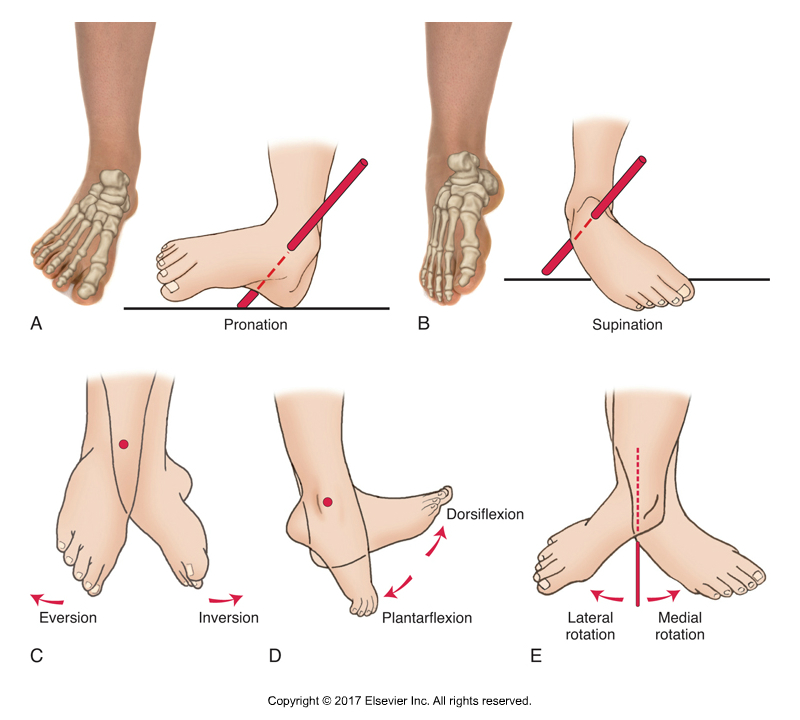
Ankle dorsiflexion refers to the movement where the top of the foot moves toward the shin, decreasing the angle between the foot and the leg. In a technical sense, it is the fundamental mechanical requirement for human locomotion, squatting, and jumping. However, in the context of modern technology, it represents a complex biometric challenge: how do we accurately measure, analyze, and optimize this range of motion using software and hardware?

The Digital Translation of Human Movement: Defining Dorsiflexion as Data
At its core, measuring ankle dorsiflexion is about quantifying a specific rotational movement within a three-dimensional space. For tech developers, this means translating biological motion into digital coordinates.
The Biomechanics of the Kinematic Chain
In the world of biomechanical software, the ankle is not viewed in isolation. It is part of a “kinematic chain.” When a user lacks sufficient dorsiflexion, the software must account for compensatory movements in the knee, hip, and lumbar spine. Modern AI tools are now programmed to recognize these compensations. For example, if a wearable sensor detects a limited ankle angle during a squat, the integrated software can predict potential strain on the patellar tendon or lower back, providing real-time alerts to the user.
Range of Motion (ROM) as a Performance Metric
In high-performance sports tech, dorsiflexion is a key indicator of “athletic availability.” Software platforms used by professional teams track ROM (Range of Motion) daily to identify signs of fatigue or impending injury. A decrease in the digital reading of an athlete’s dorsiflexion—even by a few degrees—can signal muscle tightness or joint inflammation before the athlete even feels pain. This predictive capability is the cornerstone of modern sports analytics.
Hardware Innovations: Measuring Dorsiflexion Beyond the Clinic
Historically, measuring an ankle’s angle required a physical goniometer—a plastic protractor used by clinicians. Today, the tech industry has replaced these manual tools with high-frequency sensors and IoT (Internet of Things) devices.
Inertial Measurement Units (IMUs) and Sensor Fusion
The most prevalent hardware used to track dorsiflexion is the Inertial Measurement Unit (IMU). These tiny chips, found in high-end wearables and smartphones, combine accelerometers, gyroscopes, and sometimes magnetometers. By placing an IMU on the foot and another on the shin, software can calculate the “relative angle” between the two segments with millisecond precision. This “sensor fusion” allows for dynamic tracking, meaning the tech can measure dorsiflexion while a user is sprinting or performing a heavy lift, rather than just standing still.
Smart Footwear and Integrated Textiles
The next frontier in hardware is the integration of sensors directly into the fabric of shoes and socks. Companies are developing “smart socks” embedded with textile pressure sensors and conductive fibers that track the stretch of the fabric over the ankle joint. This data is transmitted via Bluetooth Low Energy (BLE) to a central app, providing a seamless “invisible” tracking experience. For the user, this means that their daily footwear becomes a diagnostic tool, constantly monitoring for the technical markers of poor mobility or gait abnormalities.
The Role of Computer Vision and Machine Learning
While wearables are effective, the tech industry is increasingly leaning toward “markerless” motion capture powered by computer vision. This allows users to track their ankle dorsiflexion using nothing more than a smartphone camera.
Pose Estimation Algorithms
Libraries such as MediaPipe and OpenPose have revolutionized how software interprets human movement. These AI models use deep learning to identify “keypoints” on the human body—such as the lateral malleolus (ankle bone), the base of the fifth metatarsal, and the knee. By calculating the vertex angle between these points in a 2D or 3D video feed, the software can provide a real-time readout of dorsiflexion. This is a game-changer for telehealth and remote coaching apps, allowing a user in a home gym to receive the same level of technical analysis as they would in a professional laboratory.

Predictive Analytics and Injury Forecasting
Machine learning models are being trained on vast datasets of human movement to identify the “ideal” dorsiflexion signatures for different activities. For instance, an AI tool might analyze a runner’s gait over thousands of miles. If the software detects a subtle “drift” in the dorsiflexion angle during the terminal stance phase, it can cross-reference this with historical injury data to provide a risk score. This transition from descriptive tech (telling you what happened) to prescriptive tech (telling you what to do) is the current gold standard in the industry.
Enterprise Solutions and the SportsTech Ecosystem
The technical measurement of ankle dorsiflexion is not just for individual consumers; it is a burgeoning sector for enterprise SaaS (Software as a Service) providers and professional organizations.
Cloud-Based Biomechanical Platforms
For professional sports organizations and physical therapy clinics, the data gathered from various sensors is aggregated into centralized cloud platforms. These dashboards allow practitioners to manage entire rosters or patient populations. The technical challenge here lies in data interoperability—ensuring that data from a smart shoe can be accurately compared with data from a 3D motion capture suite. Advanced APIs (Application Programming Interfaces) are being built to bridge these gaps, creating a unified “Digital Twin” of the athlete’s musculoskeletal health.
Gamification and User Experience (UX) in Rehabilitation
One of the primary hurdles in physical therapy is patient compliance. Software developers are tackling this by gamifying dorsiflexion exercises. Using biofeedback tech, apps can turn a simple ankle stretch into a controller for a digital environment. For example, as a user increases their dorsiflexion angle, an avatar on the screen might jump higher or clear an obstacle. This integration of UX design with biomechanical data is proving to be a highly effective way to drive long-term engagement in digital health programs.
Digital Security and the Ethical Implications of Biometric Tracking
As we collect more granular data on how the human body moves, the conversation inevitably turns toward digital security and the privacy of biometric data.
The Sensitivity of “Movement Fingerprints”
Biometric data, including the specific nuances of a person’s gait and ankle mobility, can be as unique as a fingerprint. This “movement signature” is highly sensitive information. Tech companies are now implementing advanced encryption standards (AES-256) and decentralized data storage to protect this information. If a hacker were to gain access to an athlete’s biomechanical profile, they could potentially use that data to predict performance lapses or even target physical vulnerabilities.
Regulatory Compliance in HealthTech
As these apps and gadgets cross the line from “fitness tools” to “medical devices,” they must comply with rigorous standards such as HIPAA in the United States or GDPR in Europe. For developers, this means that the “What is ankle dorsiflexion” question is no longer just about geometry; it’s about legal architecture. Ensuring that data is anonymized before it is used to train machine learning models is a technical and ethical necessity in the modern HealthTech ecosystem.
The Future of Mobility Tech: AR, VR, and Beyond
Looking ahead, the integration of dorsiflexion metrics will move into the realms of Augmented Reality (AR) and Virtual Reality (VR). We are entering an era where “digital overlays” will provide instant feedback on our physical state.
AR Overlays for Real-Time Correction
Imagine wearing a pair of AR glasses during a workout. As you perform a squat, the glasses project a digital “arc” over your ankle, showing your current dorsiflexion in real-time versus your target range. This instant visual feedback allows for micro-adjustments that prevent injury and optimize performance. This is the ultimate synthesis of hardware, software, and human biology.
Integrating Biometrics into the Metaverse
As the Metaverse evolves, our digital avatars will be expected to mirror our physical movements with high fidelity. Tracking complex joint movements like ankle dorsiflexion will be essential for creating an immersive experience. Whether for virtual sports, social interaction, or professional training, the tech that defines how we move in the physical world will be the same tech that defines our presence in the digital one.
In conclusion, ankle dorsiflexion is much more than a simple anatomical movement. In the modern tech niche, it is a high-value data point that sits at the intersection of AI, wearable hardware, and digital health. By mastering the quantification and analysis of this movement, developers and tech companies are unlocking new ways to enhance human performance, prevent injury, and secure the future of biometric data.
aViewFromTheCave is a participant in the Amazon Services LLC Associates Program, an affiliate advertising program designed to provide a means for sites to earn advertising fees by advertising and linking to Amazon.com. Amazon, the Amazon logo, AmazonSupply, and the AmazonSupply logo are trademarks of Amazon.com, Inc. or its affiliates. As an Amazon Associate we earn affiliate commissions from qualifying purchases.