
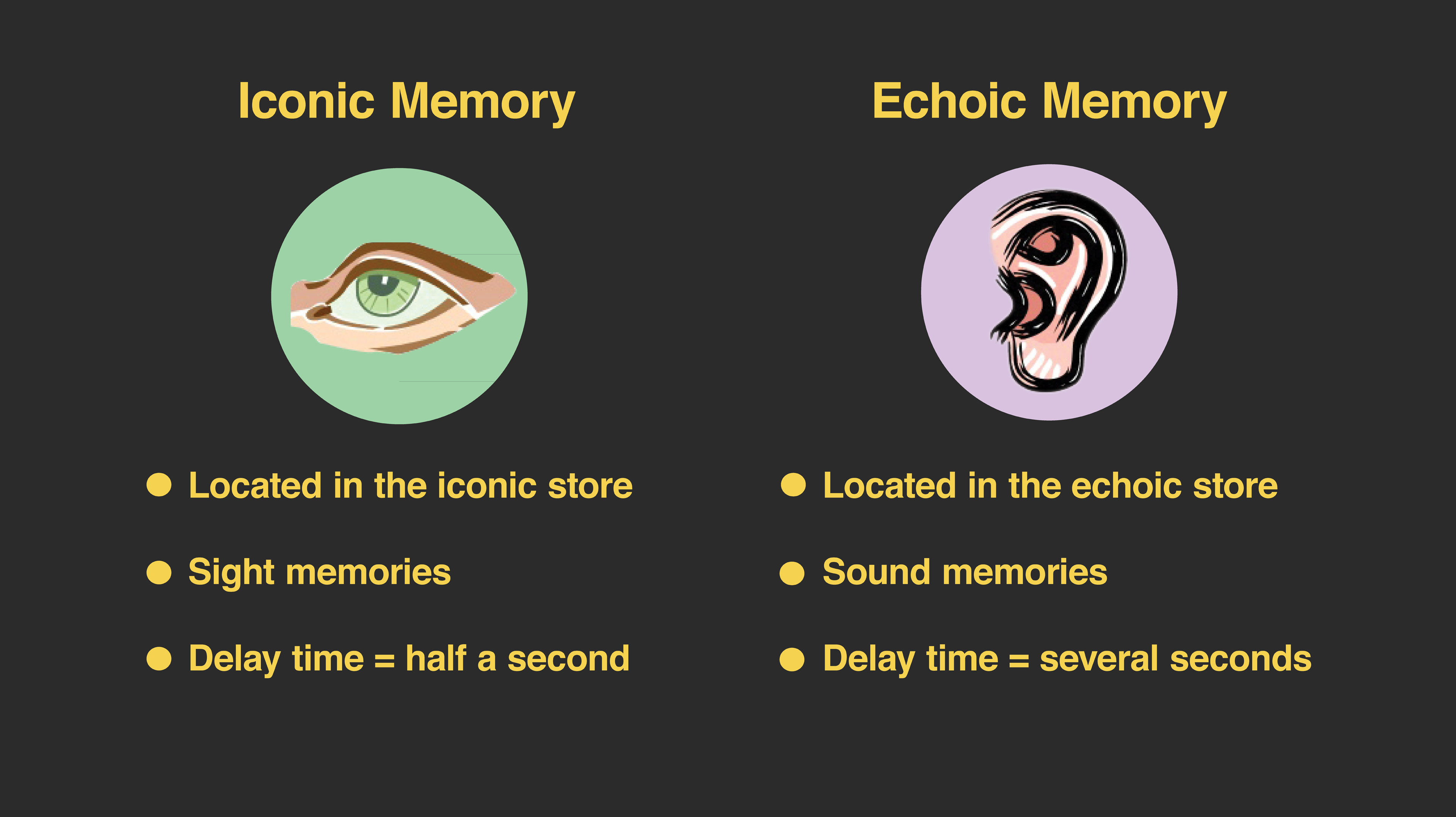
In the landscape of cognitive science and technological innovation, the concept of echoic memory serves as a vital bridge. Traditionally defined as a component of sensory memory that specifically handles auditory information, echoic memory acts as a “buffer” for the brain. It allows us to retain sounds for a brief period—typically three to four seconds—after the physical stimulus has ceased. While this may seem like a purely biological phenomenon, it has become a foundational blueprint for modern technology, particularly in the realms of Artificial Intelligence (AI), Digital Signal Processing (DSP), and Natural Language Processing (NLP).
Understanding echoic memory is no longer just the domain of psychologists; it is essential for developers and tech enthusiasts who are building the next generation of voice-activated tools and immersive audio hardware. By replicating the way the human brain temporarily stores and parses sound, technology is evolving from simple recording devices into intelligent systems capable of context-aware interaction.
The Mechanics of Sound: From Biological Senses to Digital Buffers
To understand how tech replicates auditory persistence, we must first look at the biological hardware it seeks to emulate. Echoic memory is one of the three types of sensory memory, alongside iconic memory (visual) and haptic memory (touch). Its primary function is to hold a “replay” of a sound so the brain can process it into meaningful information.
Defining the Biological “Audio Loop”
When someone speaks to you, your brain does not process every individual phoneme in isolation. Instead, it stores the sequence of sounds in a brief auditory loop. This is why, if you are distracted and someone asks, “Are you listening?” you can often “playback” the last few words they said even if you weren’t consciously paying attention. This 4-second window is the echoic memory at work. It provides the necessary context for the brain to identify words, pitch shifts, and emotional nuances.
The Digital Parallel: Audio Buffering and Pre-processing
In the tech world, echoic memory finds its equivalent in the “audio buffer.” Whether it is a streaming service like Spotify or a sophisticated voice assistant like Siri, software uses buffers to store segments of audio data before they are played or analyzed.
In digital signal processing, this “echoic” phase is critical for latency management. By holding a small window of data in RAM, the system can smooth out jitter, apply noise-reduction algorithms, and ensure that the output is seamless. Just as the human brain needs a few seconds to make sense of a sentence, a computer needs a buffer to synchronize data packets and prevent audio artifacts.
How AI Replicates Echoic Memory for Natural Language Processing (NLP)
The most significant application of echoic memory principles today is found in Artificial Intelligence. For an AI to understand human speech, it cannot simply look at a single snapshot of data; it must understand the temporal relationship between sounds.
Sequence Modeling and Temporal Data
Echoic memory is inherently temporal—it relies on the passage of time. Modern AI models, specifically Recurrent Neural Networks (RNNs) and Long Short-Term Memory (LSTM) networks, were designed to mimic this. These architectures allow the machine to “remember” previous inputs while processing the current one.
In the context of voice-to-text technology, the AI uses a digital version of echoic memory to determine if the sound “read” is the word “red” or the color “red” based on the words that preceded it. This ability to maintain a short-term store of information is what allows Large Language Models (LLMs) to generate coherent, contextually accurate responses.
Attention Mechanisms: Mimicking Focus in Sound
The evolution from LSTMs to Transformer models has further refined how machines handle “echoic” data. Through a process called “Attention,” AI can now weigh different parts of an auditory sequence differently.
Think of a crowded room: your biological echoic memory helps you filter out background noise to focus on a single conversation. Similarly, AI attention mechanisms allow software to prioritize the most relevant parts of an audio stream, effectively creating a “smart” echoic memory that discards irrelevant noise while retaining critical phonetic data for processing.

Practical Applications in Voice Technology and Gadgets
We interact with artificial echoic memory every day through our gadgets. From the smartphones in our pockets to the smart speakers in our kitchens, these devices are constantly utilizing brief storage windows to improve user experience and functionality.
Smart Assistants and “Always-On” Listening
One of the most common tech applications of echoic memory is the “wake word” detection feature in devices like Amazon Echo or Google Home. These devices utilize a circular buffer—a technological version of echoic memory—that is constantly recording and overwriting a few seconds of audio.
The device does not record everything permanently; instead, it holds the last few seconds of sound in a temporary state. Only when the onboard processor identifies the specific “echo” of the wake word (e.g., “Hey Siri”) does it move that data into long-term processing. This mimicking of echoic memory allows for “always-on” functionality without consuming massive amounts of storage or bandwidth.
Active Noise Cancellation (ANC) Algorithms
High-end headphones, such as the Sony WH-1000XM5 or Apple AirPods Max, rely on a hyper-fast version of echoic memory. The external microphones pick up ambient sound and store it for a fraction of a millisecond—just long enough for the internal processor to generate an “anti-noise” wave.
This process requires the hardware to “remember” the incoming sound wave’s shape long enough to invert it. This micro-level echoic storage is the backbone of modern acoustic engineering, allowing for the near-silent environments that tech professionals rely on for deep work.
Digital Security and the Ethics of Auditory Persistence
As machines get better at mimicking echoic memory, new challenges arise in digital security and privacy. If a device is “always listening” to maintain a temporary buffer, the question of data sovereignty becomes paramount.
Privacy Concerns in Temporary Audio Storage
The line between “temporary buffer” and “permanent recording” is often a focus of cybersecurity audits. Tech companies must ensure that the “echoic” data stored during wake-word detection is immediately purged if no command is given. Digital security protocols, such as end-to-end encryption and on-device processing (Edge AI), are increasingly used to protect these brief windows of auditory data from being intercepted by third parties.
Biometric Security and Voice Fingerprinting
Echoic memory principles are also applied in voice biometrics. When a banking app asks you to “speak your passphrase,” the system isn’t just listening to the words; it is analyzing the cadence, pitch, and resonance—elements that echoic memory naturally captures. By storing these “auditory fingerprints” in secure, encrypted enclaves, technology uses the nuances of human sound to create a more secure alternative to traditional passwords.
The Future of Echoic Memory in Human-Computer Interaction (HCI)
The future of tech lies in making our interactions with machines feel as natural as our interactions with other humans. This requires perfecting the way machines handle sensory data over time.
Real-time Translation and Augmented Reality (AR)
In the world of AR glasses and real-time translation software (like Google Translate’s conversation mode), echoic memory is the key to fluidity. For a pair of AR glasses to provide live subtitles of a foreign language, the system must hold the “echo” of the speaker’s voice, translate it, and project the text—all within the 4-second window that a human brain would expect. As processing power increases, this “digital echo” will become faster, leading to seamless cross-cultural communication tools.

Bridging the Gap Between Sensory Input and Machine Learning
We are moving toward an era of “Multimodal AI,” where machines process sight, sound, and text simultaneously. In this ecosystem, echoic memory will serve as the auditory pillar. By integrating sophisticated auditory buffers with visual processing, future robots and AI agents will be able to navigate the world with a sense of “presence.” They will know that a sound coming from the left requires an immediate shift in visual focus, much like a human would react to a sudden noise.
Echoic memory, once a term reserved for textbooks, has become a cornerstone of the modern tech stack. By understanding the brief, fleeting nature of sound, engineers are building tools that are more responsive, more intelligent, and more human-centric. Whether it is through the silent magic of noise-canceling headphones or the complex logic of a voice-activated AI, the “echo” of our world is being captured, processed, and utilized to redefine the digital experience.
aViewFromTheCave is a participant in the Amazon Services LLC Associates Program, an affiliate advertising program designed to provide a means for sites to earn advertising fees by advertising and linking to Amazon.com. Amazon, the Amazon logo, AmazonSupply, and the AmazonSupply logo are trademarks of Amazon.com, Inc. or its affiliates. As an Amazon Associate we earn affiliate commissions from qualifying purchases.