
In the early days of telecommunications, a phone number was more than just a string of digits; it was a physical map of a user’s geographic location. The North American Numbering Plan (NANP), established in 1947, was designed around the mechanical limitations of rotary switches and the human need for localized identification. However, as the digital age accelerated the demand for connectivity, the traditional method of managing these numbers reached a breaking point. Enter the “area code overlay,” a technical solution to a finite resource problem that has fundamentally changed how we interact with telecommunications infrastructure.

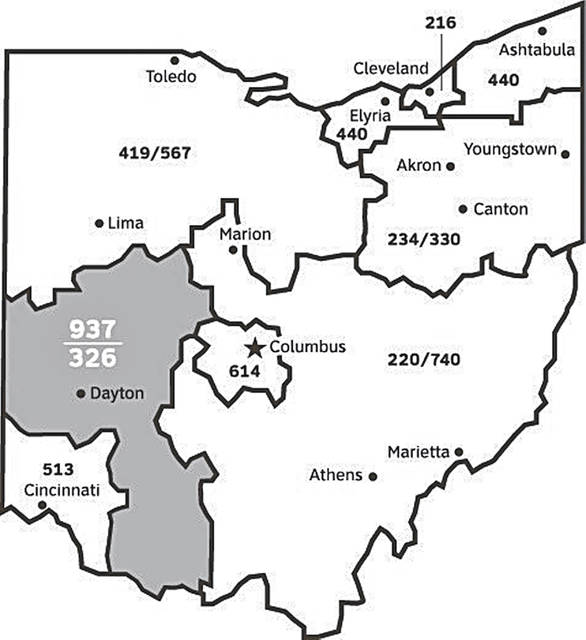
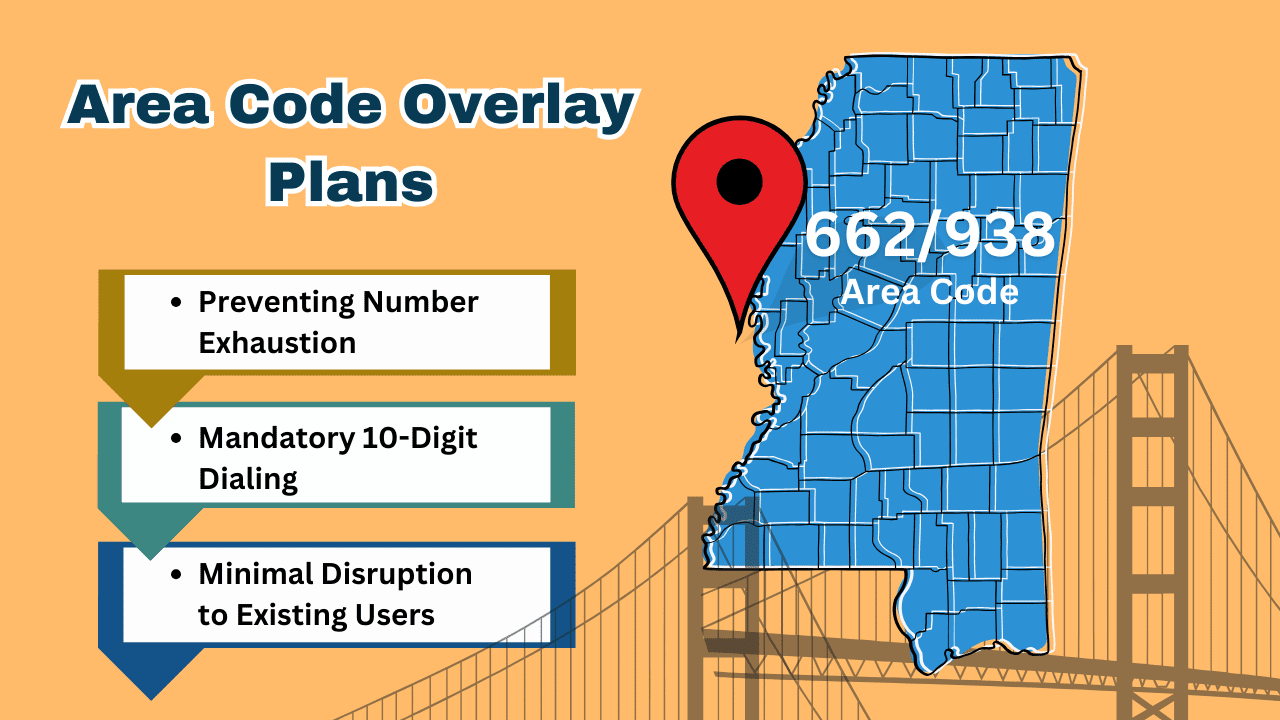
An area code overlay occurs when a new area code is added to the exact same geographic region as an existing area code. Unlike the historical “split” method, where a region was physically divided and one half was forced to change their numbers, an overlay allows everyone to keep their current numbers while all new subscribers are assigned the new code. While this sounds simple in theory, the technical implementation involves a significant shift in dialing protocols, network routing, and hardware configuration.
The North American Numbering Plan: The Technical Blueprint of Connectivity
To understand why an overlay is necessary, one must first understand the architectural constraints of the North American Numbering Plan. A standard phone number in the NANP consists of a ten-digit sequence: a three-digit Numbering Plan Area (NPA) code—commonly known as the area code—followed by a three-digit Central Office (CO) code and a four-digit line number.
Mathematically, this system provides a fixed number of possible combinations. Each area code can support approximately 792 central office codes (the middle three digits), and each central office code can support 10,000 individual line numbers. This equates to roughly 7.9 million numbers per area code. In the mid-20th century, this seemed like an infinite supply. However, the explosion of technology in the late 1990s and 2000s—fueled by the proliferation of fax machines, pagers, second home lines for dial-up internet, and eventually, the smartphone revolution—exhausted these pools at an unprecedented rate.
When an area code nears “exhaustion,” meaning there are no more available central office codes to assign, the North American Numbering Plan Administrator (NANPA) must intervene. Historically, the solution was a geographic split. This involved drawing a line on a map and telling everyone on one side of that line that their area code was changing. From a technical and branding perspective, this was a nightmare. It required businesses to reprint all collateral and required telecommunications providers to perform massive database updates. The overlay was developed as a more efficient, software-driven alternative that preserves existing identities while expanding capacity.
The Mechanics of the Overlay: Moving to 10-Digit Dialing
The most immediate technical consequence of an area code overlay is the mandatory transition from 7-digit to 10-digit dialing. In a traditional single-code environment, the local exchange switch can assume that any 7-digit number dialed is intended for a destination within the same area code. However, once an overlay is active, two different neighbors might have different area codes despite being on the same street.
This creates a technical ambiguity that the Public Switched Telephone Network (PSTN) cannot resolve without more information. To distinguish between a number in the original code and one in the overlay code, the switch requires the full 10-digit string. This shift requires a massive update to the logic programmed into local exchange switches and central office equipment.
From a technology standpoint, this involves:
- Permissive Dialing Periods: Before an overlay becomes mandatory, carriers implement a “permissive” period where the network logic is programmed to accept both 7-digit and 10-digit sequences. This allows the system to collect data on dialing patterns and gives consumers time to adapt.
- Mandatory Dialing Transition: Once the permissive period ends, the switch logic is updated to reject 7-digit strings, often triggering an intercept message (a recorded announcement) explaining the new requirement.
- Routing Table Updates: Network engineers must update the global routing tables to ensure that the new NPA is recognized by international gateways and domestic long-distance carriers.
Preparing Technical Infrastructure for an Overlay
The implementation of an area code overlay is not merely a change at the carrier level; it necessitates significant updates to private hardware and software systems. For IT departments and system administrators, an overlay announcement triggers a comprehensive audit of all communication-dependent technology.
PBX and VoIP System Reconfiguration
Private Branch Exchange (PBX) systems, especially older legacy hardware, are often programmed with specific “dialing plans.” These plans tell the system how to handle outbound calls—such as prefixing a “9” for an outside line or automatically adding the local area code to 7-digit numbers. When an overlay occurs, these internal routing tables must be manually or programmatically updated. In modern Voice over IP (VoIP) systems, this is generally managed through a web-based administrative console, but it still requires a shift in the Session Initiation Protocol (SIP) trunking logic to ensure that 10 digits are passed correctly to the provider.
Security and Life-Safety Systems
One of the most critical technical risks during an overlay transition involves automated dialing equipment. Many home and business security alarms, medical alert systems, and fire monitoring panels are programmed to dial a 7-digit number to reach a central monitoring station. If these systems are not updated to dial 10 digits before the mandatory transition, they will fail to connect during an emergency. This requires technicians to either remotely re-program the digital dialers or physically visit the site to update the firmware.
Software Databases and APIs
For developers, area code overlays impact how data is validated and stored. Legacy systems that used 7-digit fields or assumed a single area code for a specific region must be refactored. Validation logic in web forms must be updated to ensure they don’t reject the new area code as “invalid” simply because it hasn’t been added to the local database. Furthermore, Global Positioning System (GPS) and mapping software must integrate the new overlay boundaries to ensure that localized services are correctly routed.
The Impact of the IoT and VoIP on Number Exhaustion
The primary driver behind the modern frequency of area code overlays is the Internet of Things (IoT). We are no longer just assigning phone numbers to people; we are assigning them to machines. Smart meters, connected cars, fleet tracking modules, and even some wearable devices require a unique identifier to connect to cellular networks. While many of these devices use non-dialable identifiers like ICCIDs (Integrated Circuit Card Identifiers), many still utilize standard MDNs (Mobile Directory Numbers) from the NANP pool.
Furthermore, the rise of VoIP and “Over-the-Top” (OTT) communication apps (like WhatsApp, Google Voice, and Zoom) has surged the demand for numbers. These services often “hoard” blocks of numbers in various area codes to provide users with local presence. Because numbers are assigned in blocks (historically in groups of 1,000 or 10,000), even a service with only a few hundred users in a city might tie up an entire central office code, accelerating the need for an overlay.
Technological advancements in “thousand-block pooling” have helped mitigate this. Instead of a carrier being forced to take 10,000 numbers at once, they can now take them in increments of 1,000. However, even with this efficiency, the sheer volume of connected gadgets ensures that the overlay remains the standard tool for capacity expansion.
Digital Security and User Experience in an Overlay Environment
From a digital security perspective, area code overlays introduce new challenges regarding caller ID spoofing and phishing. In a single-code environment, a local area code was a strong (though not infallible) indicator of a local caller. In an overlay environment, users are presented with unfamiliar area codes that are, in fact, local. This confusion is often exploited by “neighbor spoofing” software, where robocallers use the new overlay code to appear as though they are calling from a local business or neighbor.
Moreover, the transition to 10-digit dialing has technical implications for two-factor authentication (2FA). Automated SMS gateways used by banks and tech companies must be updated to recognize the new NPA. If a service provider’s database is not synchronized with the NANPA’s latest updates, users with the new overlay code may find themselves unable to receive verification codes, effectively locking them out of their digital accounts.
The Evolution of Telephony: Beyond Geographic Boundaries
As we look toward the future, the very concept of an area code is becoming increasingly abstracted from geography. With the migration to all-IP networks, a phone number is essentially a piece of metadata attached to a user’s digital identity rather than a physical wire in a central office.
While area code overlays are currently the most efficient way to manage the legacy constraints of the NANP, the tech industry is moving toward a more fluid identification system. We are already seeing the rise of “non-geographic” area codes (like the 5XX series) used specifically for IoT and machine-to-machine communication.
In the long term, the technical hurdles of the area code overlay serve as a bridge between the old world of physical circuit switching and the new world of unified communications. The move to 10-digit dialing, necessitated by overlays, was the first step in decoupling our numbers from our locations. As we continue to integrate AI-driven call routing and cloud-based telephony, the area code may eventually become a vestigial component of our digital architecture—a ten-digit legacy of a time when the world was divided by wires and switches.
For now, the overlay remains a vital piece of telecommunications engineering, ensuring that as our world becomes more connected, our infrastructure has the capacity to keep up with the demand. It is a testament to the flexibility of the North American Numbering Plan that a system designed for rotary phones has been successfully adapted, through overlays and software logic, to support the billions of devices defining the modern technological landscape.
aViewFromTheCave is a participant in the Amazon Services LLC Associates Program, an affiliate advertising program designed to provide a means for sites to earn advertising fees by advertising and linking to Amazon.com. Amazon, the Amazon logo, AmazonSupply, and the AmazonSupply logo are trademarks of Amazon.com, Inc. or its affiliates. As an Amazon Associate we earn affiliate commissions from qualifying purchases.